
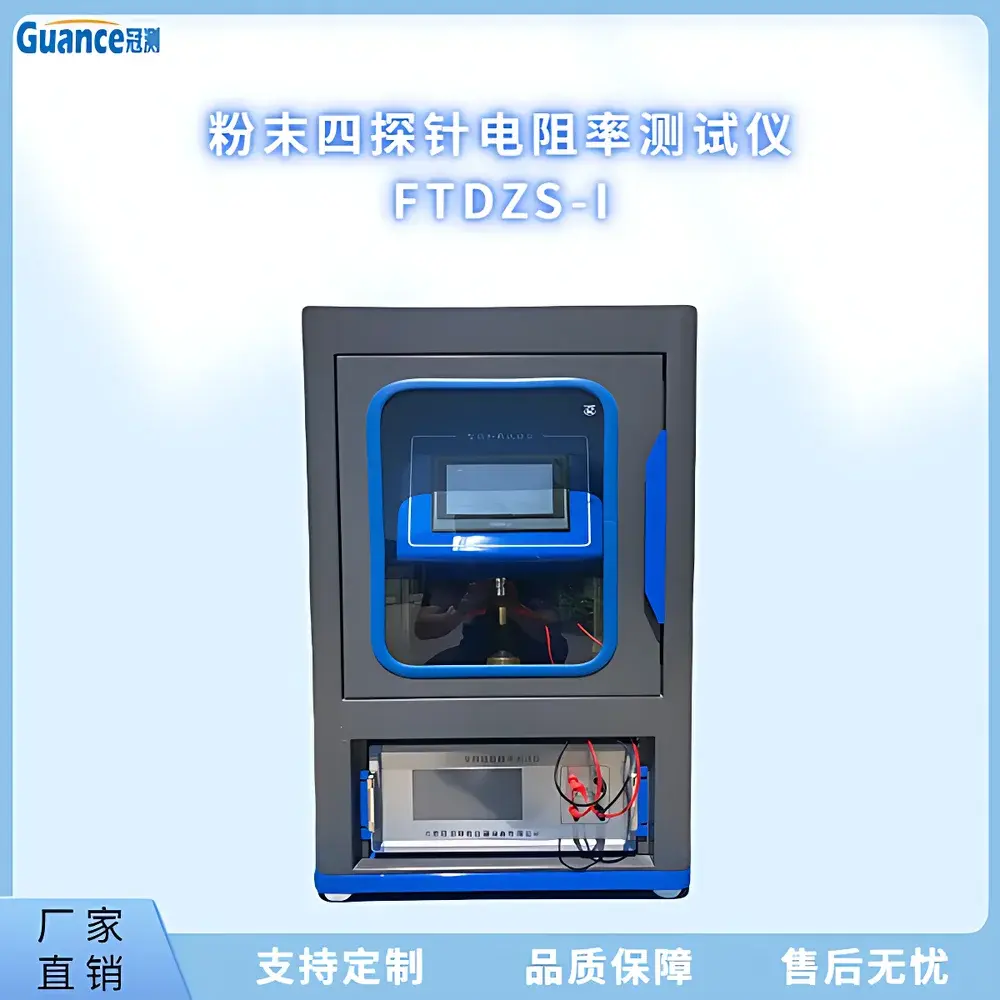
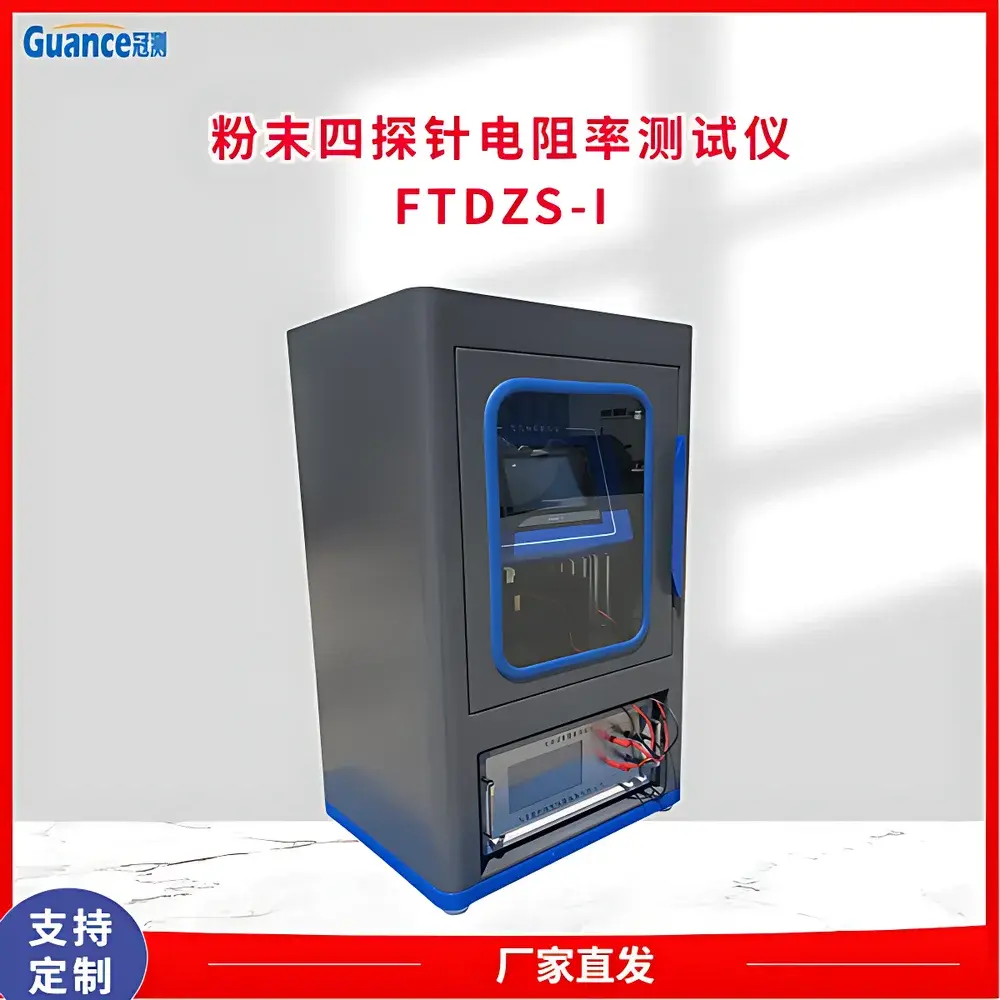
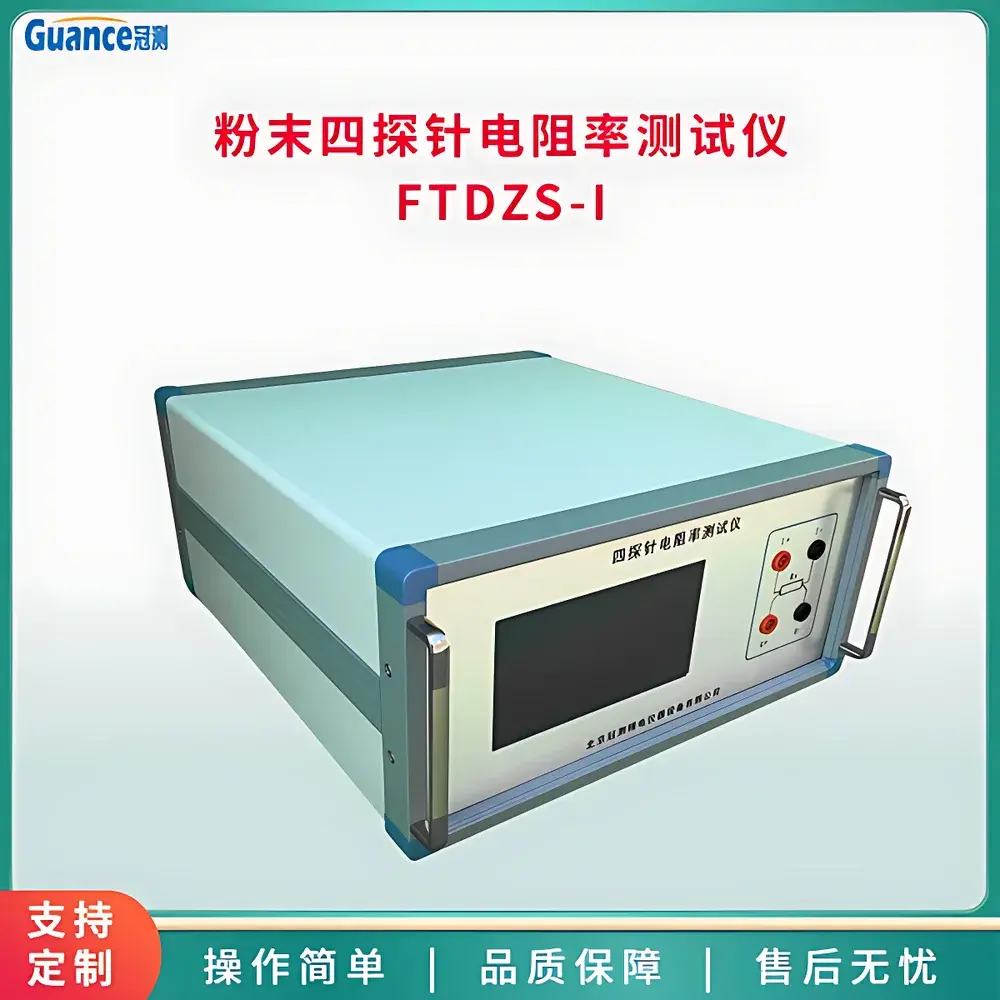
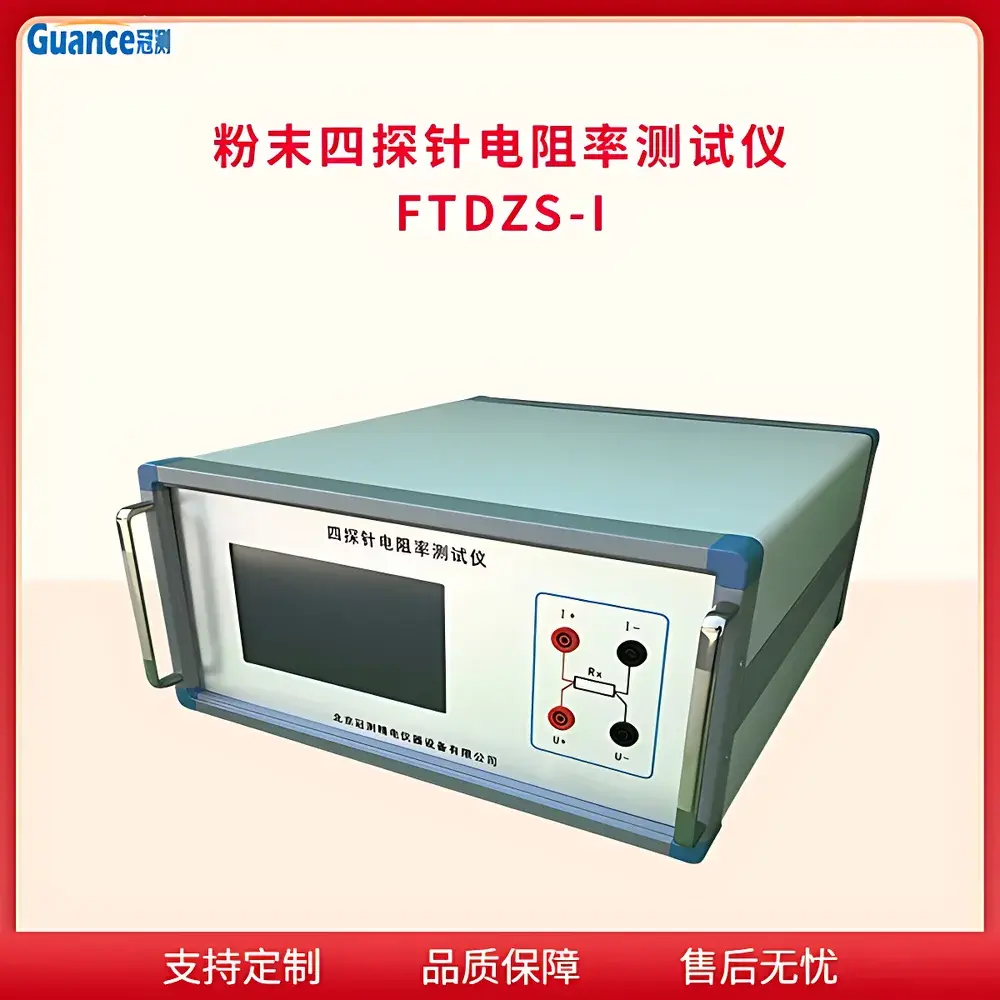
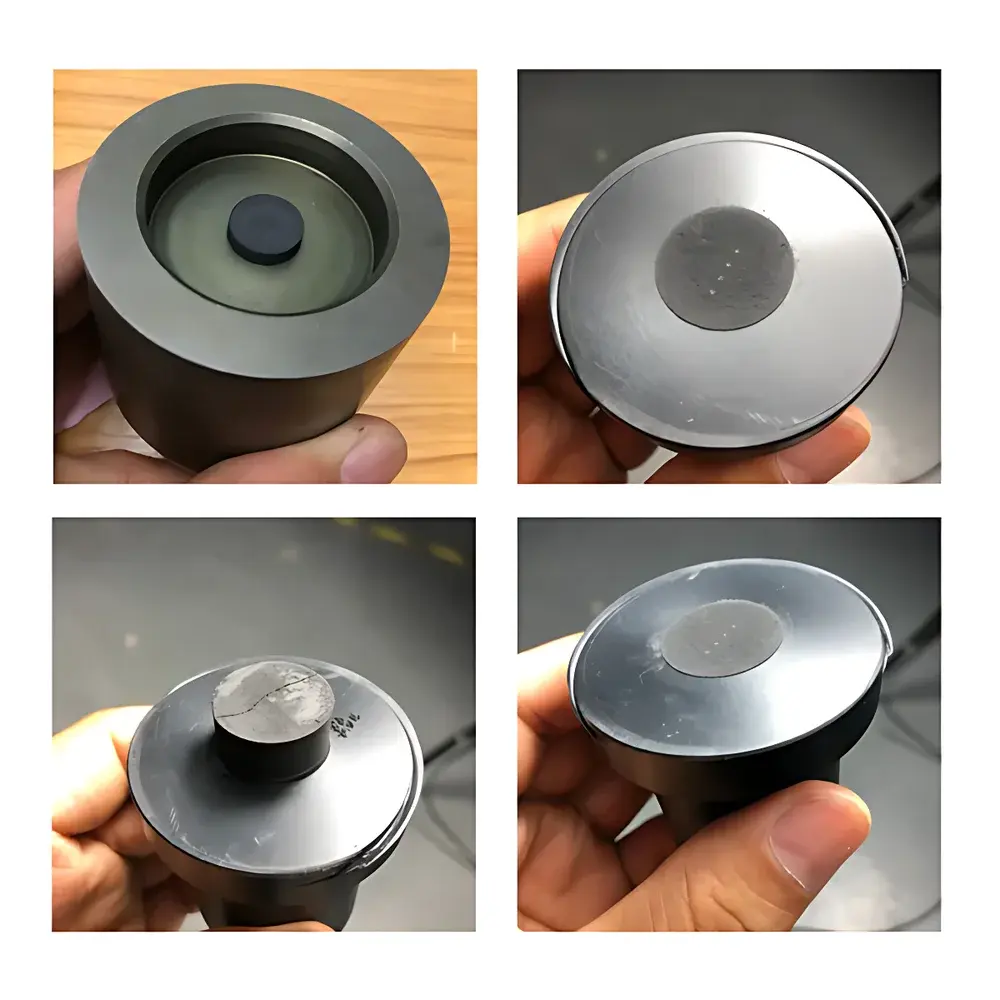
GuanCe FTDZS-I Intelligent Powder Resistivity Tester (Four-Point Probe Method)
| Brand | GuanCe Instruments |
|---|---|
| Origin | Beijing, China |
| Manufacturer Type | Authorized Distributor |
| Country of Origin | China |
| Model | FTDZS-I |
| Price | USD 2,150 (approx.) |
Overview
The GuanCe FTDZS-I Intelligent Powder Resistivity Tester is a precision-engineered instrument designed specifically for the quantitative determination of volume resistivity in granular and powdered materials using the four-point probe (4PP) method. Unlike conventional two-probe configurations, the 4PP technique eliminates contact resistance errors by separating current injection and voltage sensing functions into distinct electrode pairs—ensuring measurement fidelity independent of probe–sample interface variability. The system operates under controlled compaction conditions, applying standardized axial pressure to achieve reproducible powder density states (e.g., loose-fill or tapped density), as mandated by ASTM D3764, ISO 3915, and IEC 62631-3-2 for electrically conductive powders. This capability enables traceable, comparative resistivity assessment across batch lots, R&D formulations, and QC release testing in high-value material supply chains.
Key Features
- Integrated programmable hydraulic/pneumatic compaction module with real-time pressure feedback and digital setpoint control (range: 0–10 MPa, resolution: ±0.01 MPa)
- Four-terminal DC measurement architecture featuring low-noise, auto-zeroing digital voltmeter (sensitivity: 1 µV, input impedance >10 GΩ) and high-stability constant-current source (output range: 1 nA–100 mA, ripple <0.01% RMS)
- Industrial-grade 7-inch capacitive touchscreen HMI with intuitive calibration workflow, multi-step test protocol storage, and on-device data review
- Modular test fixture design accommodating standard cylindrical dies (diameter: 12.7 mm, height: ≤25 mm) per ASTM D3764; optional custom die adapters available
- Rugged aluminum alloy chassis with ESD-safe surface treatment and CE-compliant electromagnetic shielding
- Onboard thermal drift compensation algorithm activated during extended measurements (>30 min) to maintain ±0.2% reading stability
Sample Compatibility & Compliance
The FTDZS-I supports a broad spectrum of conductive, semiconductive, and antistatic powders—including metal alloys (e.g., Ni, Cu, Al), carbon blacks, graphite flakes, conductive polymers, battery cathode/anode precursors (LiCoO₂, Si/C composites), and refractory ceramics (TiC, WC). All measurements comply with the geometric correction requirements defined in ASTM D3764 Annex A1 for non-infinite sample thickness and edge effects. The instrument meets essential safety and EMC criteria per IEC 61010-1 (2010) and EN 61326-1:2013. Calibration traceability is maintained via NIST-traceable shunt resistors and certified reference powders (e.g., SRM 2820 from NIST for carbon black resistivity validation).
Software & Data Management
Data acquisition, analysis, and reporting are managed through GuanCe’s proprietary PC-based software suite (v3.2), compatible with Windows 10/11. The software implements full 21 CFR Part 11 compliance features including role-based user access control, electronic signatures, and immutable audit trails for all parameter changes, calibration events, and result exports. Raw voltage/current readings are timestamped at 10 Hz and stored in .CSV and .XML formats. Built-in statistical tools calculate mean resistivity, standard deviation, relative standard deviation (RSD), and confidence intervals (95%) across replicate compaction cycles. Export options include PDF reports with embedded metadata (operator ID, environmental temp/humidity, die serial number, pressure profile curve).
Applications
- Quality assurance of conductive fillers in EMI shielding compounds and static-dissipative plastics
- Process development and optimization of electrode slurry formulations for lithium-ion and solid-state batteries
- Characterization of sintering behavior in metal injection molding (MIM) feedstocks
- Resistivity mapping of gradient compositions in functionally graded materials (FGMs)
- Research on percolation thresholds in polymer–carbon nanotube composites
- GLP-compliant testing for regulatory submissions under ICH Q5C (quality of biotechnological products) where electrostatic properties impact handling safety
FAQ
What compaction pressure ranges does the FTDZS-I support, and how is pressure calibrated?
The system delivers programmable axial pressure from 0.1 MPa to 10 MPa, calibrated annually using a NIST-traceable deadweight tester with uncertainty <0.05% FS.
Can the instrument measure anisotropic resistivity in layered powder compacts?
No—the FTDZS-I measures bulk (isotropic) volume resistivity only. Anisotropy requires orthogonal electrode arrays or rotating probe configurations not supported by this model.
Is firmware upgrade capability available remotely?
Yes—firmware updates are delivered via encrypted USB dongle or authenticated HTTPS download, with version rollback and integrity checksum verification.
Does the system meet ISO/IEC 17025 requirements for accredited laboratories?
When operated with documented SOPs, scheduled metrological verification, and certified reference materials, the FTDZS-I satisfies clause 6.4 (equipment) and 6.6 (traceability) of ISO/IEC 17025:2017.
What maintenance intervals are recommended for long-term accuracy?
Voltage/current channel linearity verification every 6 months; probe tip wear inspection and cleaning after every 500 test cycles; full system calibration annually or after mechanical shock events.



