
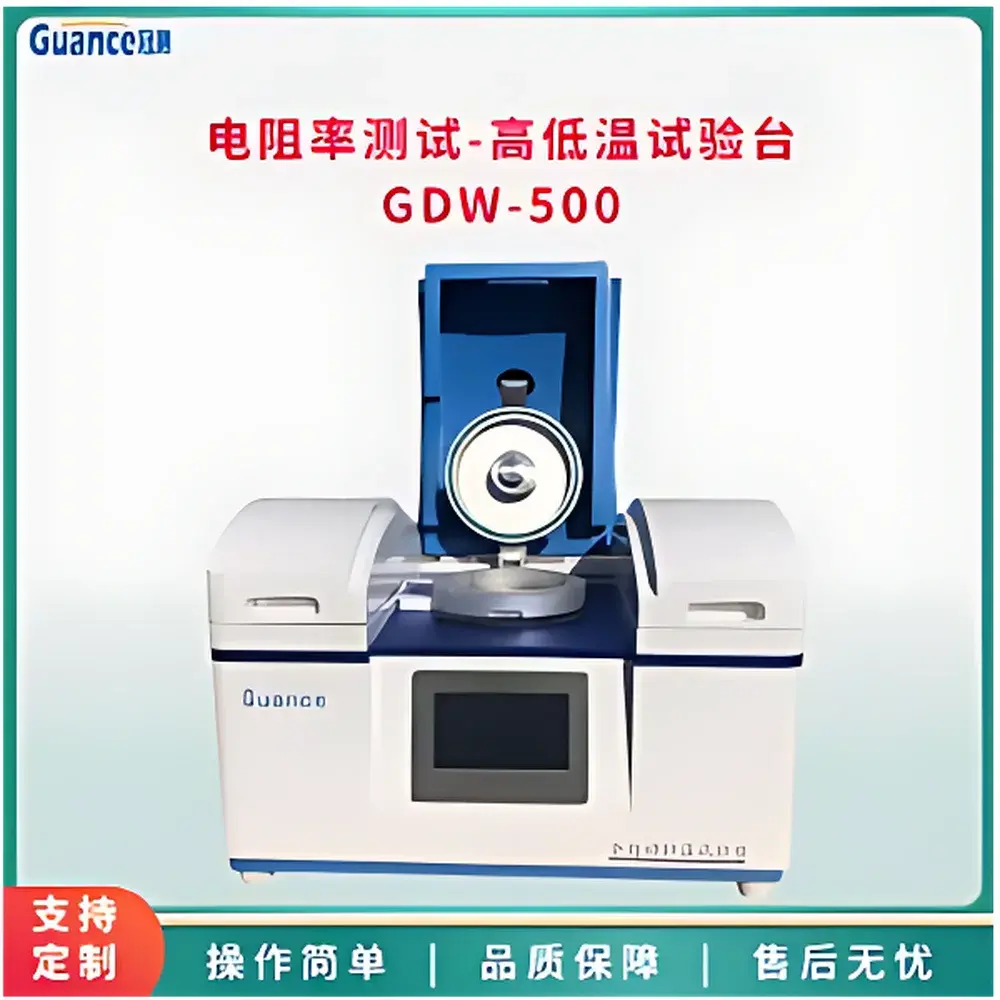
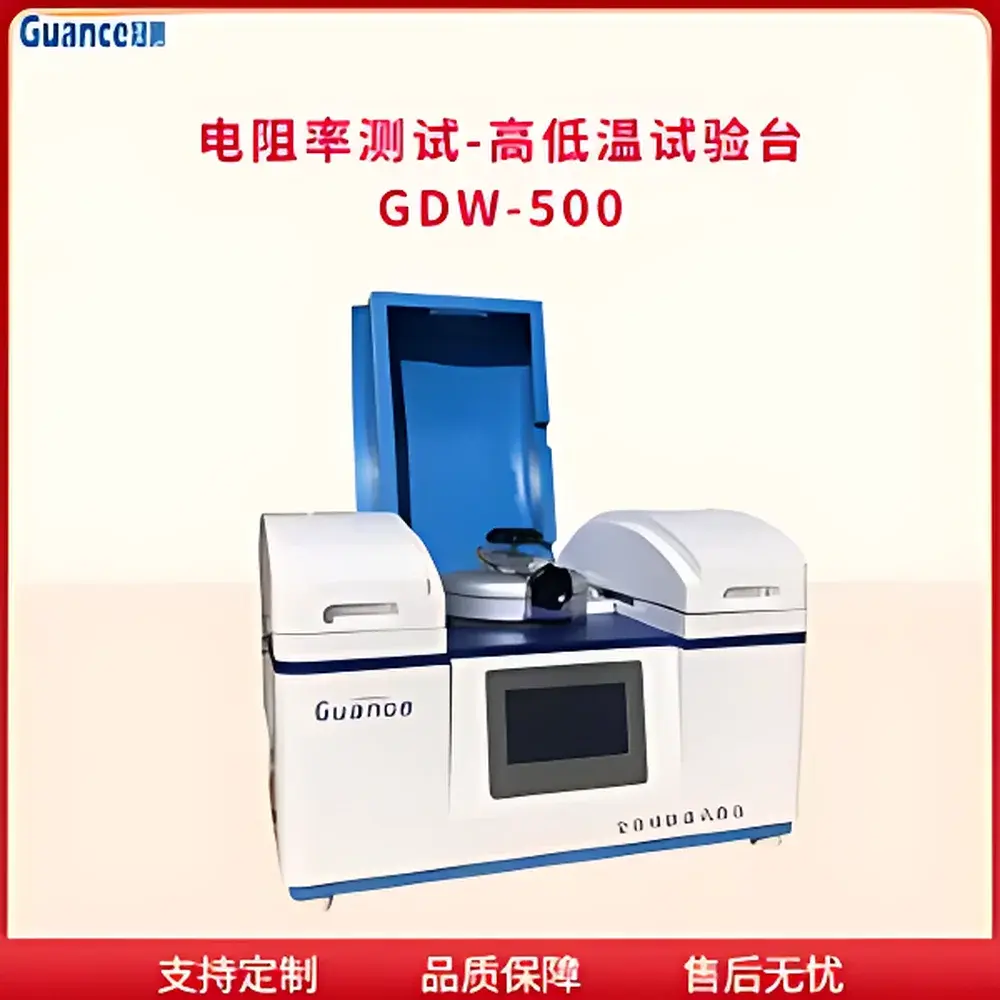
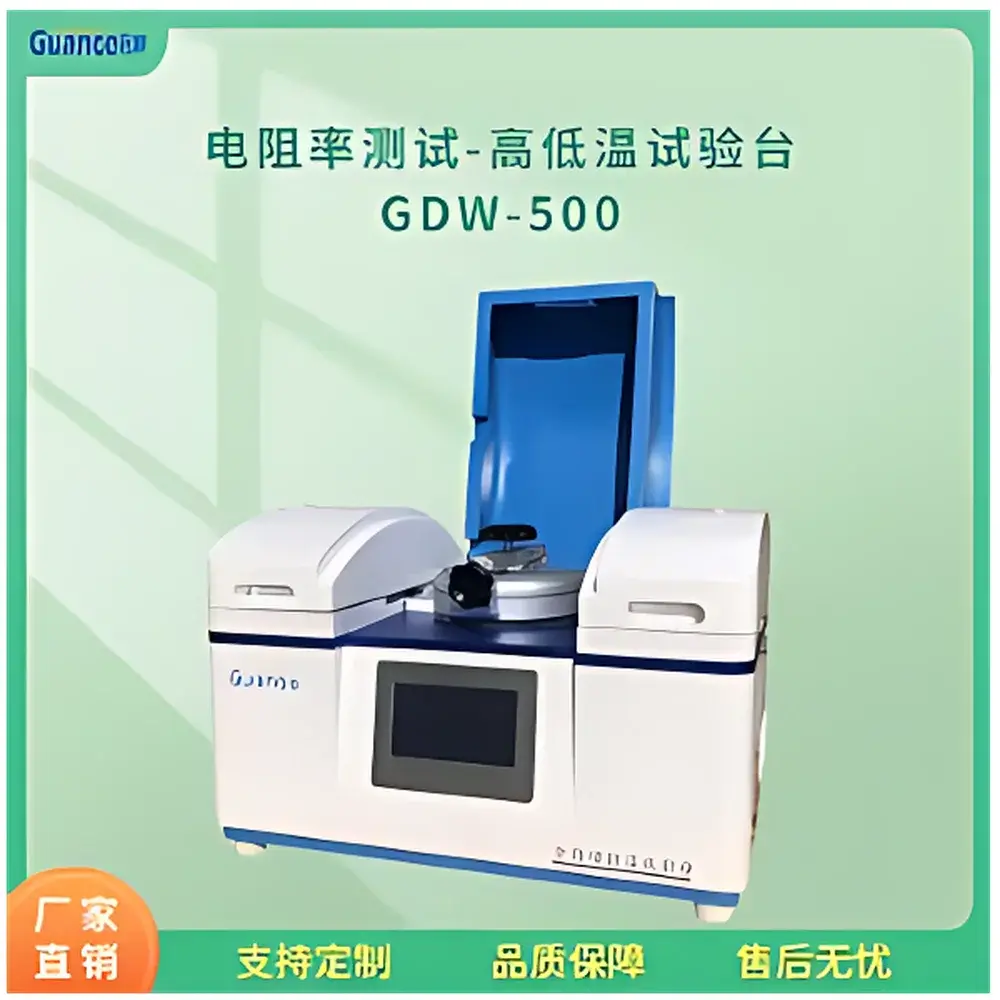
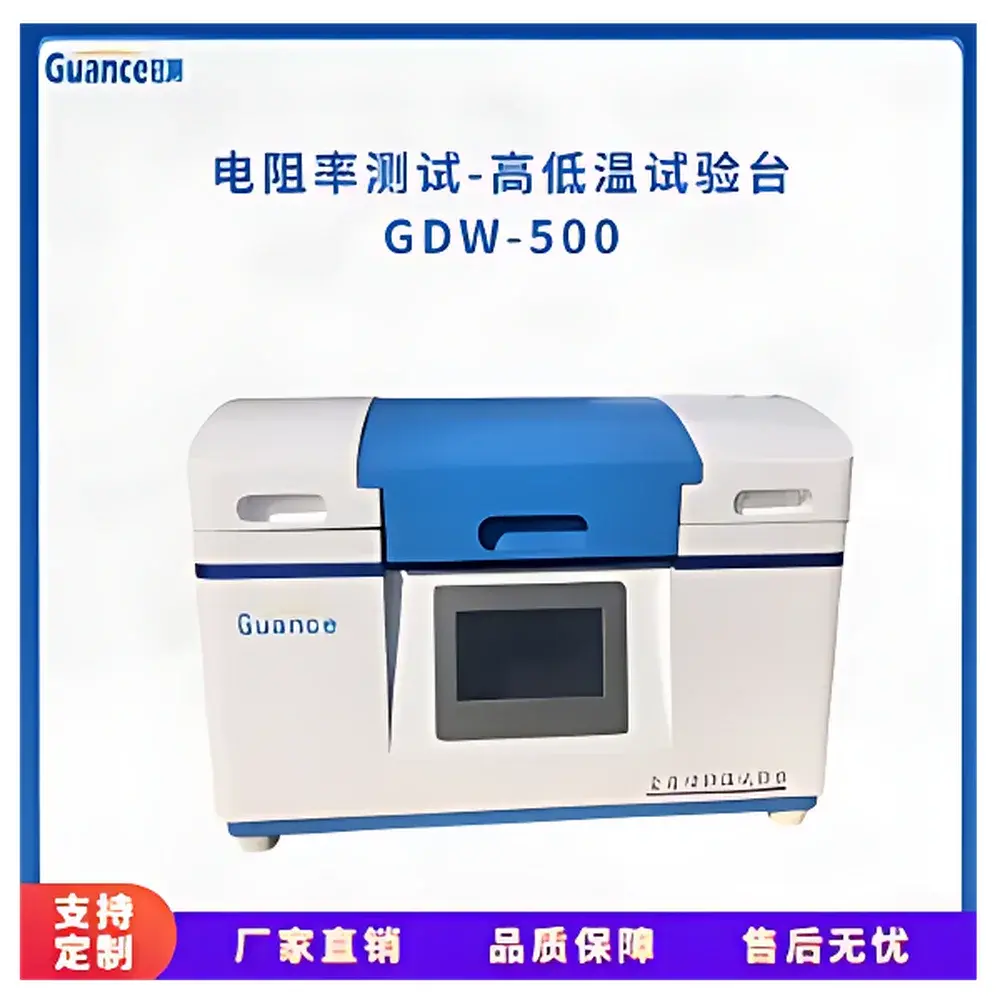
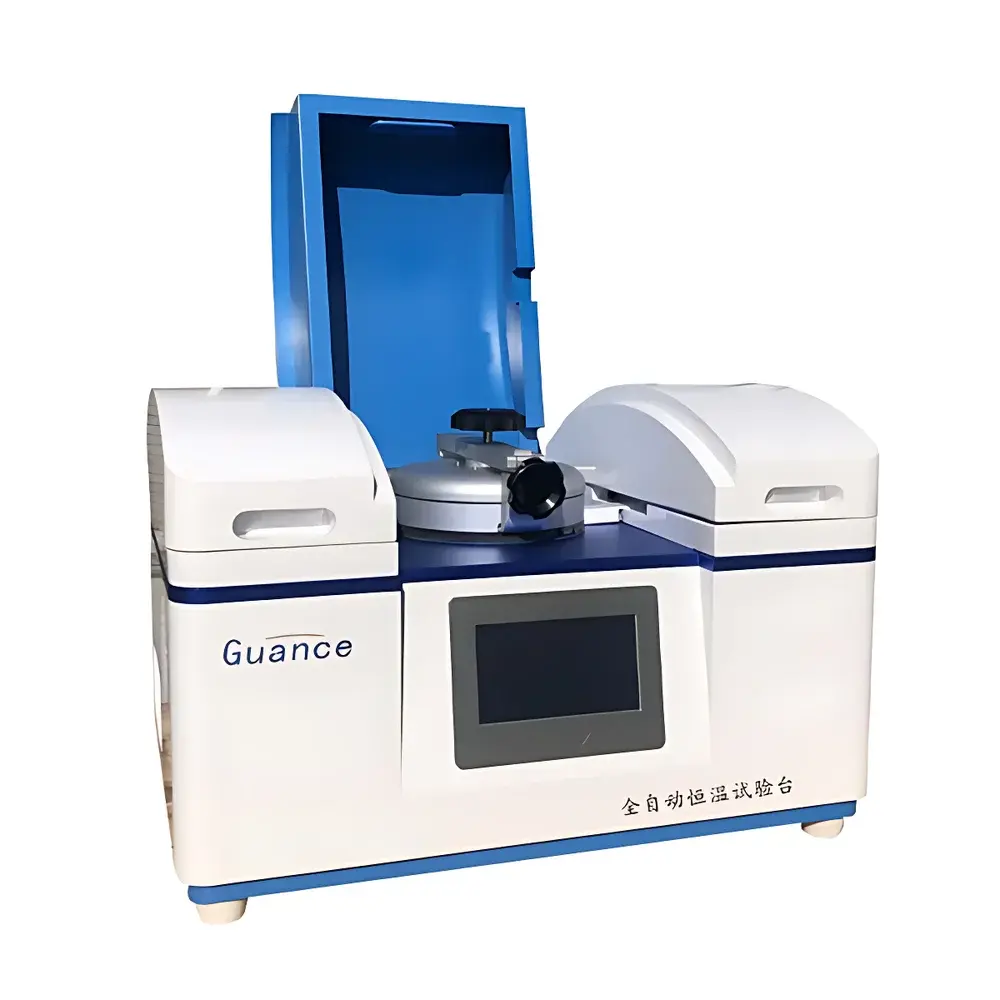
GuanCe Instruments GDW-500e High-Temperature Dielectric Constant and Resistivity Measurement System
| Brand | GuanCe Instruments |
|---|---|
| Origin | Beijing, China |
| Manufacturer Type | Authorized Distributor |
| Country of Origin | China |
| Model | GDW-500e |
| Price | USD 980 (FOB) |
| Temperature Range | −160 °C to +500 °C |
| Temperature Stability | ±0.5 °C |
| Heating Method | Electric Cartridge Heater |
| Cooling Method | Liquid Nitrogen Cryogenic Cooling |
| Electrode Material | Brass |
| Electrode Diameter | 25 mm |
| Test Frequency Range | 20 Hz – 2 MHz |
| Compliance | GB/T 1409–2006, GB/T 1693–2007, ASTM D150, IEC 60250 |
Overview
The GuanCe Instruments GDW-500e High-Temperature Dielectric Constant and Resistivity Measurement System is an engineered solution for precise characterization of dielectric properties and volume resistivity of insulating materials across extreme thermal conditions. It operates on the principle of impedance spectroscopy combined with guarded four-terminal (or two-terminal) capacitance/resistance measurement under controlled ambient temperature, enabling quantification of complex permittivity (ε* = ε′ − jε″), dielectric loss tangent (tan δ), and DC/AC resistivity as functions of both frequency and temperature. Designed for fundamental material science research and industrial quality assurance, the system supports dynamic thermally stimulated dielectric analysis (TSDA), enabling identification of relaxation mechanisms, phase transitions, interfacial polarization, and conduction pathways in ceramics, polymers, composites, thin films, and oxide-based dielectrics.
Key Features
- Wide thermal operating envelope: −160 °C to +500 °C, achieved via integrated electric heating and liquid nitrogen cryogenic cooling with closed-loop PID control
- High-stability brass parallel-plate electrodes (25 mm diameter) with precision-machined surface finish and low thermal expansion coefficient for reproducible contact geometry
- Frequency-swept and multi-point LCR measurement capability from 20 Hz to 2 MHz, supporting both real-time and stepped acquisition modes
- Three selectable measurement speeds—fast, medium, and slow—to balance signal-to-noise ratio and throughput based on sample conductivity and thermal time constants
- Simultaneous acquisition of 12 derived parameters per test point: volume resistivity, absolute/relative permittivity (real and imaginary components), loss tangent, capacitance, and dissipation factor
- Thermally synchronized data logging ensures strict temporal alignment between temperature ramping and electrical measurement sequences
Sample Compatibility & Compliance
The GDW-500e accommodates solid dielectric specimens in disc, pellet, or wafer form (thickness 0.1–5 mm), as well as powdered samples pressed into standardized pellets using hydraulic cold isostatic pressing. Liquid electrolytes may be measured using optional sealed cell fixtures with inert electrode coatings. The system conforms to international standards governing dielectric characterization: GB/T 1409–2006 (equivalent to IEC 60250) for AC permittivity and loss factor at power, audio, and radio frequencies; GB/T 1693–2007 for vulcanized rubber; and ASTM D150 for solid insulating materials. All hardware and software design elements support GLP-compliant operation, including user-accessible calibration logs, timestamped raw data files, and audit-ready configuration records.
Software & Data Management
The proprietary GDW-Control Suite provides full instrument orchestration via USB 2.0 interface. It enables automated temperature ramping with programmable dwell times, synchronized frequency sweeps at each setpoint, and real-time plotting of ε′(f), ε″(f), tan δ(f), ρ(f), and C(f). For temperature-dependent analysis, the software generates dielectric temperature spectra (ε′ vs. T, tan δ vs. T) and frequency spectra (ε′ vs. log f, Cole-Cole plots) with linear or Arrhenius-scale axes. Raw data exports to CSV and MATLAB-compatible MAT formats; reports include metadata (date/time, operator ID, sample ID, environmental conditions) and are printable in ISO-standard layout. The software architecture complies with FDA 21 CFR Part 11 requirements for electronic records and signatures when deployed in regulated environments, supporting role-based access control and electronic audit trails.
Applications
- Development and qualification of high-k dielectrics for microelectronics packaging and gate stack integration
- Thermal stability assessment of polymer matrix composites used in aerospace structural components
- Phase transition detection in ferroelectric ceramics (e.g., BaTiO₃, PZT) via dielectric anomaly mapping
- Moisture diffusion modeling in insulating varnishes and encapsulants through activation energy analysis of ε″ peaks
- Quality control of ceramic substrates (alumina, zirconia) for multilayer capacitor manufacturing
- Correlation of interfacial polarization with grain boundary chemistry in sintered metal oxides
FAQ
What types of samples can be tested with the GDW-500e?
Solid discs, pellets, wafers, and pressed powders (0.1–5 mm thickness); optional fixtures available for liquids and thin films.
Is liquid nitrogen handling training required for safe operation?
Yes—users must complete certified cryogen safety training prior to initiating sub-ambient measurements; the system includes pressure relief valves and LN₂ level sensors.
Can the system perform DC resistivity measurements at elevated temperatures?
Yes—via guarded two-terminal DC bias mode with leakage current compensation, compliant with ASTM D257 for volume/surface resistivity.
Does the software support custom script-based automation?
Yes—Python API integration is available upon request for advanced sequence programming and third-party data pipeline ingestion.
How is electrode calibration performed?
Using NIST-traceable standard capacitors and certified reference resistors; calibration certificates are generated and stored within the software’s compliance module.



