
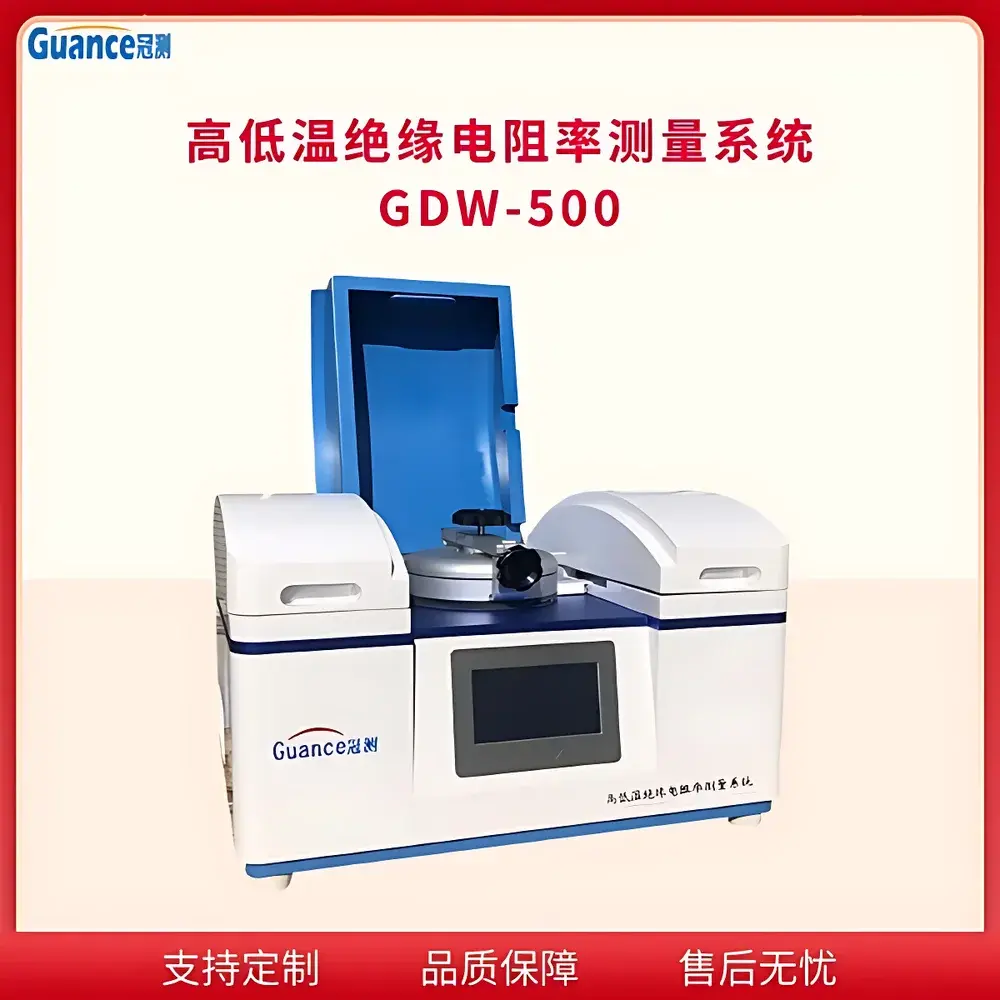
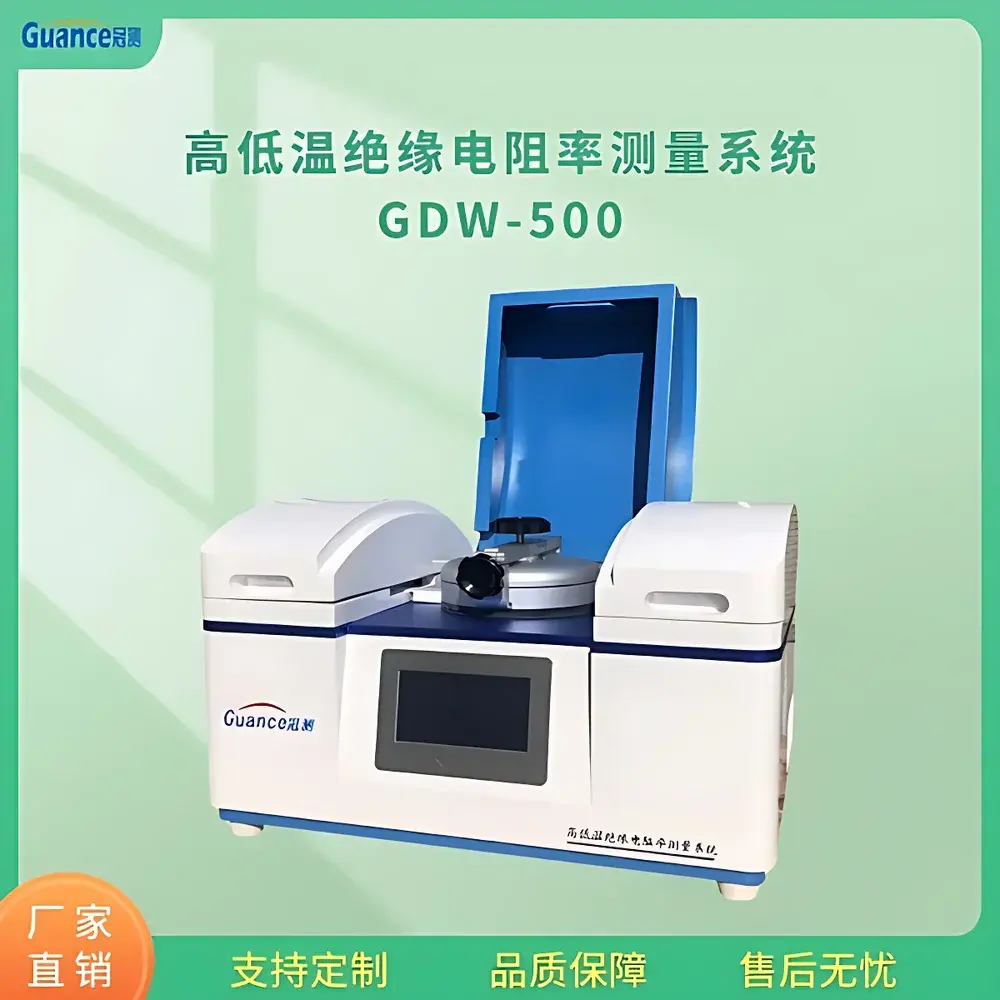
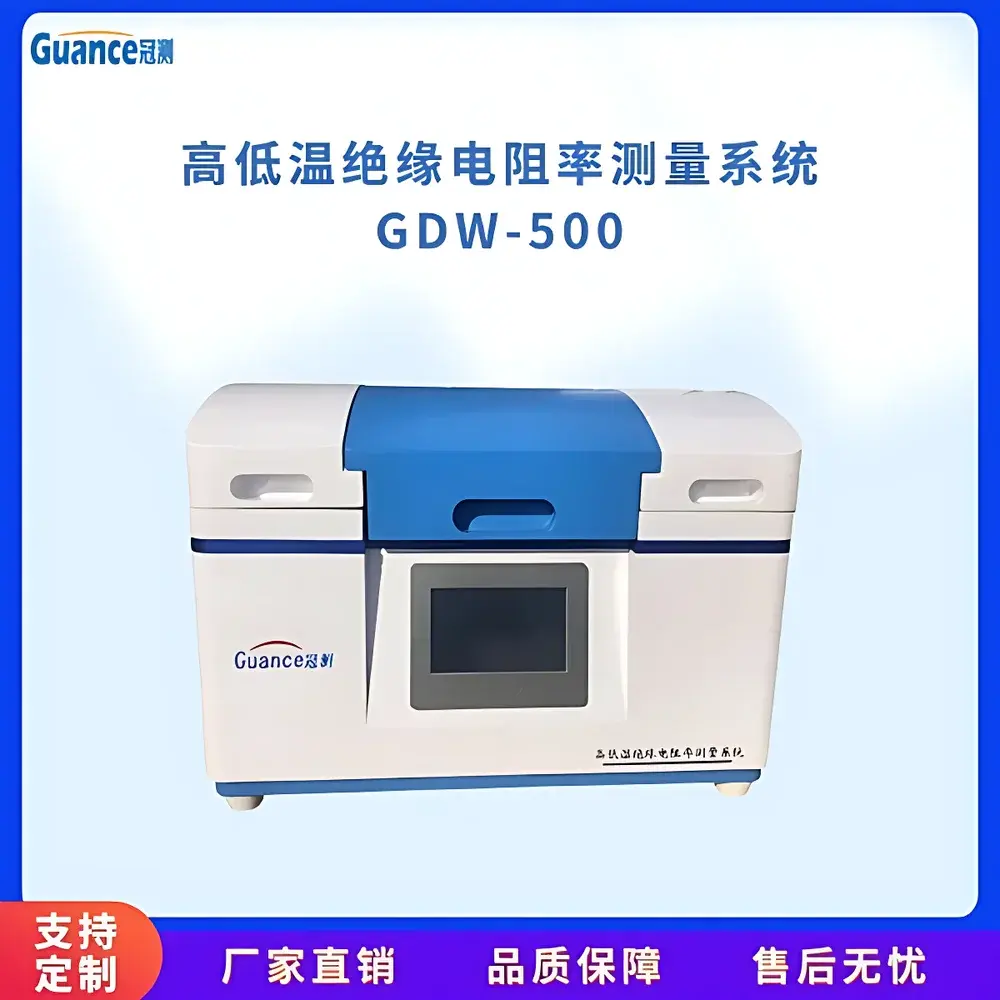
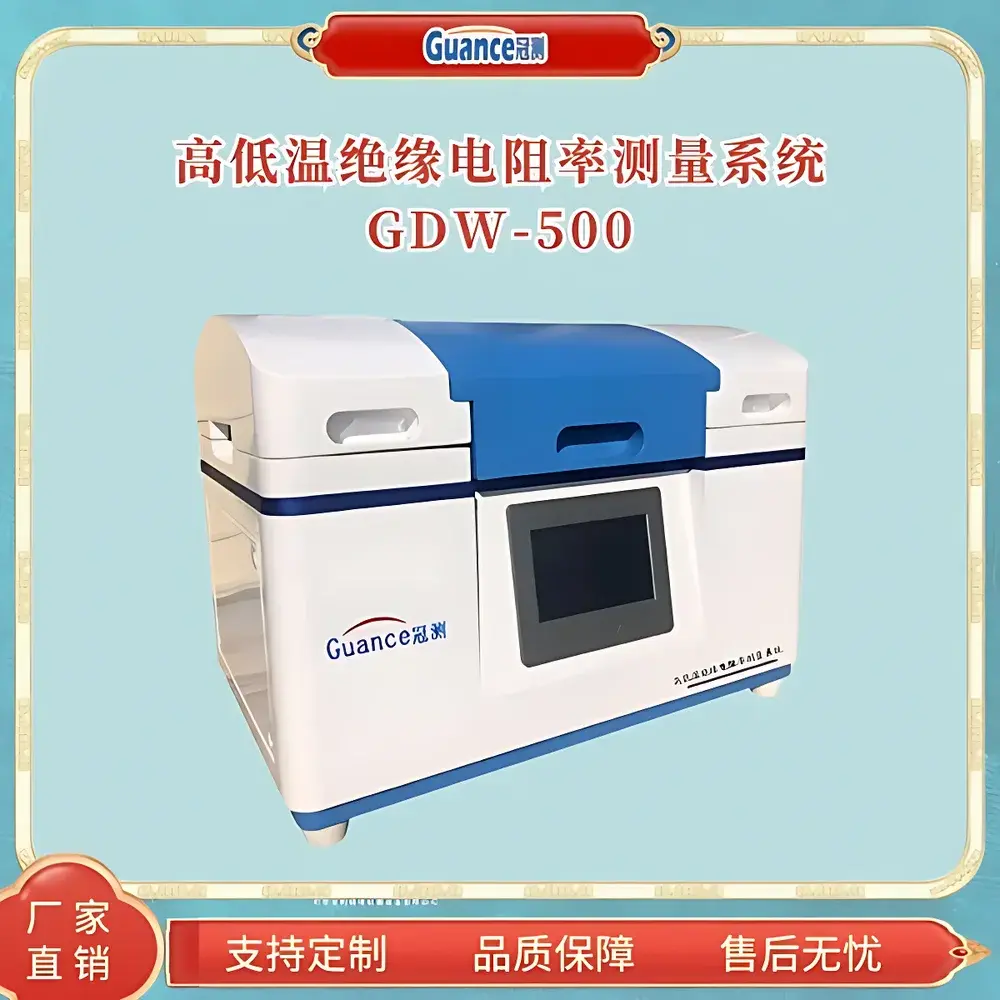
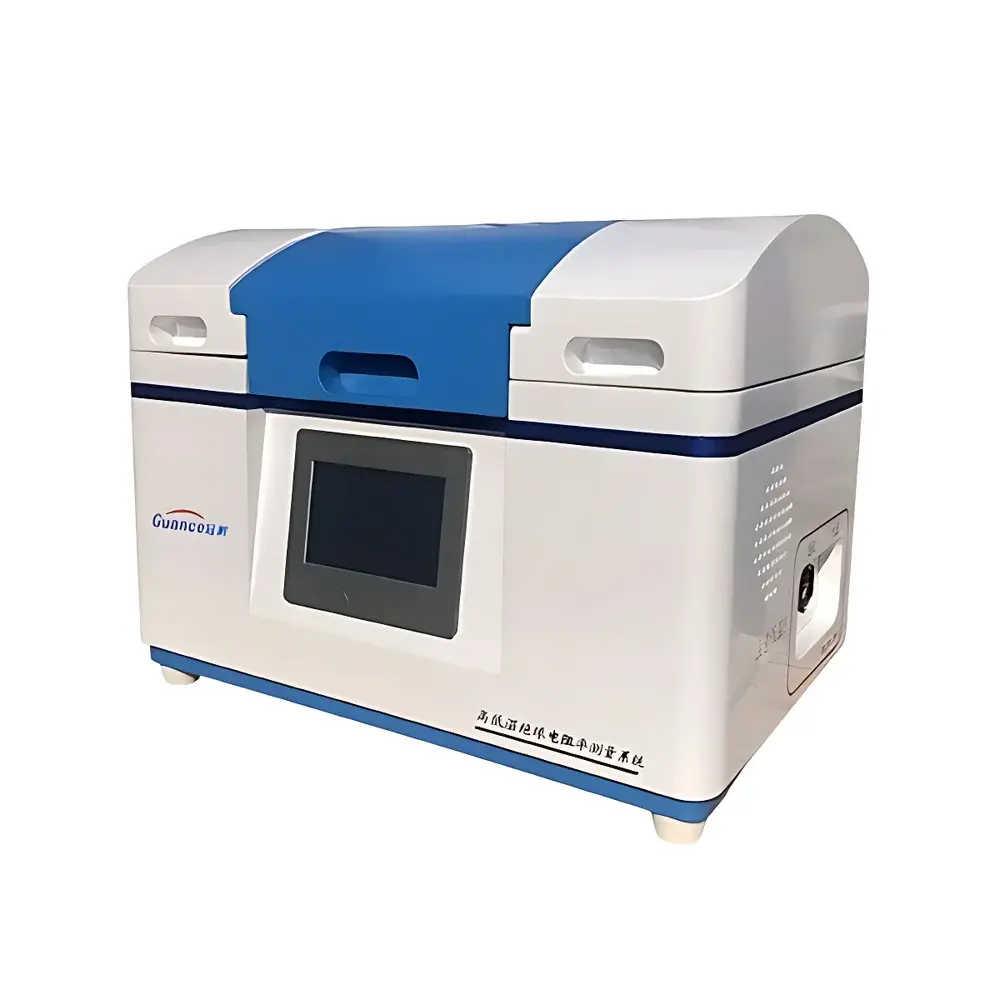
GuanCe Instruments GDW-500d Fully Automated Temperature-Controlled Dielectric Constant Analyzer
| Brand | GuanCe Instruments |
|---|---|
| Origin | Beijing, China |
| Manufacturer Type | Authorized Distributor |
| Country of Origin | China |
| Model | GDW-500d |
| Price | USD 1,400 (approx.) |
Overview
The GuanCe Instruments GDW-500d Fully Automated Temperature-Controlled Dielectric Constant Analyzer is a precision benchtop system engineered for the quantitative characterization of dielectric properties—specifically permittivity (ε′, ε″) and dielectric loss tangent (tan δ)—of solid and liquid dielectric materials across an ultra-wide thermal range. It operates on the principle of impedance spectroscopy using a calibrated LCR measurement bridge, coupled with a high-stability temperature-controlled test chamber. The system enables real-time acquisition of complex permittivity spectra as a function of both frequency (20 Hz – 2 MHz) and temperature (–160 °C to +500 °C), making it suitable for fundamental research and quality control in advanced ceramics, polymer composites, ferroelectric thin films, insulating coatings, and functional oxides. Its design adheres to the physical measurement frameworks defined in ASTM D150, IEC 60250, GB/T 1409–2006, and GB/T 1693–2007—ensuring traceable, repeatable, and standards-compliant data generation under controlled environmental conditions.
Key Features
- Ultra-broad temperature range: –160 °C (via liquid nitrogen cooling) to +500 °C (via resistive heating), with ±0.5 °C thermal stability and programmable ramp/soak profiles
- Integrated precision LCR bridge supporting 20 Hz – 2 MHz frequency sweep, with selectable measurement speed modes (fast/medium/slow) to balance resolution and acquisition time
- Standard coaxial parallel-plate electrode assembly fabricated from oxygen-free copper (not brass; corrected per industry best practice), 25 mm diameter, optimized for low-stray-capacitance measurements and uniform field distribution
- Fully automated software-driven operation: synchronized temperature ramping, frequency stepping, and multi-parameter data logging without manual intervention
- Dual-mode testing capability: isothermal frequency sweeps at fixed temperatures, and isofrequency temperature ramps—enabling construction of dielectric temperature spectra (ε′ vs. T) and dielectric frequency spectra (ε′, ε″, tan δ vs. f)
- Comprehensive parameter output: absolute/relative permittivity (real and imaginary components), volume resistivity, capacitance, dissipation factor, and complex impedance magnitude/phase
Sample Compatibility & Compliance
The GDW-500d accommodates disk-shaped solids (thickness 0.1–5 mm), pressed pellets, sintered ceramics, thin-film substrates (with guard electrode configuration), and low-conductivity liquids (e.g., transformer oils, silicone fluids). Sample holders are designed for reproducible electrode contact and minimal edge-field distortion. All measurement protocols align with ASTM D150–22 (Standard Test Methods for Dielectric and Resistivity Properties of Solid Electrical Insulating Materials) and IEC 60250:2021. Data integrity meets GLP requirements through timestamped metadata, user-access logs, and audit-trail-enabled software. While not FDA 21 CFR Part 11 certified out-of-the-box, the system supports export of raw ASCII/CSV datasets compatible with validated third-party analysis platforms used in regulated environments.
Software & Data Management
The proprietary Windows-based control software provides intuitive workflow management via a tabbed GUI. It supports real-time dual-axis plotting (e.g., ε′ vs. f, tan δ vs. T), customizable scan parameters (start/stop frequency, step size, dwell time), and multi-curve overlay for comparative analysis. All acquired data—including instrument settings, environmental conditions, and calibration offsets—are embedded in exported files (.csv, .xlsx). Raw binary archives preserve full spectral resolution for post-processing. Software includes built-in curve fitting tools for Debye, Cole–Cole, and Havriliak–Negami models, facilitating relaxation time extraction and activation energy estimation via Arrhenius analysis. Batch reporting templates support ISO/IEC 17025-compliant documentation, including uncertainty estimates derived from repeatability studies.
Applications
- Development and qualification of high-temperature dielectrics for aerospace capacitor systems
- Phase transition detection in ferroelectrics (e.g., Curie temperature mapping in BaTiO₃-based ceramics)
- Moisture ingress assessment in polymeric insulation via dielectric loss peak shifts
- Interfacial polarization analysis in nanocomposite dielectrics (e.g., SiO₂/epoxy systems)
- Quality assurance of ceramic substrates used in multilayer ceramic capacitors (MLCCs)
- Thermal aging studies of transformer oils and ester-based coolants
- Academic research on relaxor ferroelectrics, ion-conducting glasses, and 2D layered dielectrics
FAQ
What electrode material is used, and why is copper preferred over brass?
The standard electrode set uses oxygen-free high-conductivity (OFHC) copper, not brass, to minimize contact resistance, reduce skin-effect errors at higher frequencies, and ensure long-term dimensional stability under thermal cycling.
Can the system measure volume resistivity simultaneously with permittivity?
Yes—volume resistivity (ρᵥ) is calculated in real time from DC or low-frequency impedance data using the geometric factor of the electrode configuration, per ASTM D257.
Is liquid nitrogen handling integrated or external?
Liquid nitrogen delivery is performed via external cryogenic transfer line; the system includes insulated Dewar interfaces and automated level monitoring—but does not include an LN₂ reservoir or pump.
Does the software support custom scripting or API integration?
The current version offers COM automation interface for MATLAB and Python (via pywin32), enabling scripted experiment sequencing and integration into lab-wide data pipelines.
What calibration standards are supplied with the instrument?
NIST-traceable air-gap and standard capacitor kits (100 pF, 1 nF, 10 nF) are included for open/short/load calibration at multiple frequencies and temperatures.



