
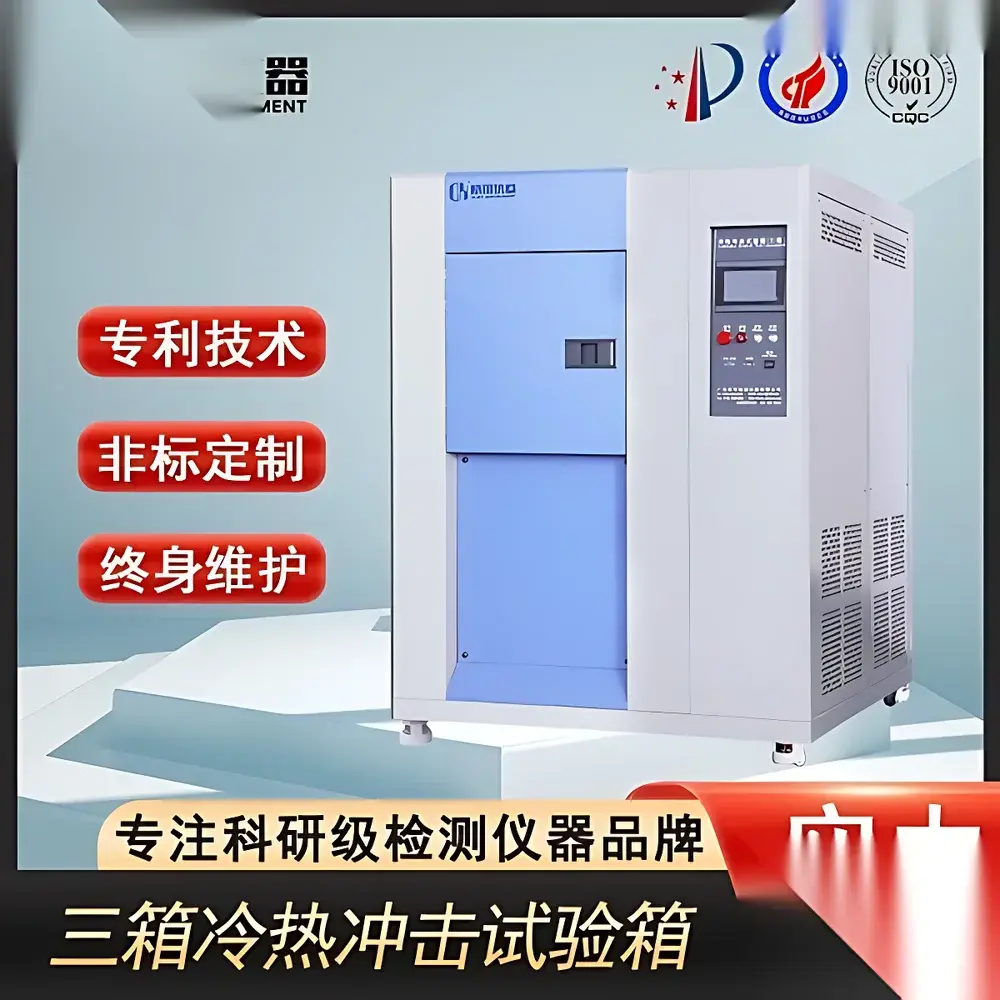
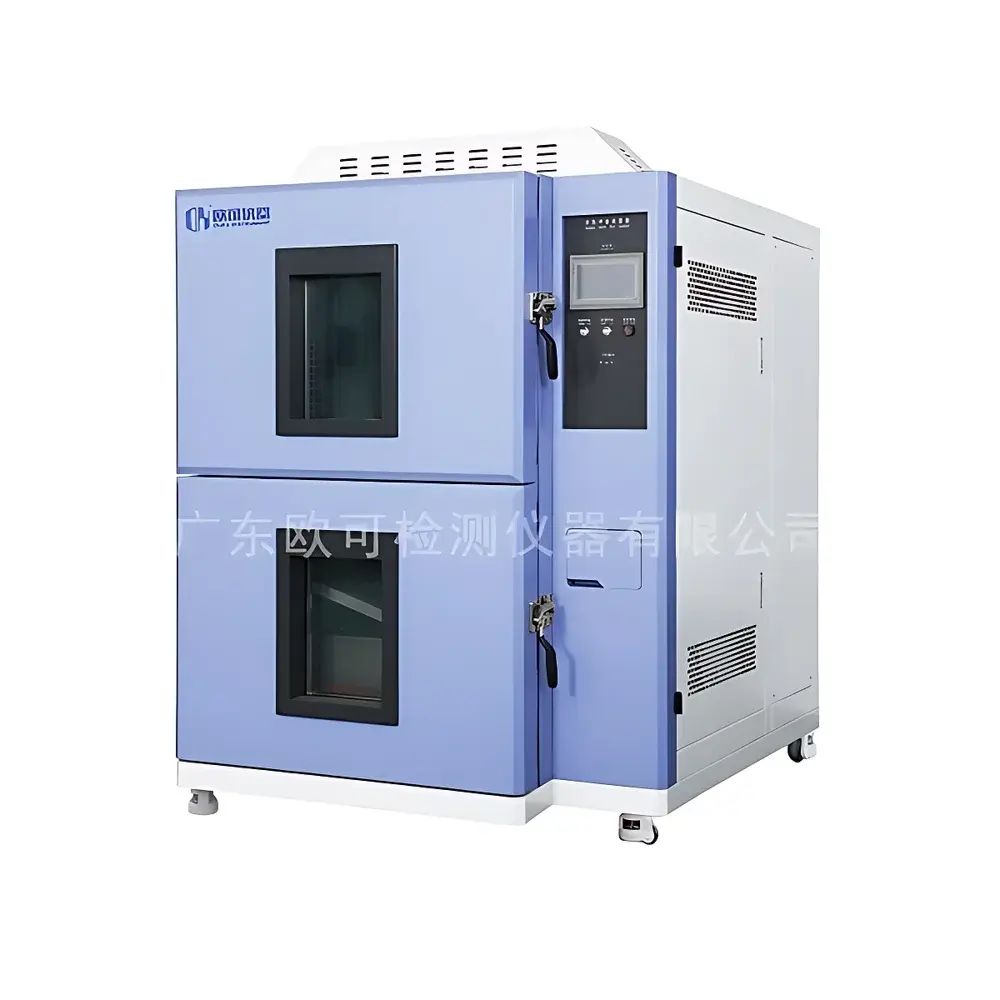
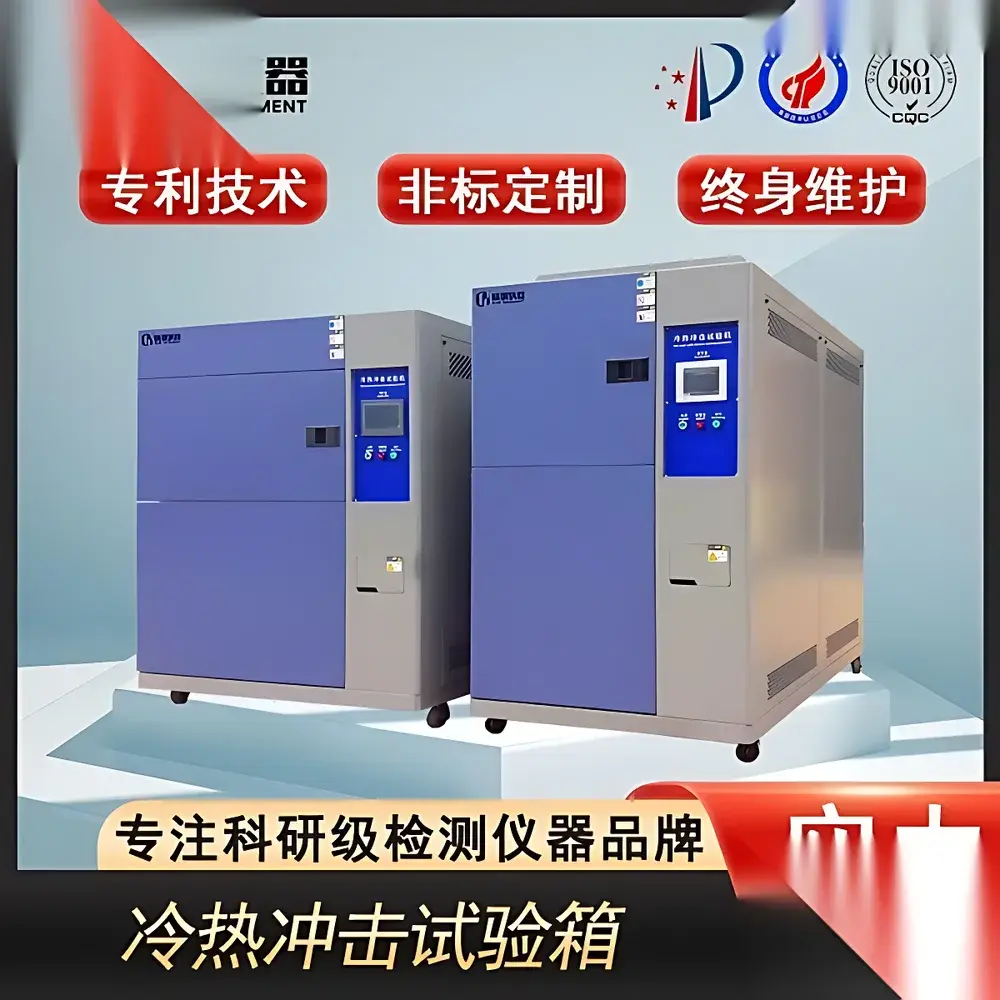
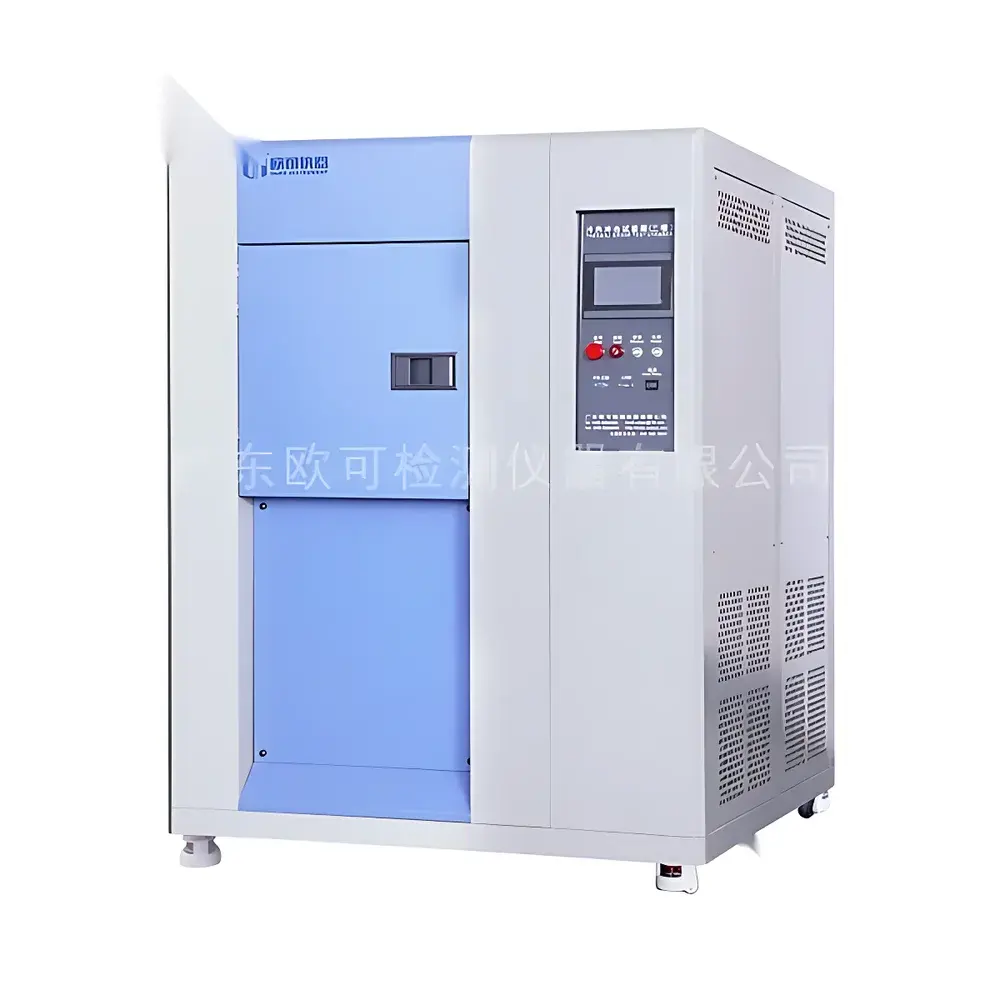
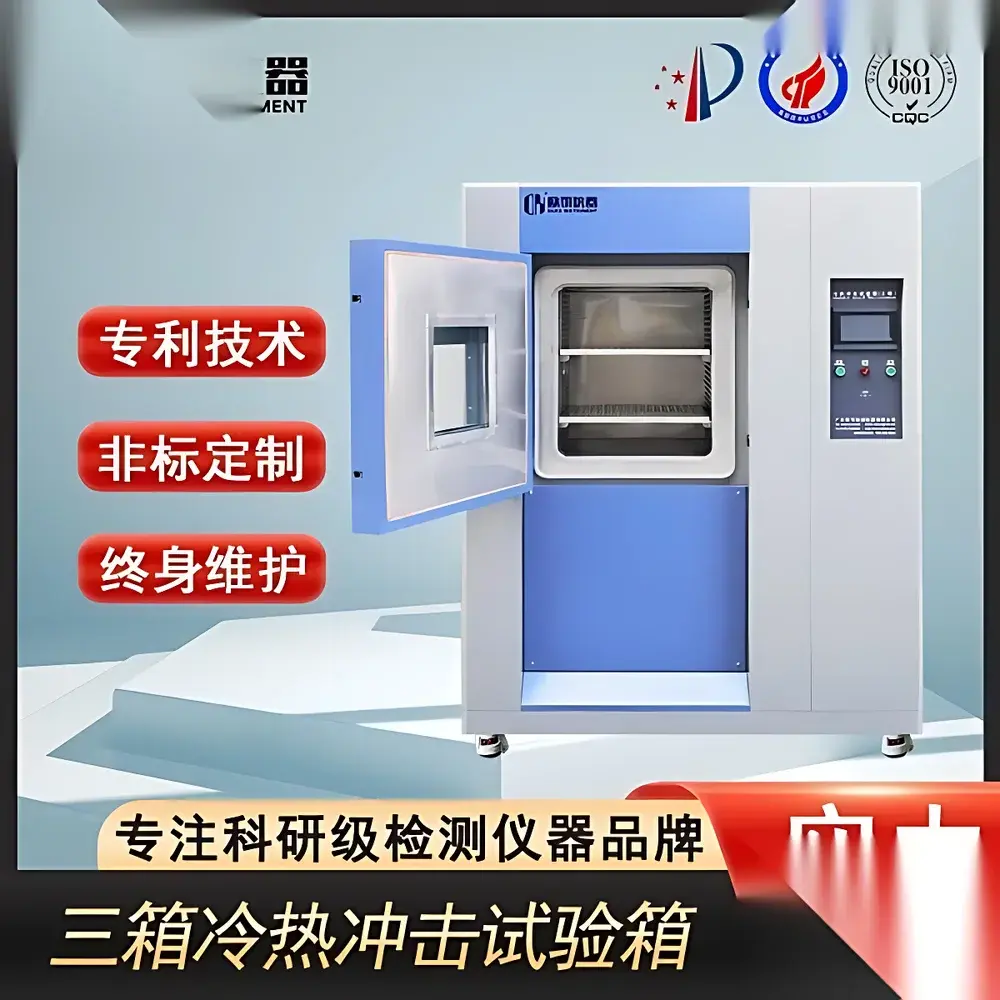
Thermal Shock Test Chamber – TST Series (Generic Industrial Grade)
| Brand | Other Brands |
|---|---|
| Origin | Imported |
| Manufacturer Type | Authorized Distributor |
| Temperature Range | −70°C to +200°C |
| Preheat Upper Limit | +200°C |
| Precool Lower Limit | −70°C |
| Temperature Uniformity | ≤ ±2°C |
| Temperature Fluctuation | ≤ ±0.5°C (Steady State), ≤ ±2°C (Cycling) |
| Ramp Rate (RT → +200°C) | ~40 min |
| Ramp Rate (RT → −70°C) | ~60 min |
| Transfer Time Between Chambers | ≤ 5 s |
| Chamber Configurations | Dual-Chamber or Triple-Chamber |
| Control Interface | Touchscreen Color LCD with PID Auto-Tuning |
| Cycle Programmability | Start Mode Selection (Hot/Cold First), Cycle Count Setting, Auto-Defrost, Scheduled Start |
| Compliance Support | Designed for ASTM D5229, ISO 11359-2, IEC 60068-2-14, MIL-STD-810H Method 503.7 |
Overview
The Thermal Shock Test Chamber – TST Series is an industrial-grade environmental test system engineered for rapid, high-fidelity thermal cycling between extreme temperature extremes. It operates on the principle of mechanical chamber transfer (dual- or triple-chamber architecture), where test specimens remain stationary in a central test basket while being physically moved—via pneumatic actuators—between independently controlled high-temperature and low-temperature zones. This design eliminates thermal mass interference from specimen loading/unloading and ensures repeatable, low-uncertainty exposure profiles critical for evaluating material integrity under thermal stress. The chamber supports standardized thermal shock protocols per ASTM D5229 (plastics), ISO 11359-2 (thermomechanical analysis), IEC 60068-2-14 (electrotechnical equipment), and MIL-STD-810H Method 503.7 (military hardware qualification). Its architecture prioritizes operational safety, controller precision, and long-term stability—making it suitable for R&D validation, production line QA/QC, and regulatory compliance testing in regulated manufacturing environments.
Key Features
- Stationary test basket design minimizes mechanical disturbance during transfer and enables external cabling via dedicated feedthrough ports—ideal for in-situ electrical monitoring during thermal cycling.
- Pneumatically actuated isolation valves ensure rapid, repeatable chamber transfer (≤5 seconds) while maintaining thermal separation and structural integrity across cycles.
- Touchscreen color LCD controller with intuitive HMI supports multi-segment profile programming, including start mode selection (hot-first or cold-first), cycle count definition, scheduled start, and automatic defrost sequencing.
- Full PID auto-tuning temperature regulation delivers high reproducibility: ≤±0.5°C steady-state fluctuation in each zone; ≤±2°C uniformity across working volume.
- Dual- and triple-chamber configurations accommodate varying throughput requirements and test severity levels—including extended dwell times and asymmetric ramp profiles.
- Integrated fault diagnostics display real-time error codes alongside step-by-step troubleshooting guidance—reducing downtime and supporting GLP/GMP documentation workflows.
- Thermal energy storage architecture avoids direct use of cryogenic liquefied gases (e.g., LN₂), mitigating occupational health risks associated with asphyxiation or operator fatigue from ambient oxygen displacement.
Sample Compatibility & Compliance
The TST Series accommodates samples up to 60 × 70 × 60 cm (W × H × D), with standard internal dimensions spanning 36 × 40 × 35 cm to 60 × 70 × 60 cm. It is routinely deployed for reliability assessment of PCBs, BGA packages, IC substrates, ceramic capacitors, polymer encapsulants, aerospace fasteners, automotive ECUs, and metallic weld joints. All models are constructed to meet CE marking requirements and support traceable calibration per ISO/IEC 17025 guidelines. The system’s control firmware and data logging architecture are compatible with FDA 21 CFR Part 11–compliant electronic record systems when integrated with validated third-party software platforms. Test reports generated through optional data export modules align with ASTM E29, ISO 17025 Annex A, and IECQ QC 080000 documentation standards.
Software & Data Management
While the embedded controller provides local profile execution and real-time parameter visualization, the chamber supports RS-485/Modbus RTU and optional Ethernet TCP/IP interfaces for integration into centralized MES or LIMS environments. Raw temperature logs (time-stamped per second), cycle status flags, alarm history, and controller configuration snapshots can be exported in CSV or XML format. Audit trails—including user login events, parameter modifications, and manual overrides—are retained onboard for ≥30 days and may be archived externally for GxP audit readiness. Firmware updates are performed via secure USB key with cryptographic signature verification to ensure system integrity.
Applications
- Qualification of solder joint reliability in high-density interconnect assemblies under repeated thermal expansion mismatch.
- Evaluation of delamination resistance in multilayer ceramic capacitors (MLCCs) and wafer-level chip-scale packages (WLCSP).
- Accelerated aging studies of elastomeric seals, gaskets, and adhesive bonds used in avionics enclosures.
- Validation of thermal interface material (TIM) performance stability across −55°C to +125°C operational envelopes.
- Failure mode analysis of optical sensor housings subjected to field-representative diurnal cycling profiles.
- Process capability assessment for conformal coating adhesion on flex-rigid PCBs exposed to automotive under-hood thermal transients.
FAQ
What is the minimum required clear space around the unit for ventilation and service access?
A minimum clearance of 60 cm on all sides—and 100 cm above—is required to ensure adequate airflow for condenser cooling and safe actuator maintenance.
Can the chamber be calibrated in-house using NIST-traceable reference sensors?
Yes—each chamber includes designated sensor mounting ports compatible with Class A PT100 probes; calibration procedures follow ISO/IEC 17025 Annex B and are supported by optional calibration certificate packages.
Is remote monitoring supported without proprietary software?
Standard Modbus RTU implementation allows integration with open SCADA platforms (e.g., Ignition, Siemens Desigo CC) without vendor lock-in.
Does the system meet requirements for automotive AEC-Q200 stress testing?
When operated within defined profiles (e.g., −40°C ↔ +125°C, 1000 cycles), the TST Series meets thermal shock preconditioning requirements specified in AEC-Q200 Rev H, though final qualification requires component-level test plan alignment.
How is thermal inertia managed during rapid transitions to maintain dwell accuracy?
Chamber walls utilize vacuum-insulated panels (VIPs) and dual-stage PID control with adaptive gain scheduling—ensuring dwell deviation remains within ±0.5°C tolerance even after 500+ consecutive transfers.



