
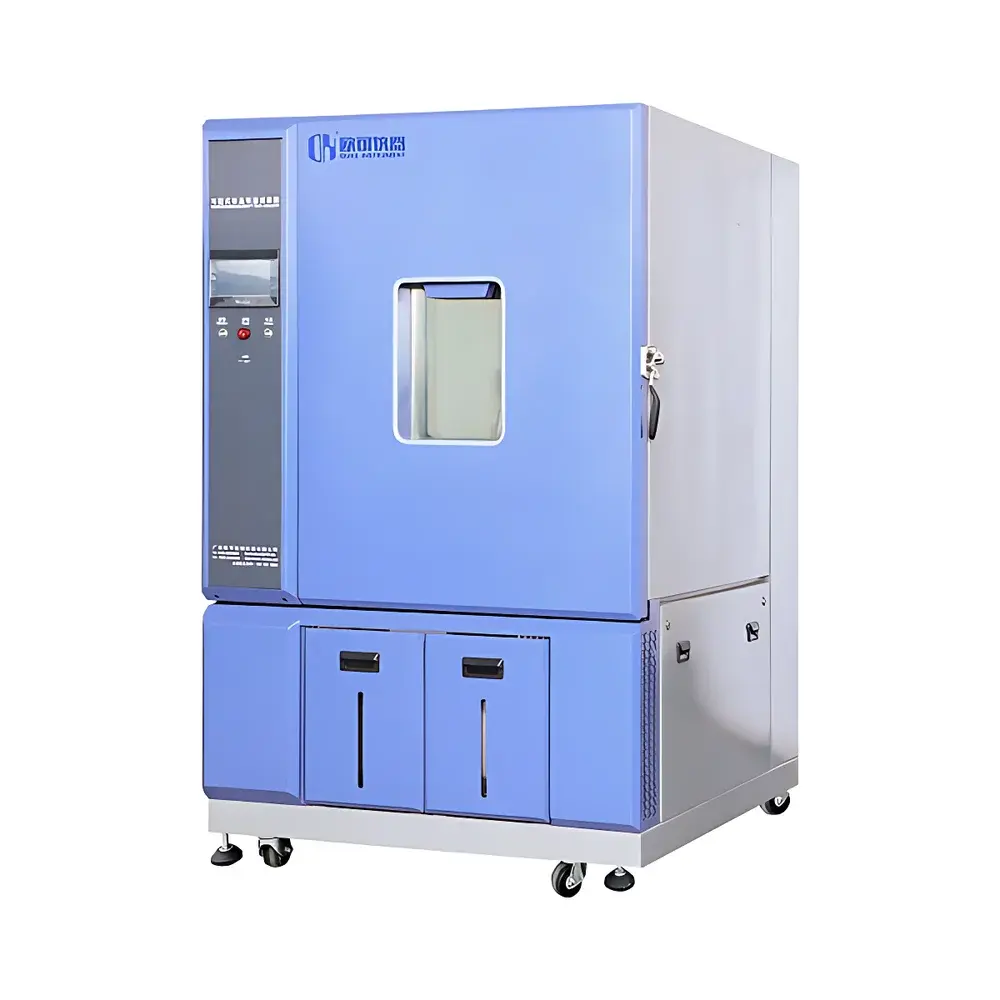
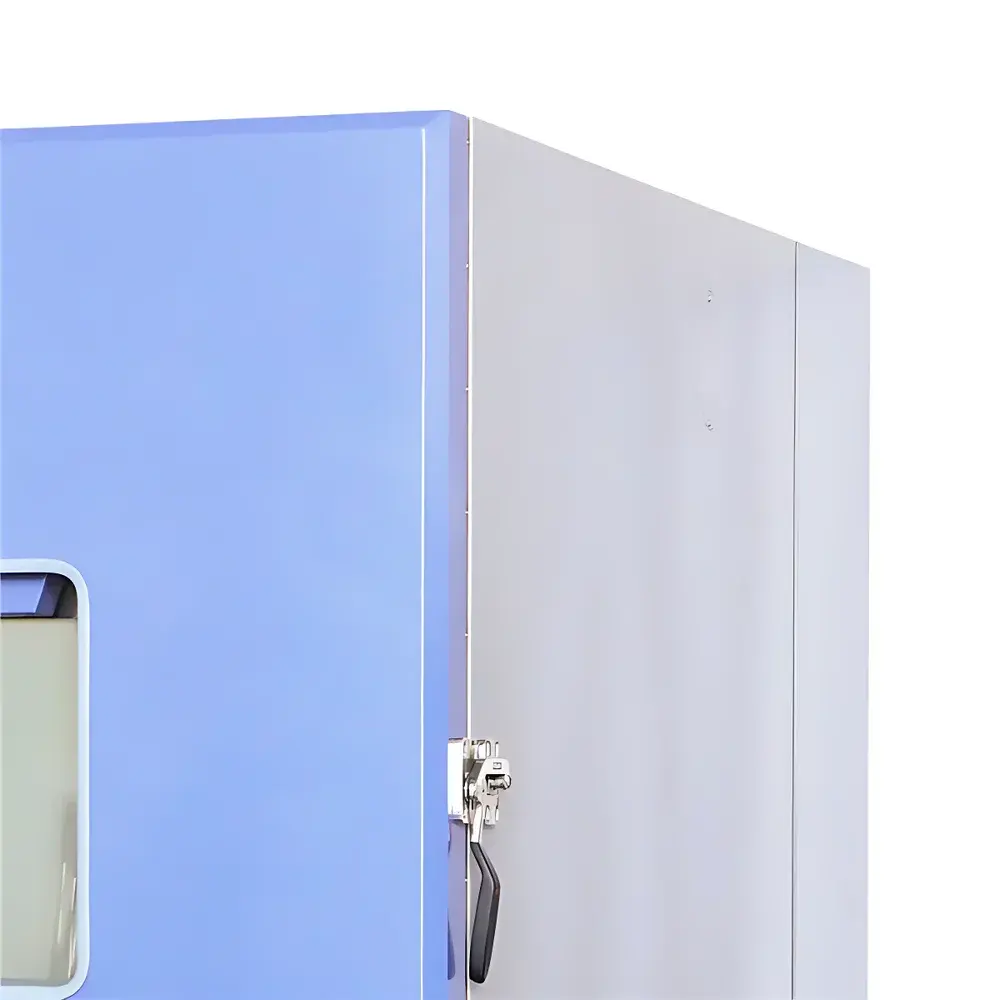
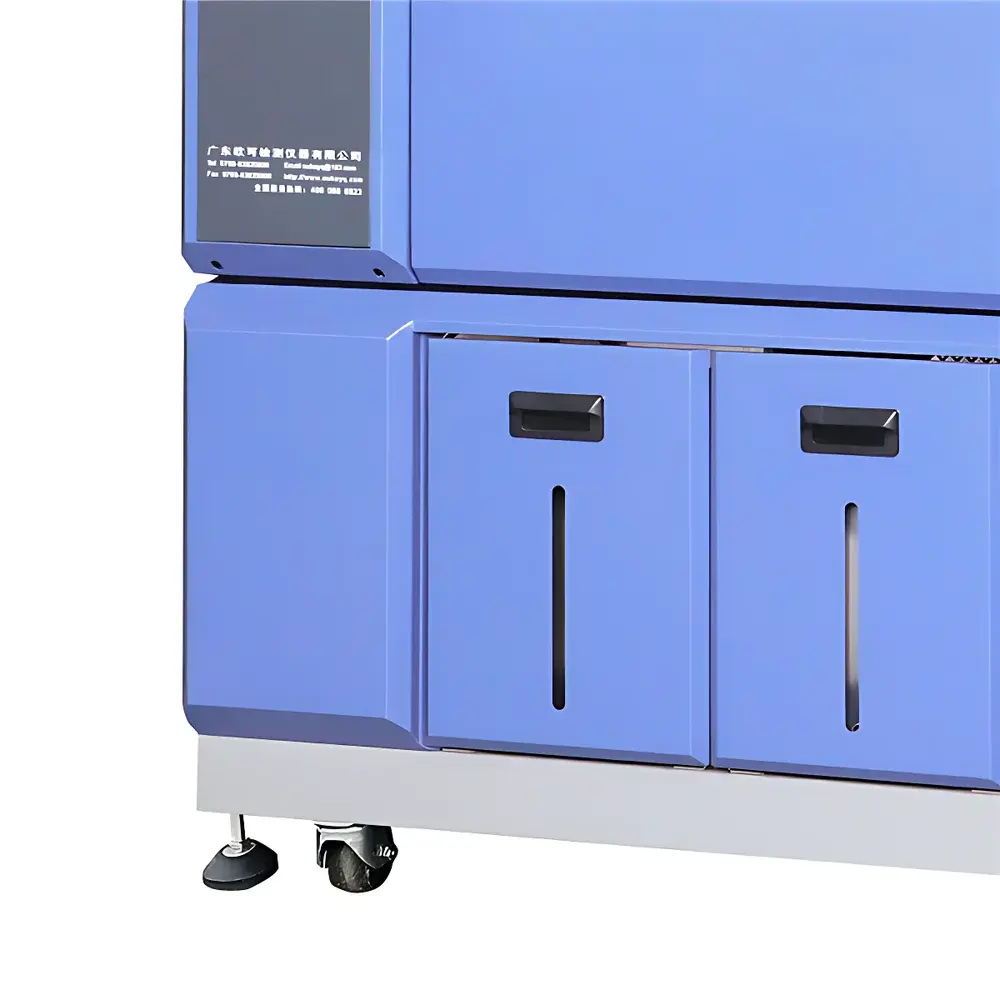
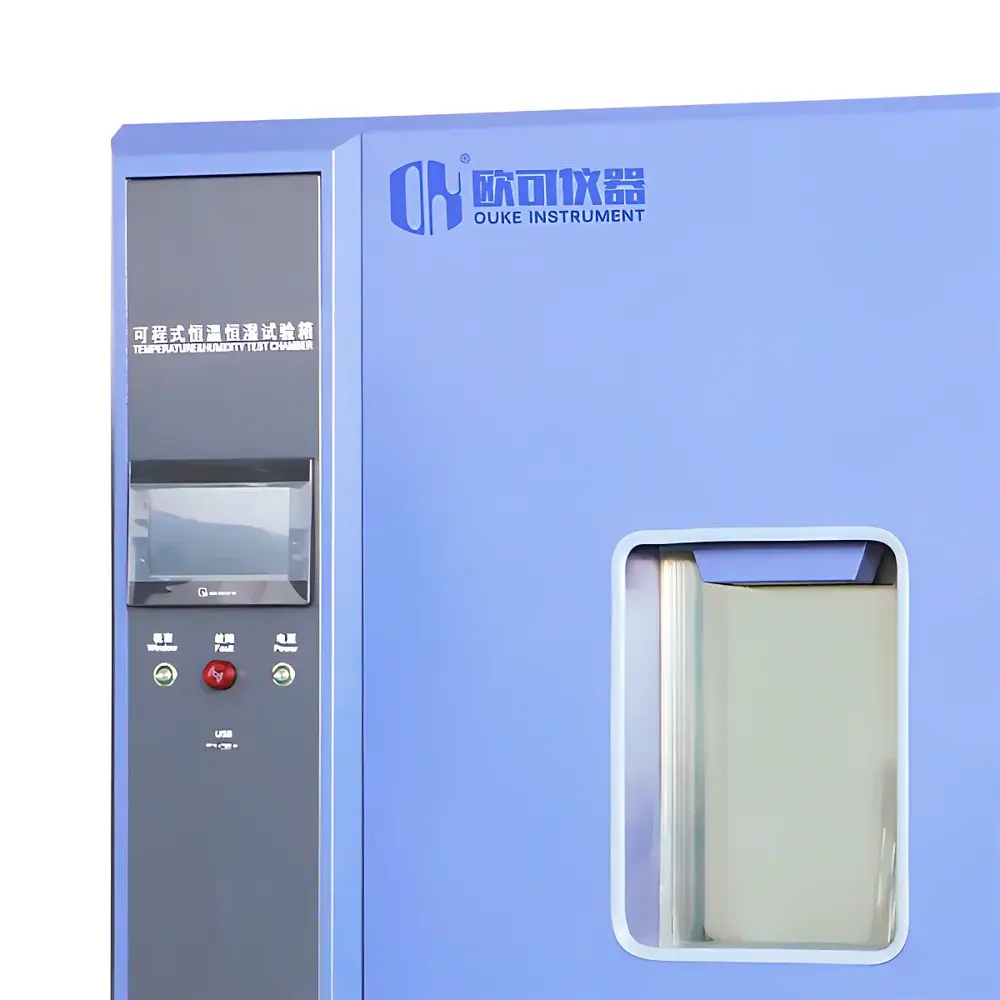
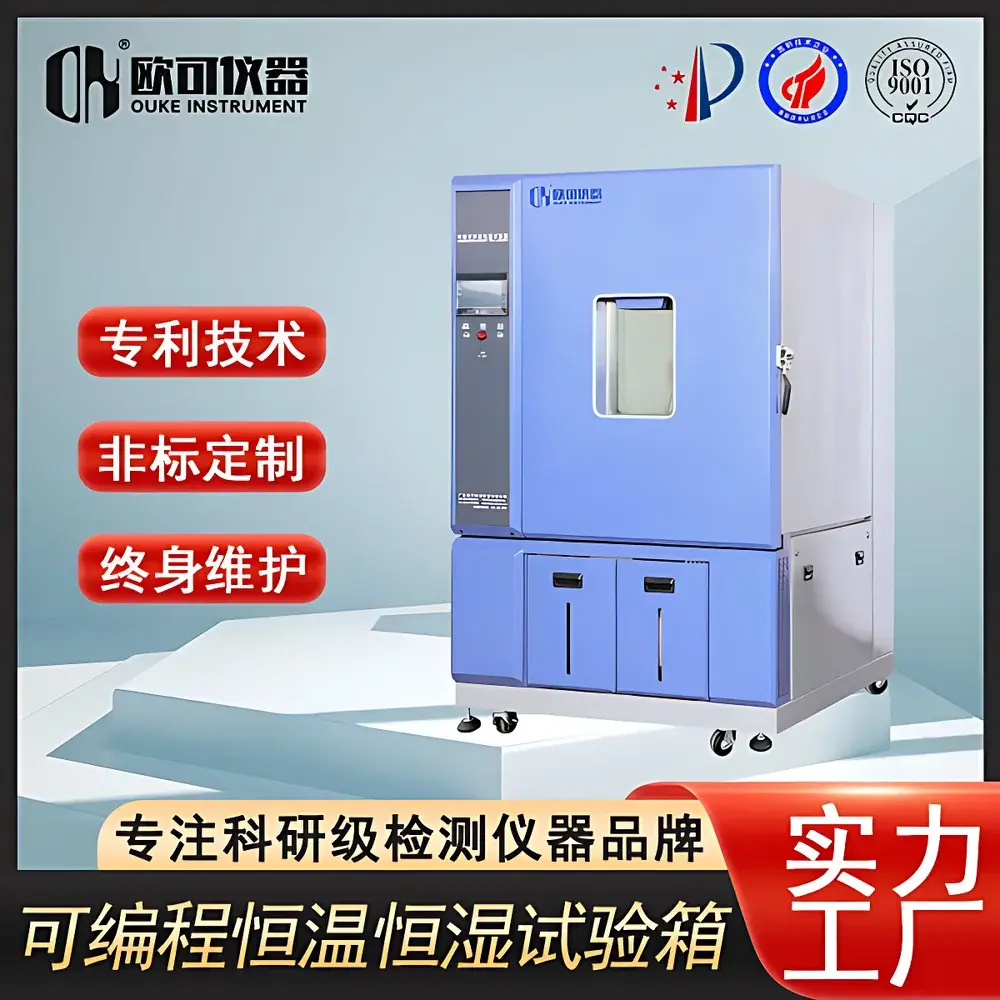
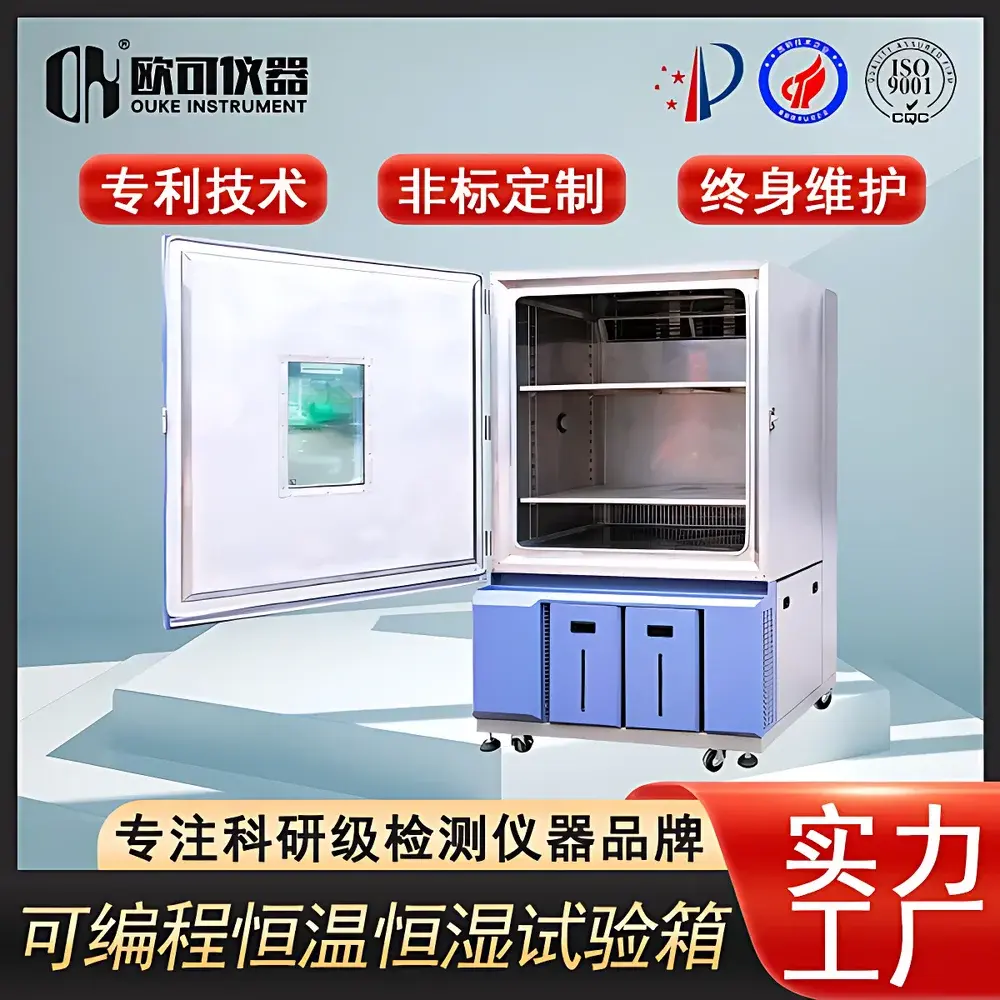
OK-TH-50 Desktop Temperature and Humidity Controlled Environmental Test Chamber
| Brand | OK Instruments |
|---|---|
| Origin | Guangdong, China |
| Manufacturer Type | Direct Manufacturer |
| Product Category | Domestic |
| Model | OK-TH-50 |
| Instrument Type | Benchtop |
| Cooling Method | Air-Cooled |
| Temperature Range | −40 °C to +150 °C |
| Humidity Range | 20–98 % RH (operational above +10 °C) |
| Temperature Uniformity | ≤ ±2 °C |
| Temperature Fluctuation | ±1 °C (high-temp), ±2 °C (low-temp) |
| Humidity Uniformity | ≤ ±3 % RH |
| Humidity Fluctuation | ±3 % RH |
| Heating Rate | 1.0–3.0 °C/min |
| Internal Chamber Dimensions (W×H×D) | 600 × 500 × 400 mm |
Overview
The OK-TH-50 is a benchtop temperature and humidity controlled environmental test chamber engineered for precision reliability testing under defined climatic conditions. It employs a dual-stage cascade refrigeration system—comprising separate high-temperature and low-temperature compressors—to achieve stable operation at −40 °C, with an extended operational envelope spanning −40 °C to +150 °C and 20–98 % RH (subject to temperature-dependent humidity feasibility). This architecture conforms to the thermodynamic requirements of ISO 16750-4, IEC 60068-2-1 (cold), IEC 60068-2-2 (dry heat), and IEC 60068-2-78 (damp heat), enabling standardized evaluation of material and component behavior across thermal and hygroscopic stress profiles. The chamber’s stainless steel SUS304 interior, rigid polyurethane insulation (≥100 mm thickness), and multi-layer heated anti-frost observation window collectively ensure long-term thermal integrity, minimal energy loss, and optical access without condensation interference.
Key Features
- Dual-stage cascade refrigeration system using environmentally compliant refrigerants (R404A/R23 blend), optimized for consistent −40 °C stability and rapid thermal response.
- High-precision control via a programmable color touchscreen controller (e.g., TEMI or OYO platform), supporting up to 99 cycles, 999 segments, and real-time data logging with USB export capability.
- PT100 platinum resistance temperature sensors and capacitive relative humidity sensors calibrated per ISO/IEC 17025 traceable protocols, delivering measurement repeatability within ±1 °C and ±2.5 % RH under standard calibration conditions.
- Benchtop footprint (W600 × H500 × D400 mm internal volume) with rear-mounted air intake/exhaust ducts, top-access electrical feedthroughs (φ50 mm), and adjustable stainless steel shelves for flexible sample configuration.
- Heated double-glazed observation window with integrated defrost circuitry, enabling continuous visual monitoring during sub-zero operation without frost accumulation.
- Shallow-water tank humidification system with auto-refill interface and refrigerant-based dehumidification via evaporator coil condensation—ensuring stable RH control without ultrasonic mist contamination risks.
Sample Compatibility & Compliance
The OK-TH-50 accommodates electronic modules, battery cells (including Li-ion pouch and cylindrical formats), automotive ECUs, aerospace-grade connectors, polymer specimens, and PCB assemblies—provided samples remain electrically passive or generate ≤50 W total heat load during test execution. Its performance validation aligns with major international test standards including GB/T 2423.1–2423.3 (China National Standards), GJB 150.4A–150.9A (PLA Military Standards), MIL-STD-810H Method 502.6 (Cold) and 507.6 (Humidity), and IEC 60068-2 series. Chamber uniformity is verified per IEC 60068-3-5:2018 through 9-point sensor mapping at steady-state conditions; all units undergo factory verification with NIST-traceable reference instruments prior to shipment.
Software & Data Management
The embedded controller supports local programming of complex test profiles—including ramp-soak cycles, step transitions, and humidity modulation synchronized with temperature changes. Optional Ethernet or RS485 interfaces enable integration into centralized lab management systems (LIMS) and SCADA platforms. Data export complies with ASTM E2918-20 for environmental test reporting, while audit trail functionality meets GLP and FDA 21 CFR Part 11 requirements when paired with validated user access controls and electronic signature modules. Raw sensor logs are timestamped at 1-second intervals and stored internally for ≥30 days, with manual or scheduled backup to external USB media.
Applications
- Automotive: Validation of ADAS sensors, battery thermal management systems, and infotainment HMI components under Arctic-equivalent cold-start and cyclic damp-heat exposure.
- Aerospace: Qualification of avionics enclosures and composite structural joints per DO-160 Section 4 (Temperature) and Section 10 (Humidity).
- Consumer Electronics: Accelerated life testing of wearable devices, outdoor IoT gateways, and drone propulsion controllers per JEDEC JESD22-A104E and A110B protocols.
- Materials Science: Characterization of coefficient of thermal expansion (CTE), moisture absorption kinetics, and glass transition shifts in thermoplastics and fiber-reinforced polymers.
- Quality Assurance Labs: Routine conformance testing for ISO 9001:2015 Clause 8.5.1 (Control of production and service provision) and IATF 16949:2016 requirement 8.5.1.1 (Control plan execution).
FAQ
What is the lowest temperature this chamber can sustain continuously?
The OK-TH-50 maintains −40 °C continuously under no-load conditions, verified per IEC 60068-3-3 Annex B.
Can humidity be controlled below +10 °C?
No—humidity control is disabled below +10 °C due to physical condensation limits; the chamber operates in dry-cold mode only in that range.
Is remote monitoring supported out of the box?
Standard configuration includes RS485 Modbus RTU; optional Ethernet/IP or OPC UA gateway modules are available for enterprise-level integration.
How often should the PT100 sensors be recalibrated?
Annual recalibration against traceable standards is recommended; field verification using certified dry-block calibrators is supported via controller diagnostics mode.
Does the chamber comply with RoHS and REACH directives?
Yes—all materials, refrigerants, and coatings meet EU Directive 2011/65/EU (RoHS2) and Regulation (EC) No 1907/2006 (REACH) Annex XVII substance restrictions.



