
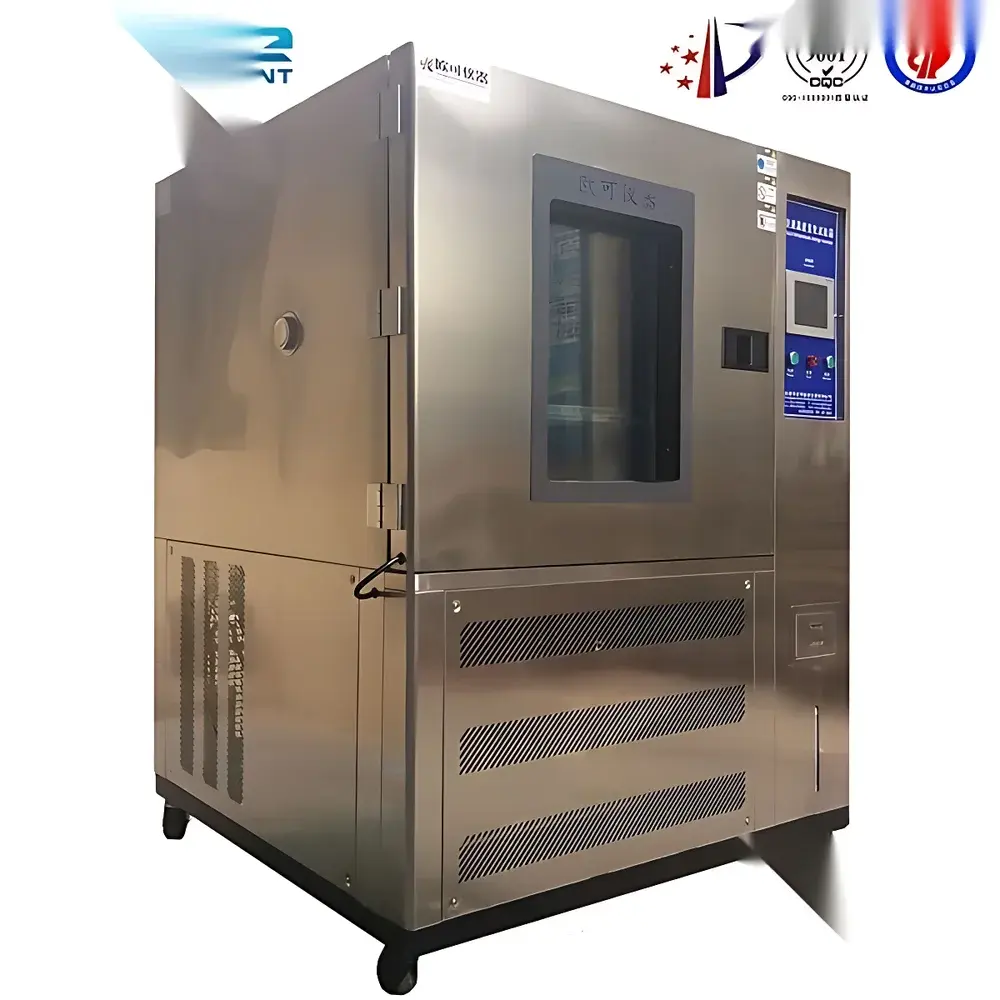
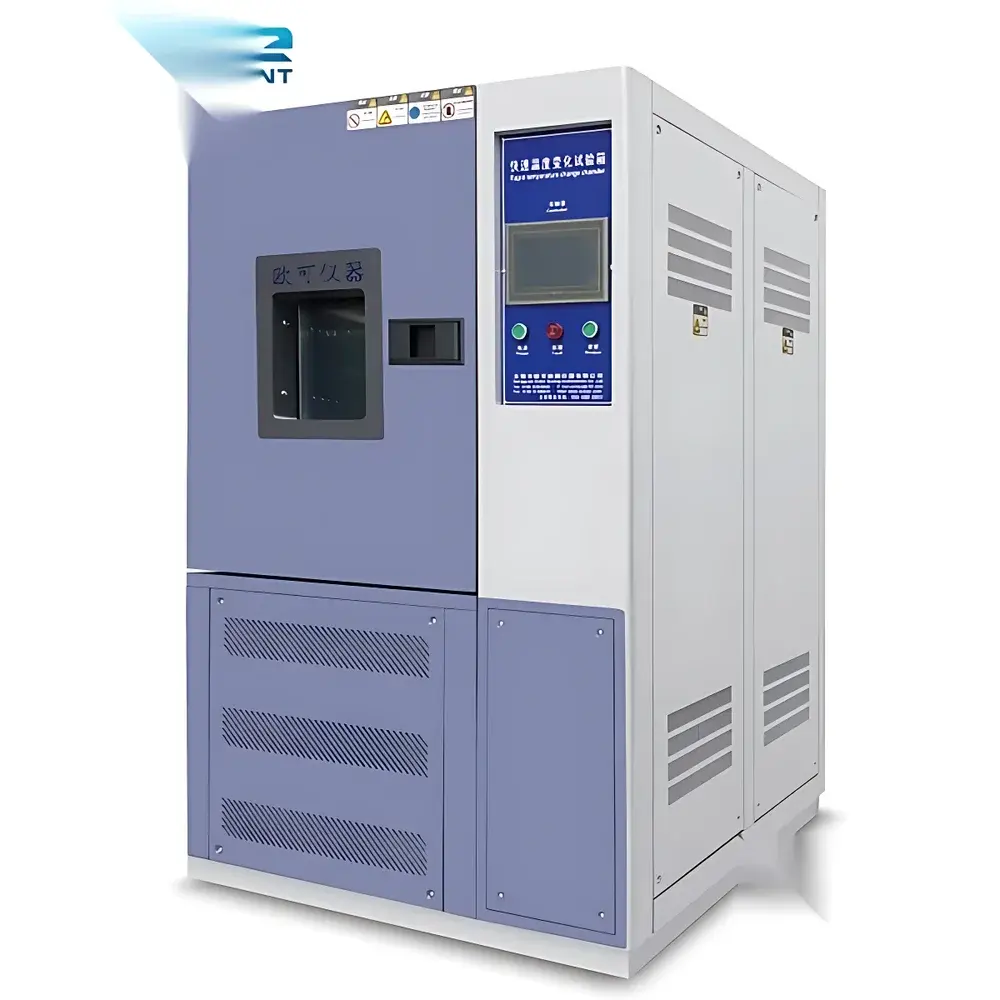
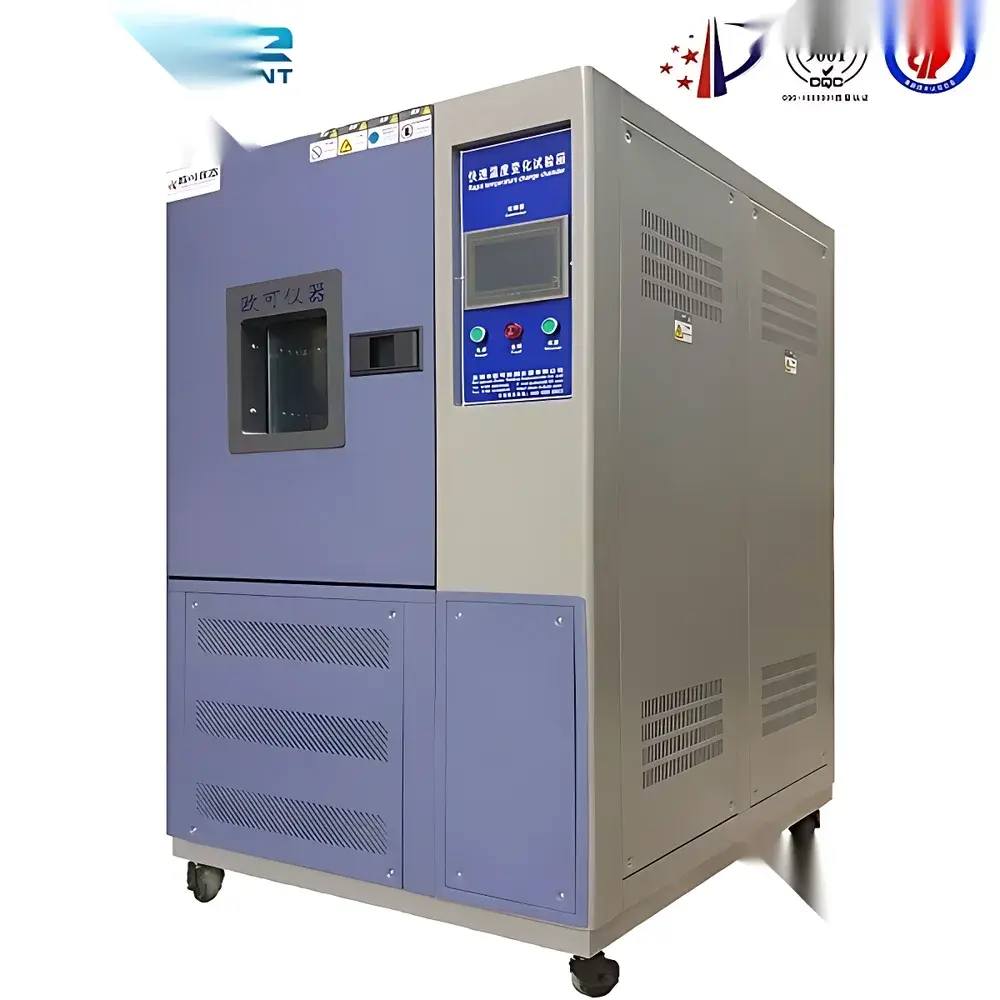
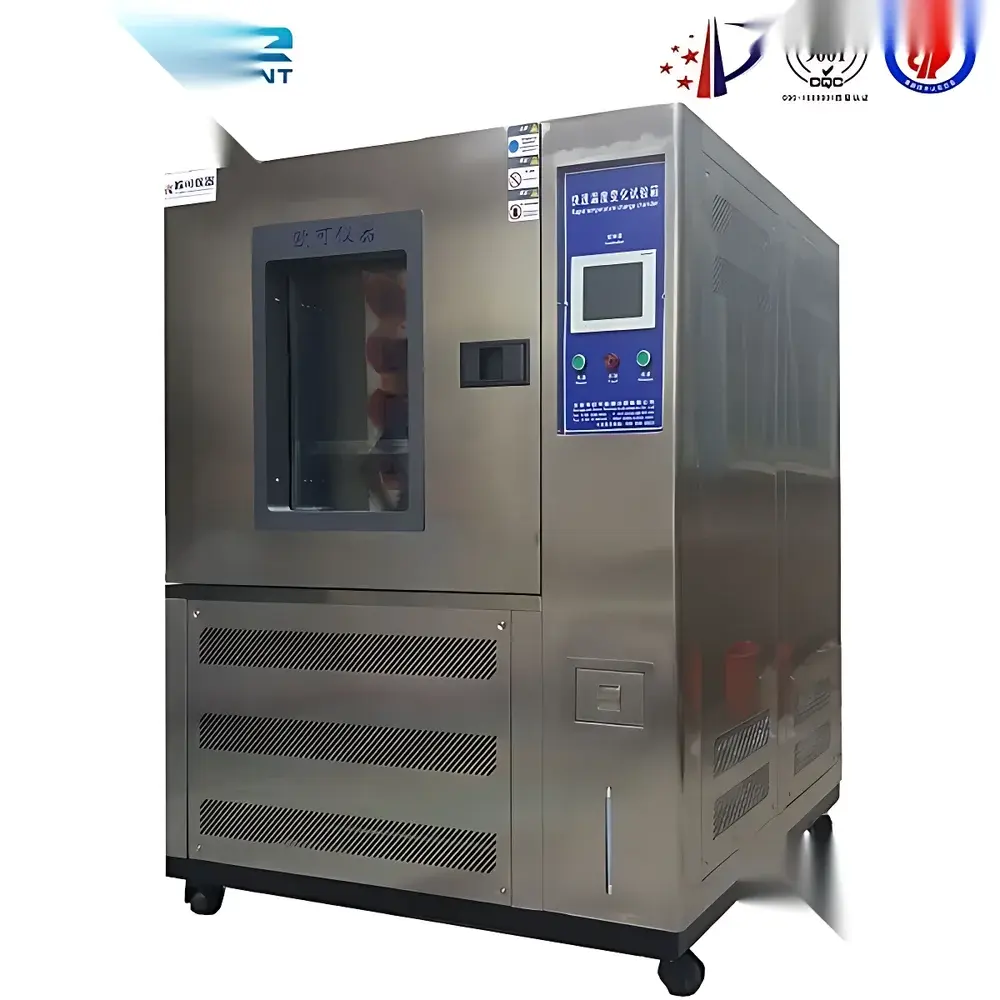
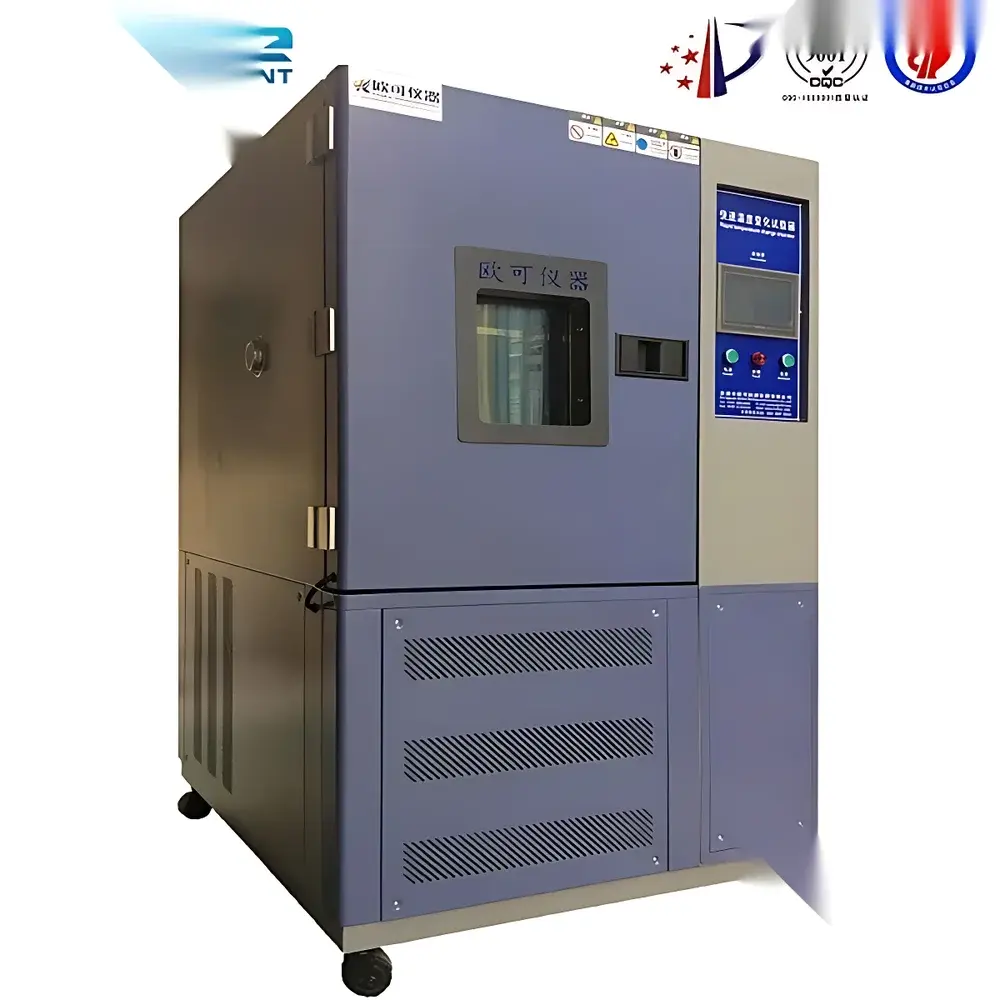
High-Performance Rapid Thermal Cycling Chamber
| Key | Brand – OEM Industrial Grade |
|---|
Overview
The High-Performance Rapid Thermal Cycling Chamber is an engineered environmental stress screening (ESS) system designed for precise, repeatable, and accelerated thermal cycling under controlled temperature and optional humidity conditions. Based on dual-refrigeration cascade cooling combined with high-efficiency electric heating and optimized airflow distribution, the chamber delivers rapid, linear, and reproducible ramp rates—critical for evaluating material integrity, solder joint reliability, interfacial adhesion, and long-term operational stability of electronic assemblies and optoelectronic components. Unlike standard climatic chambers, this unit integrates advanced thermal mass management and low-inertia heat exchangers to minimize overshoot and stabilize setpoints within ±0.3°C (at 25°C, no load), meeting the stringent requirements of JEDEC JESD22-A104 (Temperature Cycling) and IPC-9701 (Performance Test Methods for Lead-Free Solder Attachments).
Key Features
- Structural integrity ensured by CNC-machined SUS304 stainless steel inner chamber (mirror finish) and outer housing (brushed SUS304 or epoxy-coated cold-rolled steel), delivering corrosion resistance and long-term dimensional stability.
- Triple-layer insulated construction: 80–100 mm high-density fiberglass insulation, double-gasketed door with high-tensile silicone elastomer seals rated for −70°C to +200°C operation.
- Large observation window with embedded heating element and tempered safety glass prevents condensation and ensures unobstructed real-time visual monitoring.
- Standardized test port options (Ø25 mm / Ø50 mm / Ø100 mm) with removable blanking plates and silicone grommets for feedthrough of power, signal, or sensor cables—fully compliant with IEC 60068-2-14 Annex A mechanical interface guidelines.
- Dual independent safety architecture: hardware-based over-temperature cut-off (K-type thermocouple + mechanical limiter) and software-monitored thermal runaway detection with automatic shutdown and audible/visual alarm.
- Modular water management system: front-accessible reservoir with level sensor, auto-shutoff on low-water condition, and segregated steam generator circuitry to eliminate cross-contamination between control electronics and humidification pathways.
- Full-service accessibility via hinged front panel and side-mounted service doors—designed for routine calibration verification, refrigerant pressure checks, and heater element inspection without disassembly.
Sample Compatibility & Compliance
This chamber accommodates PCBs up to 600 × 600 × 600 mm (W×D×H), full-size LED modules, fiber optic transceivers, lithium-ion pouch/cylindrical cells (with optional venting duct), and multi-layer ceramic capacitors (MLCCs). It supports standardized test profiles including HALT/HASS pre-screening, GR-468-CORE optical device qualification, and automotive AEC-Q200 stress sequences. All thermal cycling protocols are traceable to NIST-traceable reference sensors and validated per ISO/IEC 17025 calibration procedures. The chamber’s control firmware includes built-in audit trail logging and user-level access control—supporting GLP/GMP environments requiring 21 CFR Part 11-compliant electronic records when paired with validated data acquisition software.
Software & Data Management
- TEMI880 or OYO 7904 controller with multilingual GUI (English/Chinese selectable), 120 programmable profiles, and up to 999 segments per cycle—including ramp/soak/humidity ramp steps with conditional branching.
- PID auto-tuning algorithm continuously adapts to thermal load variance, reducing stabilization time by up to 40% versus fixed-parameter controllers.
- RS-232/RS-485 serial interface enables remote programming, real-time parameter streaming, and automated start/stop commands via LabVIEW, Python (pySerial), or custom SCADA systems.
- Optional Ethernet module supports Modbus TCP and OPC UA connectivity for integration into MES or PLM platforms.
- Data export in CSV format; optional thermal printer provides hardcopy of setpoints, actual readings, alarms, and timestamped event logs—fully compliant with internal quality documentation standards.
Applications
Used extensively in R&D labs and production QA facilities for accelerated life testing of consumer electronics, aerospace avionics, medical devices (per ISO 13485), and electric vehicle battery management systems. Specific use cases include: validation of reflow solder joint fatigue under repeated ΔT >100K cycles; moisture sensitivity level (MSL) preconditioning per J-STD-020; thermal shock evaluation of MEMS packaging adhesion; aging studies of OLED encapsulation barriers; and qualification of photonic integrated circuits (PICs) exposed to diurnal ambient extremes. Its rapid transition capability also supports failure analysis root cause isolation—enabling correlation between thermal-induced delamination and subsequent electrical parametric drift.
FAQ
What is the typical temperature ramp rate achievable with a full 50 L load?
Ramp rates range from 10–15°C/min depending on starting/ending setpoints and thermal mass distribution; performance data sheets include load-specific curves per IEC 60068-2-14 Clause 6.3.
Does the chamber support humidity cycling per IEC 60068-2-30?
Yes—when equipped with the optional steam-humidification subsystem and condensate management kit, it meets all requirements for damp heat cyclic testing (12h dry / 12h wet per cycle).
Can the controller be validated for FDA-regulated environments?
The TEMI880 and OYO 7904 controllers support 21 CFR Part 11 compliance when deployed with third-party IQ/OQ documentation packages and electronic signature-enabled software extensions.
Is external vibration isolation required during operation?
No—the base incorporates four adjustable PU casters with integrated leveling feet and damping pads, achieving <0.5 µm RMS vibration transmission at 10–100 Hz per ISO 20486.
What maintenance intervals are recommended for compressor and heater elements?
Compressor oil and filter replacement every 3,000 operating hours; heater continuity verification and contactor inspection every 6 months—full PM checklist included in the technical manual.



