
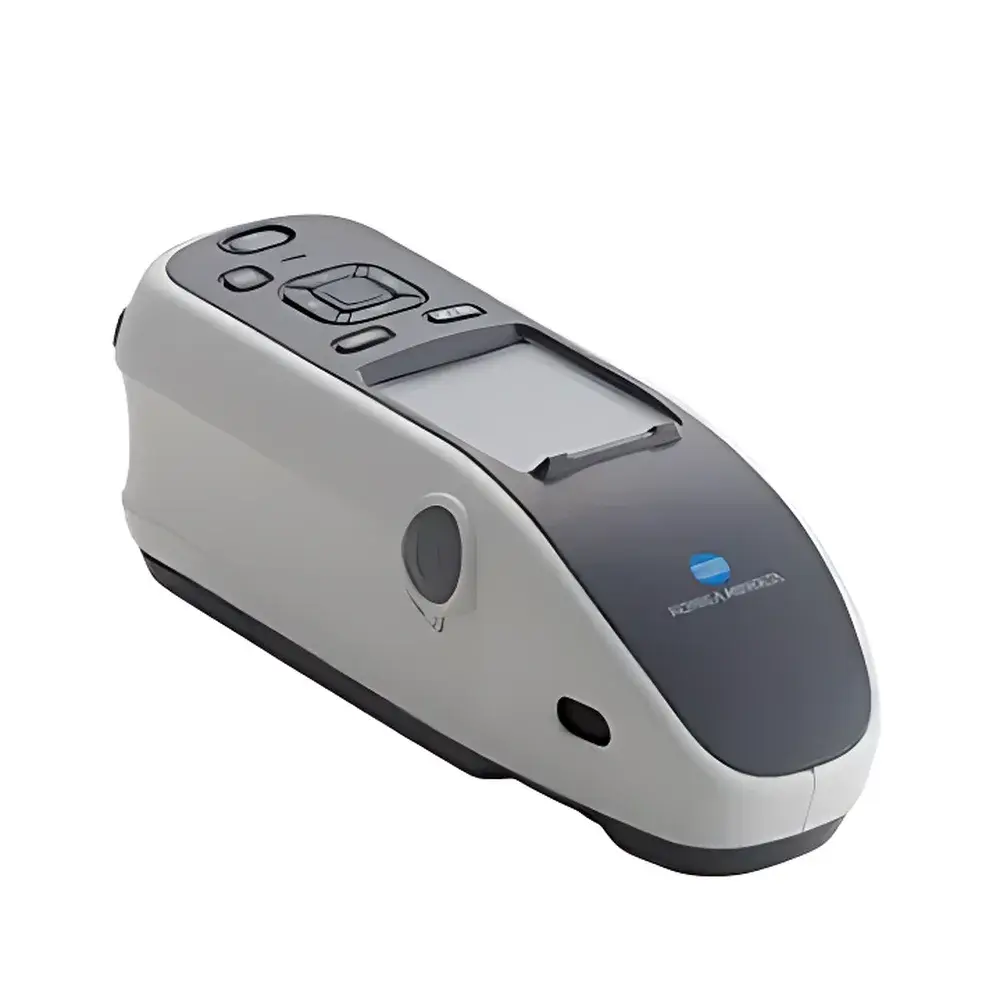
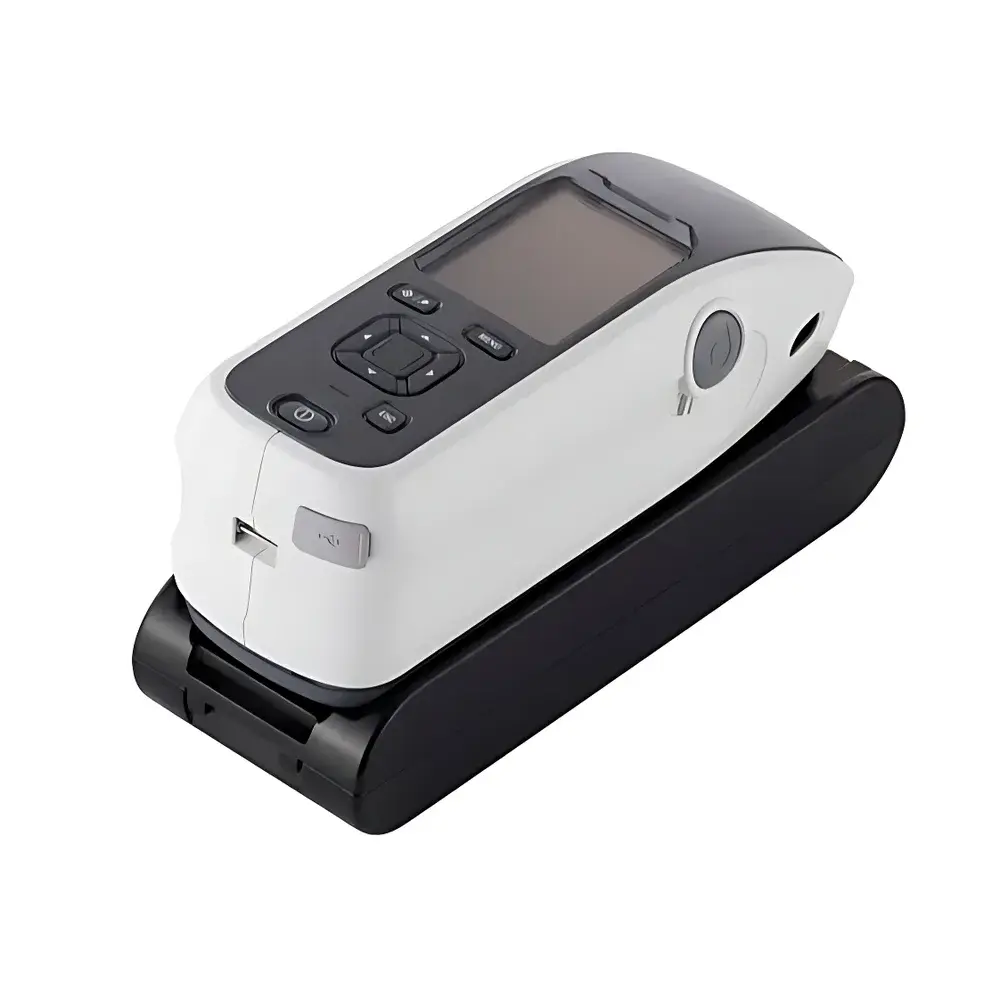
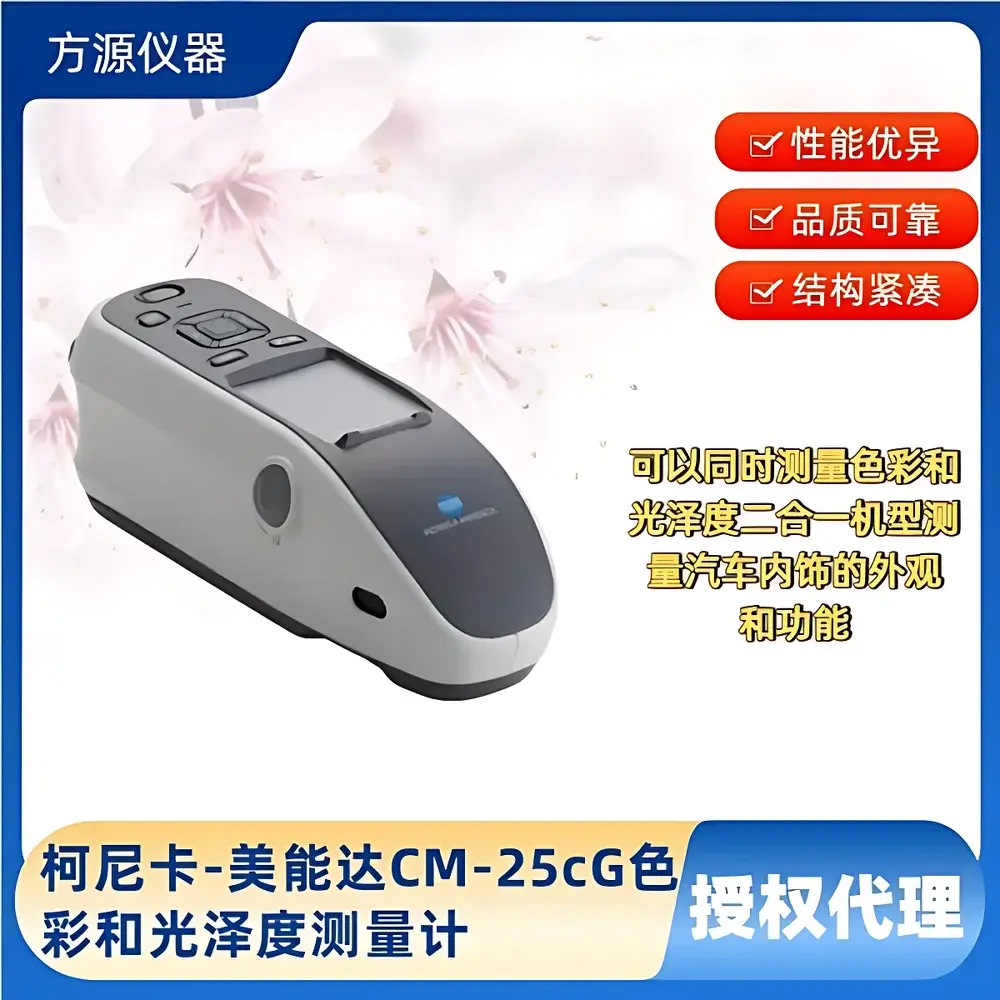
Konica Minolta CM-25cG Portable Spectrophotometer with Gloss Measurement
| Brand | Konica Minolta |
|---|---|
| Origin | Japan |
| Model | CM-25cG |
| Type | Portable spectrophotometer |
| Illumination/Viewing Geometry | 45°c:0° (color) / 60° (gloss) |
| Spectral Range | 360–740 nm |
| Spectral Interval | 10 nm |
| FWHM | ~10 nm |
| Color Measurement Repeatability | ΔE*ab ≤ 0.04 (std dev, 30 measurements on white tile) |
| Inter-instrument Agreement | ΔE*ab ≤ 0.15 (MAV, BCRA Series II) |
| Gloss Measurement Range | 0–200 GU |
| Gloss Repeatability | ±0.1 GU (0–10 GU), ±0.2 GU (10–100 GU), ±0.2% (>100 GU) |
| Gloss Inter-instrument Agreement | ±0.2 GU (0–10 GU), ±0.5 GU (10–100 GU) |
| Observer Angles | 2° / 10° CIE standard |
| Illuminants | A, C, D50, D65, F2–F12, ID50, ID65, user-defined (dual-illuminant comparison supported) |
| Color Spaces | CIE L*a*b*, L*C*h, Hunter Lab, Yxy, XYZ, Munsell MI, WI (ASTM E313), YI (ASTM E313/D1925), ISO Brightness (ISO 2470), WI/Tint (CIE) |
| Color Difference Formulas | ΔE*ab (1976), ΔE94 (1994), ΔE00 (CIE DE2000), CMC (l:c), ΔE (Hunter), ΔE99o (DIN 99o) |
| Compliance | CIE No. 15, ISO 7724-1, ASTM E179, DIN 5033-7, JIS Z8722 (color) |
| Measurement Time | ~1 s (display/output), Minimum Interval: ~2 s |
| Battery Life | ~3,000 measurements per charge (standalone, 10-s interval), ~1,000 with Bluetooth active |
| Display | 2.7″ TFT color LCD |
| Interface | USB 2.0, optional Bluetooth |
| Memory Capacity | 2,500 target + 7,500 sample data points |
| Dimensions | 224 × 81 × 81 mm |
| Weight | ~600 g (with battery) |
| Operating Environment | 5–40°C, ≤80% RH (non-condensing at ≤35°C) |
Overview
The Konica Minolta CM-25cG is a dual-function portable spectrophotometer engineered for high-precision color and gloss measurement in industrial quality control, R&D laboratories, and field applications. Unlike conventional colorimeters, the CM-25cG employs a diffraction grating-based optical architecture with a dual-row 40-element silicon photodiode array, enabling full spectral acquisition from 360 nm to 740 nm at 10 nm intervals (FWHM ≈ 10 nm). Its 45°c:0° illumination/viewing geometry complies with ISO 7724-1 and ASTM E179 for diffuse-specular-excluded colorimetry, while its integrated 60° gloss sensor—calibrated per ISO 2813 and ASTM D523—allows simultaneous, co-registered evaluation of surface appearance attributes. This dual-mode capability supports traceable, correlation-free assessment of both chromatic and specular reflectance properties within a single handheld platform—critical for evaluating coated metals, automotive finishes, plastics, and packaging where visual perception depends on combined color and gloss response.
Key Features
- Simultaneous spectral color and 60° gloss measurement in one instrument, eliminating inter-device calibration drift and spatial misregistration.
- Dual-aperture design: MAV (Ø8 mm for color / Ø10 mm for gloss) and SAV (Ø3 mm for both modes), supporting flexible sampling of textured or heterogeneous surfaces.
- Pulsed xenon lamp ensures stable, UV-inclusive illumination across the full visible spectrum without thermal drift—essential for accurate measurement of fluorescent or UV-reactive materials.
- High repeatability: ΔE*ab ≤ 0.04 (standard deviation over 30 repeated measurements on white calibration tile) and inter-instrument agreement ≤ 0.15 ΔE*ab (MAV, BCRA Series II reference set).
- Comprehensive color difference engine supporting seven industry-standard formulas—including CIE DE2000 (ΔE00), CMC (l:c), and DIN 99o—enabling alignment with internal tolerancing protocols and global supply chain requirements.
- Multi-language UI (11 languages including English, German, Spanish, Chinese, Russian) and intuitive 2.7″ TFT color display optimized for ambient light readability in factory or outdoor environments.
Sample Compatibility & Compliance
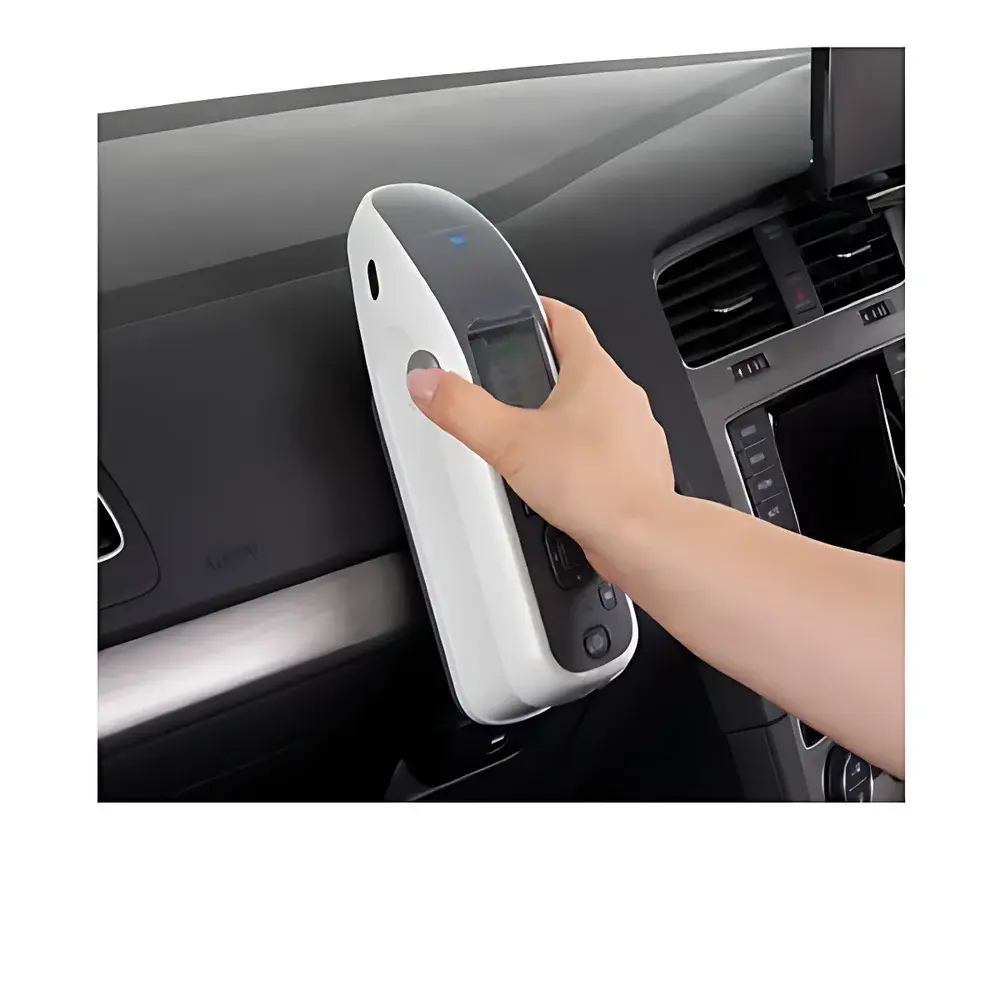
The CM-25cG accommodates flat, curved, and slightly textured surfaces typical of painted panels, injection-molded parts, printed labels, and anodized aluminum. Its compact form factor (224 × 81 × 81 mm, 600 g) and battery-powered operation enable consistent measurements across production lines, warehouse receiving bays, or supplier audits. The instrument conforms to international standards governing both colorimetry and gloss metrology: CIE No. 15, ISO 7724-1, ASTM E179, and JIS Z8722 for spectral color; JIS Z8741, ISO 2813, ASTM D523-08, and DIN 67530 for gloss. These certifications ensure data integrity during GLP-compliant validation, FDA-regulated packaging qualification (e.g., USP analytical instrument qualification), and IATF 16949 automotive PPAP submissions.
Software & Data Management
Data acquisition and analysis are supported via Konica Minolta’s proprietary SpectraMagic NX software (Windows-compatible), which provides full traceability, audit trail logging, and report generation compliant with FDA 21 CFR Part 11 requirements when configured with electronic signatures and secure user access controls. Instrument memory stores up to 2,500 target references and 7,500 sample measurements locally. USB 2.0 enables bulk export of spectral curves, color coordinates, gloss values, and pass/fail flags in CSV or XML formats. Optional Bluetooth connectivity allows real-time streaming to mobile QA apps or MES integration—supporting Industry 4.0 workflows without compromising measurement fidelity.
Applications
- Automotive: Verification of paint batch consistency, repair matching, and interior trim color-gloss harmony per OEM specifications (e.g., GMW14872, Ford WSS-M2P195-A).
- Plastics & Polymers: Monitoring pigment dispersion stability, weathering-induced hue shift, and gloss retention after UV exposure testing (ASTM G154).
- Printing & Packaging: Ensuring brand-color compliance across substrates (flexo, offset, digital) and detecting metamerism using dual-illuminant comparison (e.g., D65 vs. F2).
- Coatings & Inks: Quantifying formulation deviations during QC release, correlating lab-scale spectral data with production-line gloss readings.
- Consumer Electronics: Evaluating anodized aluminum housing uniformity, glass panel tint consistency, and matte/gloss hybrid finishes on smartphone enclosures.
FAQ
Does the CM-25cG support measurement of translucent or semi-transparent samples?
No—the instrument is optimized for opaque, reflective surfaces. Translucent materials require integrating sphere-based instruments (e.g., CM-3700A) to capture total reflectance.
Can gloss and color data be exported simultaneously in a single file?
Yes—SpectraMagic NX exports synchronized records containing spectral reflectance, CIELAB coordinates, gloss units (GU), and ΔE values per selected formula in timestamped, metadata-rich CSV files.
Is calibration traceable to NIST or other national metrology institutes?
Konica Minolta’s factory calibration uses BCRA Series II tiles and certified gloss standards traceable to NMIJ (National Metrology Institute of Japan), with optional annual recalibration services available through accredited regional labs.
What is the recommended recalibration frequency for GLP-compliant environments?
Daily zero and white calibration is required; full verification against reference standards every 30 days—or per internal SOP—is advised for regulated use.
How does the CM-25cG handle measurement of curved or recessed surfaces?
The compact probe head and short working distance (≈1 mm gap) permit stable contact measurement on radii ≥25 mm; for tighter curvatures, optional convex/concave aperture attachments are available.



