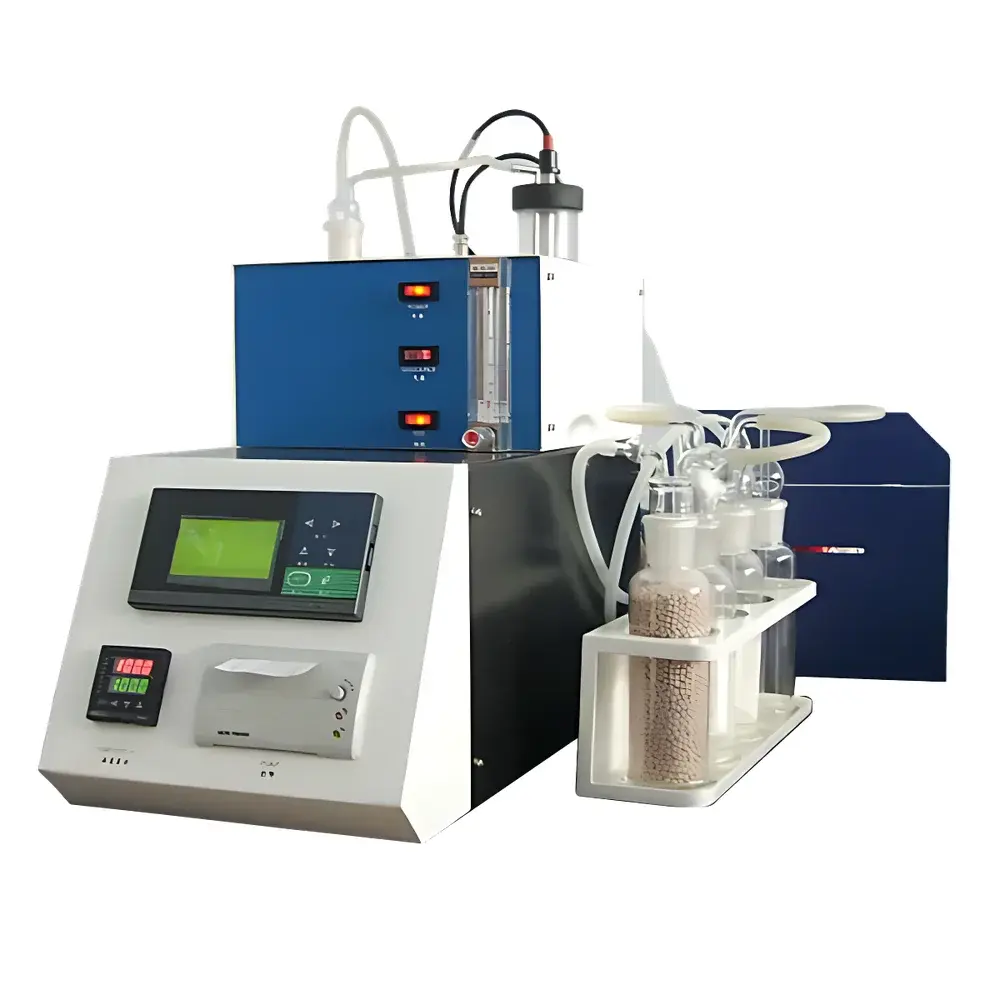
FDR-4781 Automated Rancimat Instrument for Biodiesel Oxidative Stability Testing
| Brand | FDR (csfriend) |
|---|---|
| Origin | Hunan, China |
| Model | FDR-4781 |
| Compliance | EN 14112 |
| Temperature Range | Ambient to 150 °C (±0.1 °C) |
| Air Flow Control | Imported Low-Noise Pump |
| Power Supply | AC 220 V ±10%, 50 Hz |
Overview
The FDR-4781 Automated Rancimat Instrument is a dedicated benchtop system engineered for the precise determination of oxidative stability in biodiesel and related fatty acid methyl ester (FAME) fuels. It operates on the accelerated oxidation principle defined in EN 14112, wherein a controlled stream of pre-dried air is passed through a heated oil sample at a specified temperature (typically 110 °C for biodiesel), accelerating peroxidation reactions. The instrument continuously monitors the electrical conductivity of the condensate collected from the oxidized volatile degradation products—primarily organic acids—thereby identifying the induction period (IP), the critical time elapsed before rapid oxidation onset. This IP value serves as a quantitative indicator of antioxidant efficacy and overall fuel shelf life, directly supporting quality control in biodiesel production, blending facilities, and third-party certification laboratories.
Key Features
- High-precision temperature control via the proprietary FDR intelligent thermostatic system, maintaining setpoint stability within ±0.1 °C across the full operating range (ambient to 150 °C), with built-in self-tuning PID algorithm for optimal thermal response.
- Dual independent reaction channels enable parallel testing of two samples under identical conditions, improving throughput without compromising inter-channel reproducibility.
- Integrated air drying module removes moisture from the carrier gas stream prior to sample exposure, eliminating water-induced artifacts and ensuring compliance with EN 14112’s requirement for dry air (dew point ≤ –20 °C).
- Low-noise imported diaphragm pump delivers stable, pulse-free airflow at calibrated rates (typically 10 L/h), minimizing mechanical vibration and enhancing long-term measurement consistency.
- Real-time electrochemical monitoring using platinum conductivity electrodes immersed in the condensate trap; raw signal acquisition at 1 Hz resolution with automatic baseline correction.
- Comprehensive safety architecture including dual-stage overtemperature cutoff, pressure relief venting, and hardware-interlocked door sensing to prevent operation during maintenance access.
Sample Compatibility & Compliance
The FDR-4781 is validated for use with ASTM D7545 (equivalent methodology), EN 14112 (primary reference), and ISO 6886. It accommodates standard 15 mL glass reaction vessels and accepts liquid samples with viscosity up to 25 mm²/s at 40 °C—including neat biodiesel (B100), blended fuels (B5, B20), hydrogenated vegetable oils, and synthetic esters. All wetted parts are chemically resistant (borosilicate glass, PTFE, 316 stainless steel), ensuring minimal catalytic interference. The system supports GLP-compliant workflows through timestamped data logging, user-access-level controls, and audit-trail-capable result archiving—facilitating readiness for ISO/IEC 17025 accreditation or internal QA audits.
Software & Data Management
The embedded industrial-grade LCD controller runs deterministic real-time firmware with a localized English interface. Test parameters (temperature, airflow rate, duration limits) are configured via intuitive menu navigation. All conductivity traces, derivative curves, and automatically calculated induction periods are stored internally with UTC timestamps and operator ID tags. Data export is supported via USB 2.0 to CSV format for post-processing in Excel or statistical software. While no cloud connectivity or remote diagnostics are implemented, the local database retains ≥1,000 test records with cyclic overwrite protection. Raw conductivity files include metadata headers compliant with ASTM E1447–22 for traceability.
Applications
- Quality assurance of B100 feedstock and finished biodiesel per EN 14214 specification limits (minimum IP ≥ 6 hours at 110 °C).
- Evaluation of antioxidant additives (e.g., TBHQ, BHT, natural tocopherols) during formulation development.
- Stability screening of waste cooking oil (WCO)-derived biodiesel subjected to varying pretreatment protocols.
- Comparative assessment of oxidation resistance across feedstocks (soybean, rapeseed, palm, used frying oil).
- Supporting regulatory submissions requiring documented oxidative stability data under EU RED II or U.S. EPA Renewable Fuel Standard reporting frameworks.
FAQ
What standards does the FDR-4781 explicitly support?
EN 14112 is the primary certified method; it also aligns with ASTM D7545 and ISO 6886 for oxidative stability assessment of edible oils and biofuels.
Is calibration verification included in routine operation?
Yes—the system performs automated zero-point conductivity calibration at startup using deionized water, and optional NIST-traceable conductivity standards can be used for periodic verification.
Can the instrument operate unattended overnight?
Yes, with full thermal and pressure safety interlocks active; typical 12–24 hour tests require no manual intervention beyond initial setup.
Does the FDR-4781 meet FDA 21 CFR Part 11 requirements?
No—it lacks electronic signature capability, audit trail encryption, or role-based access control required for regulated pharmaceutical environments; it is intended for industrial fuel QA, not cGMP drug manufacturing.
What maintenance intervals are recommended?
Air filter replacement every 6 months; conductivity electrode polishing and recalibration every 200 tests or quarterly—whichever occurs first.