
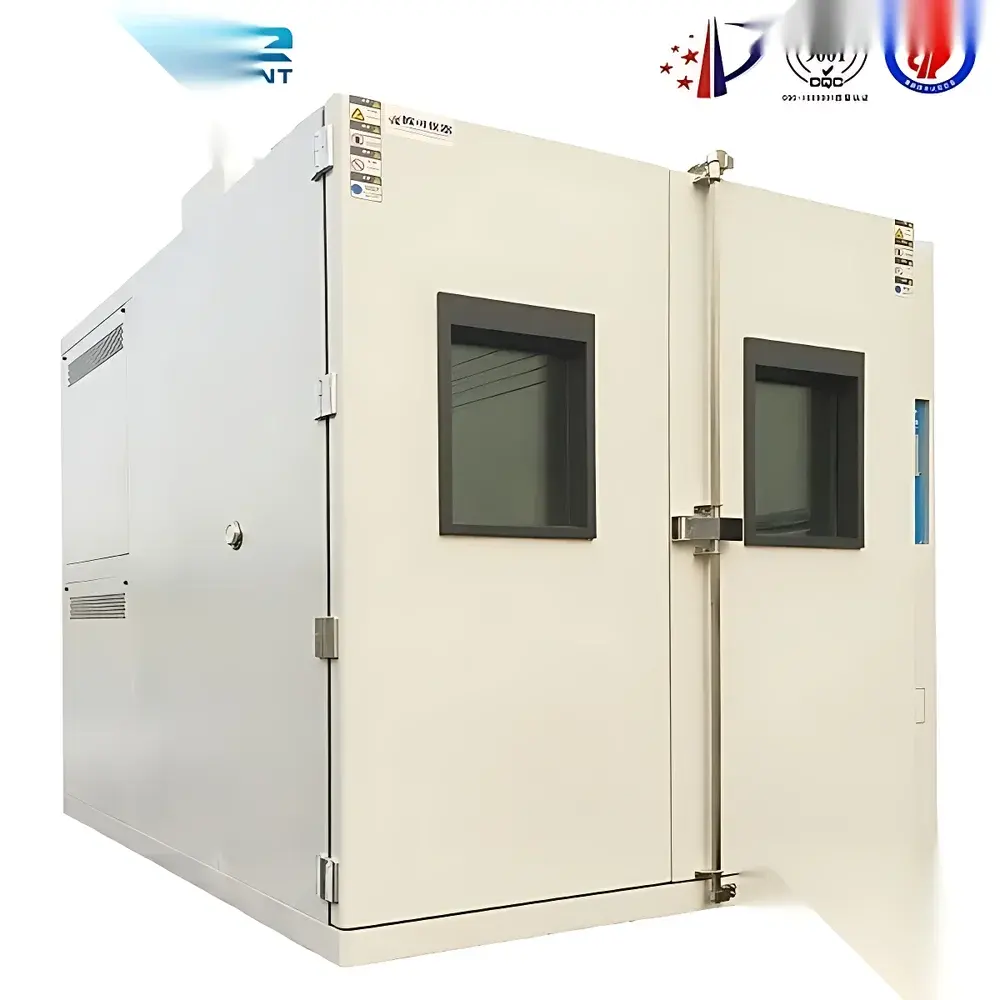
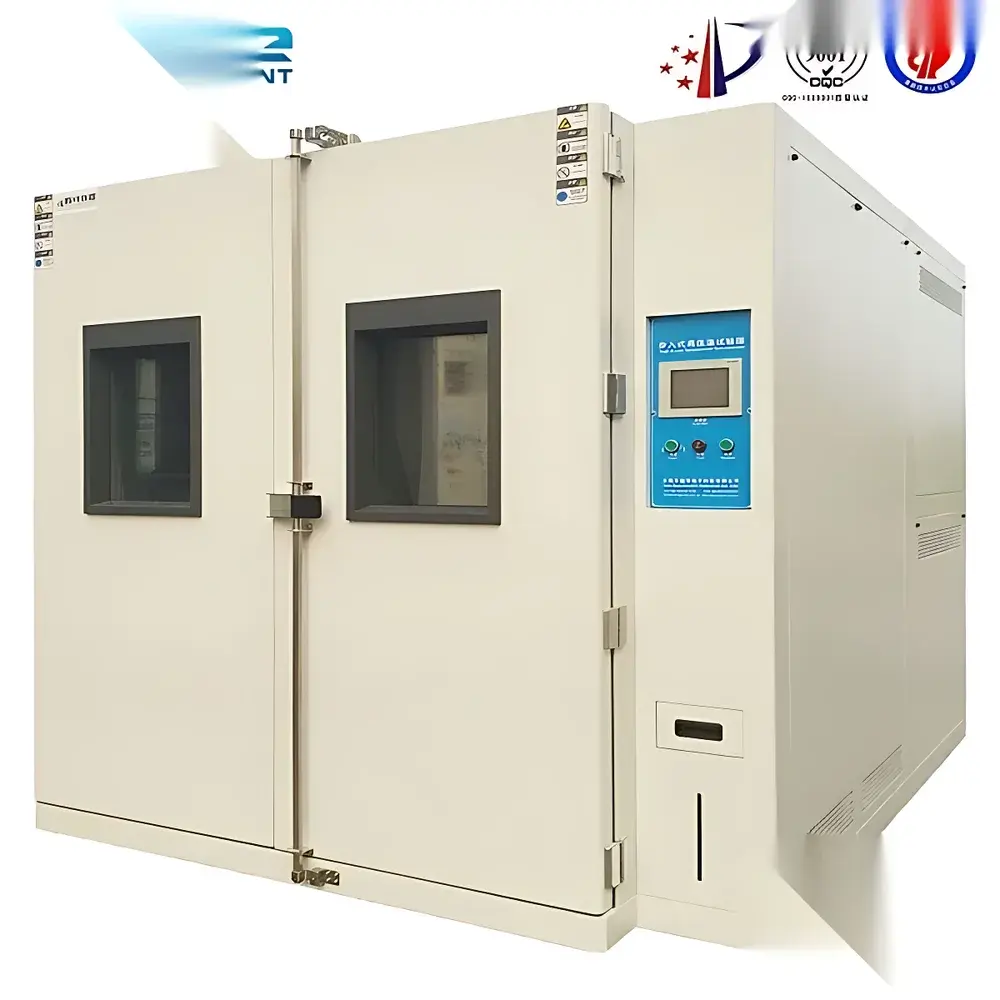
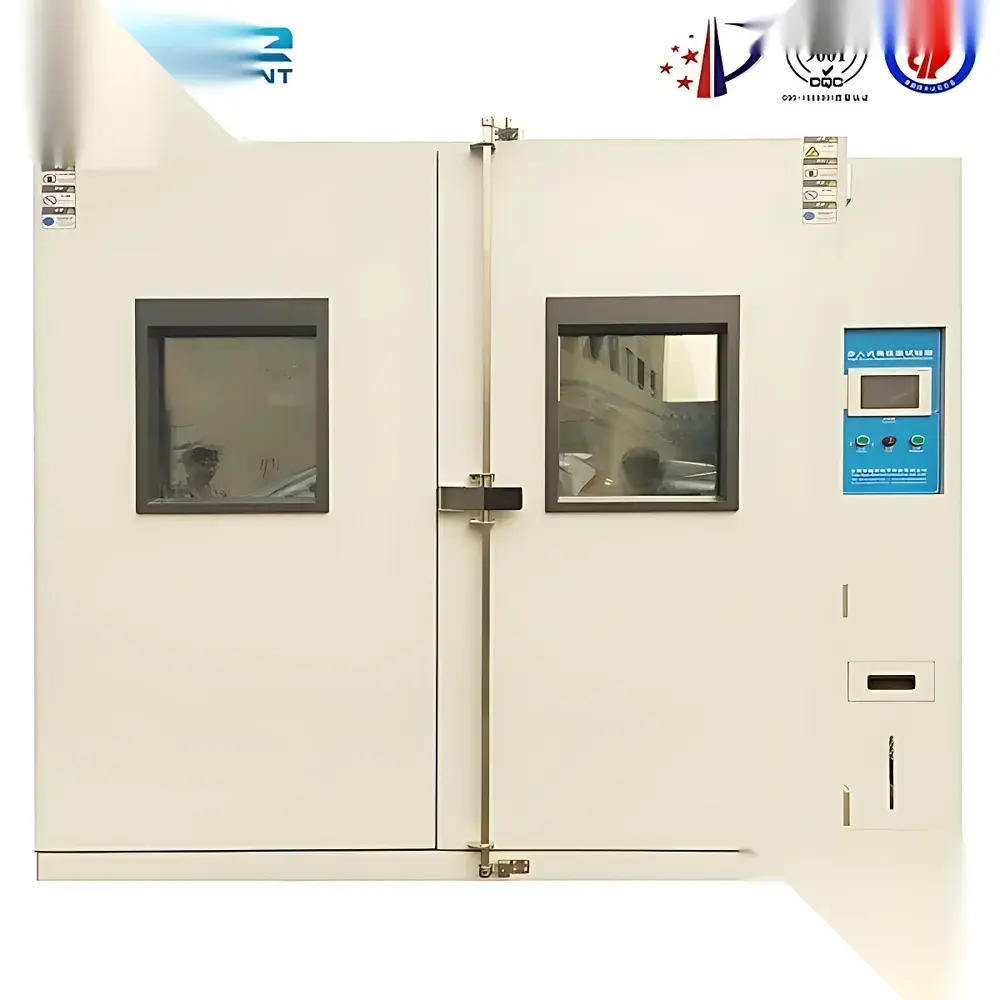
Programmable Temperature & Humidity Environmental Test Chamber
| Brand | OEM / Custom-Built |
|---|---|
| Origin | Imported |
| Manufacturer Type | Authorized Distributor |
| Price | USD 11,200 (FOB) |
Overview
The Programmable Temperature & Humidity Environmental Test Chamber is an engineered environmental simulation system designed to replicate precise, repeatable thermal and hygrothermal stress conditions for reliability validation, accelerated aging, and qualification testing. Operating on the principles of closed-loop refrigeration, electric heating, and steam-based humidification—integrated with high-fidelity PID-controlled feedback loops—the chamber maintains stable setpoints across wide operational ranges. It conforms to fundamental test methodologies defined in IEC 60068-2-1 (cold), IEC 60068-2-2 (dry heat), IEC 60068-2-30 (damp heat, cyclic), and ASTM D4332 for conditioning of materials prior to physical or electrical evaluation. Its architecture supports both static exposure and dynamic profile execution—including ramp-soak cycles, step transitions, and multi-segment programmable sequences—enabling compliance-driven testing for electronics, automotive components, pharmaceutical packaging, and construction materials under controlled ambient deviations.
Key Features
- Chamber internal dimensions: 500 mm (W) × 750 mm (H) × 600 mm (D), providing a usable test volume of 225 L for medium-scale component or subassembly evaluation.
- Robust dual-layer enclosure: Interior constructed from SUS#304 stainless steel—electropolished for corrosion resistance and non-outgassing performance; exterior fabricated from high-tensile SUS#304 with multi-stage passivation and organic coating for long-term structural integrity and surface durability.
- High-efficiency thermal insulation: Composite insulation system comprising high-density glass wool (≥80 kg/m³) and rigid polyurethane (PU) foam (density ≥35 kg/m³, thermal conductivity ≤0.022 W/m·K), minimizing thermal bridging and energy loss.
- Condensation mitigation system: Integrated anti-sweat heater circuit utilizing K-type thermocouple–monitored capillary tubing, actively managing surface temperature gradients at critical junctions (e.g., observation window frames, door seals).
- Sealed access interface: Dual-gasketed, counterbalanced door assembly with high-elasticity silicone-parking seal rated for continuous operation between −90 °C and +280 °C, ensuring leak-tight integrity during extreme humidity cycling.
- Forced-air circulation: Multi-blade centrifugal fan with aluminum alloy impeller (anodized, high-temp balanced), driven by inverter-controlled AC motor; airflow pattern optimized for horizontal dispersion and vertical thermal exchange via arc-shaped recirculation path—achieving uniformity ≤±0.5 °C and humidity homogeneity ≤±2% RH (measured per IEC 60068-3-5).
Sample Compatibility & Compliance
This chamber accommodates diverse sample configurations without modification: PCB assemblies, sealed enclosures, polymer films, coated metal substrates, and packaged food-grade containers—all within its standard interior footprint. Two adjustable stainless-steel shelves (load capacity: 25 kg each, height spacing: 50 mm increments) allow flexible vertical staging. A single 50-mm-diameter test port (with removable brass plug and silicone O-ring seal) enables real-time signal feedthrough or external sensor integration during active conditioning. The reinforced triple-layer vacuum-insulated viewing window (tempered borosilicate glass, laminated safety construction) permits optical monitoring without compromising chamber stability. All mechanical and electrical subsystems comply with CE marking requirements (2014/30/EU EMC Directive, 2014/35/EU LVD), and design documentation supports traceability for ISO/IEC 17025-accredited lab audits.
Software & Data Management
The embedded controller features a 7-inch TFT-LCD touchscreen HMI with intuitive menu navigation and multilingual UI (English, German, Japanese, Simplified Chinese). Up to 100 user-defined test programs—each supporting up to 99 segments with independent ramp rates, dwell times, and humidity/temperature coupling modes—can be stored onboard. Real-time data logging records temperature, relative humidity, and system status (compressor, heater, humidifier, fan) at configurable intervals (1 s to 60 min); logged datasets export directly to USB storage in CSV format for post-processing. Optional Ethernet/Wi-Fi connectivity enables remote supervision via secure HTTP(S) interface, compatible with enterprise LIMS platforms. Audit trail functionality meets GLP and GMP documentation expectations, including operator ID stamping, parameter change history, and electronic signature support aligned with FDA 21 CFR Part 11 principles.
Applications
- Electronics: Thermal cycling validation of solder joints (per IPC-9701), moisture sensitivity level (MSL) preconditioning (J-STD-020), and burn-in screening.
- Automotive: Climate endurance testing of infotainment modules, battery management systems, and exterior lighting housings per ISO 16750-4.
- Pharmaceuticals & Packaging: Stability studies for primary and secondary packaging per ICH Q1A(R2), including long-term and accelerated conditions.
- Building Materials: Freeze-thaw durability assessment of concrete admixtures, sealants, and insulating composites (ASTM C666, EN 12371).
- Food & Agriculture: Shelf-life modeling of dehydrated products, enzymatic activity profiling under variable water activity (aw) conditions.
FAQ
What temperature and humidity ranges does this chamber support?
Standard operating range: −40 °C to +150 °C; humidity range: 20% to 98% RH (at +20 °C to +85 °C). Extended low-temperature options down to −70 °C are available upon configuration.
Is the chamber suitable for HALT or HASS testing?
No—it is engineered for qualification-level environmental stress screening, not high-acceleration life testing. For HALT/HASS applications, dedicated vibration-thermal-humidity combinatorial systems are recommended.
Can the chamber be integrated into an existing factory MES or SCADA system?
Yes, via Modbus TCP or optional OPC UA server module, enabling bidirectional communication with industrial automation infrastructure.
What calibration standards apply to the internal sensors?
Equipped with NIST-traceable PT100 temperature sensors and capacitive RH transducers, calibrated per ISO/IEC 17025 procedures; annual recalibration service packages are available.
Does the unit include a built-in dehumidification function?
Dehumidification is achieved passively through refrigerated coil condensation and active dry-air purge—no desiccant wheel or membrane system is included in base configuration.



