
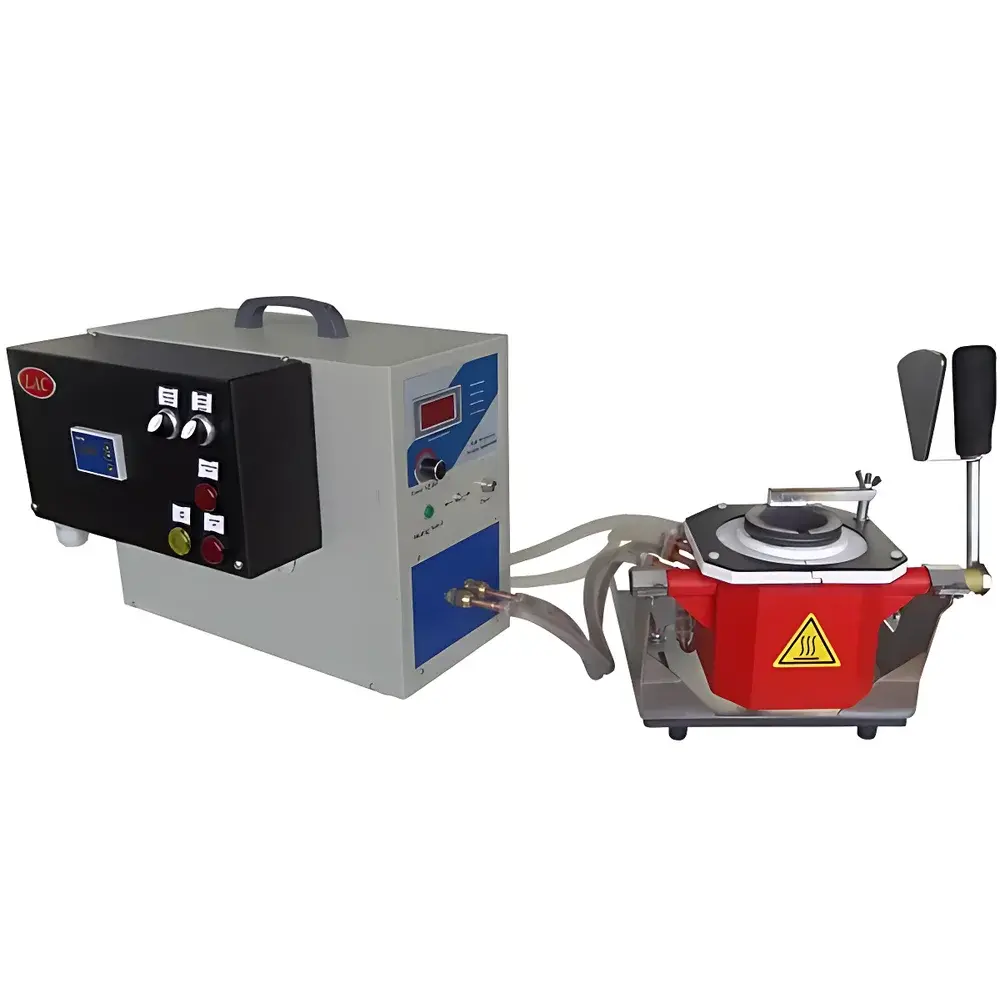
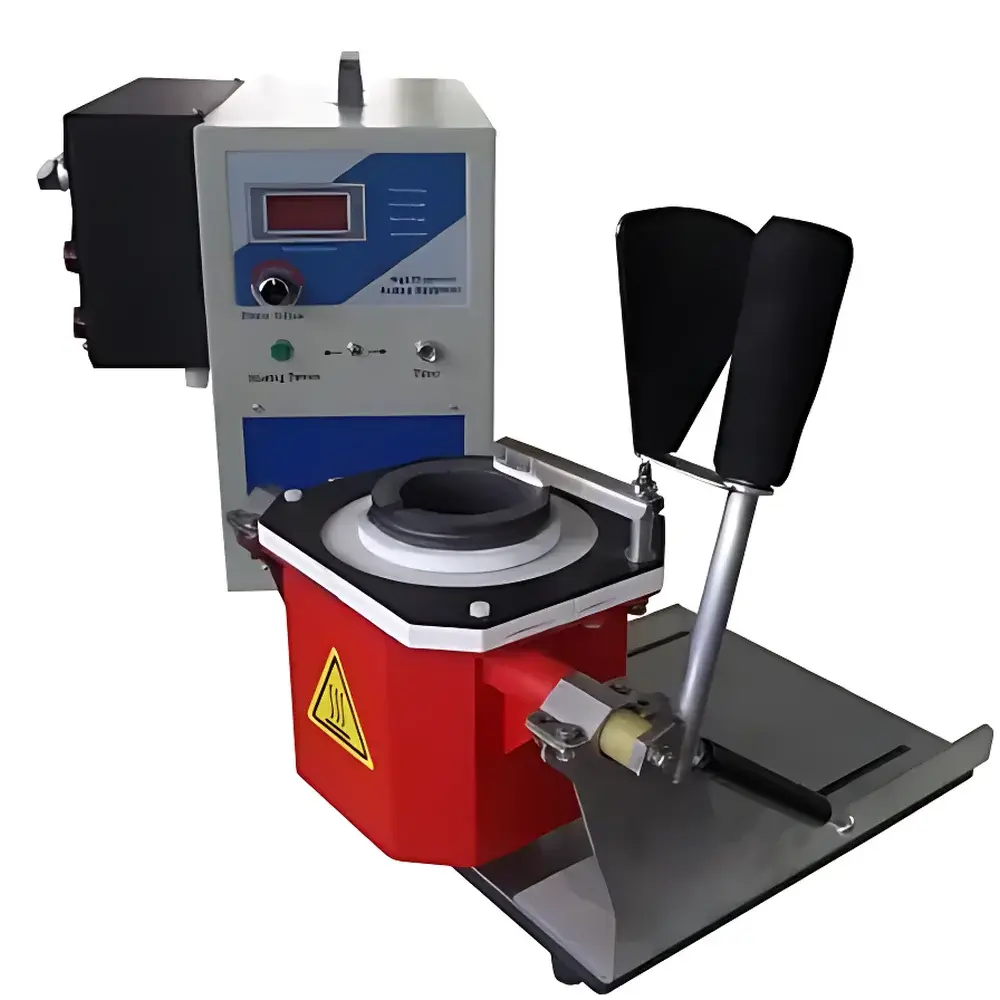
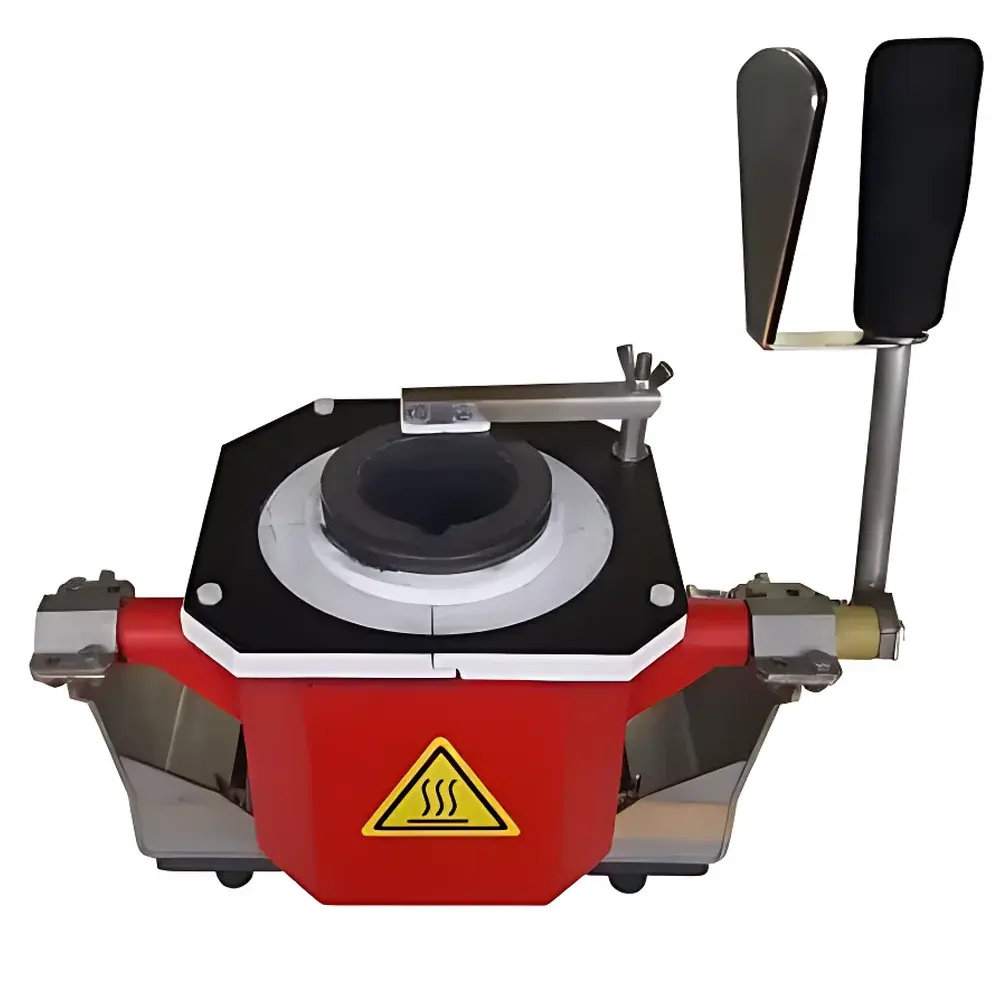
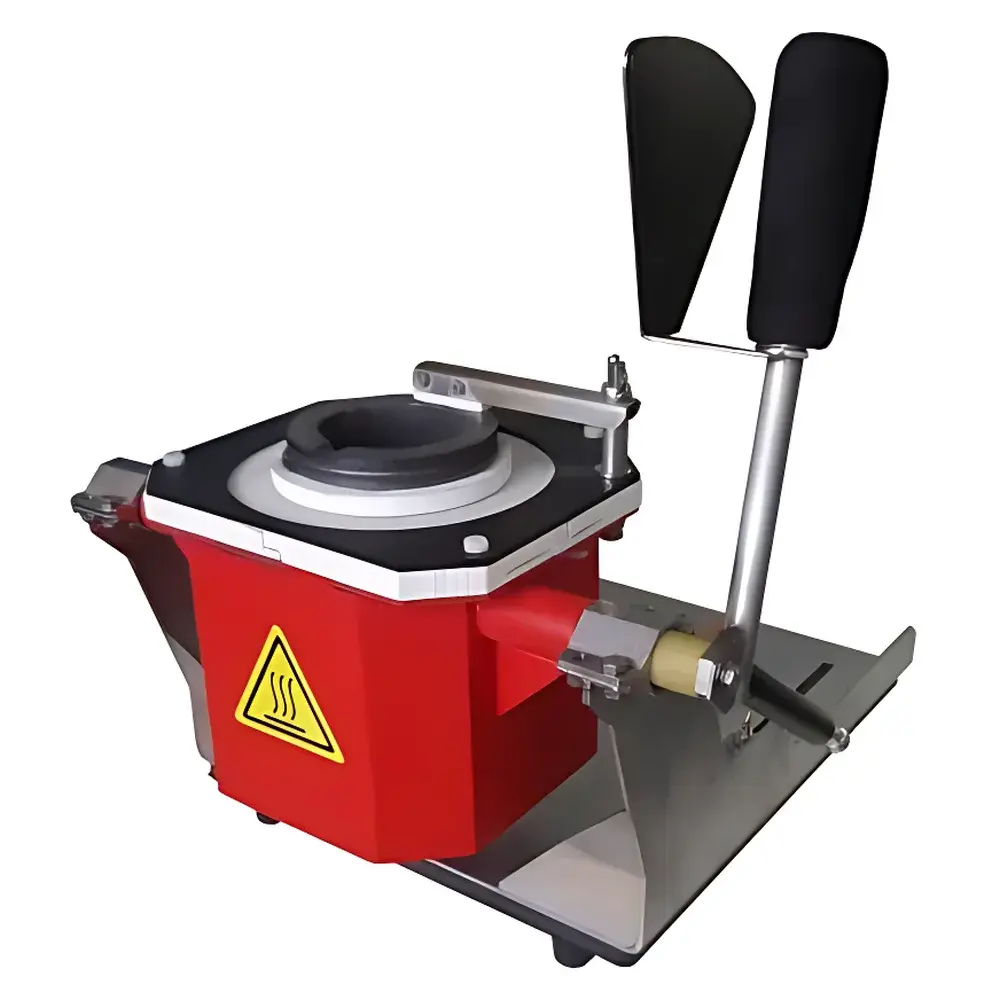
LAC I03/13 Induction Melting Furnace
| Brand | LAC |
|---|---|
| Origin | Czech Republic |
| Model | I03/13 |
| Type | Graphite Crucible Induction Furnace |
| Max Operating Temperature | 1300 °C |
| Crucible Capacity | 0.3 L |
| Input Power | 7.5 kW |
| Weight | 50 kg |
| Dimensions (W×H×D) | 350×410×520 mm |
| Tilted Height | 380 mm |
| Ejected Depth | 520 mm |
| Cooling | Dual independent water-cooled circuits (shared inlet/outlet optional) |
| HF Source | Integrated high-frequency generator with manual current regulation via rotary control |
| Standard Accessories | HF generator, flow sensor, foot pedal switch, graphite crucible (1 pc), ceramic protective insert (1 pc) |
Overview
The LAC I03/13 Induction Melting Furnace is a compact, benchtop-scale high-frequency induction system engineered for precise, repeatable melting of small batches of non-ferrous metals—including gold, silver, copper, and brass—in research laboratories, jewelry workshops, and metallurgical QA/QC environments. Unlike resistance-heated muffle furnaces, the I03/13 employs electromagnetic induction: an alternating high-frequency current (typically in the 100–500 kHz range) passes through a water-cooled copper inductor coil, generating eddy currents directly within the conductive charge inside the graphite crucible. This volumetric heating mechanism eliminates thermal lag, ensures rapid heat-up (typically 85% electrical-to-thermal conversion). The furnace operates without direct flame or external radiant heating elements, minimizing oxidation and enabling consistent melt homogeneity under ambient or inert gas conditions.
Key Features
- Octagonal structural frame fabricated from precision-machined fiberglass-reinforced plates and welded bent steel—optimized for mechanical rigidity and thermal stability during repeated thermal cycling.
- Manually operated, single-hand tilting mechanism with positive-position locking between mechanical stops; enables controlled pour-out at any angle from 0° to 90°.
- Dual independent water-cooling circuits for the inductor and HF generator—each with dedicated flow sensors—supporting either segregated cooling lines or shared inlet/outlet plumbing per user infrastructure requirements.
- Integrated high-frequency power source (7.5 kW nominal output) featuring analog rotary current regulation for fine-tuned control of induction intensity and melt rate.
- Compact footprint (350 × 410 × 520 mm) and integrated carrying handle facilitate relocation between lab benches or glovebox integration; total mass of 50 kg ensures stable operation without anchoring.
- Front-mounted thermal shield constructed from high-emissivity ceramic fiber—certified to reduce operator-facing radiant heat flux to <1.5 kW/m² at 1300 °C, compliant with EN 61000-6-4 and ISO 13732-1 ergonomic safety guidelines.
Sample Compatibility & Compliance
The I03/13 is validated for use with standard 0.3 L graphite crucibles (ISO 8544-compliant grade) and accommodates optional ceramic protective inserts to extend crucible service life during reactive melts. It supports inert atmosphere purging via optional gas burner manifold (N₂ or Ar), meeting ASTM B970-18 requirements for low-oxidation precious metal refining. All electrical subsystems conform to CE marking directives (2014/30/EU EMC, 2014/35/EU LVD), and the HF generator meets CISPR 11 Class B emission limits. For GLP/GMP-regulated labs, optional accessories—including calibrated thermocouple inputs (Type S, ±0.5 °C accuracy), audit-trail-capable foot pedal logging, and 21 CFR Part 11–compliant data export modules—are available upon request.
Software & Data Management
While the base I03/13 operates via analog controls, its optional digital upgrade package includes a USB-connected controller module running LAC FurnaceControl™ v3.2 firmware. This software provides real-time monitoring of coolant flow rate (L/min), inductor current (A), melt time stamping, and thermal ramp profiling. All operational events—including pedal actuation, tilt position changes, and overtemperature alerts—are timestamped and exportable as CSV or XML for traceability. Data logs comply with ISO/IEC 17025 clause 7.7.1 for measurement uncertainty documentation and support FDA audit readiness when paired with validated calibration certificates.
Applications
- Precious metal assay preparation (fire assay fusion of Au/Ag-bearing ores and concentrates)
- Small-batch alloy development and composition verification (e.g., Cu–Zn brass variants, Ag–Pd dental alloys)
- Recycling lab operations: recovery and purification of scrap electronics metals (Cu, Sn, Pb)
- Materials science education: demonstration of electromagnetic heating principles and solid–liquid phase transitions
- Foundry R&D: rapid prototyping of investment casting feedstock melts prior to large-scale induction furnace deployment
FAQ
What is the maximum recommended continuous operating temperature?
The I03/13 is rated for sustained operation up to 1300 °C—validated using Type S thermocouples calibrated per ISO/IEC 17025. Prolonged exposure above this limit may degrade graphite crucible integrity and reduce inductor insulation lifetime.
Can the furnace be used under vacuum or controlled atmosphere?
Yes—though not vacuum-rated natively, it integrates seamlessly with standard laboratory gloveboxes or purged enclosures. Optional gas burner kits enable continuous inert gas flow (N₂ or Ar) during melt cycles to suppress oxidation.
Is water cooling mandatory?
Yes—both the inductor and HF generator require active water cooling. Minimum flow rate is 3 L/min per circuit at 15–25 °C inlet temperature; closed-loop chillers are supported via optional retrofit.
How often must consumables be replaced?
Graphite crucibles typically last 50–80 melts depending on charge chemistry and peak temperature; ceramic inserts extend service life by ~40%. Replacement intervals are logged automatically in FurnaceControl™ when enabled.
Does the system support automated process scripting?
The base unit does not include programmable logic; however, the digital upgrade package supports pre-defined thermal profiles (ramp/soak/cool) with external trigger inputs for synchronized casting or sampling equipment.



