
LAC VP1000/17 High-Temperature Top-Lift Muffle Furnace (1700 °C)
| Brand | LAC |
|---|---|
| Origin | Czech Republic |
| Model | VP1000/17 |
| Max Temperature | 1700 °C |
| Operating Temperature Range | 1400–1700 °C |
| Temperature Uniformity | ±10 °C |
| Internal Dimensions (W×H×D) | 1100 × 1000 × 1100 mm |
| Effective Working Zone (W×H×D) | 800 × 800 × 800 mm |
| Chamber Volume | 1200 L |
| Control Accuracy | ±1 °C |
| Max Power | 140 kW |
| Heating Rate to 1700 °C | 180 min |
| Heating Elements | 24 × Kanthal® MoSi₂ Rods (Vertical, Four-Sided Configuration) |
| Lift Mechanism | Motor-Driven with Gearbox & VFD Control |
| Insulation | 300 mm Compressed Ceramic Fiber Modules + Refractory Brick Base Layer |
| Electrical Supply | 3/PEN 400/230 V AC, 50 Hz |
| Weight | 3500 kg |
| Load Capacity | 200 kg |
| Cooling | Forced-Air Dual-Shell Ventilation System |
| Controller | Siemens S7-1200 PLC + TP700 Color HMI |
| Temperature Sensing | Type B Thermocouples (PtRh30/PtRh6) |
| Data Logging | 7-Day Internal Storage + USB Export |
| Compliance | CE, EN 61000-6-4 (EMC), EN 61000-6-2 (Immunity), EN 60204-1 (Safety) |
Overview
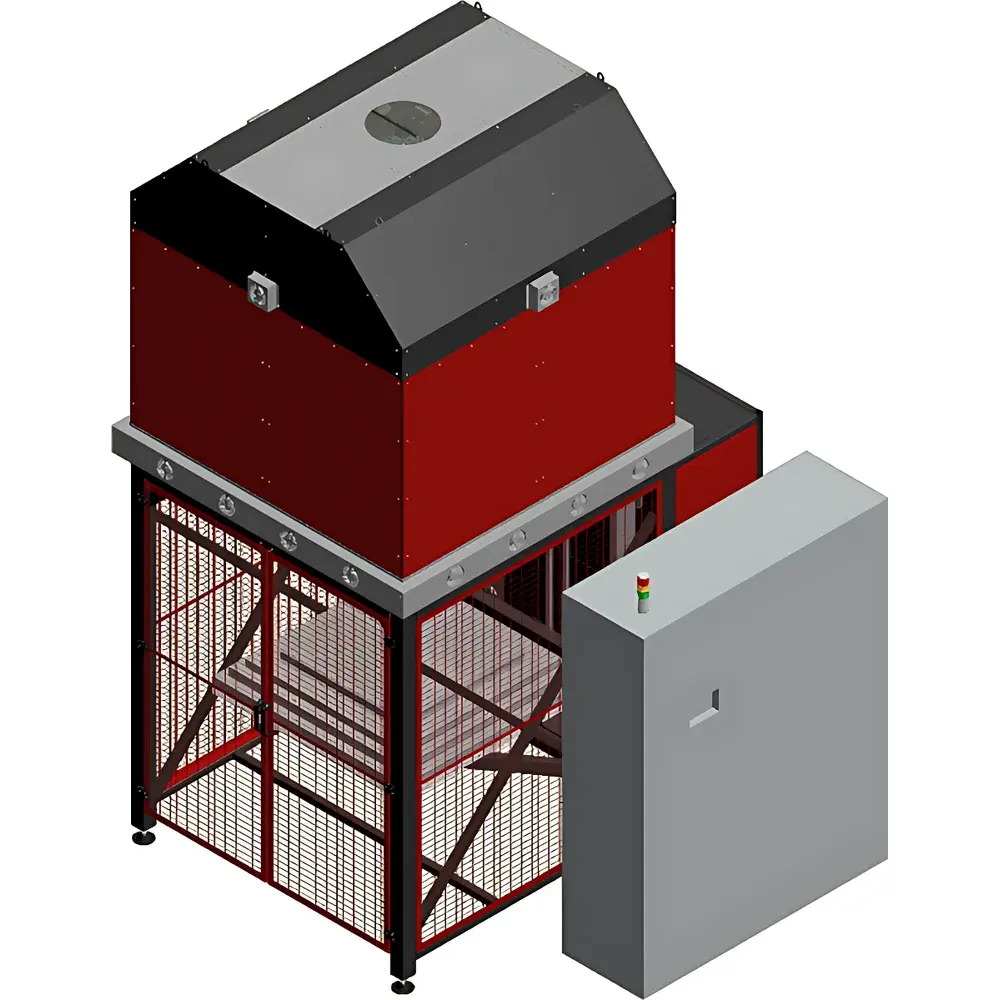
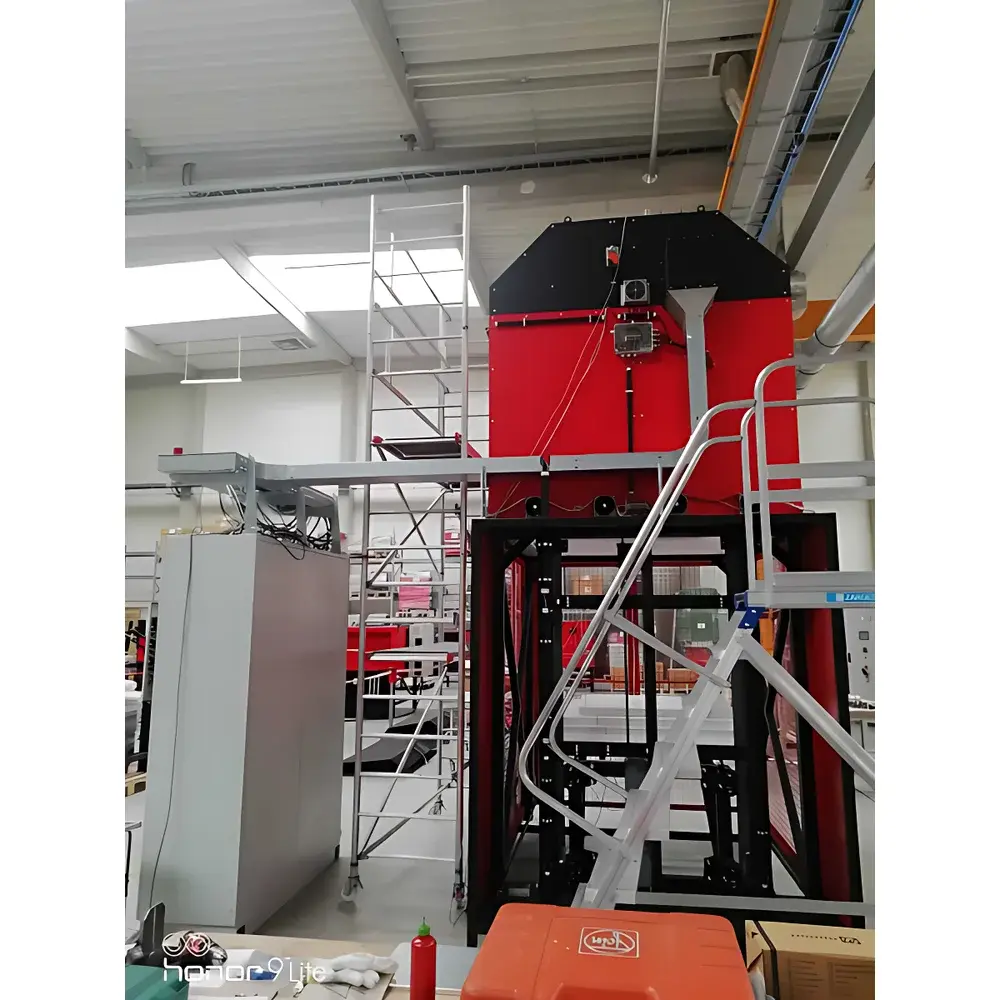
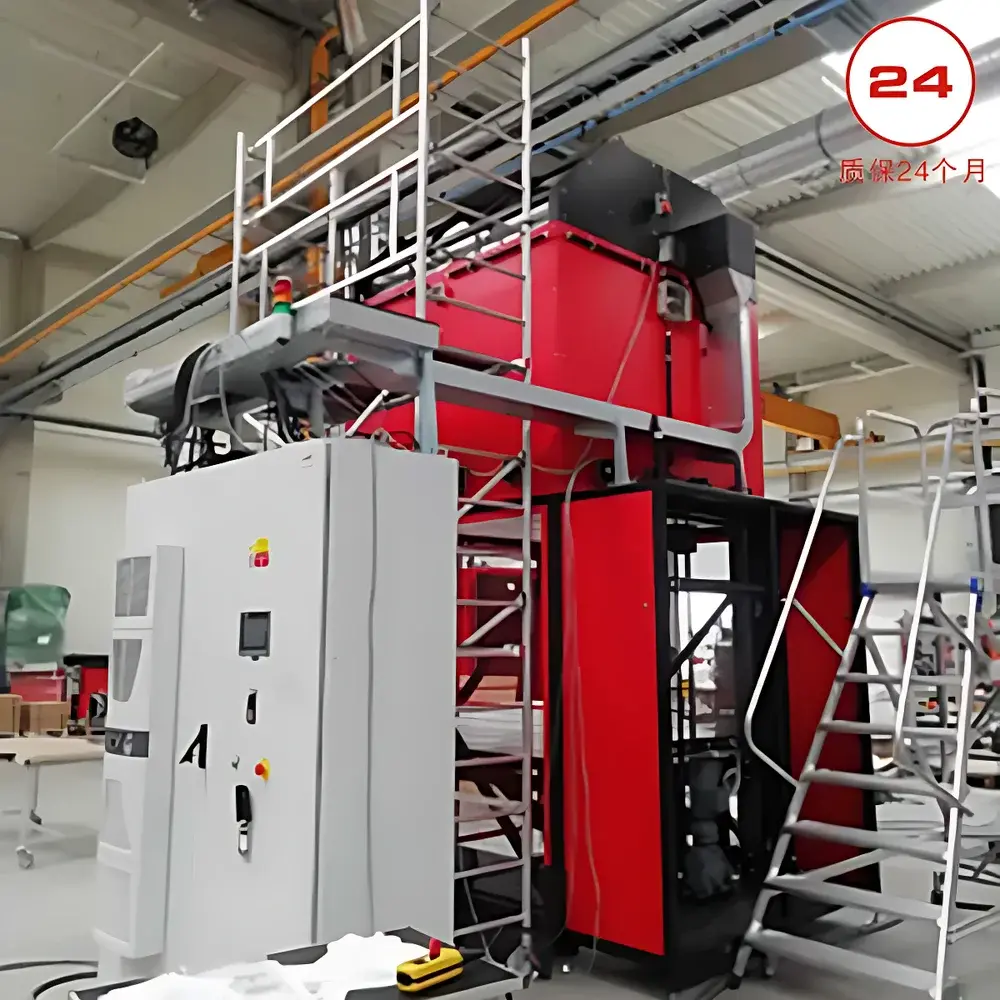
The LAC VP1000/17 is a high-precision top-lift muffle furnace engineered for sustained operation at extreme temperatures up to 1700 °C. Designed for materials research, advanced ceramics sintering, refractory testing, and high-temperature metallurgical process development, it employs a robust four-sided radiant heating architecture based on Kanthal® MoSi₂ heating elements—ensuring uniform thermal distribution across its 1200 L chamber. Unlike conventional box furnaces, the VP1000/17 utilizes a vertically actuated insulated hood, minimizing thermal mass exposure during sample loading and enabling rapid thermal stabilization after closure. Its structural integrity derives from a dual-shell welded low-carbon steel frame (DIN 1.0036), finished in RAL 3020 red (frame) and RAL 9005 black (outer shell), with forced-air interstitial cooling that maintains external surface temperatures below 60 °C under full-load conditions—meeting IEC 60519-2 requirements for industrial electric heating equipment safety.
Key Features
- Four-sided vertical MoSi₂ heating configuration (24 rods total) ensures symmetrical heat flux and minimizes axial temperature gradients within the working zone.
- 300 mm-thick compressed ceramic fiber insulation modules—combined with a reinforced base layer of high-alumina refractory bricks and porous insulating plates—deliver exceptional thermal retention and mechanical stability at 1700 °C.
- Motor-driven lift mechanism with variable-frequency drive (VFD) enables smooth, vibration-free hood elevation and lowering; position feedback integrated into the PLC ensures repeatable alignment and sealing integrity.
- Siemens S7-1200 PLC controls all thermal and mechanical sequences, including ramp-soak profiles, overtemperature cutoff (independent B-type thermocouple limiter), and interlocked safety shutdown protocols.
- Dual-zone forced ventilation system: active exhaust at the crown during operation improves gas exchange; programmable post-cycle cooling mode allows controlled quench rates down to 5 °C/min without compromising element longevity.
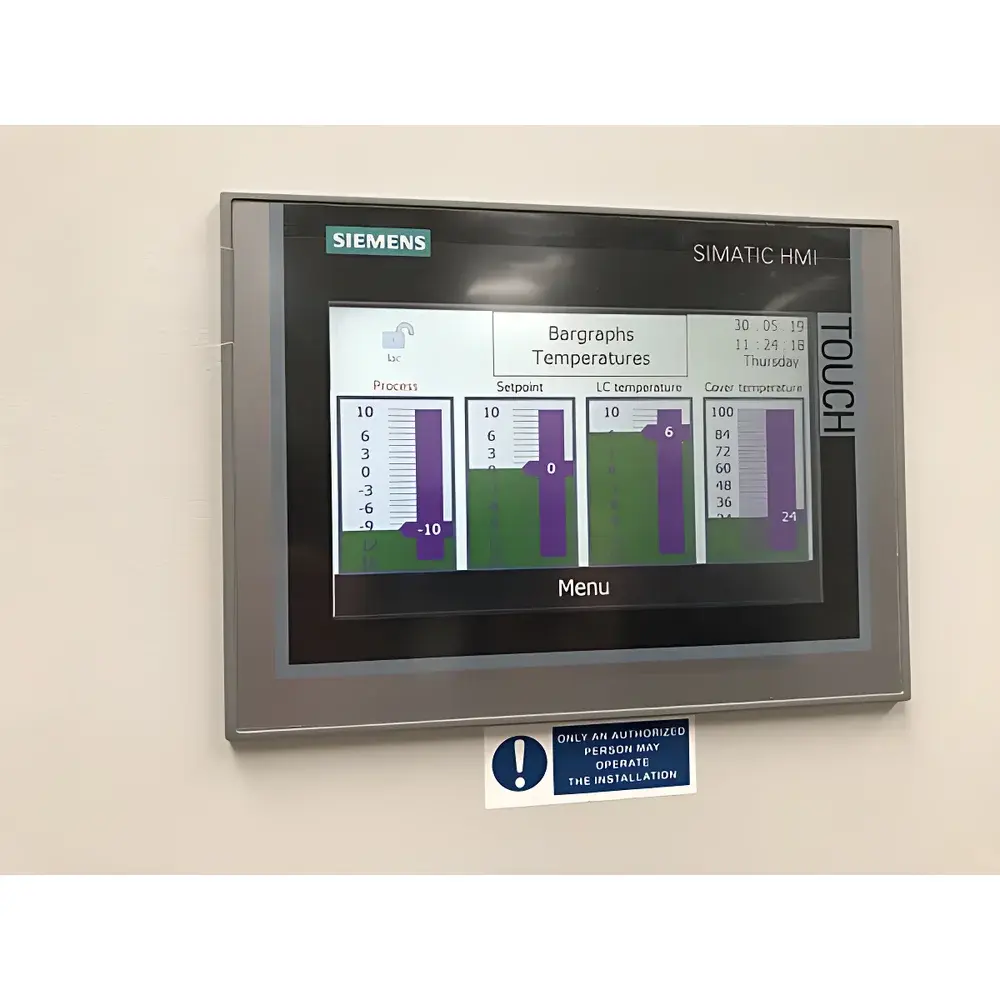
- TP700 color HMI provides intuitive parameter configuration, real-time thermal mapping visualization, service diagnostics, and password-protected maintenance menus compliant with ISO 9001 calibration traceability workflows.
Sample Compatibility & Compliance
The VP1000/17 accommodates large-format crucibles, graphite fixtures, and multi-layer sintering stacks within its 800 × 800 × 800 mm effective hot zone. It supports inert, reducing, and oxidizing atmospheres when coupled with optional gas purge systems (N₂, Ar, H₂/N₂ mixtures). All electrical components—including the dedicated RAL 7035 gray control cabinet—are rated for continuous duty at ambient temperatures up to 40 °C and conform to EN 60204-1 (safety of machinery), EN 61000-6-2/-6-4 (EMC immunity/emission), and CE Machinery Directive 2006/42/EC. The furnace meets ASTM C1171 (refractory thermal shock testing) and ISO 8501-1 (surface preparation prior to coating) preheating requirements, and its data logging functionality supports GLP-compliant audit trails per FDA 21 CFR Part 11 when used with LAC’s certified software suite.
Software & Data Management
Temperature profiles, cycle timestamps, power consumption logs, and alarm histories are recorded internally for seven days at 1-second resolution. Data export via USB flash drive preserves raw CSV-formatted records compatible with LAC’s proprietary LACSoft™ v4.2 analysis toolkit—enabling trend analysis, deviation reporting, and PDF certificate generation. The PLC firmware supports Modbus TCP integration for centralized SCADA environments, and optional OPC UA gateway modules allow seamless connection to MES platforms such as Siemens SIMATIC IT or Rockwell FactoryTalk. All logged parameters include hardware-timestamped metadata, ensuring full traceability for ISO/IEC 17025-accredited laboratories.
Applications
- Sintering of ultra-high-purity alumina, zirconia, silicon carbide, and tungsten carbide compacts under controlled atmosphere conditions.
- Thermal gravimetric analysis (TGA) support for long-duration oxidation studies of aerospace alloys and nuclear-grade graphite.
- Heat treatment qualification of ceramic matrix composites (CMCs) per AMS 2750E pyrometry class requirements.
- Calibration of secondary standard thermocouples and fixed-point cells (e.g., Co-C, Pd-C) in metrology laboratories.
- Pre-firing of investment casting molds and ceramic cores prior to metal pouring in precision foundry applications.
- High-temperature annealing of optical crystals (e.g., YAG, sapphire) where thermal gradient control directly impacts lattice defect density.
FAQ
What is the maximum recommended continuous operating temperature?
The VP1000/17 is rated for continuous operation at 1650 °C; 1700 °C is specified as the absolute upper limit for short-duration cycles (<2 hours) under strict atmospheric control.
Can this furnace be integrated into an automated production line?
Yes—its Modbus TCP interface and hardwired I/O terminals support synchronization with robotic loaders, conveyor systems, and central process controllers.
Is the furnace supplied with calibration documentation?
Each unit ships with a factory-as-built calibration certificate covering thermocouple linearity, controller setpoint accuracy (±1 °C), and lift mechanism positional repeatability (±0.5 mm).
What maintenance intervals are recommended for the MoSi₂ heating elements?
Under typical usage (≤1600 °C, air atmosphere), Kanthal® MoSi₂ rods maintain stable resistance for ≥2000 hours; annual visual inspection and resistance measurement are advised.
Does the system comply with EU energy efficiency directives?
Yes—the dual-shell cooling design, optimized insulation thickness, and VFD-controlled lift motor collectively reduce standby losses by 32% versus legacy single-shell designs, meeting EU Ecodesign Regulation (EU) 2019/2020 for industrial furnaces.
Related Products



