
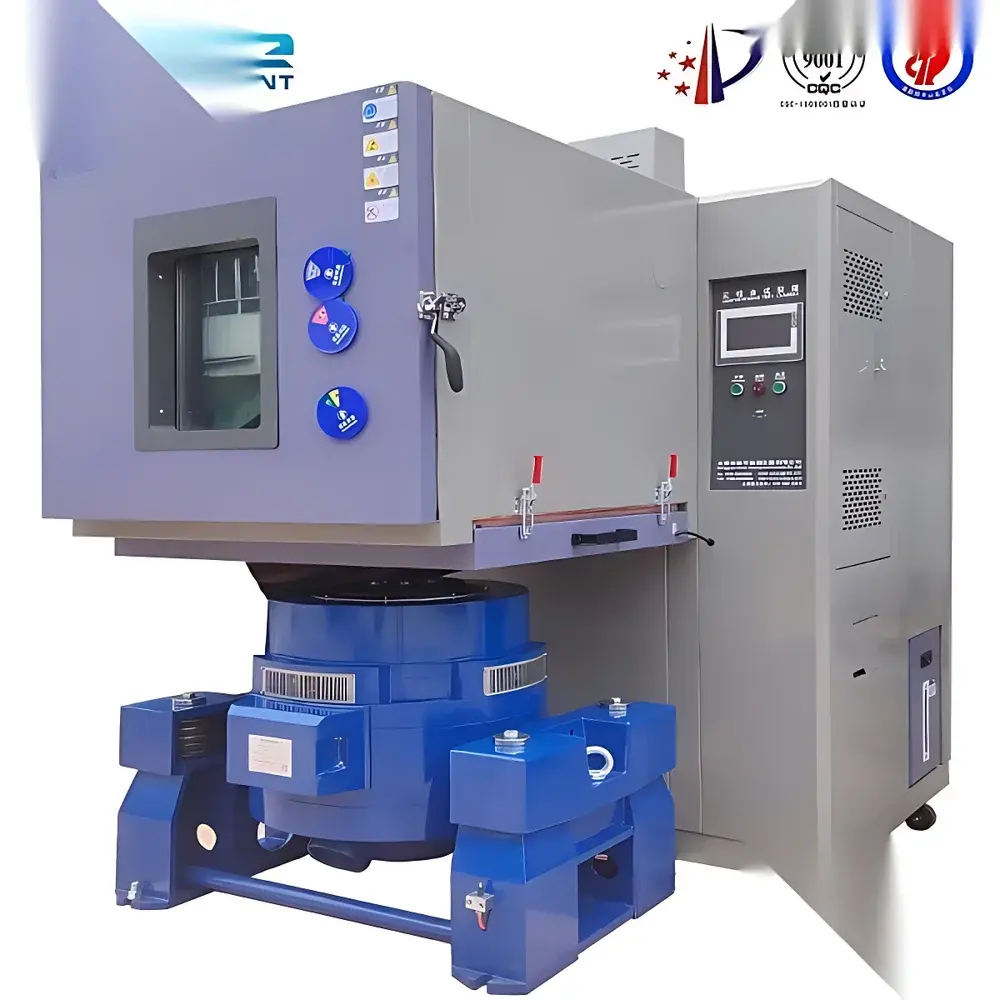
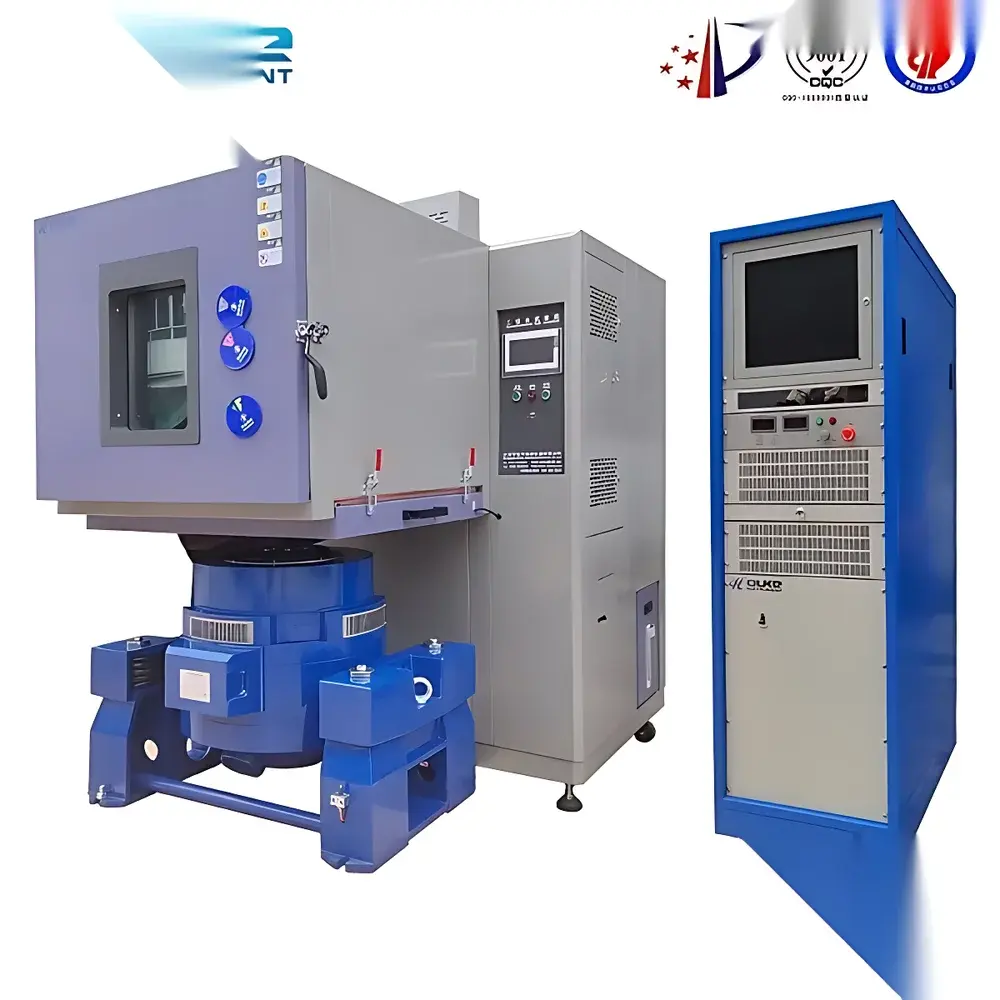
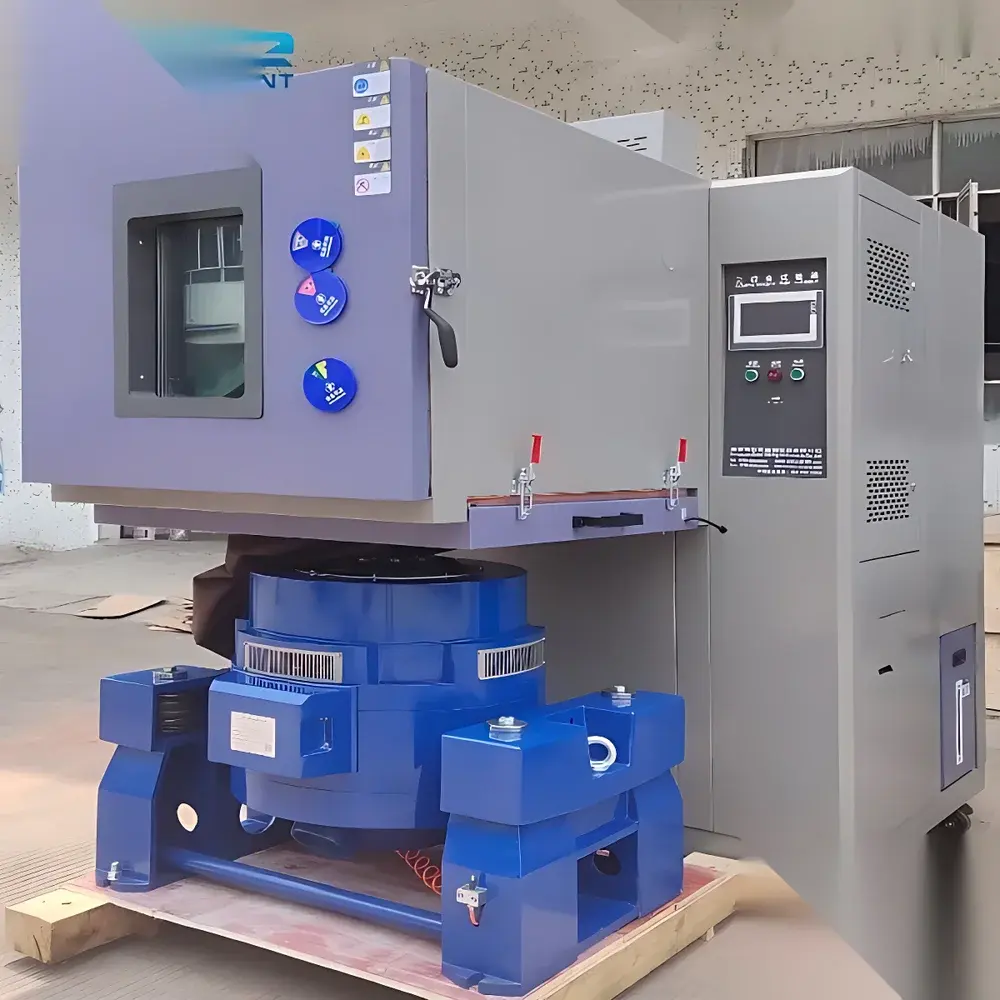
Combined Environmental Test System OK-ZTH Series
| Brand | Other Brands |
|---|---|
| Origin | Imported |
| Manufacturer Type | General Distributor |
| Price | USD 21,000 (approx.) |
| Internal Volume | Customizable per user requirement |
| Temperature Range | −70 °C to +150 °C |
| Temperature Fluctuation | ≤ ±0.5 °C |
| Temperature Uniformity | ≤ 2 °C |
| Temperature Deviation | ≤ ±2 °C |
| Humidity Range | 20 %RH to 98 %RH (at +20 °C to +80 °C) |
| Humidity Deviation | ≤ ±3 %RH (≤75 %RH), ≤ ±5 %RH (>75 %RH) |
| Rapid Temperature Range | −55 °C to +85 °C |
| Ramp Rate | 5 °C/min or 10 °C/min (average or linear mode) |
| Refrigeration System | Semi-hermetic Copeland (Germany) compressors |
| Refrigeration Method | Dual-stage mechanical cascade |
| Refrigerants | HFC-R404A / HFC-R23 |
| Condenser | Stainless steel brazed plate heat exchanger |
| Cooler | Finned-tube air cooler |
| Cooling Method | Water-cooled |
| Air Circulation | Wide-band forced convection, bottom-in top-out, extended-shaft stainless steel centrifugal blower |
| Humidification | Integrated water tank with booster pump |
| Control System | Bilingual (English/Chinese) color touchscreen + PLC controller (OYO Japan or TIME Korea) |
| Vibration Subsystem | Optional electrodynamic or servo-hydraulic shaker (user-specified model & capacity) |
| Chamber Construction | Interior – mirror-finish SUS304 stainless steel |
Overview
The OK-ZTH Series Combined Environmental Test System is an integrated test platform engineered for simultaneous, synchronized application of temperature, humidity, and mechanical vibration stress—enabling accelerated reliability assessment of electronic components, aerospace subsystems, automotive ECUs, medical devices, and high-value industrial assemblies. Unlike sequential environmental testing, this system implements true concurrent tri-stress conditioning based on Couette-type thermal-humidity airflow dynamics and rigidly coupled vibration interface architecture. It operates under ISO 16750-4, MIL-STD-810H Method 509.6 (combined environments), and IEC 60068-2-64 for vibration compatibility, supporting full-cycle profile execution per ASTM D4332 and JEDEC JESD22-A104E. The chamber’s structural integrity ensures minimal thermal crosstalk between the refrigeration loop and shaker baseplate, maintaining measurement fidelity during dynamic load transitions.
Key Features
- Triple-stress synchronization engine: Real-time coordination of thermal ramping, humidity modulation, and vibration excitation via deterministic PLC-based master clock—no time-domain desynchronization between stimuli.
- Dual-stage cascade refrigeration: Utilizes Copeland semi-hermetic compressors with HFC-R404A (high-temp stage) and HFC-R23 (low-temp stage), achieving stable sub-zero operation down to −70 °C without cryogenic consumables.
- High-fidelity humidity control: Precision steam injection with PID-regulated boiler and condensate recovery loop, calibrated per ISO 12048 for RH accuracy across 20–98 %RH at temperatures from +20 °C to +80 °C.
- Modular vibration integration: Standardized ISO 13373-compliant mounting interface (including sealed baseplate and alignment dowels) supports retrofitting of electrodynamic shakers (up to 100 kN peak force) or servo-hydraulic systems (broadband 5–2000 Hz).
- Bilingual programmable controller: OYO 8000-series or TIME T-9000 PLC with 10.4″ TFT touchscreen, supporting up to 1000-step profiles, alarm logging, and USB data export compliant with FDA 21 CFR Part 11 audit trail requirements.
- Robust chamber construction: Mirror-polished SUS304 interior minimizes particulate shedding and corrosion; external powder-coated galvanized enclosure meets IP54 ingress protection for lab-floor deployment.
Sample Compatibility & Compliance
The OK-ZTH accommodates test specimens up to 1 m³ (customizable internal volume), with standard configurations supporting DUT weights up to 150 kg on the vibration interface. All thermal-humidity-vibration interactions are validated against IEC 60068-3-10 for combined environmental testing methodology. Chamber calibration procedures follow ISO/IEC 17025-accredited protocols, and optional IQ/OQ documentation packages support GLP and GMP laboratory validation. Humidity sensors are NIST-traceable capacitive hygrometers; temperature uniformity mapping is performed per ASTM E742 using 9-point thermocouple arrays.
Software & Data Management
Embedded controller firmware provides native CSV export of time-stamped sensor logs (temperature, RH, acceleration RMS/peak, compressor discharge pressure, dew point). Optional PC-based software (OK-TestSuite Pro) enables remote monitoring via Ethernet, real-time waveform overlay (vibration vs. thermal deviation), and automated report generation in PDF/Excel formats. Data encryption, user role permissions (admin/operator/viewer), and electronic signature capture align with 21 CFR Part 11 Annex 11 expectations for regulated industries.
Applications
- Automotive electronics: Validation of ADAS modules under thermal shock + road-spectrum vibration per ISO 16750-4 Clause 7.2.
- Aerospace avionics: HALT/HASS screening of flight control computers with combined thermal cycling (−55 °C ↔ +85 °C @ 10 °C/min) and random vibration (GRMS = 12, 20–2000 Hz).
- Medical device packaging: Accelerated aging of sterile barrier systems under cyclic humidity (20 ↔ 95 %RH) and ambient vibration simulating warehouse transport.
- Consumer electronics: Stress testing of battery management ICs under simultaneous high-humidity soak (+60 °C/95 %RH) and resonant frequency sweep (5–500 Hz).
- Defense systems: Environmental qualification of radar transceivers per MIL-STD-810H Method 509.6 (temperature/humidity/vibration combination).
FAQ
What vibration shaker types can be integrated with the OK-ZTH chamber?
Electrodynamic shakers (e.g., LDS V875, TIRA TV 50120) and servo-hydraulic systems (e.g., MTS 370 series) are supported via standardized ISO 13373 mounting interfaces. Maximum payload and frequency range depend on selected shaker model.
Is the chamber suitable for long-term reliability testing (e.g., 1000+ hours)?
Yes—the dual-stage refrigeration system features redundant safety controls, continuous oil management, and predictive maintenance alerts. Mean time between failures (MTBF) exceeds 12,000 hours per ASME PCC-2 guidelines.
Can humidity be controlled independently during vibration operation?
Yes. The humidification system remains fully active and responsive during vibration cycles, with closed-loop RH feedback unaffected by mechanical motion due to isolated steam delivery path and anti-splash water tank design.
Does the system support automated compliance reporting for ISO/IEC 17025 labs?
Yes. Optional calibration certificate package includes uncertainty budgets, traceability statements, and as-found/as-left data per ILAC-P10 requirements. Full validation documentation (IQ/OQ/PQ) is available upon request.



