
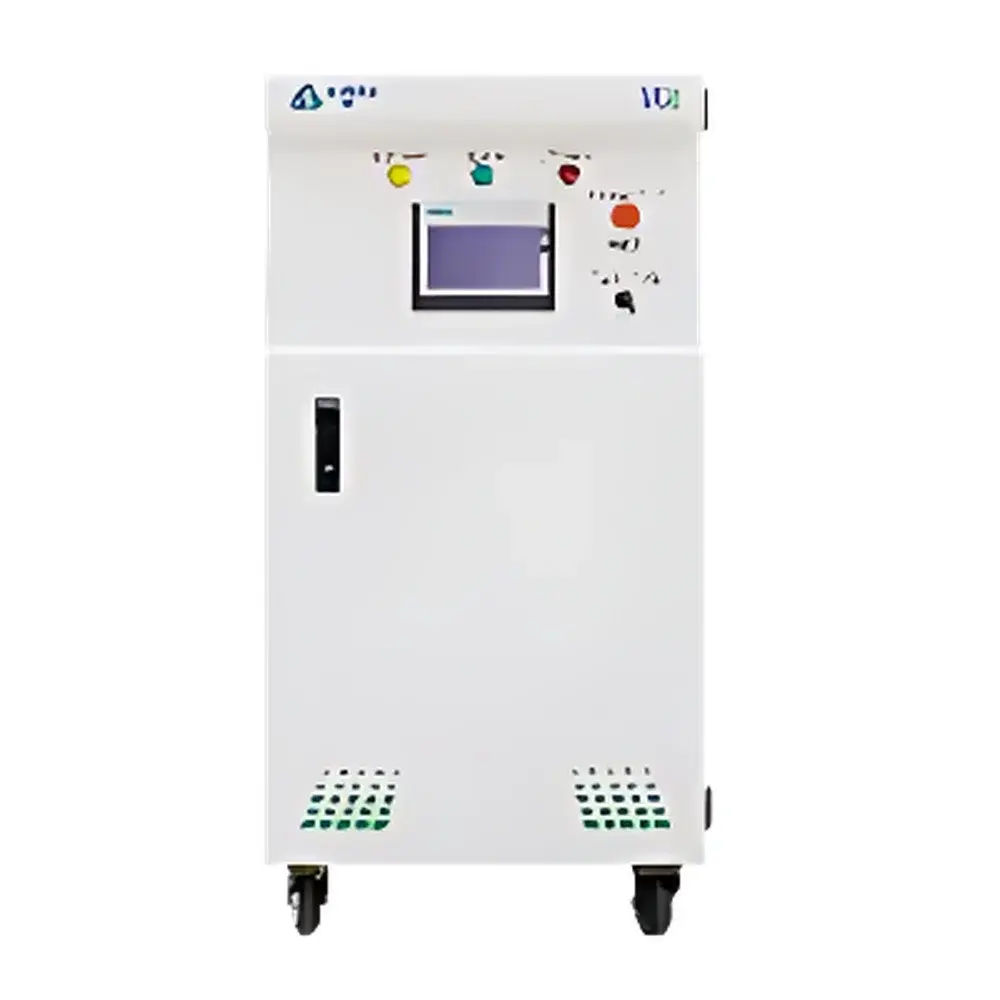
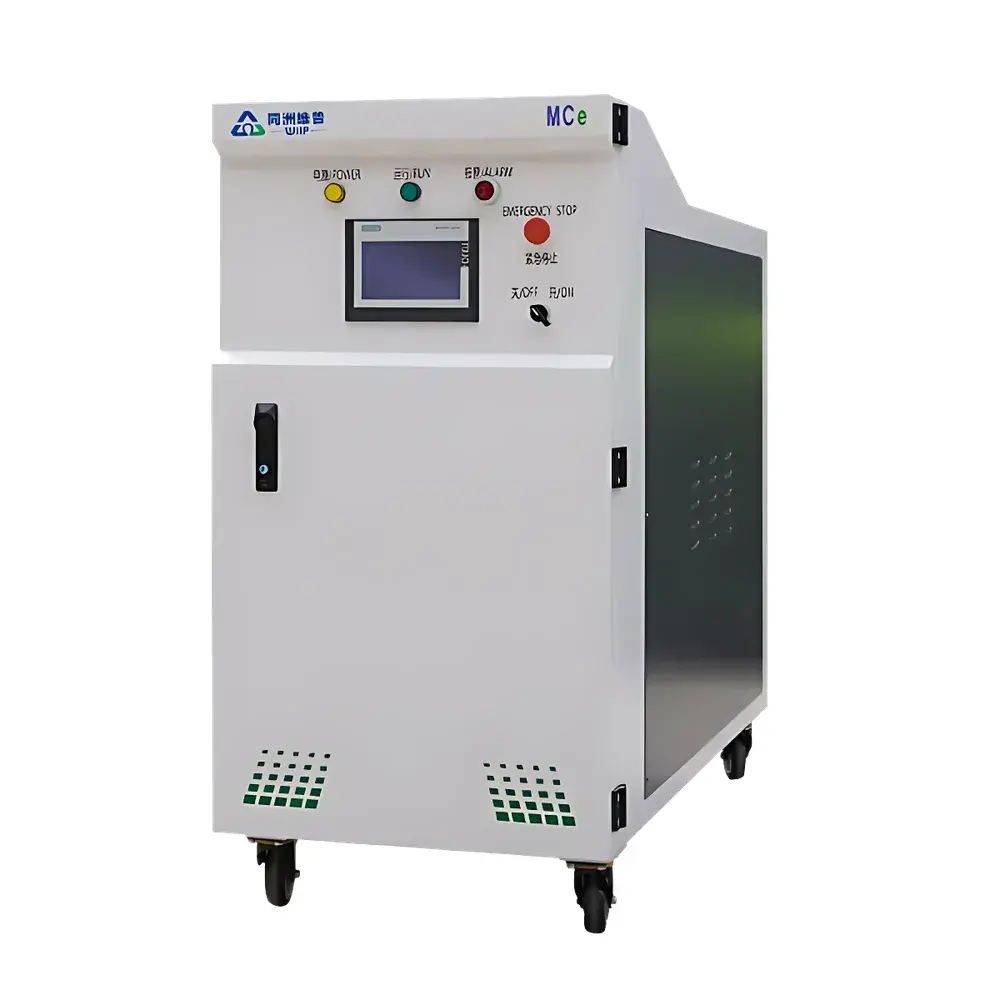
Tongzhou Weipu MCe Series Integrated Circulating Chiller for Motor Testing
| Brand | Tongzhou Weipu |
|---|---|
| Origin | Beijing, China |
| Manufacturer Type | Direct Manufacturer |
| Product Category | Domestic |
| Model | MCe Series for Motor Test Applications |
| Instrument Type | Integrated Unit |
| Temperature Control Range | +10 °C to 95 °C |
| Temperature Stability | ±1 °C |
| Refrigeration Capacity | 20 kW – 300 kW |
| Circulating Pump Flow Rates | 2–20 L/min |
Overview
The Tongzhou Weipu MCe Series Integrated Circulating Chiller is an engineered thermal management solution designed specifically for high-power electric motor, inverter, and battery pack testing in laboratory and R&D environments. Unlike conventional vapor-compression chillers, the MCe system operates on a direct heat exchange principle—utilizing externally supplied chilled water or glycol-water coolant from a central plant or dry cooler. This architecture eliminates onboard refrigerant circuits, compressors, and condensers, resulting in zero refrigerant charge, significantly reduced acoustic emissions (<65 dB(A) at 1 m), and inherent energy efficiency gains of up to 30% compared to traditional closed-loop refrigeration units under equivalent load conditions. The system functions as a precision temperature-regulated fluid delivery platform, maintaining stable inlet coolant temperatures across dynamic thermal loads typical of EV component validation—such as continuous torque cycling, overload endurance, and thermal runaway simulation protocols.
Key Features
- Direct-cool architecture with no integrated refrigeration cycle—eliminates refrigerant handling, leak risks, and associated regulatory compliance burdens (e.g., F-Gas Regulation EU No 517/2014)
- Wide operational temperature range (+10 °C to 95 °C) enabling both cooling and high-temperature conditioning for motor winding insulation validation and controller junction temperature mapping
- Five selectable flow rate configurations (2–20 L/min up to 10–150 L/min) matched to test bench hydraulic resistance and heat load profiles
- ±1 °C temperature stability maintained under variable flow and load conditions via PID-controlled three-way mixing valve and high-resolution Pt100 sensor feedback (Class A tolerance)
- Stainless steel fluid path (AISI 316) with EPDM-free wetted materials compatible with inhibited glycol solutions and deionized water
- Modular control interface supporting analog (0–10 V / 4–20 mA) and digital (Modbus RTU over RS-485) integration into automated test stands per IEEE 1588 or EtherCAT timing standards
Sample Compatibility & Compliance
The MCe chiller is compatible with standard EV powertrain test fixtures including dynamometer-mounted motors (PMSM, induction, axial flux), liquid-cooled inverters (SiC-based), and modular battery modules (20–1000 V nominal). Its fluid circuit meets ISO 8502-3 requirements for particulate cleanliness (NAS 1638 Class 6) and ASTM D1121 for glycol solution pH stability. All electrical components comply with IEC 61000-6-2 (immunity) and IEC 61000-6-4 (emission) standards. The unit supports GLP/GMP-aligned operation through optional audit-trail-enabled firmware (21 CFR Part 11 compliant data logging when paired with certified SCADA systems).
Software & Data Management
The embedded controller provides real-time monitoring of inlet/outlet temperature differentials, flow rate, pressure drop, and pump speed via a 5.7″ TFT HMI. Optional Ethernet/IP or OPC UA connectivity enables seamless integration with LabVIEW, MATLAB/Simulink, or dSPACE SCALEXIO test automation platforms. Historical thermal performance data—including timestamped setpoint deviations, flow anomalies, and alarm logs—is exportable in CSV or HDF5 format for traceability and root-cause analysis. Firmware updates are performed via secure HTTPS-based OTA protocol with SHA-256 signature verification.
Applications
- Dynamic thermal characterization of traction motors during ISO 19453-2 and GB/T 18488.1 endurance cycles
- Controller junction temperature control during IGBT/SiC MOSFET switching loss measurement per JEDEC JESD51-1
- Battery module hot/cold soak conditioning prior to UN 38.3 T.4/T.5 safety testing
- Thermal fatigue validation of liquid cold plates per SAE J2380 and LV-124-2
- Calibration support for infrared thermography systems requiring stable background thermal reference
FAQ
Does the MCe chiller require refrigerant charging or periodic servicing of a compressor?
No. The MCe operates exclusively via external chilled water supply and contains no refrigerant, compressor, or oil-lubricated mechanical cooling components.
Can it maintain precise temperature control during rapid load transients typical of motor dyno testing?
Yes. Its fast-response three-way valve actuation (<1.2 s step response) and dual-sensor differential control algorithm ensure ±1 °C stability even during 50 kW/s thermal ramp events.
Is the system compatible with deionized water coolant loops commonly used in semiconductor-grade EV testing?
Yes—wetted materials are selected for compatibility with DI water (conductivity <1 µS/cm) and meet ASTM D1121 pH stability criteria for long-term use.
What certifications are provided for international shipment and installation?
CE marking (2014/30/EU EMC Directive, 2014/35/EU LVD Directive), RoHS 2011/65/EU compliance documentation, and factory calibration certificates traceable to NIM (China National Institute of Metrology) are included.
How is flow rate selection determined for a specific motor test setup?
Selection is based on required ΔT (typically 3–8 K), maximum heat rejection (kW), and system pressure drop constraints—engineering support provides hydraulic modeling using ISO 5198 methodology upon request.



