
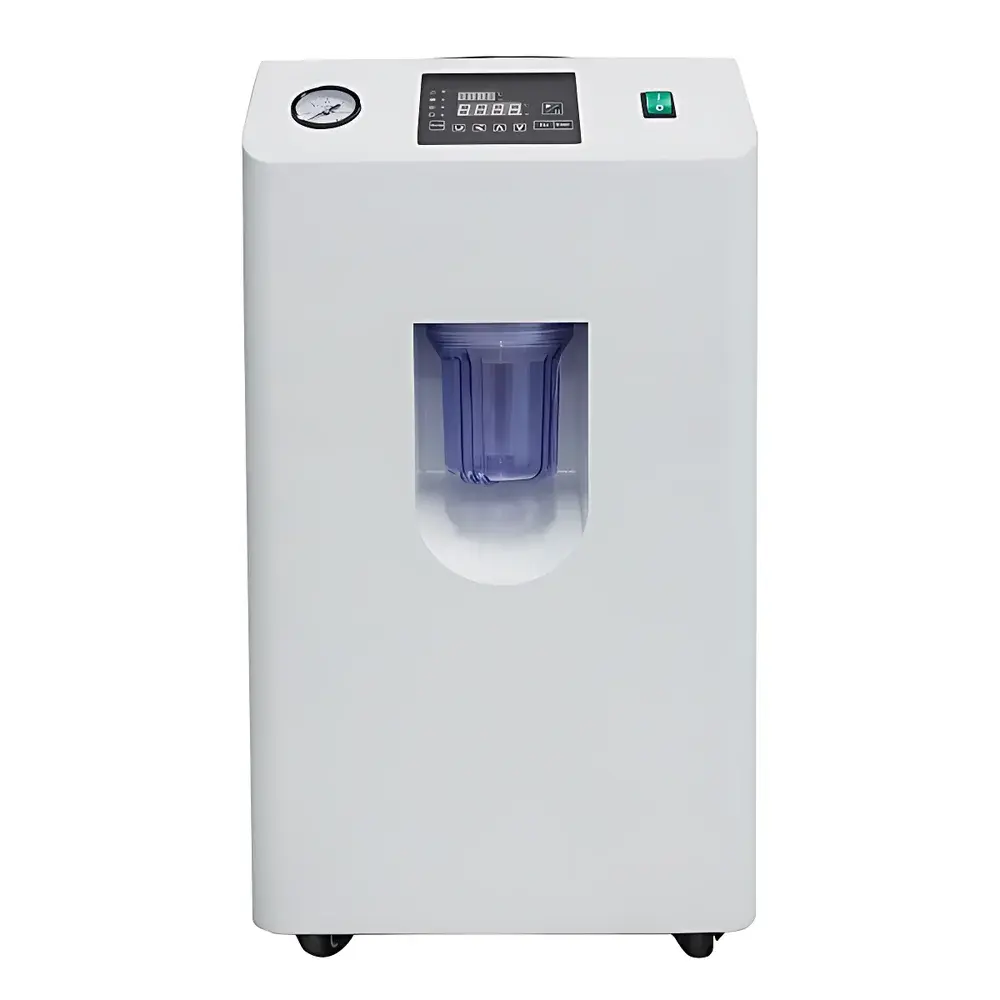
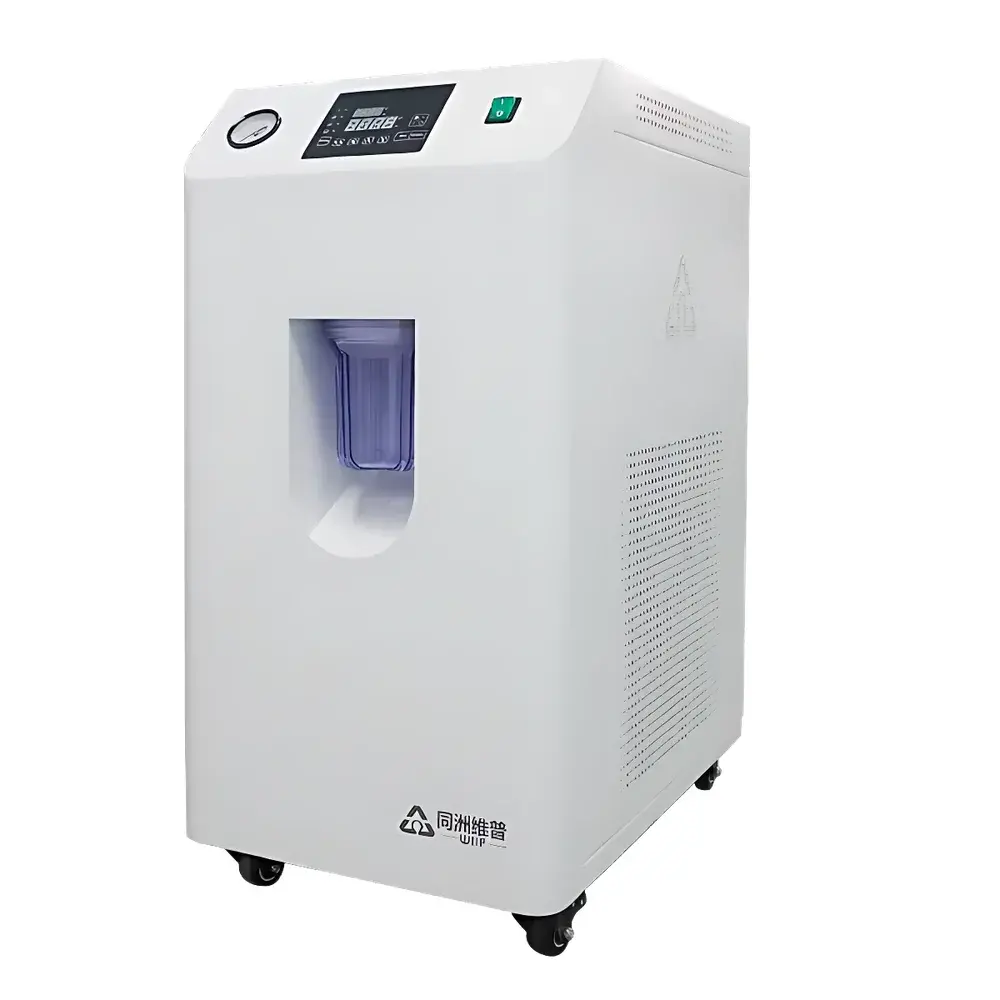
Tongzhou Weipu C2 Integrated Circulating Chiller for ICP Plasma Etching Systems
| Brand | Tongzhou Weipu |
|---|---|
| Origin | Beijing, China |
| Manufacturer Type | Direct Manufacturer |
| Instrument Type | Integrated Circulating Chiller |
| Cooling Method | Water-Cooled |
| Temperature Control Range | 5°C to 35°C |
| Cooling Capacity | 1600 W |
| Temperature Stability | ±0.1°C |
| Reservoir Volume | 20 L |
| Refrigeration Principle | Phase-Change Refrigeration |
| Compliance | Designed for laboratory and semiconductor process equipment integration |
Overview
The Tongzhou Weipu C2 Integrated Circulating Chiller is an engineered thermal management solution specifically designed to support high-precision, heat-sensitive analytical and fabrication instruments in research laboratories and semiconductor pilot lines. It operates on a closed-loop phase-change refrigeration cycle—utilizing a compressor-driven vapor-compression system with R410A or equivalent environmentally compliant refrigerant—to deliver stable, low-noise, and continuous cooling to demanding loads such as inductively coupled plasma (ICP) etch sources, reactive ion etchers (RIE), and atomic layer deposition (ALD) plasma generators. Unlike air-cooled alternatives, the C2 employs water-cooled condensation, enabling consistent performance under variable ambient conditions and minimizing thermal crosstalk with adjacent sensitive instrumentation. Its compact integrated architecture eliminates external condenser routing, reducing installation footprint and fluid path complexity while maintaining full operational transparency via front-panel digital interface and remote monitoring readiness.
Key Features
- Stable temperature regulation within ±0.1°C across the full 5–35°C operating range—critical for sustaining plasma impedance consistency and etch rate repeatability in ICP systems.
- 1600 W nominal cooling capacity at 20°C ambient, scalable via optional flow-rate modulation (0.8–4.0 L/min) to match dynamic thermal loads of multi-zone plasma chambers or stacked process tools.
- 20 L stainless-steel reservoir with level sensor, corrosion-resistant internal wetted parts (316L SS tubing, EPDM seals), and integrated deionized water compatibility for semiconductor-grade coolant circulation.
- Phase-change refrigeration architecture with high-efficiency scroll compressor, copper-aluminum microchannel condenser, and PID-controlled expansion valve ensures long-term reliability and minimal maintenance intervals.
- Front-panel touchscreen interface with real-time display of setpoint, actual temperature, flow rate, compressor status, and fault codes—including over-temperature, low-flow, and refrigerant pressure alerts.
- RS485 Modbus RTU and optional Ethernet (TCP/IP) connectivity for integration into centralized facility monitoring systems or SCADA platforms supporting ISO/IEC 17025-compliant lab infrastructure.
Sample Compatibility & Compliance
The C2 chiller is validated for continuous-duty operation with plasma-based analytical and process tools requiring precise thermal stabilization of RF generators, matching networks, and chamber cooling jackets. It meets mechanical and electrical safety requirements per GB 4793.1 (equivalent to IEC 61010-1) and complies with CE marking directives for laboratory equipment (2014/30/EU EMC and 2014/35/EU LVD). While not certified to UL 61010-1, its design adheres to core risk mitigation principles including double-insulated power supply, ground-fault detection, and overpressure relief in the coolant loop. For GMP/GLP environments, audit-ready operation logs can be exported via USB or network interface, supporting traceability requirements aligned with FDA 21 CFR Part 11 when paired with validated data acquisition software.
Software & Data Management
The embedded firmware supports time-stamped event logging (start/stop cycles, alarms, setpoint changes) stored internally for up to 30 days. Optional PC-based configuration software (Windows/Linux compatible) enables remote parameter tuning, historical trend analysis, and export of CSV-formatted thermal profiles. All communication protocols are open and documented—facilitating integration with LabVIEW, MATLAB, or custom Python-based control suites. No proprietary cloud services or mandatory vendor subscriptions are required; local network deployment ensures full data sovereignty and compliance with institutional IT security policies.
Applications
- Thermal stabilization of ICP plasma sources in optical emission spectrometers (ICP-OES) and mass spectrometers (ICP-MS), preventing wavelength drift and detector saturation.
- Cooling of RF matching networks and chamber walls in plasma etch tools (ICP, RIE, CCP) to maintain consistent electron density and minimize sidewall redeposition.
- Support for PEALD reactors by regulating heater block and showerhead temperatures during pulsed plasma exposure sequences.
- Heat extraction from rapid thermal processing (RTP) lamp arrays and magnetic probe station cryo-shields where vibration isolation and thermal inertia must be minimized.
- Secondary cooling loop for glovebox antechambers, SEM column chillers, and high-frequency induction melters requiring non-condensing, low-particulate coolant delivery.
FAQ
What is the maximum allowable coolant conductivity for semiconductor applications?
For compatibility with ALD/ICP tools, recommended resistivity is ≥1 MΩ·cm (conductivity ≤1 µS/cm); deionized water with inline resin cartridge is advised.
Can the C2 operate continuously at 5°C ambient?
Yes—the water-cooled condenser design maintains rated cooling capacity down to 5°C ambient without derating, provided the facility cooling water supply remains within 10–32°C.
Is the reservoir compatible with ethylene glycol mixtures?
No—glycol-based coolants are not supported due to viscosity impact on pump head and potential seal incompatibility; only DI water or approved aqueous corrosion inhibitors (e.g., Dowfrost HD) may be used.
Does the unit include a built-in flow meter?
Yes—a calibrated turbine-type flow sensor provides real-time volumetric flow readout with ±3% accuracy across the operational range.
How is calibration traceability established?
Factory calibration uses NIST-traceable PT100 sensors; users may perform field verification using external Class A platinum resistance thermometers per ASTM E74-22 guidelines.
Related Products



