
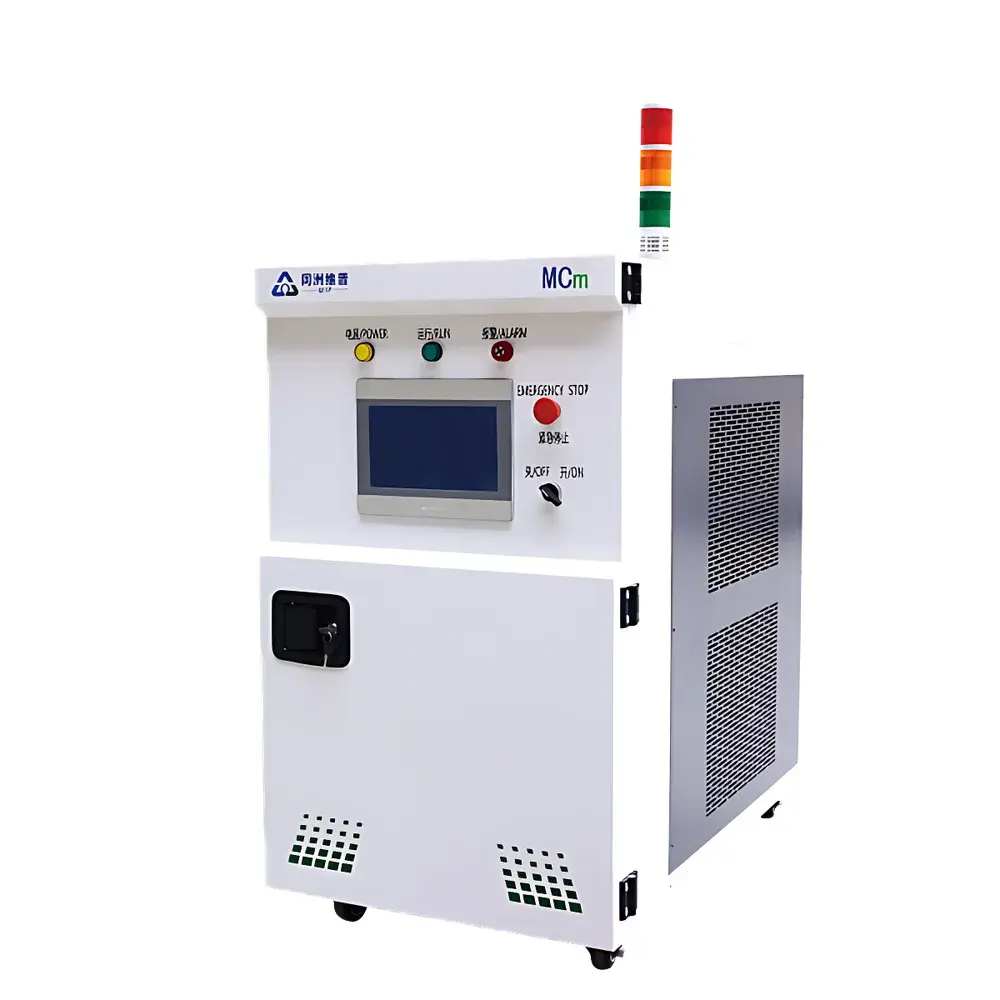
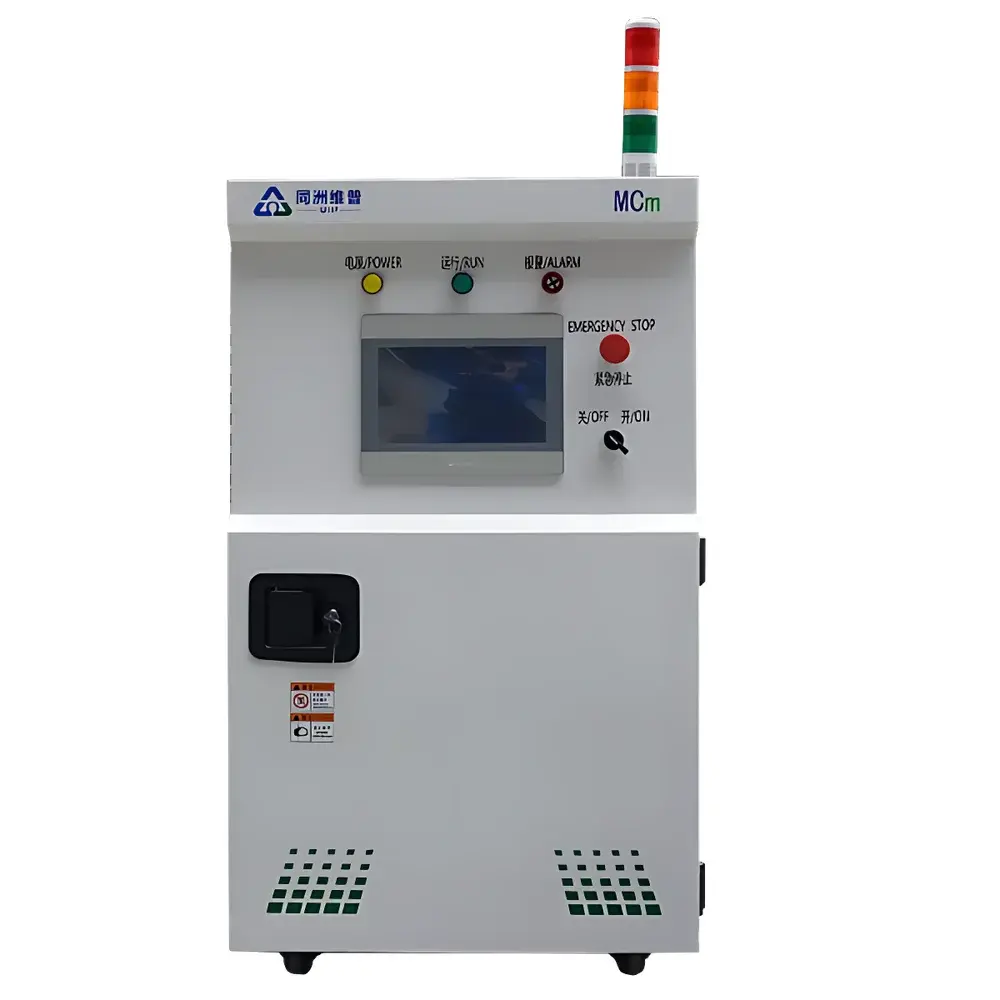
Tongzhou Weipu MCm Compact EV Battery Thermal Test Chiller
| Brand | Tongzhou Weipu |
|---|---|
| Origin | Beijing, China |
| Manufacturer Type | Direct Manufacturer |
| Instrument Type | Integrated Circulating Chiller |
| Temperature Range | −20 °C to +95 °C |
| Cooling Capacity | 3 kW to 15 kW |
| Temperature Stability | ±0.5 °C |
Overview
The Tongzhou Weipu MCm Compact EV Battery Thermal Test Chiller is an integrated, high-precision circulating temperature control system engineered specifically for electrochemical testing and thermal validation of lithium-ion battery components. It operates on a closed-loop refrigeration–heating cycle using environmentally compliant R-410A or R-134a refrigerant (model-dependent), combined with electric resistance heating and PID-controlled fluid circulation. The system delivers stable, programmable thermal environments across a wide operating range (−20 °C to +95 °C), enabling precise simulation of real-world thermal stress conditions—including rapid thermal cycling, steady-state thermal soak, and dynamic load-driven temperature response—critical for evaluating cell-level thermal runaway propagation, module-level heat dissipation efficiency, and pack-level thermal management system (TMS) performance under ISO 12405-4, UN GTR 20, and SAE J2464 test protocols.
Key Features
- Integrated dual-mode thermal control architecture combining vapor-compression refrigeration and electric immersion heating for seamless transition between cooling and heating without external switching valves
- High-flow, low-pulsation magnetic-drive circulation pump with flow rate monitoring and adjustable pressure setpoints (0.2–3.0 bar) to ensure uniform thermal transfer across multi-channel battery test fixtures
- Stainless steel 316L fluid reservoir and internal piping with corrosion-resistant glycol–water mixture compatibility (up to 40% propylene glycol)
- Industrial-grade PLC-based controller with 7-inch capacitive touchscreen interface supporting ramp-soak profiles, multi-step programs, and real-time deviation alarms
- RS485 Modbus RTU and Ethernet TCP/IP communication interfaces for integration into automated test benches and SCADA systems
- Comprehensive safety subsystems including high/low pressure cutouts, overtemperature protection, dry-run detection, and leak sensing via conductivity monitoring
Sample Compatibility & Compliance
The MCm chiller is designed for direct coupling with battery test chambers, calorimeters (e.g., BTC-500, TCC-1000), and custom thermal interface plates used in EV battery validation labs. Its fluid outlet/inlet ports conform to standard 3/8″ and 1/2″ NPT or BSP threading, enabling mechanical compatibility with common quick-connect fittings (e.g., Parker A-Lok, Swagelok). The system meets CE marking requirements under the EU Machinery Directive 2006/42/EC and Electromagnetic Compatibility Directive 2014/30/EU. Fluid temperature stability of ±0.5 °C (at 1 L/min flow, ambient 25 °C) supports GLP-compliant thermal validation per ASTM E2577 and ISO/IEC 17025:2017 calibration traceability frameworks. Optional IQ/OQ documentation packages are available for GMP-aligned battery development facilities.
Software & Data Management
The embedded controller logs timestamped temperature, pressure, flow, and power consumption data at user-defined intervals (1 s to 60 min) and stores up to 30 days locally. Export is supported via USB mass storage (CSV format) or network transfer (FTP/SFTP). For enterprise integration, the optional Tongzhou Weipu LabLink™ software provides remote monitoring, alarm escalation via email/SMS, audit trail generation with operator ID tagging, and 21 CFR Part 11–compliant electronic signature support. All configuration changes and system events are recorded with immutable timestamps and source identifiers—enabling full traceability during regulatory audits.
Applications
- Thermal characterization of prismatic, pouch, and cylindrical Li-ion cells under controlled charge/discharge cycles (e.g., CC/CV, pulse loading)
- Validation of battery thermal management system (BTMS) designs—including cold plate efficiency, coolant channel pressure drop, and transient response time
- Accelerated life testing (ALT) and abuse testing per UL 1642, IEC 62619, and GB/T 31485 standards
- Calorimetric measurement synchronization in isothermal or adiabatic modes using ARC or BTC platforms
- Preconditioning of battery modules prior to mechanical shock, vibration, or penetration testing
FAQ
What is the minimum and maximum working fluid temperature range?
The MCm chiller maintains stable operation from −20 °C to +95 °C, with full cooling capacity available down to −10 °C and full heating capacity up to +90 °C. Performance derating applies at extreme ends of the range.
Can the system be integrated with third-party battery cyclers such as Arbin or Bitrode?
Yes—via Modbus RTU over RS485 or TCP/IP, the MCm supports bi-directional command exchange for synchronized temperature setpoint updates and status feedback during dynamic test sequences.
Is the chiller suitable for use with dielectric coolants required for high-voltage battery testing?
Standard configuration uses aqueous glycol solutions; however, models with fluorinated heat transfer fluids (e.g., 3M™ Novec™ 7200) are available upon request with modified seals and pump materials.
What maintenance intervals are recommended for long-term reliability?
Compressor oil and refrigerant levels should be verified annually; glycol concentration and pH tested quarterly; and filter cartridges replaced every 6 months under continuous operation.
Does the system include validation documentation for laboratory accreditation?
Factory-installed sensors are calibrated against NIST-traceable references. IQ/OQ protocols and calibration certificates meeting ISO/IEC 17025 requirements can be supplied as an optional service.



