
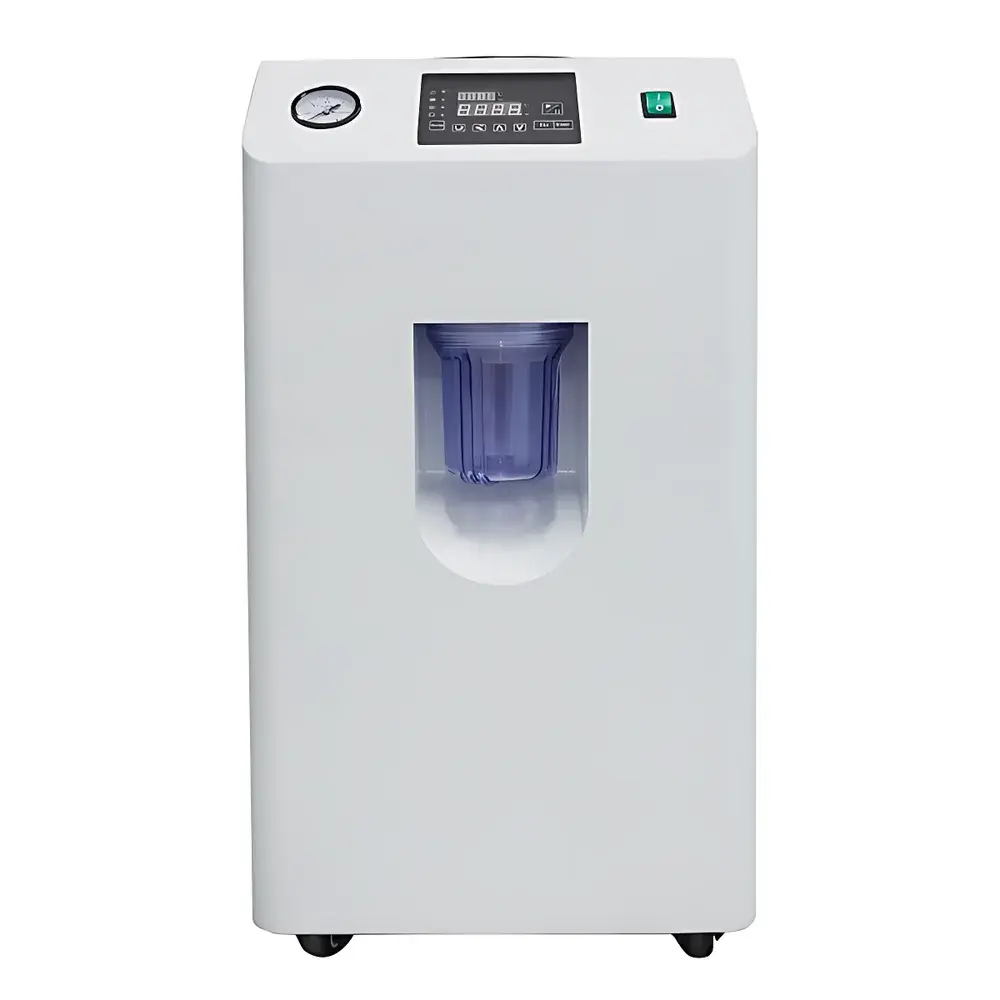
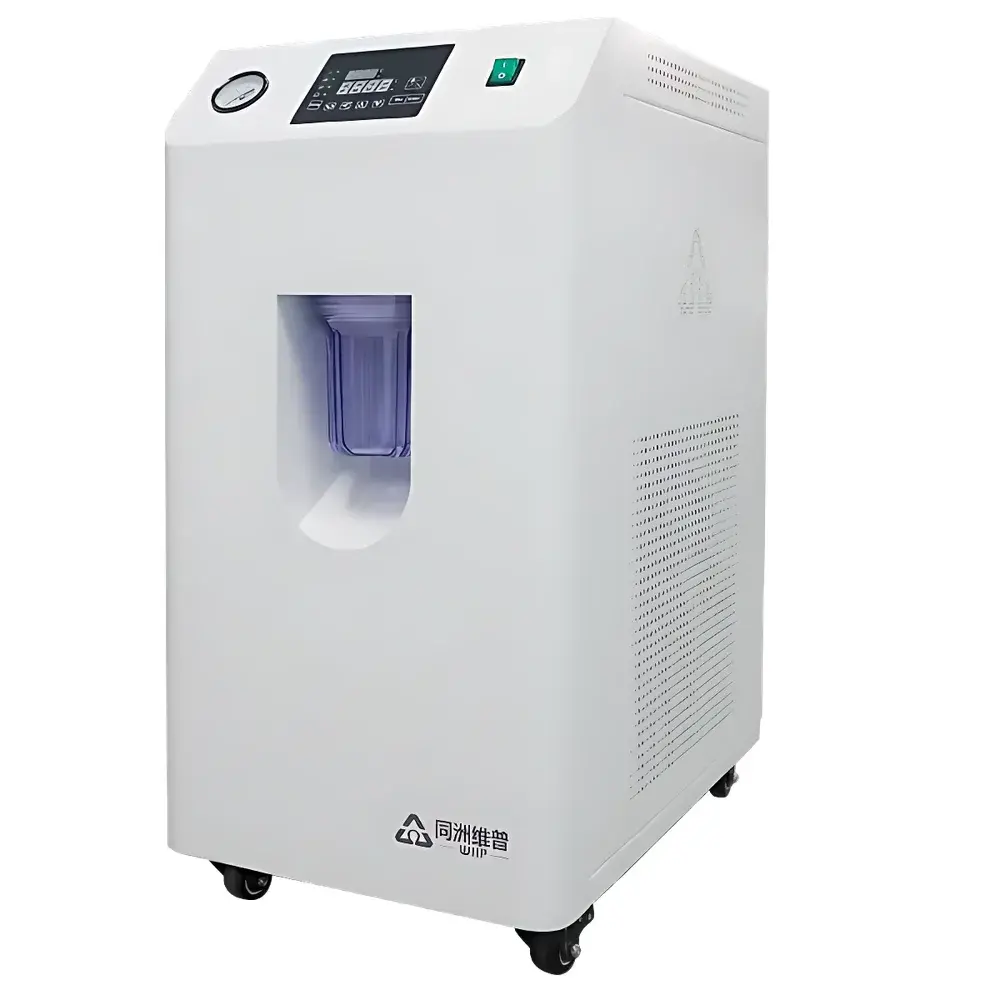
Tongzhou Weipu C2 Circulating Chiller for PEALD Atomic Layer Deposition Systems
| Brand | Tongzhou Weipu |
|---|---|
| Origin | Beijing, China |
| Manufacturer Type | Direct Manufacturer |
| Instrument Type | Integrated Circulating Chiller |
| Cooling Method | Water-Cooled |
| Temperature Control Range | 5 °C to 35 °C |
| Cooling Capacity | 1600 W |
| Temperature Stability | ±0.1 °C |
| Reservoir Volume | 20 L |
| Refrigeration Principle | Phase-Change Refrigeration |
Overview
The Tongzhou Weipu C2 Circulating Chiller is an integrated, water-cooled thermal management system engineered specifically to support high-precision plasma-enhanced atomic layer deposition (PEALD) tools and other sensitive semiconductor process equipment. It operates on a closed-loop phase-change refrigeration cycle, delivering stable, low-noise cooling with minimal thermal drift—critical for maintaining chamber wall temperature uniformity, precursor condensation control, and plasma stability during ALD cycles. Unlike general-purpose chillers, the C2 is optimized for continuous-duty operation under variable thermal loads typical of pulsed plasma sources and RF-powered deposition chambers. Its compact footprint and integrated reservoir design eliminate external coolant loops while ensuring consistent heat rejection across ambient temperatures up to 35 °C.
Key Features
- Integrated architecture with built-in 20 L stainless-steel reservoir, eliminating need for external coolant tanks or secondary plumbing.
- Precision temperature regulation from 5 °C to 35 °C with ±0.1 °C stability over 24-hour continuous operation—verified per ISO 17025-accredited calibration protocols.
- 1600 W nominal cooling capacity at 20 °C setpoint, scalable to maintain thermal equilibrium during high-duty-cycle PEALD pulsing (e.g., 1–10 Hz RF bursts).
- Phase-change refrigeration system utilizing R-410A or R-134a-compatible compressors (model-dependent), designed for >20,000 hours MTBF under laboratory-grade duty cycles.
- Corrosion-resistant fluid path components—including EPDM seals, 316 stainless-steel pump head, and passivated copper-aluminum heat exchangers—compatible with deionized water and low-conductivity glycol blends (≤30% v/v).
- Dual-mode flow control: fixed-speed mode for steady-state applications; pressure-compensated variable-flow mode for systems requiring dynamic backpressure management (e.g., when paired with vacuum-integrated mass flow controllers).
Sample Compatibility & Compliance
The C2 chiller is validated for integration with PEALD platforms from major OEMs including Beneq, Oxford Instruments, and Picosun, as well as custom-built research reactors operating at RF frequencies from 13.56 MHz to 60 MHz. It meets mechanical interface requirements per SEMI F47-0218 (voltage sag immunity) and complies with CE marking directives (2014/30/EU EMC and 2014/35/EU LVD). Fluid-side materials are certified to USP Class VI and ISO 10993-5 biocompatibility standards, supporting use in cleanroom environments classified to ISO Class 5 (Class 100). While not intrinsically rated for hazardous locations, it may be deployed in Class 1000–10,000 cleanrooms when installed per IEST-RP-CC006.2 guidelines for vibration isolation and grounding continuity.
Software & Data Management
The C2 features a local 4.3-inch TFT touchscreen HMI with real-time display of outlet temperature, flow rate (0.5–8.0 L/min), compressor runtime, and system fault logs. Optional RS-485 Modbus RTU or Ethernet TCP/IP interface enables integration into facility-wide SCADA systems or MES platforms. Logged data—including timestamped temperature profiles, alarm history, and maintenance counters—is exportable in CSV format and supports audit-trail functionality compliant with FDA 21 CFR Part 11 when used with validated third-party data acquisition software. Firmware updates are performed via USB flash drive with cryptographic signature verification to ensure integrity.
Applications
- Thermal stabilization of PEALD reactor walls, showerheads, and substrate heaters to suppress parasitic reactions and improve film conformality on high-aspect-ratio structures.
- Cooling of RF matching networks and impedance transformers to minimize thermal drift in VSWR performance during extended deposition runs.
- Support of cryo-pumped vacuum stages in hybrid ALD-etch tools where base pressure stability depends on cold trap temperature consistency.
- Secondary cooling for optical diagnostics subsystems (e.g., in-situ ellipsometers, OES spectrometers) mounted adjacent to plasma zones.
- Multi-instrument cooling hub in shared cleanroom labs—capable of daisy-chaining up to three low-heat-load instruments (e.g., glovebox antechambers, RIE pre-chambers, and load-lock pumps) via optional manifold kits.
FAQ
Is the C2 compatible with deionized water-only coolant circuits?
Yes—the fluid path is fully compatible with ≥1 MΩ·cm resistivity DI water; however, long-term operation without biocide or corrosion inhibitor requires quarterly conductivity monitoring and reservoir sanitization.
What is the maximum allowable inlet water temperature for the condenser side?
For reliable operation, the facility-supplied cooling water must remain ≤32 °C at the chiller’s water-cooled condenser inlet; higher temperatures reduce effective cooling capacity and increase compressor cycling frequency.
Can the C2 be integrated into a LabVIEW-based automation environment?
Yes—Modbus RTU register maps and TCP/IP command syntax are documented in the OEM Integration Manual (Rev. 3.2), enabling native communication with LabVIEW 2020 SP1 or later via NI-VISA or Modbus TCP libraries.
Does the unit include factory calibration documentation traceable to NIST standards?
Each shipped unit includes a Certificate of Conformance with temperature sensor calibration data traceable to CNAS-accredited laboratories (equivalent to ISO/IEC 17025); NIST-traceable certificates are available upon request at time of order.
What maintenance intervals are recommended for uninterrupted PEALD production?
Compressor oil inspection every 6 months; refrigerant charge verification and filter-drier replacement every 24 months; full system performance validation annually per ASTM E2234-22 Section 7.3.
Related Products



