
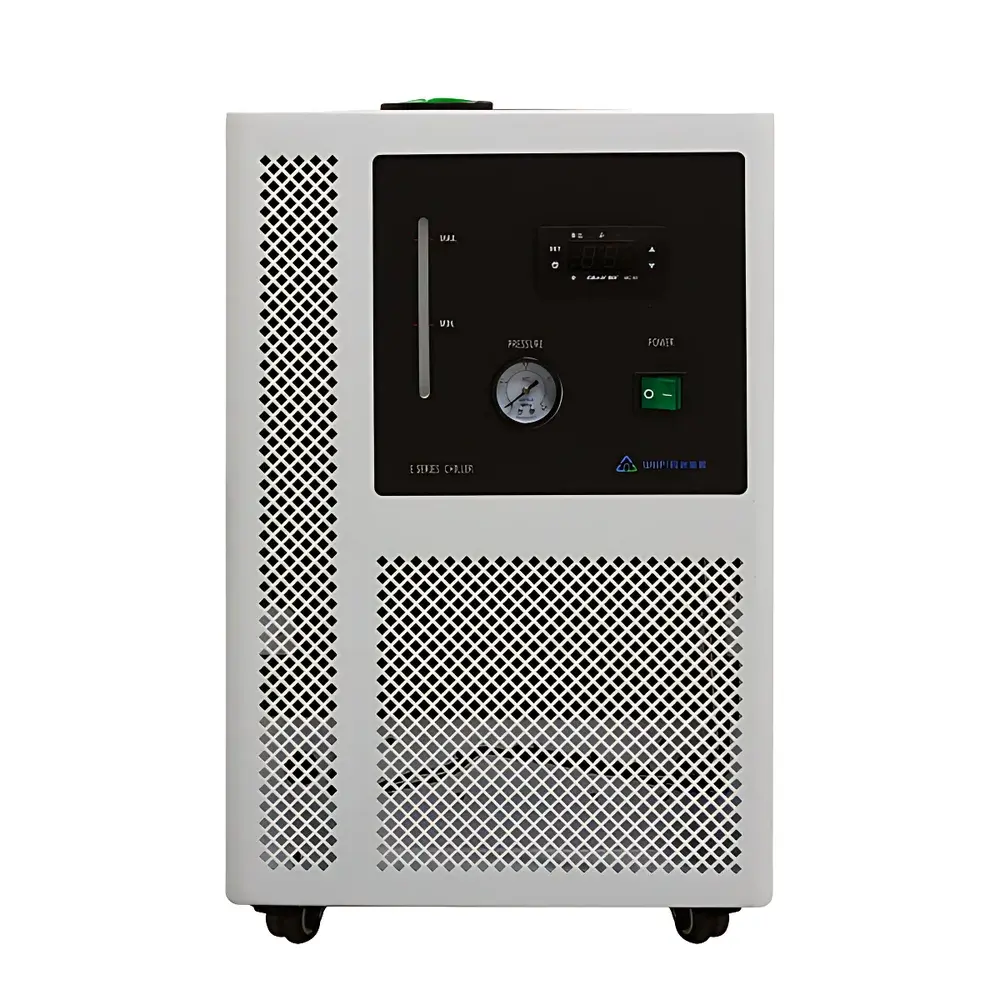
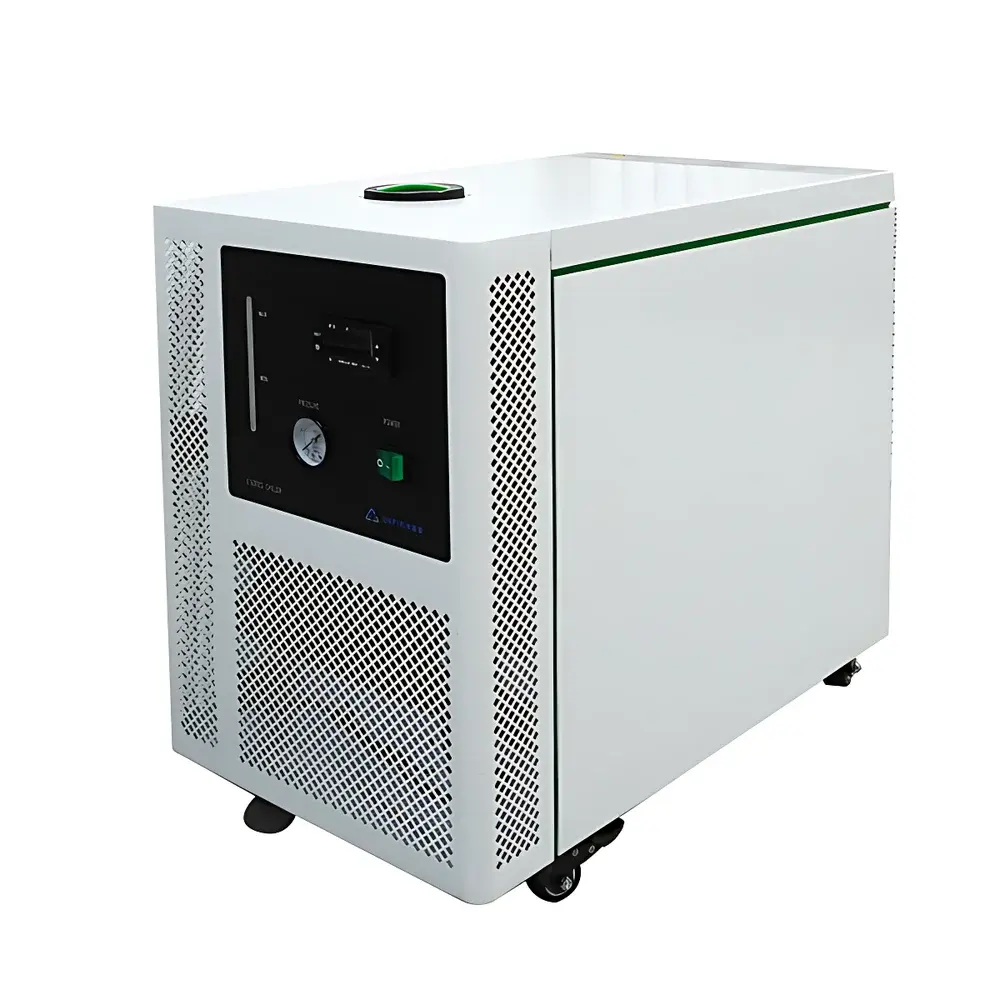
Tongzhou Weipu E2 Circulating Chiller for Atomic Absorption Spectrophotometers (AAS)
| Brand | Tongzhou Weipu |
|---|---|
| Origin | Beijing, China |
| Manufacturer Type | Direct Manufacturer |
| Instrument Type | Integrated Circulating Chiller |
| Cooling Method | Water-Cooled |
| Temperature Control Range | 5 °C to 35 °C |
| Cooling Capacity | 300 W to 5600 W |
| Temperature Stability | ±0.1 °C |
| Operating Principle | Phase-Change Refrigeration |
| Form Factor | Horizontal Benchtop/Under-Desk Design |
| Compliance Scope | Designed for AAS, ICP-OES, ICP-MS, Glove Boxes, and Kjeldahl Nitrogen Analyzers |
Overview
The Tongzhou Weipu E2 Circulating Chiller is an integrated, horizontal-format refrigeration system engineered specifically to meet the stringent thermal management requirements of high-precision analytical instrumentation. It operates on a phase-change refrigeration cycle—utilizing compression, condensation, expansion, and evaporation of a certified refrigerant—to deliver stable, controllable coolant circulation at temperatures between 5 °C and 35 °C. Unlike generic chillers, the E2 is purpose-built for atomic absorption spectrophotometers (AAS), where consistent coolant temperature directly influences nebulizer efficiency, flame stability, graphite furnace thermal ramping fidelity, and long-term signal reproducibility. Its low-profile horizontal architecture enables under-bench or desktop-integrated installation—minimizing laboratory footprint while maintaining accessibility for service and fluid maintenance. The unit is manufactured in Beijing and conforms to ISO 9001-certified production protocols, with design inputs aligned to IEC 61010-1 safety standards for laboratory electrical equipment.
Key Features
- Horizontal form factor optimized for space-constrained analytical labs—height permits installation beneath standard laboratory workbenches (typical clearance: ≥180 mm)
- Wide-range cooling capacity (300 W–5600 W) dynamically matched to variable thermal loads from AAS flame and graphite furnace modules, ICP plasma torches, and vacuum pump jackets
- High-stability temperature control with ±0.1 °C fluctuation over 24-hour continuous operation—achieved via PID-controlled refrigerant expansion valve and dual-sensor feedback loop (inlet/outlet)
- Corrosion-resistant stainless-steel reservoir and fluid path components compatible with deionized water, 30% ethylene glycol/water mixtures, and other non-aggressive coolants approved for spectroscopic instrumentation
- Integrated flow monitoring with adjustable pressure setpoints and automatic dry-run protection to prevent pump damage during low-flow or blockage events
- RS-485 communication interface supporting Modbus RTU protocol for integration into centralized lab infrastructure monitoring systems
Sample Compatibility & Compliance
The E2 chiller is validated for continuous duty with major AAS platforms—including PerkinElmer PinAAcle, Thermo Scientific iCE 3000, and Shimadzu AA-7000—as well as ICP-OES (e.g., Agilent 5110), ICP-MS (e.g., Thermo Scientific iCAP RQ), inert-atmosphere glove boxes (O₂ < 1 ppm), and Kjeldahl digestion systems requiring precise condenser cooling. All wetted materials comply with USP Class VI biocompatibility requirements and are free of leachable heavy metals that could compromise trace-metal analysis. The unit meets CE marking requirements per Directive 2014/30/EU (EMC) and 2014/35/EU (LVD). Optional documentation packages support GLP/GMP audit readiness, including factory calibration certificates (traceable to NIM, China), IQ/OQ templates, and maintenance log templates aligned with ISO/IEC 17025 clause 6.4.3.
Software & Data Management
The E2 operates via an embedded microcontroller with local LCD interface (4-button navigation, real-time display of setpoint, actual temperature, flow rate, and compressor status). While it does not include proprietary PC software, its RS-485 port enables seamless integration with third-party laboratory information management systems (LIMS) and building automation platforms. Data logging (temperature, pressure, runtime, fault codes) is stored onboard for up to 30 days and exportable via USB flash drive in CSV format. Audit trail functionality satisfies FDA 21 CFR Part 11 requirements when deployed with validated LIMS middleware—supporting electronic signatures, user-level access control, and immutable event records for critical cooling parameters.
Applications
- Stabilizing graphite furnace atomizers in electrothermal AAS to ensure repeatable pyrolysis and atomization temperature profiles across multi-element sequences
- Maintaining constant coolant temperature for ICP-OES plasma torch cooling jackets—reducing spectral drift and improving long-term precision (RSD < 0.8% over 8 h)
- Providing regulated heat removal for cryo-trapped vacuum pumps used in ICP-MS sample introduction systems
- Controlling condenser temperature in automated Kjeldahl digestors to standardize distillation efficiency and minimize ammonia loss
- Sustaining inert gas purge temperature in glove boxes housing hygroscopic AAS standards or reference materials
FAQ
Is the E2 chiller compatible with PerkinElmer AAS models requiring 15 °C ±0.3 °C coolant setpoints?
Yes—the E2 achieves ±0.1 °C stability at 15 °C under nominal load (1.2 L/min flow, 3 bar backpressure) and includes factory calibration verification at this point.
Can the unit operate continuously for 72 hours without maintenance intervention?
Yes—rated for unattended 24/7 operation; reservoir volume (12 L) and auto-evaporation compensation support extended runtime without manual top-up.
Does the chiller support glycol-based coolant mixtures?
Yes—fluid path materials are rated for up to 40% ethylene glycol/water; viscosity and thermal conductivity corrections are preloaded in firmware.
What safety certifications apply to the E2 model shipped to the EU?
CE marked per EMC Directive 2014/30/EU and Low Voltage Directive 2014/35/EU; RoHS 2011/65/EU compliant; full test reports available upon request.
Is remote monitoring possible without additional hardware?
No—RS-485 interface requires external gateway (e.g., Modbus-to-Ethernet converter); no built-in Wi-Fi or Ethernet port is included.



