
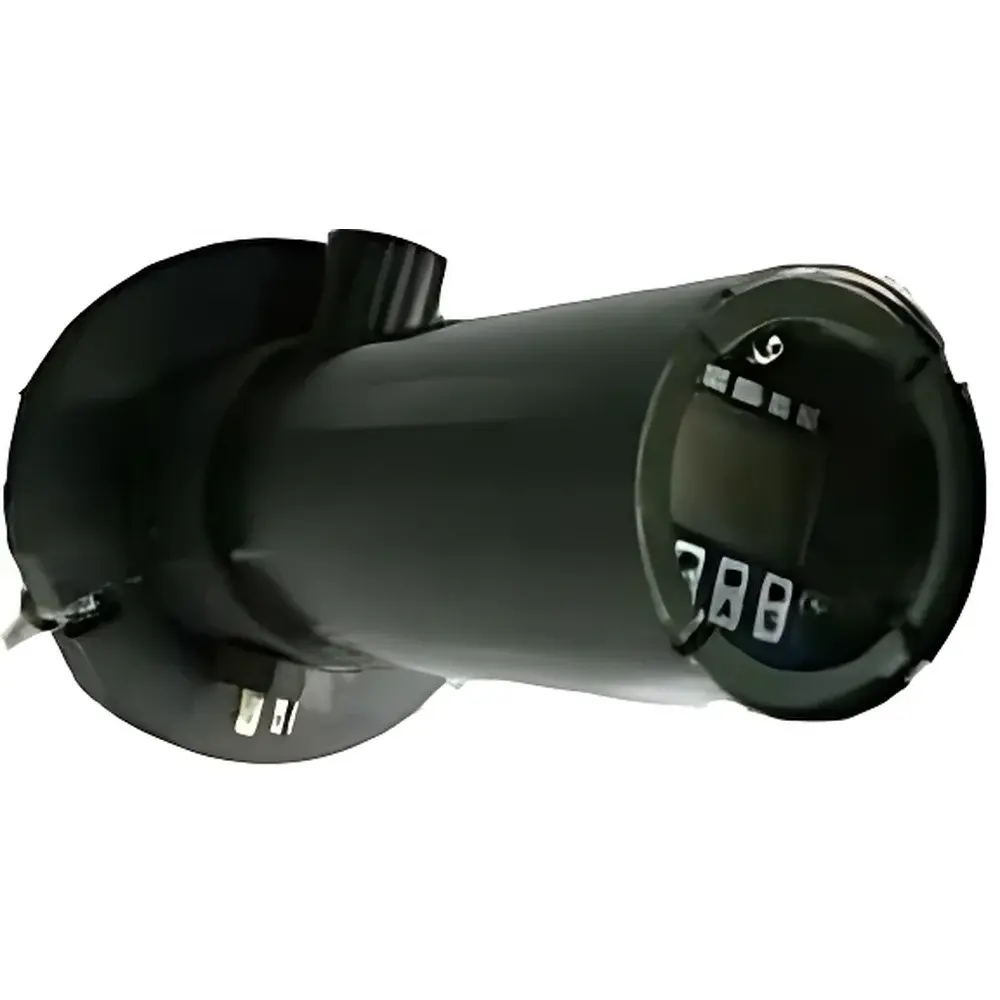
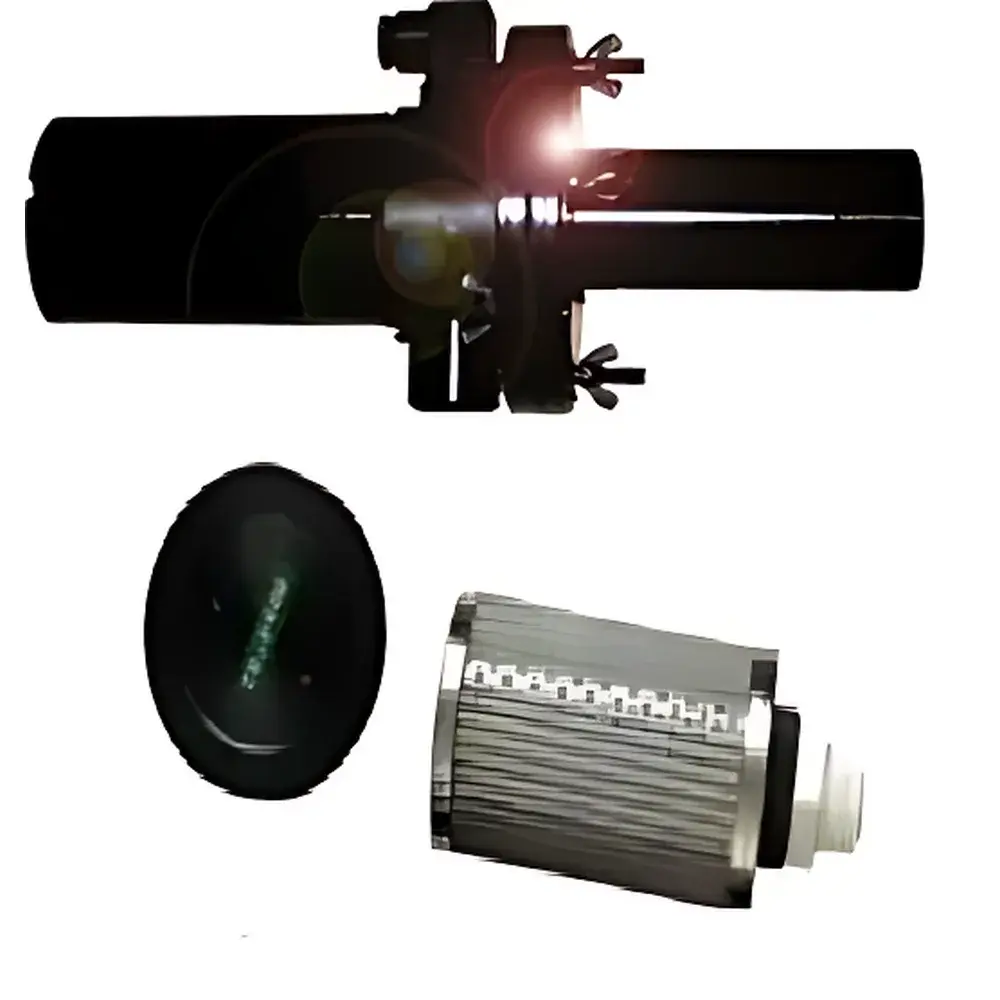
ML3100 Laser Backscatter Continuous Emission Monitoring System (CEMS) for Particulate Matter
| Key | Origin: Beijing, China |
|---|---|
| Manufacturer Type | Authorized Distributor |
| Model | ML-3100 |
| Operating Principle | Laser Backscatter Light Scattering |
| Explosion-Proof Rating | Ex d IIB T4 Gb |
| Measurement Range | 0–200 mg/m³ (low range) / 0–10 g/m³ (high range) |
| Resolution | 0.01 mg/m³ |
| Accuracy | ±1% of reading |
| Relative Error | ±2% FS |
| Operating Temperature | −40 °C to +65 °C |
| Humidity Range | 0–100% RH |
| Max Flue Gas Temp | 300 °C (customizable for higher) |
| Output Signal | 4–20 mA (max load 500 Ω) |
| Power Consumption | ≤3 W |
| Dimensions | 160 × 160 × 250 mm |
| Weight | 4 kg |
| Applicable Stack Diameter | 0.5–15 m |
| Minimum Detectable Concentration | 2 mg/m³ |
Overview
The ML3100 Laser Backscatter Continuous Emission Monitoring System (CEMS) is an industrial-grade particulate matter (PM) analyzer engineered for real-time, in-situ measurement of dust and aerosol mass concentration in flue gas streams. It operates on the principle of laser backscatter photometry—where a collimated 650 nm semiconductor laser beam interacts with suspended particles in the stack, and the intensity of retro-reflected light is quantitatively correlated to particle mass concentration via factory-calibrated Mie scattering models. Unlike forward-scatter or transmissometry systems, the ML3100’s single-ended optical architecture eliminates alignment sensitivity to mechanical vibration, thermal gradient-induced refractive index fluctuations, or stack wall deformation—making it inherently robust for harsh, high-turbulence emission sources such as coal-fired boilers, sintering belts, rotary kilns, and electrostatic precipitator (ESP) bypass ducts. Designed for permanent installation in classified hazardous areas, the unit complies with IEC 60079-0 and IEC 60079-1 for flameproof enclosure (Ex d IIB T4 Gb), enabling safe deployment adjacent to explosive atmospheres without external purge or pressurization.
Key Features
- Single-ended, alignment-free optical design: No requirement for opposing transmitter/receiver ports; eliminates field calibration drift due to misalignment.
- “Tool-free” mechanical installation: All mounting hardware integrates into the housing; only one screwdriver required for electrical termination—typical field commissioning time <10 minutes.
- Low-power embedded architecture: Total system power draw ≤3 W enables operation from standard 24 V DC loop-powered supplies or uninterruptible backup sources.
- Wide dynamic measurement span: Dual-range capability supports high-resolution monitoring at low concentrations (0–200 mg/m³) and overload tolerance up to 10 g/m³ without sensor saturation or manual range switching.
- Environmental resilience: IP66-rated enclosure with integrated rain shield; operational across −40 °C to +65 °C ambient and 0–100% RH non-condensing humidity.
- Standard analog interface: Isolated 4–20 mA output compliant with IEC 61000-6-2/6-4 EMC requirements; configurable zero/span points via local DIP switches or remote HART-compatible command set.
Sample Compatibility & Compliance
The ML3100 is validated for continuous measurement of solid-phase particulates—including fly ash, cement kiln dust, metallurgical fumes, and lime slurry droplets—in dry or moderately wet flue gases (dew point ≤80 °C). It meets EN 15267-3 (QAL1 certified per EN 14181) for automated monitoring of industrial emissions under EU Industrial Emissions Directive (IED) Annex VI. For U.S. applications, the analyzer supports compliance with EPA Method 9 (visual opacity correlation) and Method 5 (isokinetic sampling reference), and its data integrity framework aligns with 40 CFR Part 60 PS-11 and Part 75 Appendix A requirements. All firmware revisions maintain full audit trail logging per FDA 21 CFR Part 11 principles when integrated with compliant CEMS data acquisition systems (DAS).
Software & Data Management
While the ML3100 operates autonomously via analog output, optional RS-485 Modbus RTU interface enables integration into centralized SCADA or CEMS platforms (e.g., Siemens Desigo, Honeywell Experion PKS, or custom OPC UA architectures). Configuration and diagnostics are accessible via local LCD menu or remote terminal using standard Modbus function codes (03h/06h). Internal event logging records timestamped calibration events, fault conditions (e.g., lens contamination alert, signal dropout >5 s), and temperature-compensated raw scatter voltage—retained for ≥30 days in non-volatile memory. Data export formats include CSV and XML for traceability in GLP/GMP-regulated environments.
Applications
- Regulatory CEMS for coal-, biomass-, and waste-to-energy power plants subject to EU LCP BREF or U.S. MATS compliance.
- Process optimization in cement clinker coolers, steel sinter strands, and aluminum anode baking furnaces.
- Performance verification of baghouses, ESPs, and wet scrubbers—enabling predictive maintenance based on differential pressure vs. real-time PM trends.
- Stack testing support during EPA Performance Specifications (PS-11) certification and periodic QA/QC audits.
- Mobile source emission characterization in tunnel ventilation monitoring and incinerator stack surveys.
FAQ
Does the ML3100 require periodic factory recalibration?
No—field zero calibration can be performed using clean-air purging (N₂ or filtered ambient air); span verification is recommended annually against gravimetric reference methods (e.g., ISO 9096 or EPA Method 5).
Can it operate in stacks with internal refractory lining or acoustic insulation?
Yes—the 12° acceptance angle and 150 mm minimum standoff distance accommodate typical liner thicknesses and irregular internal geometries without signal attenuation.
Is high-temperature flue gas (>300 °C) supported?
Standard units are rated to 300 °C flue gas temperature; extended-range variants with active air-cooled probe housings are available for up to 500 °C upon engineering review.
How is optical window fouling managed?
The instrument includes automatic baseline drift compensation and optional pneumatic air-knife cleaning kits (integrated or external) compatible with plant instrument air supply (4–7 bar, oil-free, dew point <−20 °C).
What documentation is supplied for regulatory submittal?
Each unit ships with Factory Acceptance Test (FAT) report, Ex-certification dossier (ATEX/IECEx), QAL1 test summary, and CE DoC—fully editable for site-specific validation protocols.
Related Products







