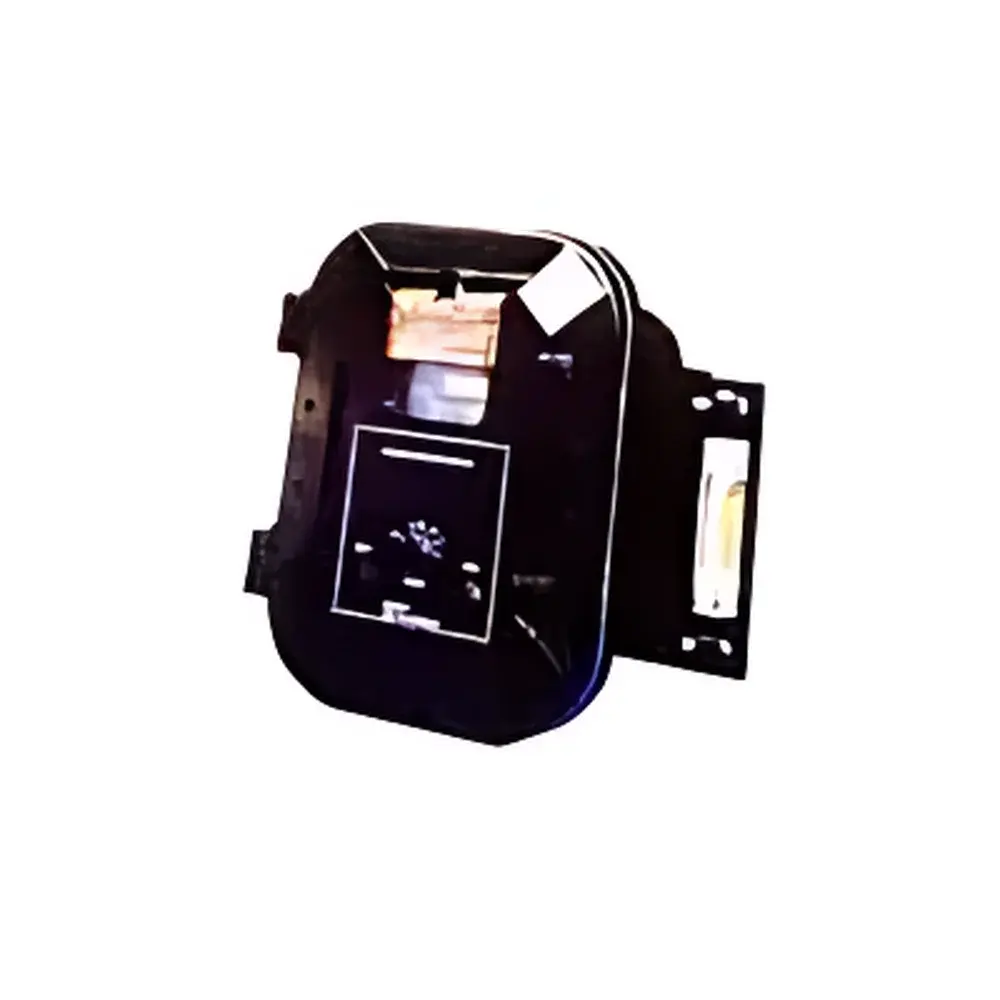
AII GPR-28 Intrinsically Safe Online Oxygen Analyzer for Percent-Level Measurement
| Brand | AII |
|---|---|
| Origin | USA |
| Model | GPR-28 |
| Measurement Principle | Electrochemical Fuel Cell |
| Range Options | 0–1%, 0–5%, 0–10%, 0–25% FS |
| Sensor Type | GPR-11-32-4 (standard), XLT-11-32-4 (optional, for CO₂-rich streams) |
| Sample Gas Compatibility | Inert gases, He, H₂, mixed gases, and acidic CO₂-containing streams (with XLT sensor) |
| Enclosure Rating | NEMA 4X / 7, Class I, Division 1, Groups B, C, D |
| Temperature Range | GPR sensor: –10 to +45 °C |
| XLT sensor | –20 to +45 °C |
| Pressure Range | Inlet 5–30 psig (max 100 psig), Outlet: ambient |
| Flow Rate | 1–5 SCFH (recommended: 2 SCFH) |
| Response Time (T₉₀) | ≤10 seconds |
| Linearity | >0.995 |
| Sensitivity | <0.5% FS |
| Zero & Span Stability | <1% FS/month |
| Display Resolution | 0.001% O₂ |
| Output Signals | 0–1 VDC analog + isolated 4–20 mA |
| Alarm Outputs | Two user-adjustable capacitive relay outputs (high/low) |
| Calibration | Single-point with 80% FS certified span gas |
| Compensation | Automatic temperature compensation |
| Power Supply | 220 VAC, 50/60 Hz |
| Housing | Anodized aluminum wall-mount enclosure |
| Certifications | FM, CSA, CE, ISO 9001 |
Overview
The AII GPR-28 is an intrinsically safe, continuous online oxygen analyzer engineered for precise percent-level O₂ measurement in hazardous industrial environments. It employs a galvanic fuel cell sensing principle—where oxygen diffuses through a selective membrane and undergoes electrochemical reduction at the cathode, generating a current linearly proportional to partial pressure. This zero-power, self-powered transduction mechanism ensures long-term stability without external bias voltage or frequent recalibration. Designed for integration into continuous process monitoring loops, the GPR-28 delivers high reproducibility in demanding applications including inerting control, blanketing verification, fermentation off-gas analysis, and combustion air optimization. Its robust architecture supports operation under fluctuating pressure and flow conditions while maintaining traceable accuracy per ASTM D6299 and ISO 8573-1 guidelines for gas purity validation.
Key Features
- Intrinsically safe design certified to FM, CSA, and CE standards for Class I, Division 1, Groups B–D locations—enabling deployment in petrochemical refineries, hydrogen production units, and pharmaceutical nitrogen purge systems.
- Dual-sensor compatibility: Standard GPR-11-32-4 sensor (36-month service life, zero maintenance) and optional XLT-11-32-4 variant for reliable operation in CO₂ concentrations exceeding 0.5%, eliminating sensor poisoning in biogas or beverage carbonation lines.
- Four factory-configurable full-scale ranges (0–1%, 0–5%, 0–10%, 0–25% O₂) selectable via front-panel controls housed within the explosion-proof operator interface.
- Integrated stainless-steel sampling train—including needle valve, rotameter, and 1/8″ Swagelok® compression fittings—ensuring corrosion resistance and leak-tight integrity per ASME B31.3 process piping requirements.
- Real-time diagnostics with dual capacitive relays for programmable high/low alarms and autonomous detection of sensor degradation, open-circuit faults, and power anomalies.
- Auto-compensated analog output (0–1 VDC) and fully isolated 4–20 mA signal compliant with ISA-50.00.01 current loop standards, supporting direct connection to DCS, PLC, or SCADA systems without signal conditioning.
Sample Compatibility & Compliance
The GPR-28 accommodates a broad spectrum of process gases, including nitrogen, argon, helium, hydrogen, and CO₂-diluted mixtures. When equipped with the XLT sensor, it maintains metrological integrity in acidic environments where conventional zirconia or paramagnetic sensors exhibit drift. All wetted materials meet FDA 21 CFR Part 177 compliance for food-grade applications. The analyzer conforms to IEC 60079-0/-11 for intrinsic safety, EN 61326-1 for EMC immunity in industrial settings, and ISO 9001:2015 for manufacturing quality control. Documentation includes full test reports, calibration certificates traceable to NIST standards, and conformity declarations supporting GLP/GMP audit readiness.
Software & Data Management
While the GPR-28 operates as a standalone hardware analyzer without embedded firmware-based software, its analog and 4–20 mA outputs are fully compatible with third-party data acquisition platforms such as Siemens Desigo CC, Honeywell Experion PKS, and Emerson DeltaV. For regulatory environments requiring electronic record integrity, the isolated 4–20 mA output may be connected to a validated historian system compliant with FDA 21 CFR Part 11—enabling time-stamped trend logging, alarm event capture, and audit-trail generation. Optional RS-485 Modbus RTU interface (via external converter module) permits remote configuration of alarm thresholds and range selection when integrated into centralized asset management networks.
Applications
- Chemical synthesis reactors: Monitoring O₂ breakthrough during nitrogen purging to prevent explosive atmospheres.
- Pharmaceutical lyophilization: Verifying residual oxygen levels in vial headspace prior to stoppering (per USP & Ph. Eur. sterility assurance protocols).
- Food packaging lines: Ensuring modified atmosphere packaging (MAP) integrity by validating O₂ concentration in sealed trays (<0.5% target).
- Hydrogen infrastructure: Detecting air ingress in electrolyzer feed gas or storage buffers where even sub-100 ppm O₂ poses embrittlement risk.
- Biogas upgrading: Quantifying O₂ content upstream of amine scrubbers to protect catalyst longevity and avoid oxidation side reactions.
FAQ
What calibration gas is recommended for routine span verification?
A certified 80% full-scale nitrogen/oxygen standard gas (e.g., 20% O₂ in N₂ for the 0–25% range) is required; calibration must be performed in-situ with process flow active.
Can the GPR-28 operate continuously at 100 psig inlet pressure?
Yes—the sensor and housing are rated for intermittent exposure up to 100 psig, though sustained operation above 30 psig requires optional pressure regulation upstream of the flow control valve.
Is temperature compensation applied automatically across the entire operating range?
Yes—integrated thermistor circuitry provides real-time correction per the sensor’s published temperature coefficient, eliminating need for manual offset adjustment.
Does the analyzer support HART communication protocol?
No—the GPR-28 provides only analog outputs; HART functionality requires external smart transmitters or retrofit modules not supplied by AII.
What is the expected service life of the XLT-11-32-4 sensor in 10% CO₂ environments?
Minimum 24 months under continuous operation at 2 SCFH flow and ambient temperatures; performance validation via quarterly zero/span checks is recommended per ISO 17025 internal quality procedures.