English Product Name
| Origin | Italy |
|---|---|
| Manufacturer Type | Authorized Distributor |
| Origin Category | Imported Instrument |
| Model | 8866 |
| Price | USD 9,400 (FOB) |
| Measurement Principle | Thermal Conductivity Detection (TCD) |
| Range Options | 0–1%, 0–2%, 0–5%, 0–10%, 0–15%, 0–20%, 0–30%, 0–40%, 0–75%, 0–100%, 80–100%, 95–100%, 98–100% He in Ar (also configurable for H₂, CH₄, CO, CO₂, N₂, Ar mixtures) |
| Accuracy | ±1% FS |
| Repeatability | ≤0.3% FS |
| Linearity Error | ≤1% FS |
| Response Time (t₆₀/t₉₀/t₉₉) | H₂ <1 s / 13 s / 24 s / 40 s |
| Zero Drift | ≤1% FS/week |
| Sample Flow Rate | 100 mL/min to 2 L/min |
| Inlet Fitting | 1/4" Swagelok or 6 mm compression |
| Analog Outputs | Four isolated 4–20 mA outputs |
| Digital Communication | RS232 & RS485 (Modbus RTU) |
| Power Supply | 24–30 VDC (sensor), or 115 VAC ±10% / 220 VAC ±20%, 50 ±0.5 Hz, 150 VA |
| Enclosure Rating | IP66 |
| Explosion Protection | ATEX II 2G Ex d IIC T6 Gb, CSA Class I, Division 1, Groups A, B, C, D, T6 |
| Hazardous Area Classification | Zone 1, Zone 2, Class I Div 1 |
| Controller Options | Intrinsically Safe (Ex ia) and Non-Explosive Versions Available |
Overview
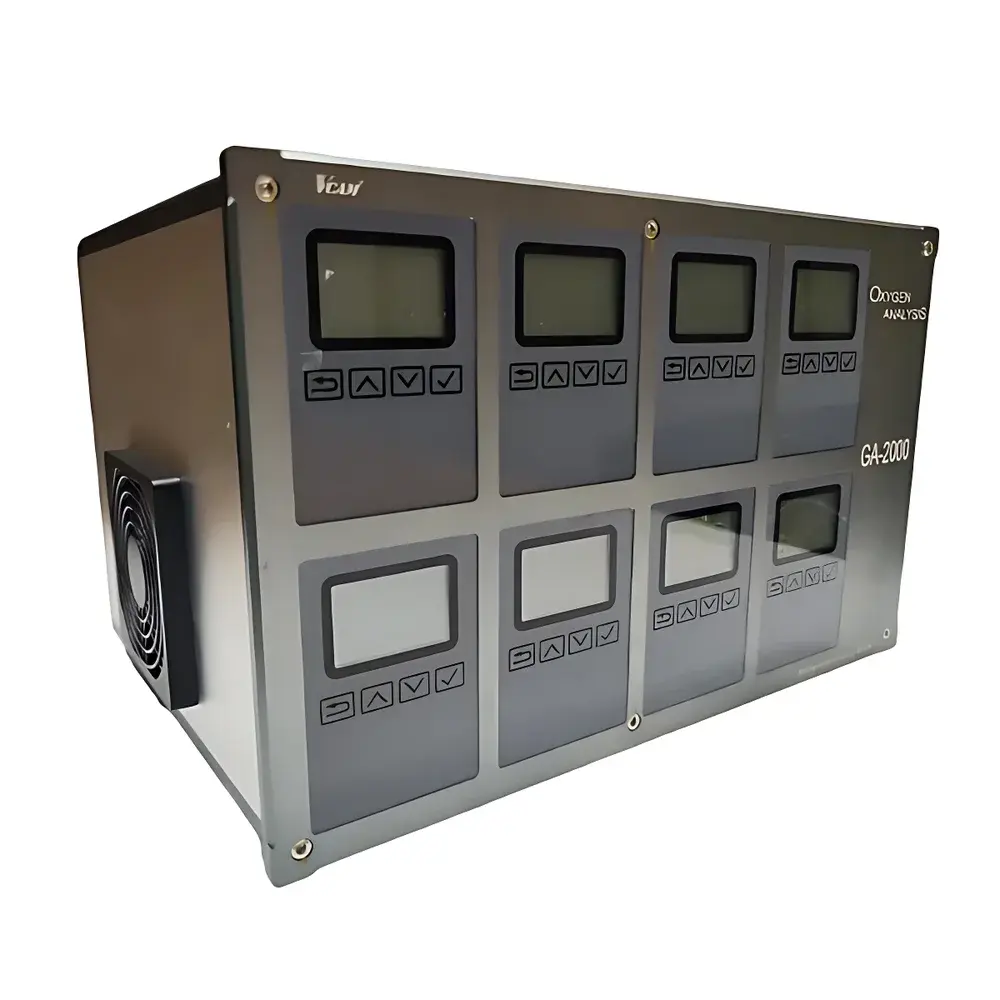
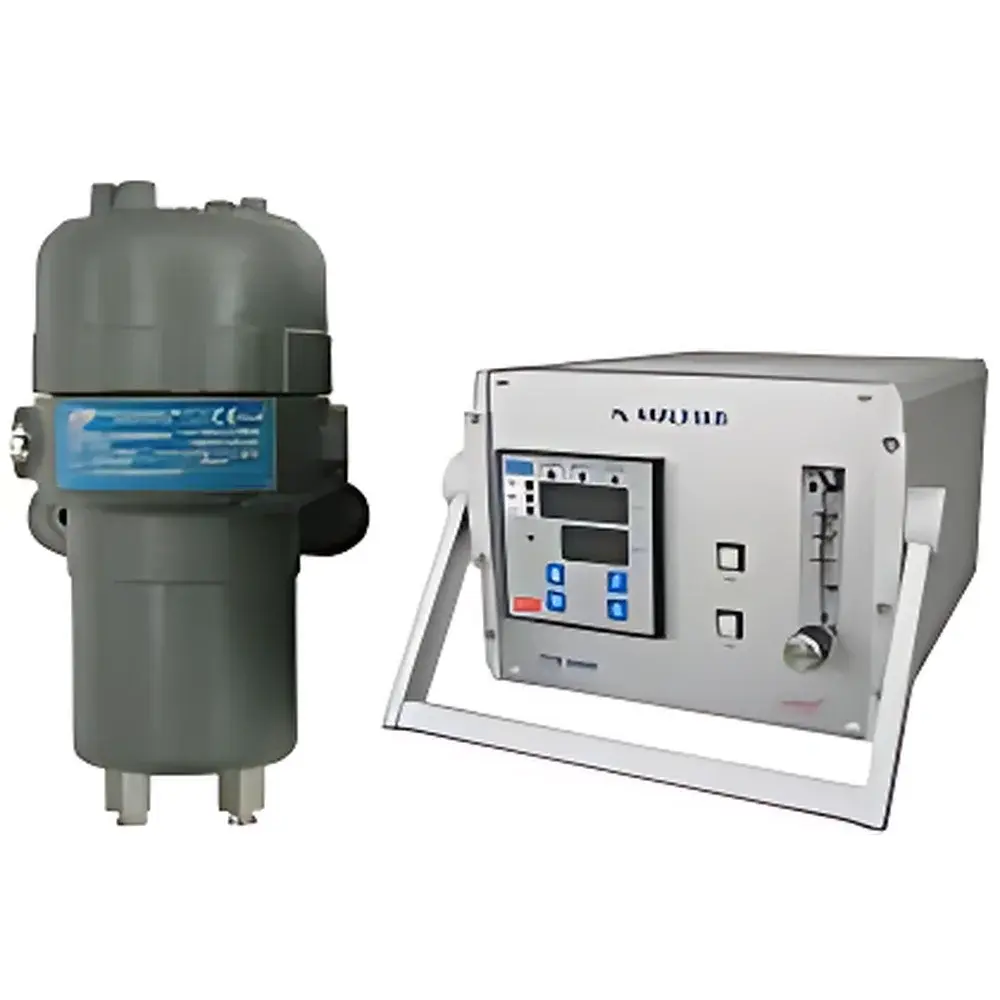
The Systech Illinois 8866 Online Thermal Conductivity Gas Analyzer is a high-stability, industrial-grade analyzer engineered for continuous, real-time quantification of helium concentration in argon carrier gas streams — with full configurability for other binary and multi-component gas mixtures including H₂/Ar, He/N₂, H₂/N₂, CO/air, CO₂/air, and Ar/CO₂. Based on dual-beam thermal conductivity detection (TCD), the 8866 leverages differential measurement between a reference cell (filled with pure argon or sealed inert gas) and an active sample cell to deliver precise, drift-compensated readings independent of ambient temperature fluctuations. Its robust sensor architecture eliminates moving parts and catalytic elements, ensuring long-term reliability in harsh process environments where maintenance access is constrained. Designed specifically for integration into closed-loop gas monitoring systems, the analyzer meets functional safety requirements for continuous purity assurance in critical applications such as hydrogen-cooled turbine generators, nuclear coolant gas loops, and high-purity synthesis gas purification trains.
Key Features
- Dual-cell thermal conductivity sensor with automatic zero tracking and dynamic thermal compensation
- Configurable multi-range capability: selectable full-scale ranges from 0–1% to 0–100% He in Ar, plus specialized spans for generator hydrogen monitoring (e.g., 85–100% H₂ in air or CO₂)
- Four independently calibrated 4–20 mA analog outputs assignable to primary gas concentration, secondary component, temperature, or diagnostic status
- RS232 and RS485 serial interfaces supporting Modbus RTU protocol for seamless integration with DCS, PLC, and SCADA systems
- ATEX-certified explosion-proof controller housing (Ex d IIC T6) and intrinsically safe sensor variants compliant with IEC 60079-0/-1/-11 standards
- IP66-rated enclosure suitable for outdoor mounting in chemical plants, steel mills, and power generation facilities
- Sample flow control via integrated needle valve and pressure-regulated inlet; compatible with standard 1/4″ Swagelok or 6 mm compression fittings
Sample Compatibility & Compliance
The 8866 is validated for use with non-corrosive, non-condensing gas matrices containing helium, hydrogen, methane, carbon monoxide, carbon dioxide, nitrogen, argon, and air. It is not suitable for halogenated compounds, silanes, or vapors with condensable hydrocarbons. Calibration is performed using certified NIST-traceable gas standards (e.g., He in Ar, H₂ in N₂). The instrument complies with ISO 14644-1 for cleanroom-compatible installation, meets electromagnetic compatibility requirements per EN 61326-1 (industrial environment), and supports audit-ready operation under FDA 21 CFR Part 11 when paired with compliant data logging software. Its design aligns with ASTM D1946 (standard test method for analysis of reformed gas) and IEC 61511 for safety instrumented systems (SIL 1 capable with proper system architecture).
Software & Data Management
The 8866 operates autonomously without embedded PC hardware but supports remote configuration and diagnostics via its serial interface. When connected to a host system running Systech’s proprietary GasView™ software (Windows-based), users gain access to real-time trend visualization, automated calibration scheduling, event-triggered data capture, and electronic logbook generation with user authentication and change history. All analog output signals are timestamped and stored with millisecond resolution. For regulated environments, optional firmware enables GLP/GMP-compliant audit trails, including operator ID, parameter modification timestamps, and calibration certificate linkage. Data export formats include CSV, XML, and OPC UA (via gateway).
Applications
- Hydrogen-cooled turbo-generators: continuous monitoring of H₂ purity in air or CO₂ diluent to prevent explosive mixtures and ensure dielectric integrity
- Steel annealing and galvanizing lines: verification of protective argon/helium atmospheres during hot-dip coating processes
- Nuclear reactor coolant gas systems: detection of helium leakage into primary circuit purge streams or containment monitoring
- Synthesis gas quality control in ammonia and methanol plants: quantification of residual helium as an inert tracer or impurity indicator
- Chlor-alkali and caustic soda production: monitoring of chlorine/hydrogen separation efficiency via helium spike testing
- Natural gas transmission: verification of helium content in pipeline-grade gas prior to LNG liquefaction or helium extraction units
- High-purity gas manufacturing: final QC release testing for electronic-grade argon and helium blends used in semiconductor CVD/PVD tools
FAQ
What gases can the 8866 measure besides helium in argon?
The analyzer supports over 20 pre-configured binary and ternary gas pairs, including H₂ in N₂, CO in air, CO₂ in air, Ar in CO₂, N₂ in Ar, and H₂ in Ar — all using the same thermal conductivity principle without hardware modification.
Is field calibration possible without sending the unit to a service center?
Yes — zero and span calibration can be performed in situ using certified span gases and the built-in calibration wizard accessible via front-panel keypad or serial command set.
Does the 8866 meet SIL certification requirements for safety-critical loops?
While the analyzer itself is not SIL-certified, its architecture supports SIL 1 implementation when integrated into a certified safety instrumented system (SIS) with appropriate redundancy, voting logic, and proof-test procedures per IEC 61511.
Can the 8866 operate continuously in high-humidity sample streams?
No — moisture must be removed upstream via refrigerated or desiccant dryers, as condensed water vapor causes irreversible sensor drift and thermal imbalance.
What is the recommended maintenance interval for the thermal conductivity sensor?
Under typical industrial conditions, sensor recalibration is advised every 6 months; mechanical inspection and flow-path cleaning are recommended annually — no consumables or replacement parts are required within the first 5 years of operation.
Related Products