
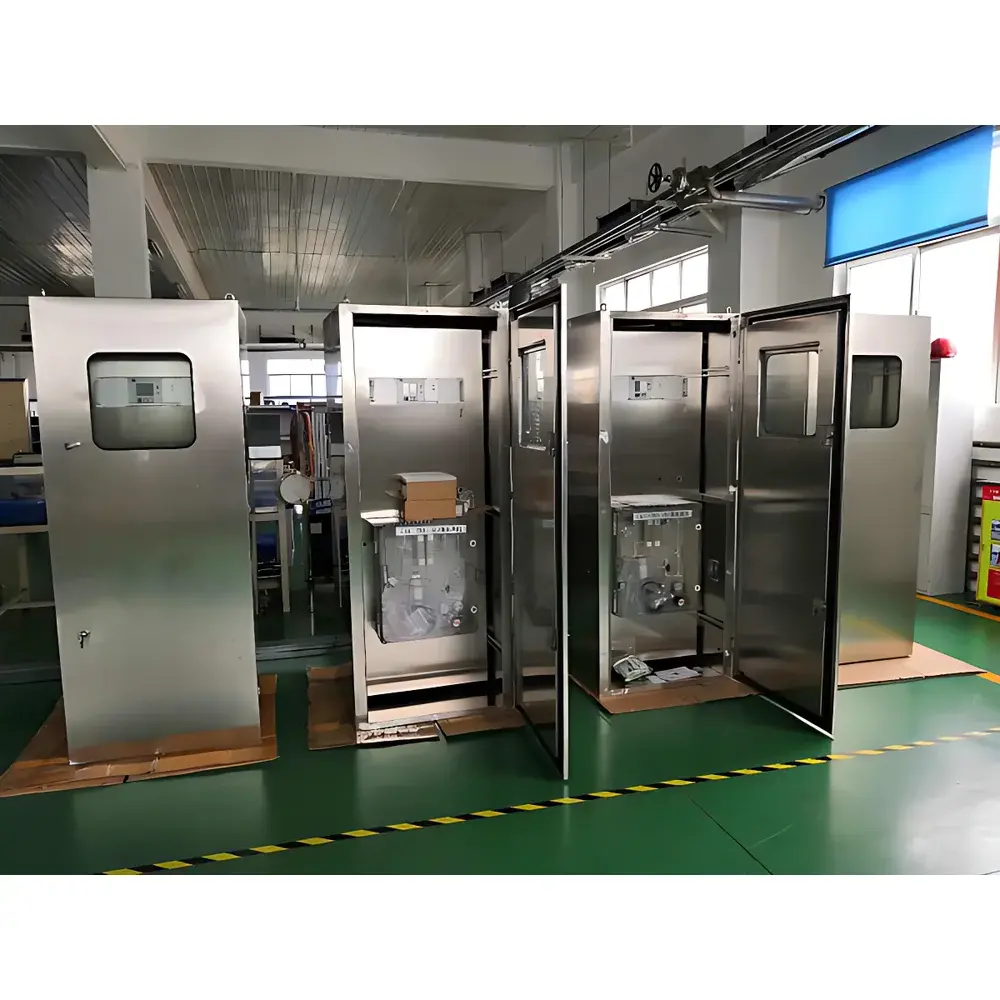
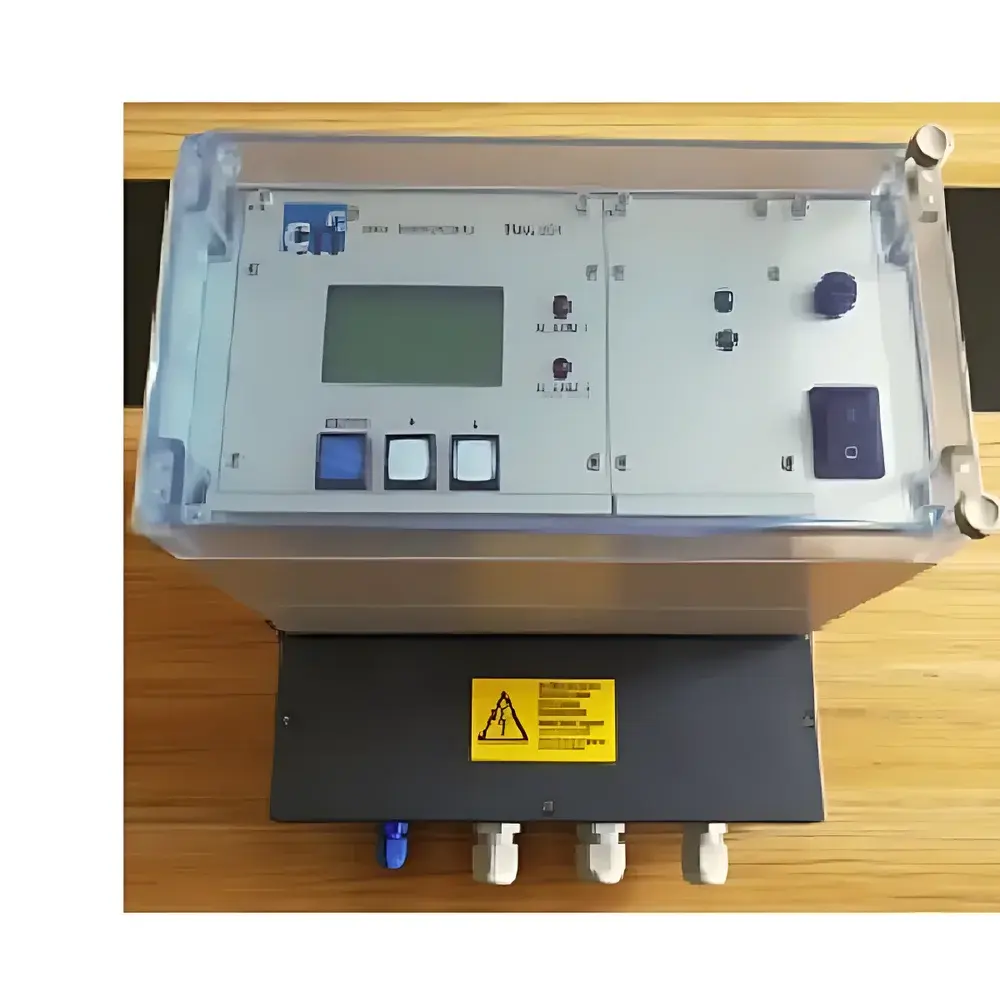
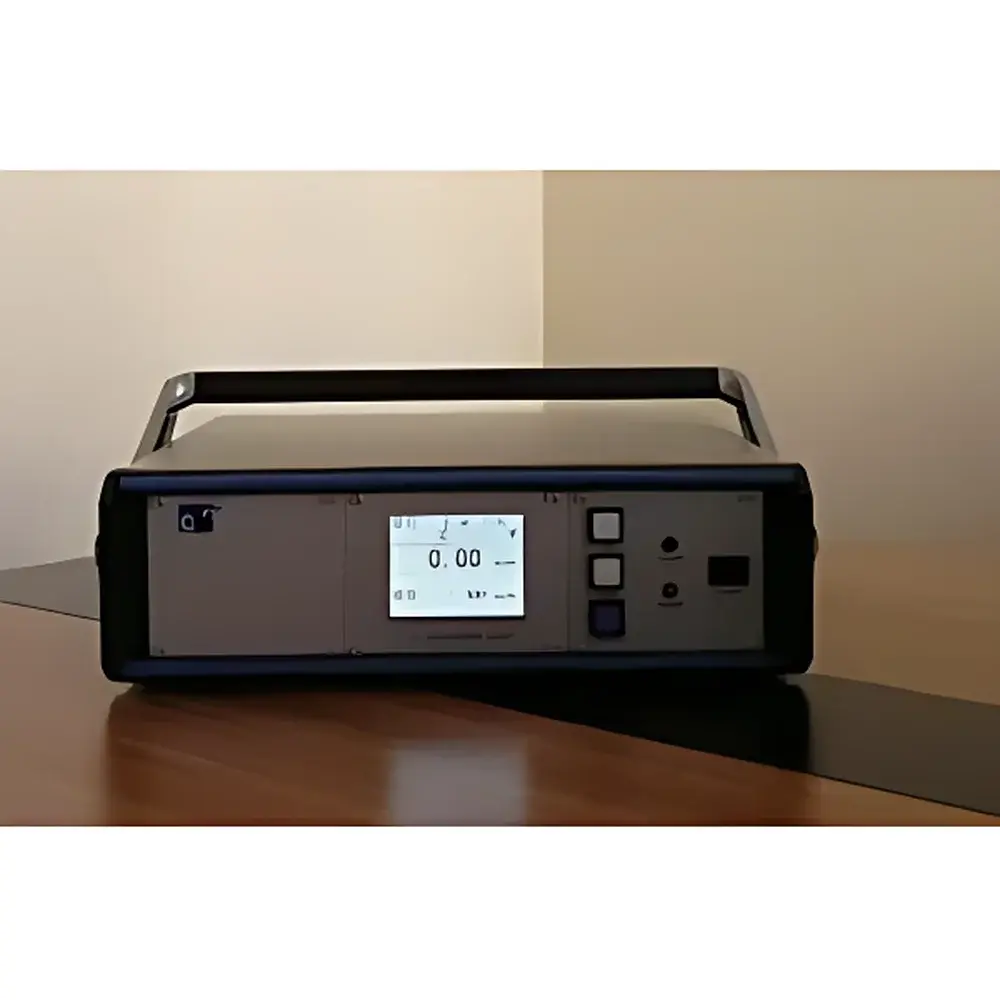
CMC-TM-H2O Chlorine Gas Moisture Analyzer System
| Brand | CMC |
|---|---|
| Origin | Germany |
| Model | CMC-TM-H2O System |
| Instrument Principle | Phosphorus Pentoxide (P₂O₅) Electrolytic Method |
| Operating Temperature Range | −20 °C to +80 °C |
| Accuracy | ±0.2 °C dew point equivalent |
| Repeatability | ±0.1 °C dew point equivalent |
| Sample Flow Rate | 20 NL/h or 100 NL/h |
| Operating Pressure | 0.1–1.5 barg |
| Sensor Material Options | Stainless Steel, Monel 400, Hastelloy, Glass, PFA |
| Electrode Material | Platinum or Rhodium |
| Sealing Materials | Viton, FEP, or FFKM |
| Electrical Connector | LEMO waterproof |
| Enclosure Rating | IP20 (benchtop/rack), IP65 (wall-mount) |
| Power Supply | 80–230 VAC, 50/60 Hz |
| Power Consumption | 8 W |
| Dimensions (Analyzer) | 363 × 115 × 377 mm (portable), 482 × 133 × 350 mm (19″ rack), 300 × 260 × 280 mm (wall-mount), 257 × 160 × 316 mm (desktop) |
| Weight (Analyzer) | ~6 kg |
| Probe Dimensions | Ø43 × 120 mm |
| Probe Weight | ~300 g |
| Display | Backlit LCD |
| Output Signals | 4–20 mA / 0–20 mA / 0–10 V (user-configurable) |
| Digital Interface | RS232 |
| Relay Outputs | 2 alarm relays (230 VAC / 1 A), 5 range-indication relays |
| Input | 5 external relay contacts for range switching |
| Calibration | Automatic zero and span calibration at power-on |
| Response Time (T₅₀) | <8 s |
| Measurement Range (with TMA-202/204/210) | 0–10 / 100 / 1000 / 2500 ppmᵥ |
| Measurement Range (with TMA-404) | 0–1 / 10 / 100 / 1000 ppmᵥ |
| Environmental Operating Temp. | −10 °C to +50 °C |
| Sample Gas Temp. | +5 °C to +150 °C (recommended ≤50 °C |
| Ambient Temp. (Probe) | +5 °C to +65 °C |
Overview
The CMC-TM-H2O is a dedicated sampling and conditioning system engineered for high-integrity moisture measurement in chlorine gas streams using phosphorus pentoxide (P₂O₅) electrolytic analyzers—specifically the TMA-202, TMA-204, TMA-210, and TMA-404 series. Unlike generic dew point meters relying on chilled-mirror or capacitive sensing, this system employs the fundamental electrochemical principle of quantitative water decomposition: anhydrous P₂O₅ reacts irreversibly with water vapor to form phosphoric acid, generating a stoichiometric current proportional to H₂O concentration. This method delivers trace-level sensitivity (down to 1 ppmᵥ), immunity to hydrocarbon interference, and long-term stability in aggressive, oxidizing environments typical of chlorine production, purification, and cylinder-filling facilities. The TM-H2O system addresses critical field challenges—including condensate carryover after extended shutdowns, particulate contamination, and pressure fluctuations—through integrated dual-stage filtration, precision pressure regulation, and liquid-water separation prior to sensor entry. Its modular architecture ensures compatibility with both portable and permanently installed analyzer configurations while maintaining NIST-traceable measurement integrity under continuous operation.
Key Features
- Two-stage particulate filtration (0.1 µm final stage) combined with coalescing liquid-water removal to prevent sensor poisoning and baseline drift
- Single-stage pressure reduction to stable 0.1–1.5 barg operating range, minimizing flow-induced turbulence and thermal transients
- Multi-channel flow control supporting standardized sample rates of 20 NL/h or 100 NL/h, optimized for P₂O₅ cell residence time and signal-to-noise ratio
- Chemically resistant wetted materials: configurable sensor cells in stainless steel, Monel 400, Hastelloy C-276, borosilicate glass, or PFA-lined variants; electrodes plated with platinum or rhodium for catalytic stability
- Sealing options include Viton (standard), FEP (for elevated temperature or halogen resistance), and FFKM (for extreme chemical exposure)
- LEMO-series waterproof electrical connectors rated for industrial ambient conditions; probe cable length extendable up to 300 m without signal degradation
- Vertical mounting via three M4 threaded inserts—designed for vibration-damped panel integration in chlor-alkali plant control rooms or cylinder banks
Sample Compatibility & Compliance
The CMC-TM-H2O is validated for use with dry, compressed chlorine gas (Cl₂) containing trace moisture in the 1–2500 ppmᵥ range. It is unsuitable for applications involving free liquid chlorine, hydrogen chloride (HCl) vapors above 10 ppm, or significant concentrations of ammonia or amines, which react competitively with P₂O₅. All wetted components comply with ASTM B164 (Monel), ASTM B575 (Hastelloy), and ISO 8502-3 (surface cleanliness). The analyzer firmware supports automated zero/span calibration routines aligned with ISO 17025 internal verification protocols. When configured with optional CF card data logging (1 GB), it maintains timestamped audit trails compliant with GLP and FDA 21 CFR Part 11 requirements—provided user-defined electronic signatures and access controls are implemented at the host system level. Enclosure ratings meet IEC 60529 (IP20/IP65), and electrical safety conforms to IEC 61010-1 for measurement category CAT II.
Software & Data Management
The embedded microcontroller provides local configuration via a backlit LCD interface with intuitive menu navigation. All operational parameters—including range selection (manual, auto-ranging, or external relay-triggered), analog output scaling (4–20 mA, 0–20 mA, or 0–10 V), relay thresholds, and calibration lockout status—are accessible through password-protected menus. RS232 serial communication enables bidirectional command/response interaction using ASCII-based SCPI-like syntax, allowing integration into DCS/SCADA systems (e.g., Siemens Desigo, Honeywell Experion) via Modbus RTU gateways. Optional CF storage logs moisture values, temperature, pressure, calibration events, and alarm states at user-defined intervals (1 s to 1 h resolution). Raw data exports as comma-separated .CSV files compatible with MATLAB, Python pandas, or LIMS platforms. No proprietary software installation is required—configuration and diagnostics operate entirely through terminal emulation or web-enabled HMI frontends.
Applications
- Chlorine liquefaction and vaporization skids: real-time monitoring of moisture ingress during phase transitions to prevent corrosion in carbon steel piping
- Electrolytic cell off-gas treatment: validation of dryer performance prior to Cl₂ compression and liquefaction
- Cylinder filling stations: pre-fill verification per ISO 8573-3 Class 2 (≤10 ppmᵥ) and CGA G-4.2 specifications
- Process safety interlocks: triggering purge sequences or shutdown logic upon sustained >50 ppmᵥ excursions
- Quality assurance in pharmaceutical-grade chlorine synthesis where moisture-induced side reactions compromise reagent purity
- Research-scale chlorination reactors requiring sub-ppm moisture quantification under variable pressure and temperature
FAQ
What is the maximum allowable sample gas temperature at the probe inlet?
The probe is rated for continuous exposure up to +150 °C; however, sustained operation above +50 °C requires active cooling (e.g., air-cooled heat exchanger or thermostatic bypass) to preserve P₂O₅ film integrity and avoid thermal decomposition artifacts.
Can the CMC-TM-H2O be used for hydrogen or oxygen service?
No. While the P₂O₅ sensor itself functions in inert and oxidizing gases, the TM-H2O sampling system is mechanically and chemically optimized for chlorine—particularly its corrosion profile and density-dependent flow dynamics. Separate validation per ISO 8573-8 is required for non-Cl₂ applications.
How often must the P₂O₅ sensor be recalibrated?
Under stable operating conditions, annual zero-and-span calibration suffices. In high-moisture or contaminated environments, quarterly verification is recommended. The analyzer performs automatic self-checks at power-up, reporting sensor health via diagnostic codes on the LCD.
Is the system compatible with hazardous area classifications (e.g., ATEX or IECEx)?
The base CMC-TM-H2O is rated for Zone 2/Class I Div 2 environments when installed with appropriate conduit seals and grounding. For Zone 0/1 or Div 1 applications, an intrinsically safe barrier kit (not included) must be integrated upstream of the 24 VDC auxiliary supply line.
What maintenance consumables are required for routine operation?
Standard maintenance includes periodic replacement of inlet filters, O-rings (Viton/FEP), electrode cleaning solution (acetone/deionized water), and P₂O₅ replenishment kits—available as OEM part numbers from CMC’s authorized service centers in Europe and North America.
Related Products



