
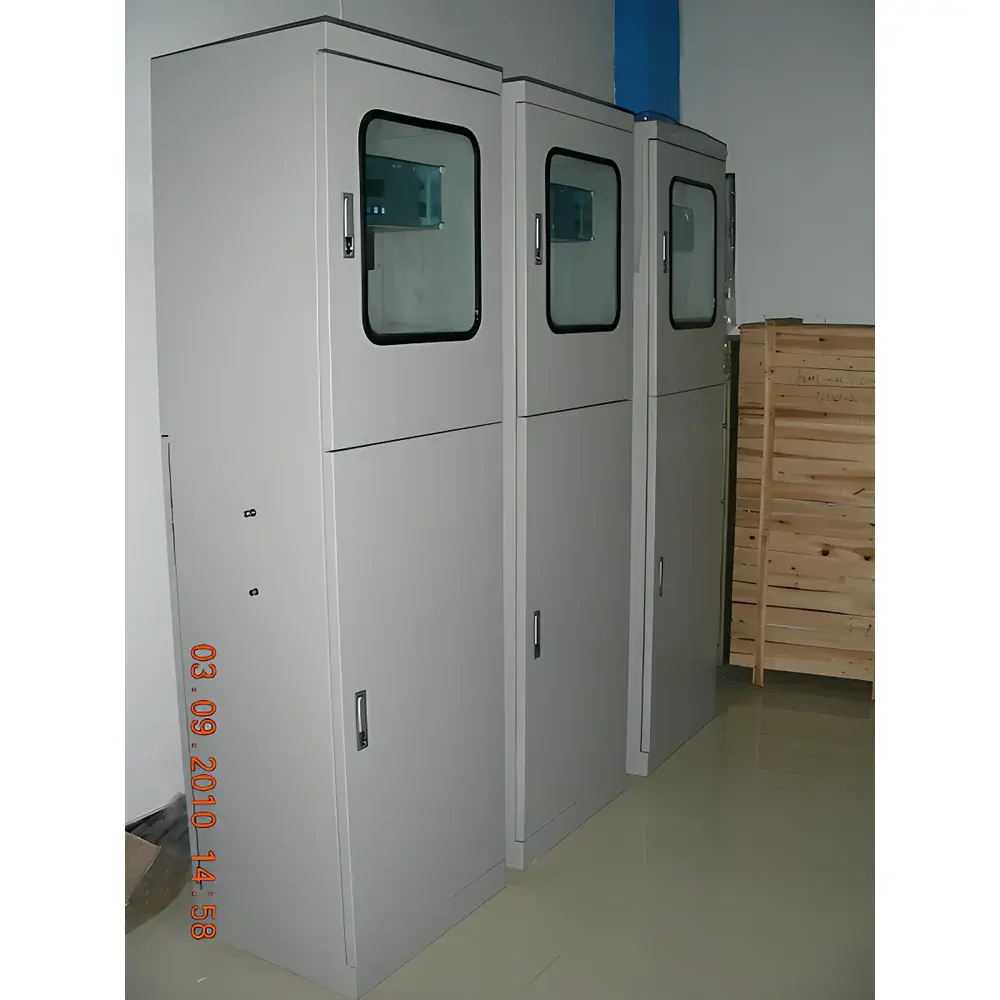
ADEV GY-2000 Online Biogas Analysis System
| Brand | ADEV |
|---|---|
| Origin | Italy |
| Model | GY-2000 |
| Measurement Range | CH₄: 0–100% vol, CO₂: 0–50% vol, H₂S: 0–9999 ppm, O₂: 0–20% vol, pH: 0–14, Temperature: 0–100°C, Pressure: 0–100 kPa |
| Resolution | 0.01% (for gas vol%), ppm-level detection for H₂S |
| Response Time | ≤30 s |
| Detection Principles | Non-dispersive Infrared (NDIR) for CH₄/CO₂, Electrochemical for H₂S/O₂, Potentiometric for pH, RTD/Thermistor for T, Piezoresistive for P |
Overview
The ADEV GY-2000 Online Biogas Analysis System is an integrated, wall-mountable process analyzer engineered for continuous, real-time monitoring of biogas composition and associated physicochemical parameters in anaerobic digestion facilities, landfill gas recovery plants, and wastewater treatment biogas upgrading stations. It operates on a multi-principle sensor architecture: non-dispersive infrared (NDIR) spectroscopy for high-selectivity quantification of methane (CH₄) and carbon dioxide (CO₂); electrochemical cells for trace-level hydrogen sulfide (H₂S) and oxygen (O₂) detection; potentiometric glass electrodes for pH measurement; platinum resistance thermometers (Pt100) or NTC thermistors for temperature; and piezoresistive transducers for pressure. All sensors are configured for direct in-line or sidestream sampling with integrated sample conditioning—comprising particulate filtration, moisture removal via membrane dryers or condensate traps, and flow regulation—to ensure long-term stability and minimize drift under variable biogas matrix conditions (e.g., high humidity, siloxane content, particulate load). The system complies with IEC 60079-0/-11 for intrinsic safety in Zone 1 hazardous areas when equipped with certified sensor modules and barrier interfaces.
Key Features
- Modular multi-parameter architecture supporting simultaneous measurement of CH₄, CO₂, H₂S, O₂, pH, temperature, pressure, and optional liquid-level or ORP inputs
- High-resolution display with backlit 7-inch LCD touchscreen interface for local configuration, real-time trend visualization, and alarm acknowledgment
- Dual relay outputs (220 VAC / 0.5 A each), configurable as normally open (NO) or normally closed (NC), for integration with external control logic (e.g., scrubber activation, flare ignition, valve sequencing)
- Standard 4–20 mA analog outputs per channel (load ≤400 Ω), plus RS232 and RS485 Modbus RTU communication for SCADA and DCS interoperability
- Three programmable alarm relays per measured parameter, plus one dedicated fault relay for system diagnostics and maintenance alerts
- Rugged 9-U (600 × 478 × 500 mm) industrial enclosure rated IP65, designed for wall mounting or rack integration in control rooms or field shelters
- Comprehensive sample handling subsystem including heated sample line option (to prevent condensation), automatic zero/span calibration ports, and bypass valve for maintenance isolation
Sample Compatibility & Compliance
The GY-2000 accommodates raw, unfiltered biogas streams with typical moisture saturation and particulate concentrations found in digester off-gas and landfill wells. Its sample conditioning unit removes >99.5% of liquid water and sub-5 µm particulates without chemical reagents, preserving analyte integrity for electrochemical and NDIR sensors. Sensor selection adheres to EN 14181 (QAL1–QAL3 requirements for automated measuring systems) and supports compliance with EU Directive 2010/75/EU (IED) and U.S. EPA Method 25A for CH₄/CO₂ reporting. Optional ATEX-certified sensor variants (II 2G Ex d IIB T4 Gb) enable deployment in classified zones. Data logging meets GLP/GMP audit trail requirements per 21 CFR Part 11 when paired with validated software configurations.
Software & Data Management
The embedded firmware provides local data storage (≥30 days at 1-min intervals) with timestamped event logs (calibrations, alarms, power cycles). Remote access is enabled via Ethernet or optional 4G LTE module, supporting secure HTTPS-based web interface and OPC UA server functionality. Configuration and historical data export (CSV, PDF reports) are managed through ADEV’s BiogasView™ desktop application, which includes statistical process control (SPC) charts, batch comparison tools, and customizable dashboards. All digital records retain immutable metadata—including operator ID, calibration certificates, and sensor health diagnostics—to satisfy ISO/IEC 17025 traceability requirements.
Applications
- Real-time optimization of anaerobic digester loading rate and retention time based on CH₄:CO₂ ratio trends
- Early detection of process upsets (e.g., acidosis via pH/ORP drop, sulfate reduction via rising H₂S)
- Automated feedforward control of biogas desulfurization units and pressure regulation valves
- Regulatory reporting for renewable natural gas (RNG) certification (e.g., California CARB Low Carbon Fuel Standard)
- Performance verification of membrane separation or amine scrubbing units during biogas upgrading
- Correlation analysis between digester temperature, pH, and volatile fatty acid (VFA) accumulation inferred from gas composition shifts
FAQ
What gas detection principles does the GY-2000 employ, and why are multiple methods used?
The system combines NDIR (for CH₄ and CO₂), electrochemical (for H₂S and O₂), potentiometric (for pH), and physical transduction (RTD, piezoresistive) to ensure cross-interference-free measurement across diverse analytes with vastly different concentration ranges and chemical behaviors.
Can the GY-2000 operate in explosive atmospheres?
Yes—when fitted with ATEX/IECEx-certified sensor modules and connected via approved intrinsic safety barriers, it meets Zone 1 (gas) classification requirements per IEC 60079-11.
Is remote calibration supported?
Zero and span calibration can be initiated locally or remotely via Modbus command or BiogasView™; however, span gas delivery requires manual connection to the calibration port—fully automated gas panel integration is available as an OEM option.
How is data integrity ensured for regulatory submissions?
All measurements include embedded timestamps, sensor-specific calibration coefficients, and hardware-level CRC checksums; audit logs record every user action, aligning with 21 CFR Part 11 electronic record requirements when deployed with validated software and access controls.
What maintenance intervals are recommended for long-term reliability?
Filter elements require replacement every 3–6 months depending on gas cleanliness; electrochemical sensors have a typical service life of 18–24 months; NDIR optical paths should be inspected annually for contamination; full system verification (QAL2) is advised every 6 months per EN 14181.
Related Products





