
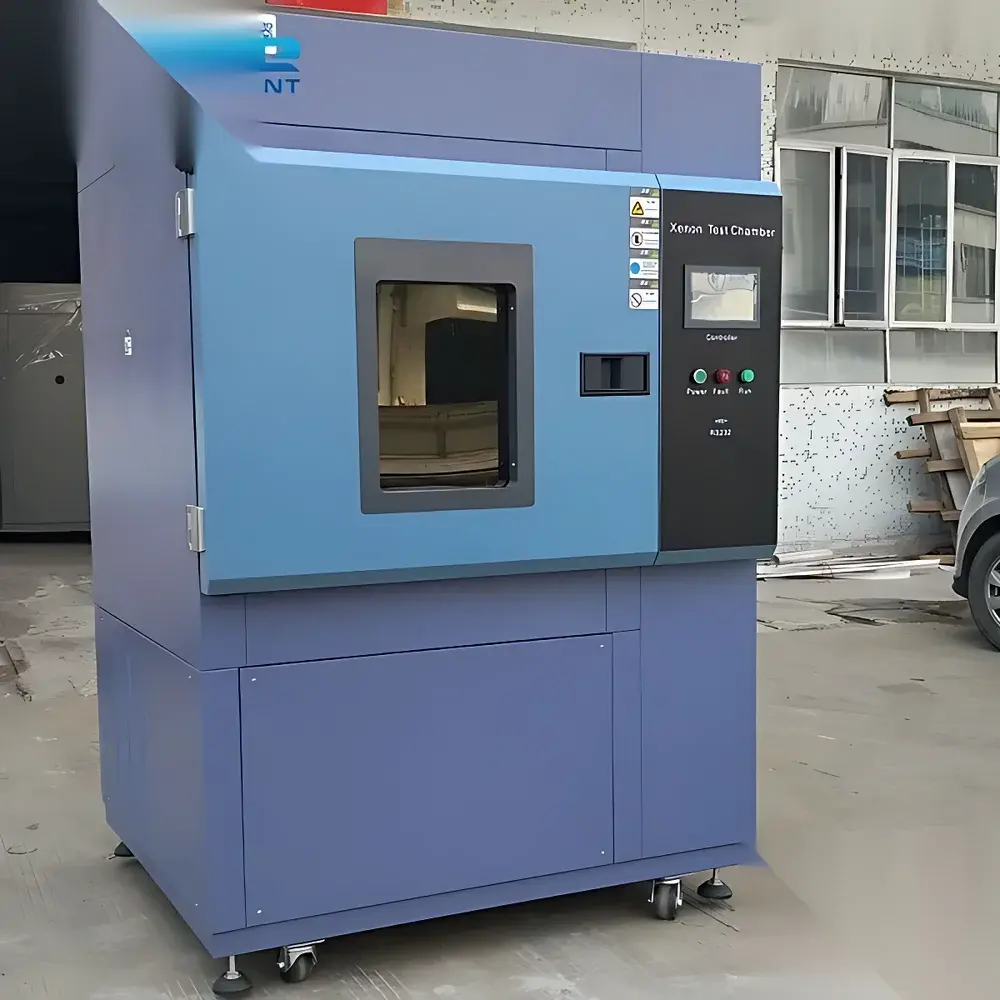
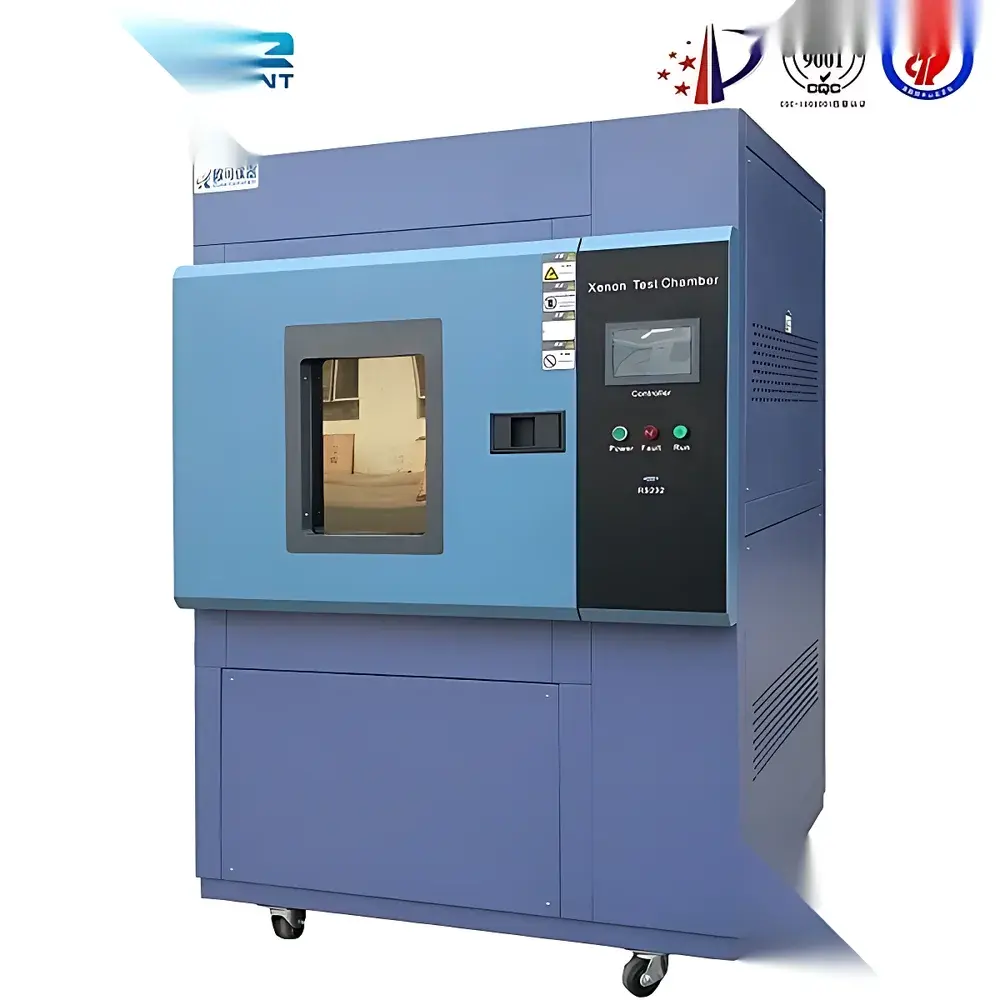
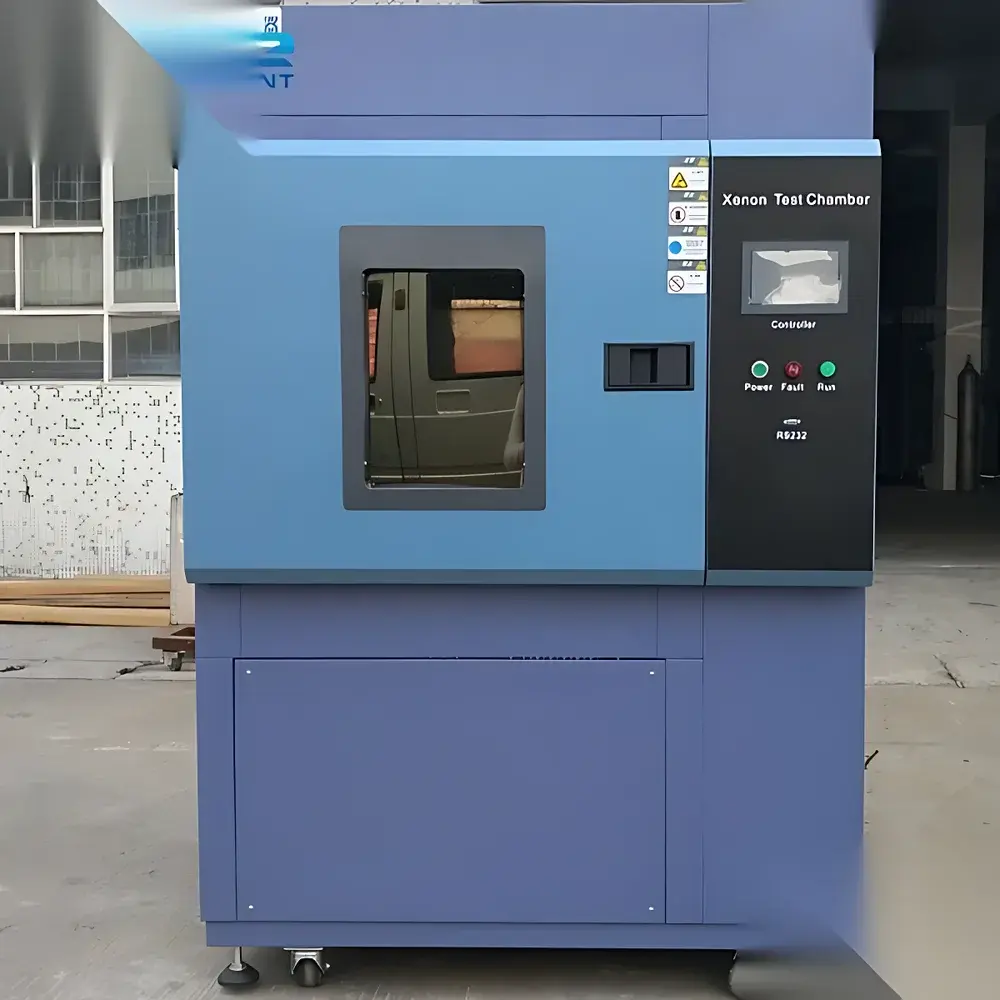
Xenon Arc Weathering Test Chamber OK-XD-1000 by OEM Manufacturer
| Brand | OEM |
|---|---|
| Origin | Imported |
| Manufacturer Type | Authorized Distributor |
| Temperature Range | −70 °C to +100 °C |
| Humidity Range | 10–98% RH |
| Humidity Uniformity | ±3% RH |
| Temperature Uniformity | ±2 °C |
| Rainfall Duration | 0–9999 min (continuous) |
| Rainfall Cycle | 0–240 min (intermittent) |
| Xenon Lamp Power | 6 kW ±5% |
| Spectral Range | 290–400 nm |
| Irradiance Control | 0.35–0.65 W/m²/nm @ 340 nm |
| Sample Rack Rotation | 1 rpm, 360° |
| Lamp-to-Sample Distance | 300–375 mm |
| Refrigerant | R404A |
| Cooling System | Air-cooled, hermetic French Tecumseh compressor |
| Humidity Control | Direct steam injection + dew-point contact dehumidification |
| Compliance | ASTM G155, ISO 4892-2, SAE J2527, SAE J2412, GB/T 16422.2, GB/T 1865, IEC 60068-2-5 |
Overview
The OK-XD-1000 Xenon Arc Weathering Test Chamber is an engineered environmental simulation system designed for accelerated weathering evaluation of polymeric, coated, and composite materials under controlled, reproducible conditions that replicate solar radiation, thermal cycling, humidity, rain, and condensation. It employs a 6 kW air-cooled xenon arc lamp with spectral output filtered to match terrestrial sunlight (290–400 nm), enabling precise irradiance control at critical wavelengths—particularly 340 nm (0.35–0.65 W/m²/nm)—as specified in ASTM G155 and ISO 4892-2. Unlike UV-only or fluorescent lamp systems, the xenon source delivers full-spectrum irradiance including visible and near-infrared energy, making it suitable for evaluating both photodegradation and thermally coupled degradation mechanisms. The chamber integrates six independent environmental stressors—light, heat, humidity, water spray, dark condensation, and optional airflow—allowing users to configure sequential or simultaneous exposure profiles aligned with real-world service environments such as automotive exterior panels, architectural coatings, or outdoor electronics enclosures.
Key Features
- Stainless steel 304 interior chamber with electrostatically sprayed powder-coated steel exterior for corrosion resistance and long-term structural integrity
- High-precision digital temperature/humidity controller (VERTEX brand, Taiwan) with PID algorithm, real-time data logging, and programmable ramp-soak profiles
- Dual independent climate control: separate heating (NiCr alloy heaters) and cooling (hermetic Tecumseh compressor, R404A refrigerant) circuits ensure rapid thermal response and stability
- Automatic defrost-evaporator system with finned-tube evaporator and microchannel copper coil design minimizes frost accumulation and maintains consistent dehumidification efficiency
- Rotating sample rack (1 rpm, 360° continuous) ensures uniform irradiance distribution across all specimens; adjustable lamp-to-sample distance (300–375 mm) enables irradiance calibration per specimen thickness and geometry
- Integrated rainfall system with programmable duration (0–9999 min) and interval timing (0–240 min), featuring stainless steel nozzles and pressure-regulated water delivery to simulate natural precipitation patterns
- Black panel thermometer (BPT) compliant with ASTM G155 requirements for surface temperature monitoring; calibrated against NIST-traceable reference standards
- Comprehensive safety architecture: overtemperature cutoff, low-water-level shutoff, lamp current monitoring, door interlock, and refrigerant leak detection via sealed-system pressure testing (48-hour hold at 2.5 MPa)
Sample Compatibility & Compliance
The OK-XD-1000 accommodates flat-panel specimens up to 1000 × 1000 × 1000 mm (W × D × H) within its working volume, supporting standard test frames per ASTM D7869 and ISO 11341. Specimen holders are compatible with ISO 1514-compliant substrate plates and ASTM G151-recommended mounting configurations. All operational parameters—including irradiance setpoint, temperature ramp rate, humidity dwell time, and spray frequency—are fully traceable and auditable, meeting GLP documentation requirements. The system conforms to international regulatory frameworks governing material qualification: ASTM G155 (practice for operating xenon arc apparatus), ISO 4892-2 (methods for plastics exposure), SAE J2527/J2412 (automotive component durability), and Chinese national standards GB/T 16422.2 and GB/T 1865. Full compliance documentation—including factory calibration certificates, filter spectral transmittance reports, and refrigerant handling records—is supplied with each unit.
Software & Data Management
Control and monitoring are managed via a built-in industrial PLC (Moeller / Schneider Electric) interfaced with a 7-inch color touchscreen HMI. The system supports USB data export of time-stamped logs (temperature, humidity, irradiance, spray status, BPT reading) in CSV format for post-test analysis. Optional Ethernet connectivity enables integration into centralized lab management platforms (LIMS) and supports remote diagnostics via secure SSH tunneling. Audit trails record all operator actions—including parameter changes, manual overrides, and maintenance events—with timestamp, user ID, and reason code, satisfying FDA 21 CFR Part 11 requirements for electronic records and signatures when paired with appropriate access controls and electronic signature modules.
Applications
- Accelerated aging of automotive clearcoats, bumpers, and interior trim under simulated Florida/Miami or Arizona desert spectra
- Photostability assessment of pharmaceutical packaging films per ICH Q1B guidelines using controlled UV-B exposure
- Colorfastness validation of textile dyes and architectural paints per AATCC TM16 and ISO 105-B02
- Corrosion resistance testing of galvanized steel substrates under cyclic wet/dry conditions with UV exposure
- Validation of UV stabilizers and HALS additives in polyolefin compounds used in outdoor infrastructure
- Qualification of encapsulants and adhesives for photovoltaic module backsheet systems per IEC 61215-2 MQT10
FAQ
What spectral filters are included with the OK-XD-1000?
The chamber ships with Daylight-Q filter set (equivalent to ISO 4892-2 Option A), optimized for general-purpose weathering. Optional filters include Window Glass-Q (Option B) and Extended UV-Q for enhanced short-wavelength output.
Is irradiance calibration performed at installation?
Yes—each unit undergoes on-site irradiance mapping using a NIST-traceable spectroradiometer prior to commissioning, with calibration report issued per ISO/IEC 17025 accredited procedure.
Can the chamber operate without rain or condensation cycles?
Absolutely—the exposure profile is fully programmable; users may disable any stressor (e.g., rain, humidity, dark cycle) while maintaining irradiance and temperature control.
What maintenance intervals are recommended for the xenon lamp and filters?
Lamp replacement is required every 1500 hours of operation; borosilicate inner and quartz outer filters must be replaced every 500 hours or after visible clouding or transmission loss exceeding 5% at 340 nm.
Does the system support third-party software integration for automated reporting?
Yes—Modbus TCP and OPC UA protocols are available as optional firmware upgrades, enabling bidirectional communication with LabVIEW, MATLAB, or enterprise MES platforms.
Related Products



