
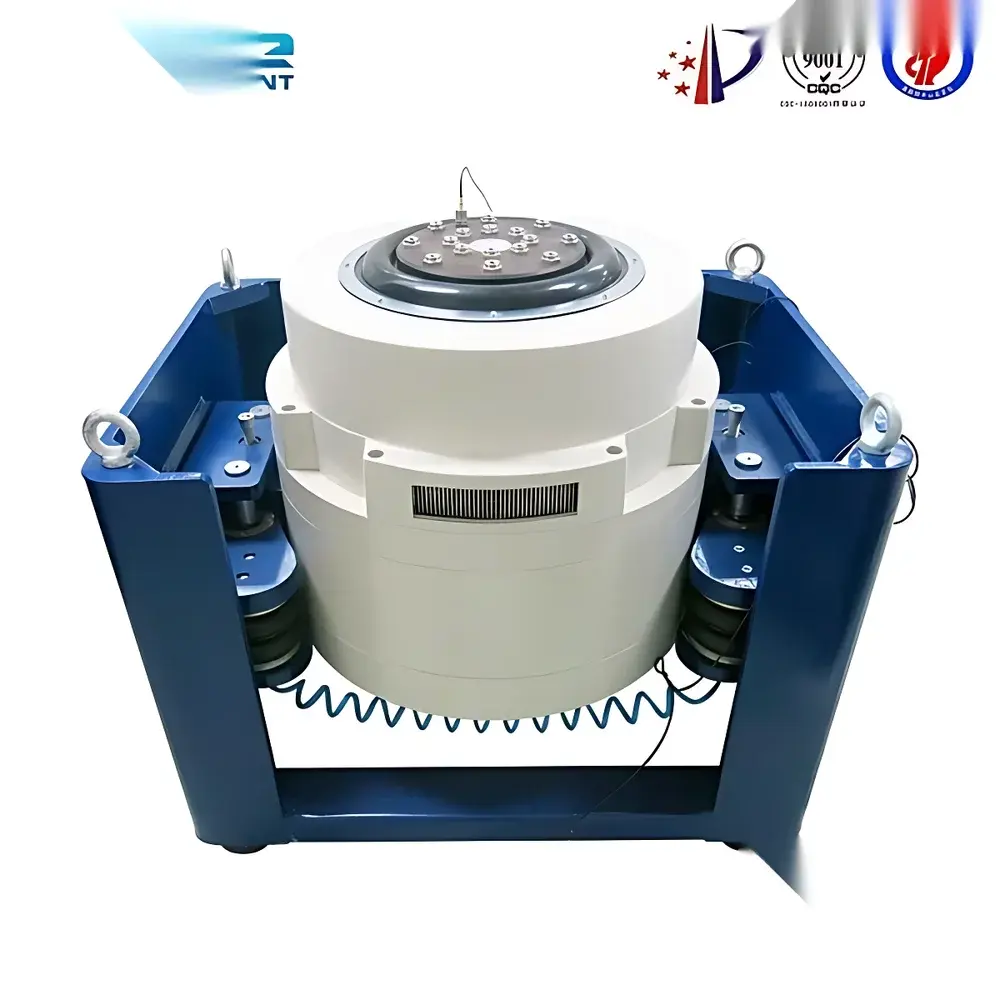
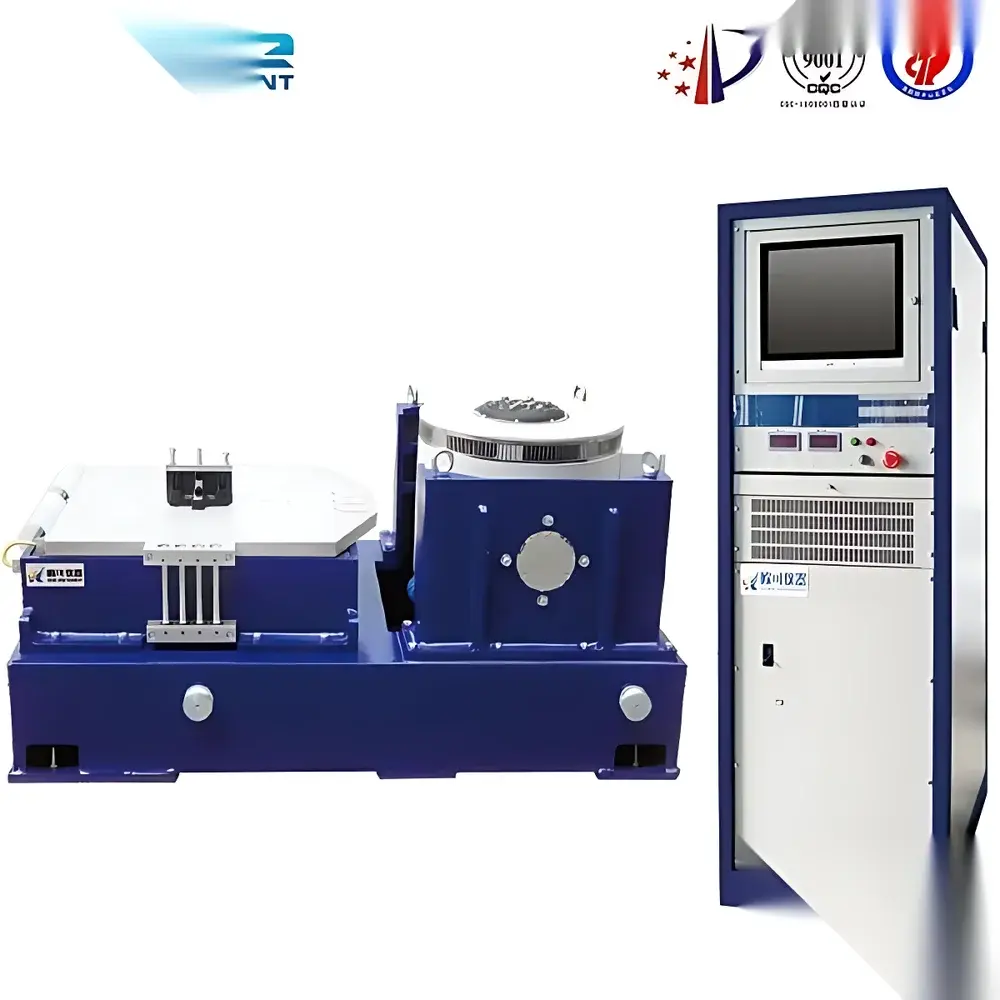
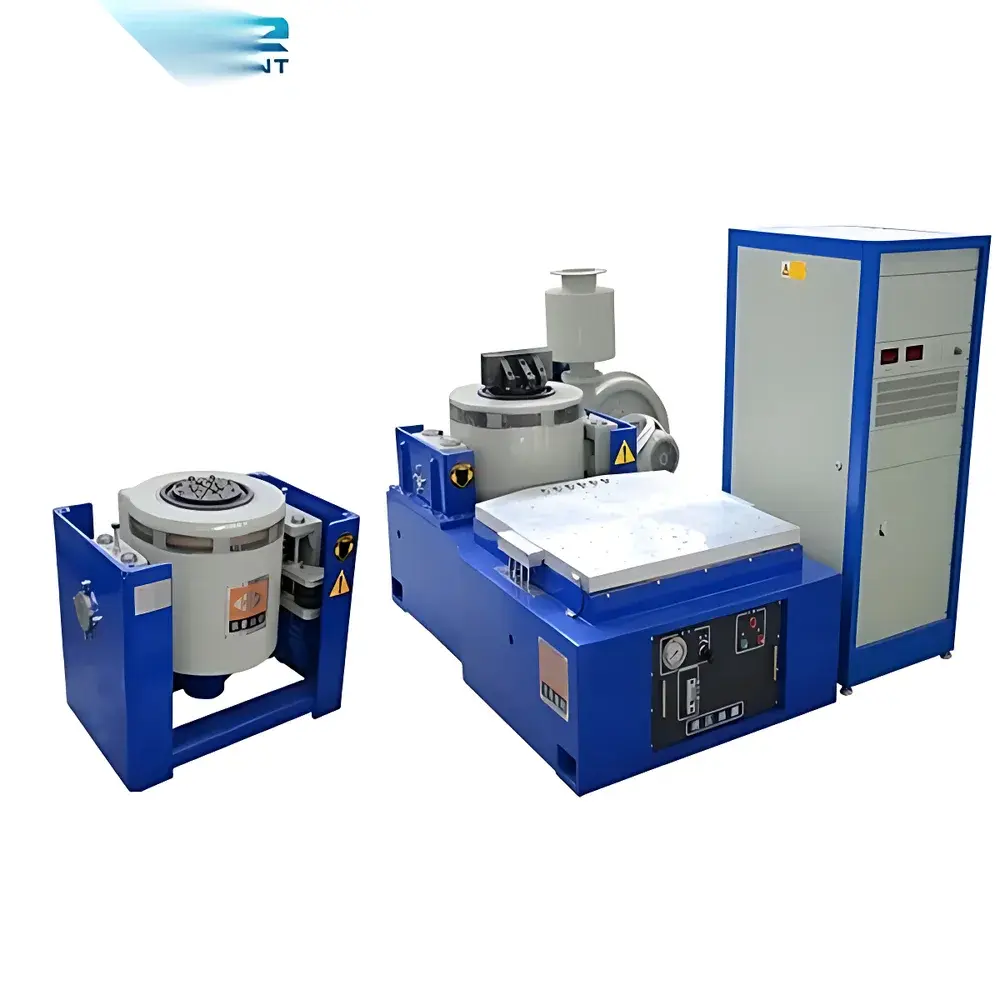
OK-ES Series Sweep Frequency Vibration Shaker
| Brand | Other Brands |
|---|---|
| Origin | Imported |
| Manufacturer Type | General Distributor |
| Price | USD 21,000 (approx.) |
| Speed Range | 100–300 RPM (continuously adjustable) |
| Speed Accuracy | ±3 RPM |
| Amplitude | 25.4 mm (1 inch) ±15% |
| Maximum Load Capacity | 100 kg |
| Test Table Dimensions | 1200 × 1000 mm (customizable) |
| Timer Range | 0–99.99 hours |
| Motor Power | 1.5 kW |
| Supply Voltage | 220 V, 50 Hz |
| Net Weight | ~250 kg |
| Drive System | DC motor with synchronous silent belt transmission |
| Mounting | Linear rail-based sample clamping |
| Base Construction | Heavy-duty channel steel frame with vibration-damping rubber pads |
| Vibration Mode | Rotary (orbital/circular motion, commonly referred to as “galloping” or “eccentric rotation”) |
Overview
The OK-ES Series Sweep Frequency Vibration Shaker is a robust, electromechanically driven rotary vibration testing system engineered for reliability and operational simplicity in industrial quality assurance laboratories. Unlike electrodynamic shakers that rely on voice-coil actuators and closed-loop servo control, this unit implements a mechanically tuned eccentric-mass drive architecture—delivering controlled orbital (rotary) motion via precision-balanced rotating masses. This design enables stable, repeatable low-frequency excitation (100–300 RPM), making it particularly suitable for endurance testing of assembled products subjected to transportation-related vibratory stresses, such as palletized shipments, packaged electronics, or automotive subassemblies. The system operates on fundamental principles of forced harmonic motion under constant amplitude conditions, where displacement is defined by mechanical eccentricity and rotational speed determines frequency content. Its fixed-amplitude, variable-speed configuration aligns with standard transport simulation protocols defined in ASTM D999, ISTA 3A, and ISO 2247.
Key Features
- DC motor-driven speed control ensures smooth acceleration/deceleration profiles and high torque retention across the full 100–300 RPM range, supporting consistent load response up to 100 kg.
- Synchronous silent belt transmission eliminates gear mesh noise and backlash, reducing acoustic emissions to <65 dB(A) at 1 m—critical for shared lab environments requiring minimal ambient interference.
- Linear rail-mounted fixture interface enables rapid, tool-free sample positioning and secure clamping without alignment jigs; compliant with ISO 10816-3 guidelines for mechanical mounting rigidity.
- Heavy-gauge channel steel base integrated with elastomeric damping pads isolates structural resonance and prevents floor coupling—no anchoring or foundation bolting required per ISO 5348 Annex B recommendations.
- Digital LED frequency display provides real-time RPM readout with ±3 RPM accuracy, traceable to NIST-calibrated tachometric references.
- Programmable timer supports exposure durations from 0.01 to 99.99 hours in 0.01-hour increments, enabling long-duration fatigue cycling aligned with MIL-STD-810H Method 514.7 tailoring requirements.
Sample Compatibility & Compliance
The OK-ES shaker accommodates rigid and semi-rigid test specimens up to 100 kg mass and 1200 × 1000 mm footprint. Its orbital motion profile replicates road-induced vibrations experienced during truck or rail transport, satisfying test criteria specified in IEC 60068-2-64 (broadband random vibration simulation via swept-sine approximation) and GB/T 4857.7 (Chinese national standard for transport packaging vibration testing). While not certified for sine-on-random or shock pulse testing, its performance meets GLP-compliant documentation requirements when paired with external data loggers. All electrical components conform to IEC 61000-6-2 (immunity) and IEC 61000-6-4 (emission) standards. CE marking is applicable for EU market distribution under Machinery Directive 2006/42/EC when installed per manufacturer’s mechanical isolation instructions.
Software & Data Management
This model operates as a standalone analog-controlled instrument with no embedded firmware or proprietary software stack. Speed, duration, and operational status are managed exclusively through front-panel digital controls. For traceable test execution in regulated environments (e.g., ISO 9001-certified QA labs), users integrate third-party USB-connected tachometers or optical encoders interfaced with validated PC-based acquisition platforms such as LabVIEW™ or MATLAB®. Audit trails—including start/stop timestamps, actual vs. setpoint RPM logs, and elapsed runtime—can be exported in CSV or PDF format to satisfy FDA 21 CFR Part 11 electronic record requirements when deployed with appropriate validation packages and user access controls.
Applications
The OK-ES Series is routinely deployed in incoming inspection, process validation, and final product release testing across multiple sectors: evaluation of solder joint integrity in PCB assemblies (per IPC-J-STD-002); verification of fastener retention in automotive interior modules; assessment of display panel adhesion stability in consumer electronics; validation of blister pack seal strength in pharmaceutical secondary packaging; and durability screening of plastic housing seams in toys and power tools. It is also employed in academic mechanical engineering labs for empirical correlation studies between input vibration spectra and output structural response metrics (e.g., resonant peak shifts, damping ratio estimation).
FAQ
What type of vibration motion does the OK-ES Series generate?
It produces controlled orbital (circular) motion—commonly termed “galloping” or “eccentric rotation”—not linear sinusoidal or random vibration.
Can the amplitude be adjusted?
No. Amplitude is mechanically fixed at 25.4 mm (±15%) and cannot be varied without hardware modification.
Is this system suitable for HALT or HASS testing?
No. It lacks the frequency agility, acceleration capability, and thermal integration required for highly accelerated life testing protocols.
Does it support remote control or Ethernet connectivity?
No. It is a manually operated benchtop unit with no digital communication interfaces.
What maintenance is required?
Biannual inspection of belt tension, motor brush wear (if applicable), and damping pad compression set is recommended per OEM service bulletin ES-MNT-2023.



