
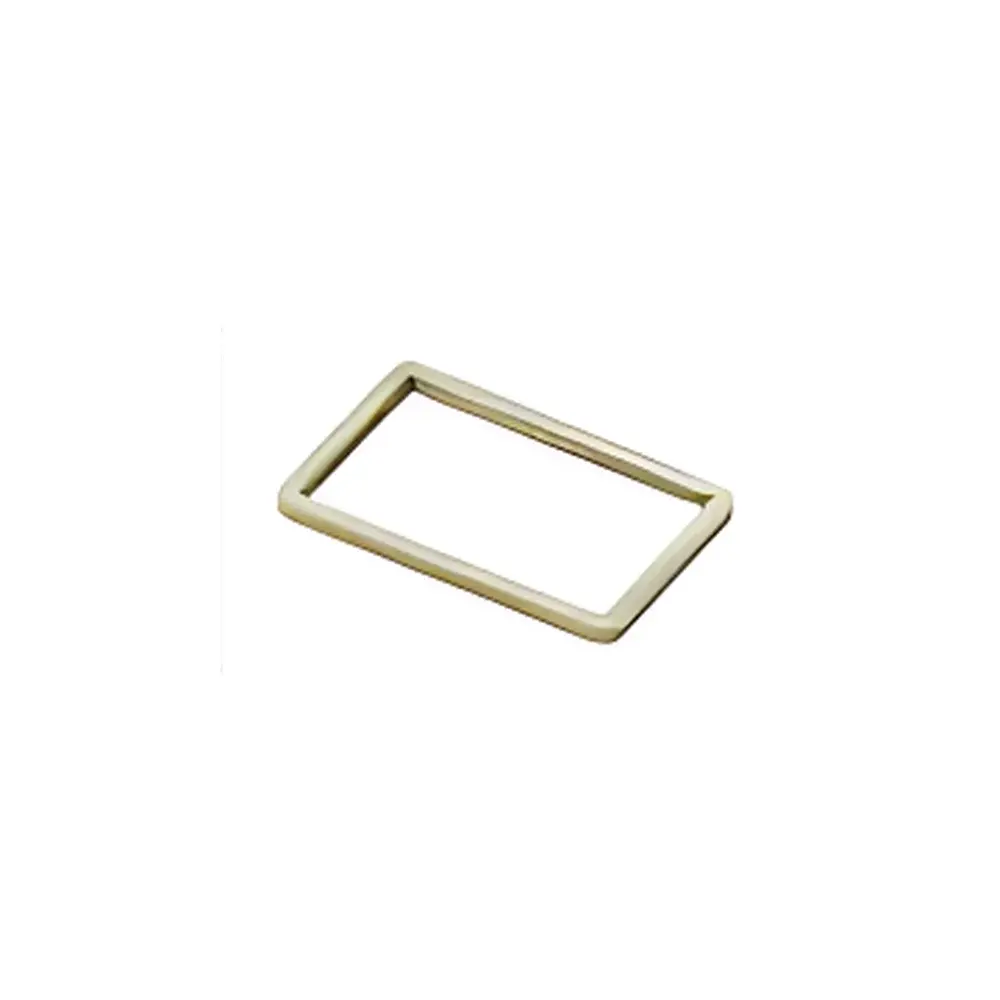
Narishige CF-10 Chamber Frame for Chronic Mouse Stereotaxic Experiments
| Brand | Narishige |
|---|---|
| Origin | Japan |
| Model | CF-10 |
| Material | Stainless Steel |
| Dimensions (W×D×T) | 12 mm × 19 mm × 1 mm |
| Weight per Unit | ~0.5 g |
| Observation Port Diameter | Ø5 mm |
| Mounting Hole | Ø10 mm countersunk |
| Optional Observation Aperture | Ø9 mm |
| Surface Finish | Unprocessed (as-machined) stainless steel |
| Package Quantity | 10 units |
Overview
The Narishige CF-10 Chamber Frame is a precision-engineered, implantable mechanical interface designed specifically for chronic stereotaxic experiments in murine models. It functions as a rigid, biocompatible mounting platform that integrates seamlessly with standard stereotaxic apparatuses—such as the Narishige SR series or other third-party frames—to enable repeatable, high-fidelity head fixation across multiple experimental sessions. Unlike temporary holders or adhesive-based solutions, the CF-10 provides long-term mechanical stability by forming a permanent anchor point on the skull surface. Its design adheres to fundamental biomechanical principles: minimal mass (<0.5 g), low-profile geometry (1 mm thickness), and distributed load-bearing features ensure negligible thermal and mechanical perturbation to underlying neural tissue during extended recording or stimulation protocols. The frame’s unprocessed stainless steel construction offers inherent corrosion resistance and compatibility with standard cranial cement application (e.g., C&B Metabond or dental acrylic), while its Ø5 mm central observation port enables unobstructed optical access to cortical or subcortical targets without requiring frame removal.
Key Features
- Ultra-low-mass design (≈0.5 g per unit) minimizes inertial loading and motion artifact during awake-behaving or head-fixed behavioral assays.
- Compact footprint (12 mm × 19 mm × 1 mm) accommodates bilateral or multi-site implantation without inter-frame interference.
- Ø5 mm centrally located observation port supports simultaneous optical imaging (e.g., two-photon microscopy, widefield fluorescence) and electrophysiological access via adjacent cannulae or electrodes.
- Countersunk Ø10 mm mounting recess ensures flush integration with dental cement, enhancing adhesion integrity and reducing shear stress at the bone-cement interface.
- Unprocessed stainless steel surface preserves native oxide layer integrity, eliminating risk of galvanic corrosion when used alongside titanium or platinum-iridium implants.
- Supplied sterile-ready (non-sterile; compatible with ethylene oxide or autoclave sterilization per ISO 11135/ISO 17665 protocols).
Sample Compatibility & Compliance
The CF-10 is validated for use in adult C57BL/6, BALB/c, and CD-1 mice (typically 20–30 g body weight). Its geometry conforms to standard murine skull curvature metrics defined in the Paxinos & Franklin mouse brain atlas. When affixed using FDA-cleared cranioplastic cements (e.g., Ortho-Jet Acrylic), the assembly meets ASTM F2129-22 requirements for electrochemical corrosion resistance in physiological saline environments. The frame itself carries no CE marking or FDA 510(k) clearance, as it is classified under ICH S5(R3) and OECD TG 417 as a non-active surgical implant accessory—not a medical device per se—but is routinely deployed in GLP-compliant neuropharmacology and behavioral neuroscience studies compliant with NIH OLAW and AAALAC International standards.
Software & Data Management
As a passive mechanical component, the CF-10 requires no firmware, drivers, or software integration. However, its dimensional consistency (±5 µm tolerance on critical apertures) ensures full compatibility with digital stereotaxic planning workflows—including BrainMaker, QuickNII, and custom MATLAB-based coordinate transformation pipelines. When used with Narishige’s digital stereotaxic controllers (e.g., SR-L, ASI-MU), the frame’s fixed reference points enable sub-50 µm reproducibility in target re-access across days or weeks. Audit trails for implantation procedures—including torque settings, cement batch numbers, and post-op recovery timelines—can be logged within electronic lab notebooks (ELNs) compliant with 21 CFR Part 11 when paired with validated timestamped documentation systems.
Applications
- Chronic in vivo calcium imaging through cranial windows or GRIN lenses.
- Repeated intracranial microinjection or optogenetic fiber optic coupling over ≥7-day intervals.
- Longitudinal electrophysiological recordings using silicon probes or tetrodes.
- Behavioral testing in head-fixed paradigms (e.g., visual discrimination, whisker-dependent texture sensing).
- Combined fMRI/fNIRS preparation where mechanical stability is required during scanner operation.
- Preclinical validation of closed-loop neuromodulation devices requiring precise anatomical registration across sessions.
FAQ
Is the CF-10 autoclavable?
Yes—stainless steel construction permits steam sterilization at 121°C for 20 minutes (ISO 17665-1). Avoid repeated cycles beyond five to prevent cumulative surface oxidation.
Can the CF-10 be used in rats?
Not recommended. Its footprint and mounting geometry are optimized for murine skull dimensions; rat-scale applications require the CF-20 or custom-machined variants.
Does Narishige supply pre-sterilized CF-10 units?
No—CF-10 is supplied non-sterile. End users must validate their own sterilization protocol per institutional biosafety guidelines.
What cement types are compatible with CF-10 adhesion?
C&B Metabond, Ortho-Jet Acrylic, and Super-Bond C&B demonstrate optimal bond strength (>12 MPa shear adhesion) on unprocessed stainless steel surfaces after sandblasting pretreatment.
How is alignment verified during initial implantation?
Use the Narishige SM-15 micromanipulator-mounted alignment probe (Cat. No. SM-15-AP) to confirm zero-offset engagement with the frame’s lateral indexing notches prior to cement curing.



