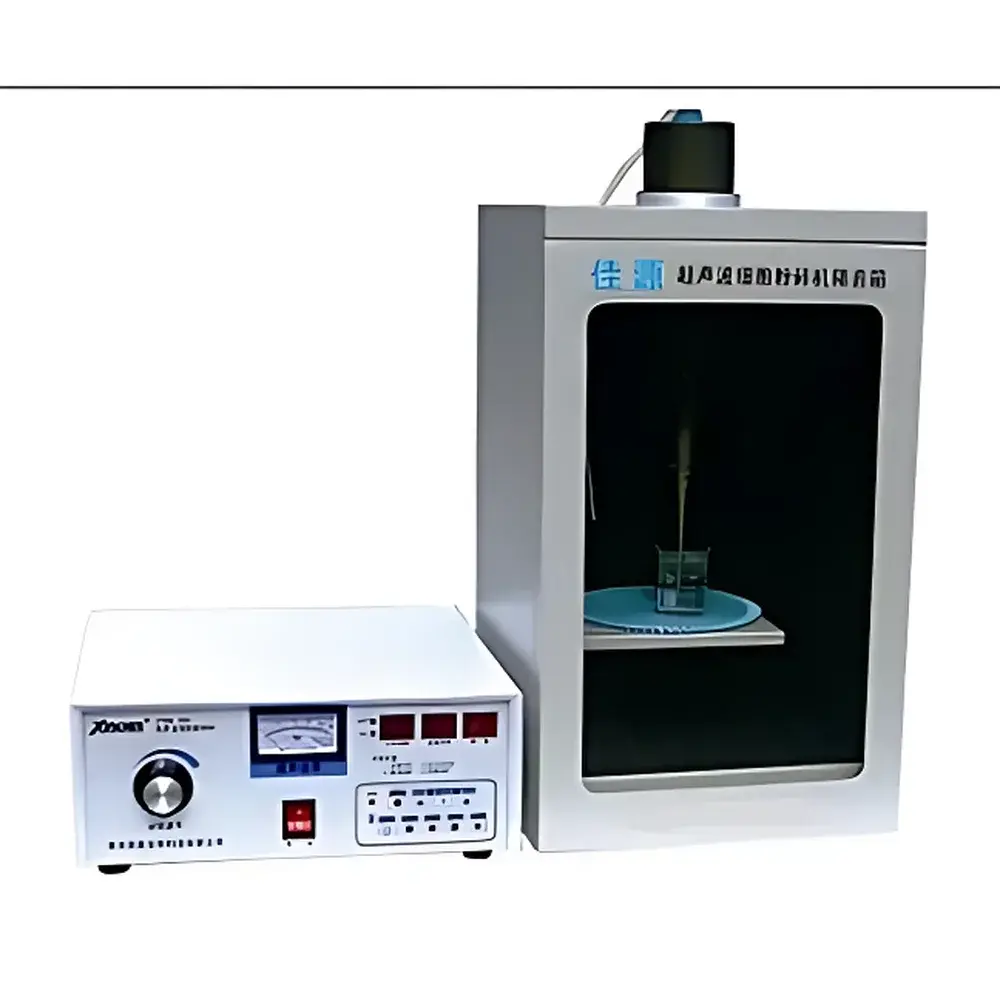
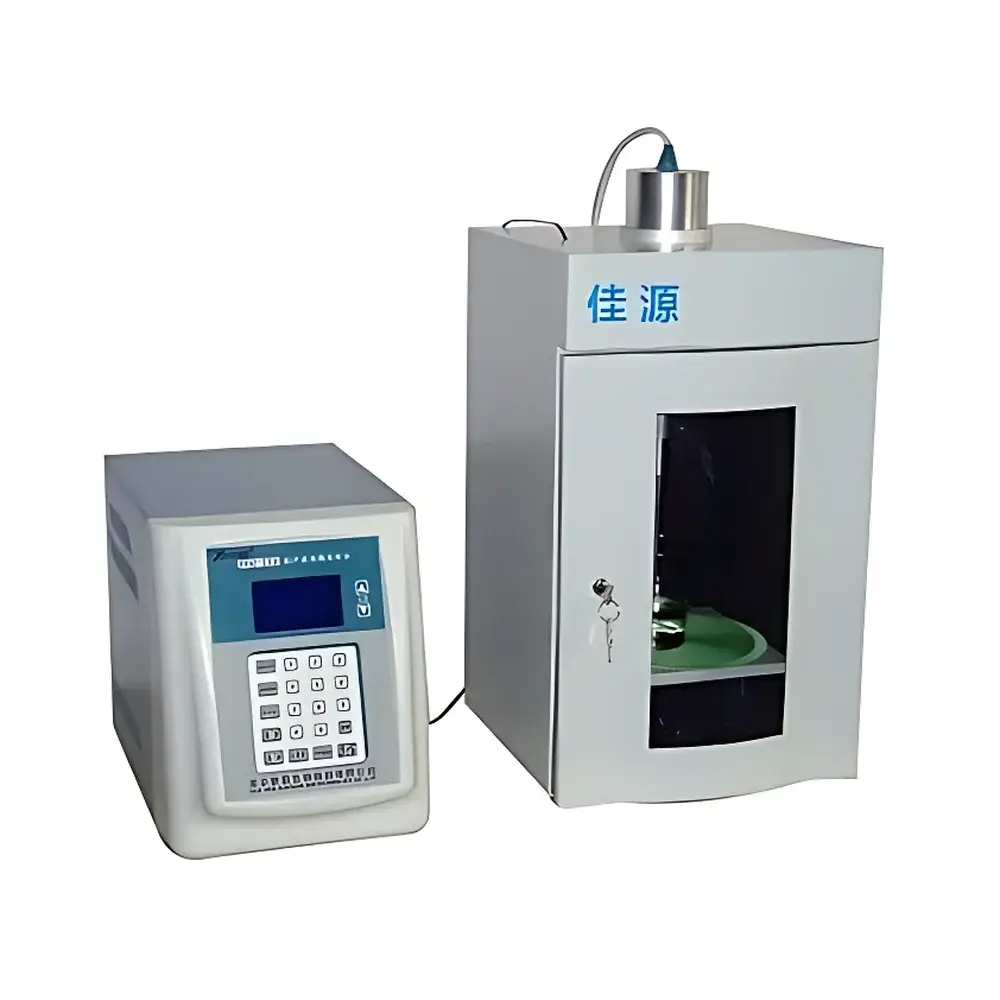
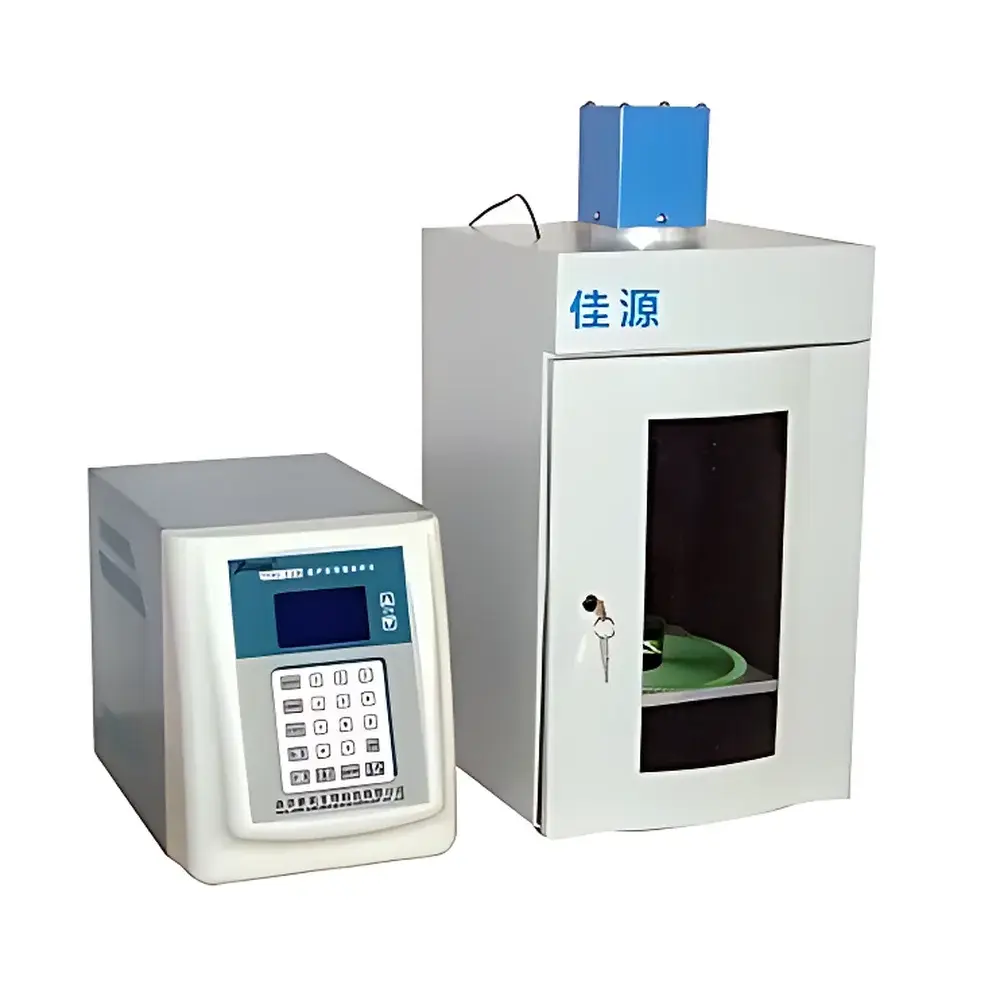
Jiayuan JY88-II Ultrasonic Cell Disruptor
| Brand | Jiayuan |
|---|---|
| Origin | Beijing, China |
| Model | JY88-II |
| Ultrasonic Frequency | 20–25 kHz (auto-frequency tracking) |
| Output Power | 250 W |
| Duty Cycle | 1–99% |
| Pulse Mode | Adjustable On/Off ratio (10–90% for both ultrasonic and interval time) |
| Total Operating Time | 1–99 min |
| Standard Probe Diameter | Φ6 mm |
| Optional Probes | Φ2, Φ3, Φ2–Φ15, Φ18–Φ25 mm |
| Sample Volume Capacity | 0.2–200 mL |
| Input Voltage | 220 V / 110 V, 50 Hz / 60 Hz |
| Instrument Type | Ultrasonic Cell Disruptor |
Overview
The Jiayuan JY88-II Ultrasonic Cell Disruptor is a benchtop sonication system engineered for precise, reproducible mechanical lysis of biological samples via high-intensity ultrasonic cavitation. Operating within the 20–25 kHz frequency range with automatic frequency tracking, the instrument generates controlled acoustic energy that induces transient microcavitation in liquid media—leading to localized shear forces, shockwaves, and microstreaming sufficient to disrupt cell membranes, organelles, and microbial structures without significant thermal degradation when operated under pulsed conditions. Designed for versatility across life science workflows, it serves as a core tool for nucleic acid and protein extraction, subcellular fractionation, nanoparticle dispersion, emulsification, and acceleration of enzymatic or chemical reactions requiring homogeneous mixing at the molecular level.
Key Features
- 250 W nominal output power with real-time amplitude stability and auto-frequency tracking ensures consistent energy delivery across varying sample loads and viscosity conditions.
- Pulse-mode operation with independently adjustable duty cycle (1–99%) and programmable on/off timing (10–90% for both ultrasonic burst and rest intervals) enables thermal management during sensitive applications such as chromatin shearing or RNA isolation.
- Digital timer with 1–99 minute range supports unattended operation while maintaining traceable process parameters for GLP-compliant documentation.
- Interchangeable titanium alloy probes—including standard Φ6 mm tip and optional diameters from Φ2 mm to Φ25 mm—allow optimization for volume scalability (0.2–200 mL) and target-specific energy density requirements.
- Built-in safety interlocks prevent probe activation without proper immersion depth detection and include over-temperature and overload protection circuits compliant with IEC 61010-1 standards.
Sample Compatibility & Compliance
The JY88-II accommodates a broad spectrum of biological matrices: mammalian and insect cell suspensions, bacterial cultures (including Gram-positive strains), yeast, plant tissues (homogenized or slurry-based), viral particles, and subcellular preparations. It is routinely employed in protocols aligned with ISO 17025-accredited laboratories and supports method validation per USP , ASTM E2945-21 (Standard Guide for Ultrasonic Processing of Nanomaterials), and CLSI EP17-A2 for limit-of-detection studies in diagnostic assay development. While not FDA 21 CFR Part 11–certified out-of-the-box, audit-ready electronic logs can be generated via external data capture systems interfaced through RS-232 or analog output ports.
Software & Data Management
The JY88-II operates via an integrated digital control panel with LED display and tactile membrane keys—designed for glove-compatible use in biosafety cabinets and cleanroom environments. Though it does not feature embedded PC software or cloud connectivity, its parameter settings (power level, pulse ratio, duration) are retained in non-volatile memory after power cycling. For regulated environments, third-party LabVIEW or Python-based acquisition scripts can interface with the device’s TTL-triggered start/stop signals and analog voltage outputs to record operational metadata—including real-time amplitude feedback—for inclusion in electronic lab notebooks (ELNs) and LIMS integration.
Applications
- Nucleic acid extraction: Efficient lysis of genomic DNA, plasmid DNA, and total RNA from cultured cells and clinical isolates, minimizing shearing artifacts when using low-duty-cycle pulsing.
- Protein solubilization: Disruption of inclusion bodies and membrane-bound proteins in recombinant expression systems, particularly prior to affinity chromatography purification.
- Nanomaterial processing: Deagglomeration and surface functionalization of carbon nanotubes, metal oxides, and polymeric nanoparticles in aqueous or organic dispersions.
- Vaccine development: Viral particle disruption for antigen release and adjuvant formulation via ultrasonic emulsification of oil-in-water systems.
- Phytochemical analysis: Accelerated extraction of alkaloids, flavonoids, and terpenoids from ground plant material under solvent-assisted sonication (SAS).
FAQ
What is the recommended maintenance schedule for the JY88-II probe?
Titanium probes should be inspected visually before each use for pitting or erosion; cleaning with 70% ethanol followed by distilled water rinse is advised after every session. Annual calibration of power output against a reference calorimeter is recommended for labs operating under ISO/IEC 17025 quality systems.
Can the JY88-II be used for continuous (non-pulsed) operation?
Yes, though continuous mode is discouraged for volumes >50 mL or thermally sensitive targets due to cumulative heat generation; temperature monitoring via external probe or ice-bath immersion is required for compliance with thermal stability thresholds in RNA workflows.
Is the Φ6 mm probe suitable for small-volume lysates (e.g., ≤10 µL)?
No—minimum effective volume for the Φ6 mm probe is ~0.2 mL; for microliter-scale applications, the optional Φ2 mm probe must be selected to maintain acoustic intensity and avoid excessive sample heating or splashing.
Does the instrument support external triggering or automation integration?
Yes—TTL-level trigger input allows synchronization with robotic liquid handlers or spectrophotometers; analog voltage output (0–5 V) corresponds linearly to instantaneous power output for closed-loop process monitoring.
How does the auto-frequency tracking function improve reproducibility?
It continuously monitors load impedance and adjusts drive frequency to maintain resonance at the probe tip, compensating for changes caused by sample viscosity, temperature drift, or probe wear—thereby stabilizing cavitation intensity across repeated runs.