
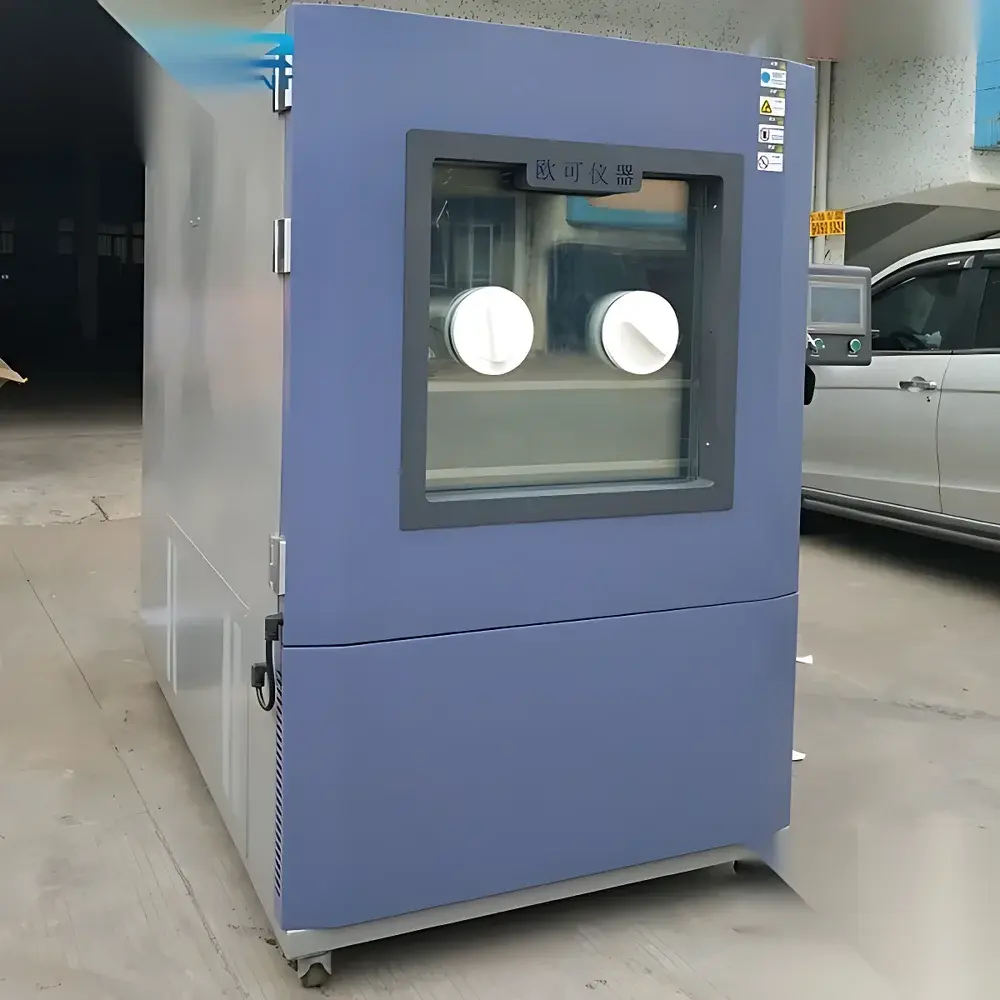
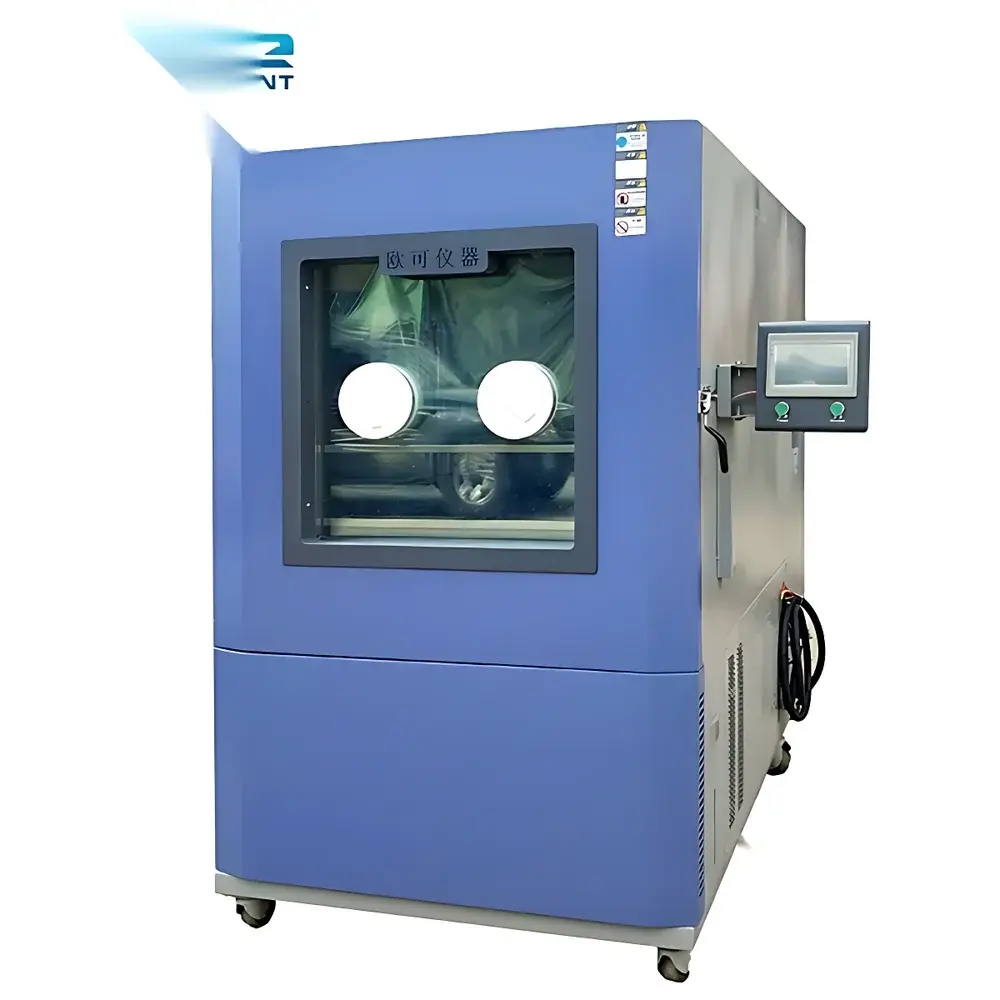
Ultra-Low Humidity Temperature and Humidity Controlled Chamber
| Brand | OEM |
|---|---|
| Origin | Imported |
| Manufacturer Type | Authorized Distributor |
| Price | USD 2,650 (FOB) |
| Temperature Range | –70°C to +180°C |
| Humidity Range | 5% to 98% RH |
| Minimum Achievable Humidity | ≤5% RH (at 25°C) |
| Control Accuracy | ±0.5°C / ±2% RH |
| Uniformity | ±1.5°C / ±3% RH |
| Cooling Water Requirement | 10–28°C, 0.1–0.3 MPa |
| Power Supply | 380 VAC, 3-phase, 50/60 Hz |
| Compliance | GB/T 2423.1–2023, GB/T 2423.2–2023, IEC 60068-2-1, IEC 60068-2-2, GJB 1032A–2012, MIL-STD-2164A, USP <1151> (Environmental Stress Screening Guidance) |
Overview
The Ultra-Low Humidity Temperature and Humidity Controlled Chamber is a precision-engineered environmental test system designed to replicate extreme low-humidity conditions while maintaining tight thermal and hygrometric control across wide operational ranges. Unlike standard humidity chambers limited to ≥10% RH minimum, this chamber integrates advanced desiccant-assisted dehumidification with dual-stage refrigeration and full P.I.D.-driven BTHC (Balanced Temperature and Humidity Control) architecture—enabling stable operation down to 5% RH at ambient temperature and sustaining sub-10% RH across the full –70°C to +180°C temperature span. Its core function is to perform accelerated environmental stress screening (ESS), climatic adaptability validation, and long-term reliability assessment for mission-critical components in aerospace, defense electronics, automotive ECUs, and high-reliability medical devices. The system operates on R404A refrigerant (zero ozone depletion potential), complies with ISO 17025 traceable calibration requirements, and meets the procedural rigor of MIL-STD-2164A and GJB 1032A for qualification-level stress screening.
Key Features
- Ultra-low humidity capability: Stable control to ≤5% RH at 25°C, with verified repeatability of ±0.8% RH over 72-hour continuous operation.
- Balanced Temperature & Humidity Control (BTHC): Real-time dynamic compensation using SSR-driven heating/humidification and variable-speed compressor modulation—eliminates overshoot and ensures energy-efficient steady-state stability.
- Dual-stage dehumidification architecture: Combines high-efficiency finned-tube evaporator cooling with optional integrated silica-gel desiccant wheel (optional upgrade) for deep-dry performance without nitrogen purge dependency.
- Full-coverage safety redundancy: Independent overtemperature cutoff (mechanical & electronic), dry-run protection for steam humidifier, low-water-level interlock, high-pressure refrigerant switch, motor overload relay, and Class II residual-current circuit breaker (RCCB) compliant with IEC 61000-4-5.
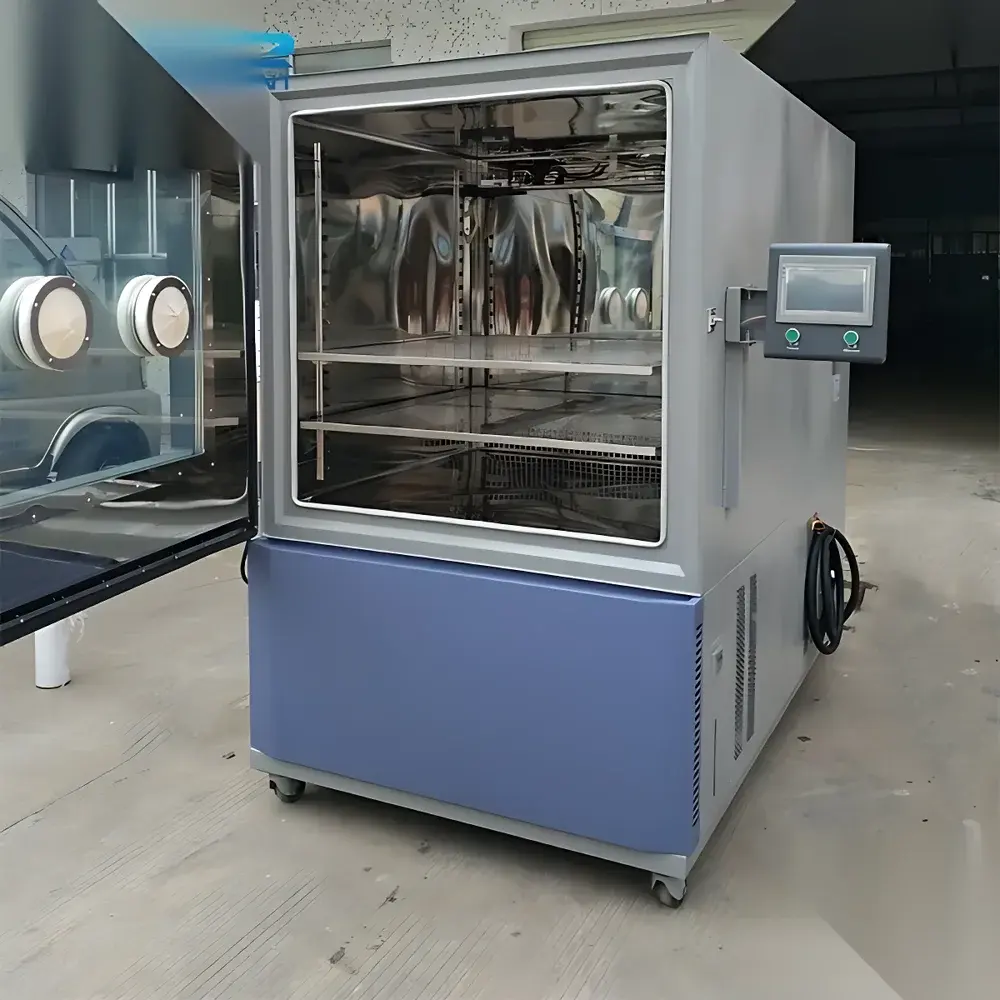
- Ergonomic industrial design: Seamless stainless-steel interior (304 grade), arc-shaped front panel with anti-glare tempered glass viewport, flat non-reactive door handle, and maintenance-accessible modular layout per ISO 13850.
- Energy-optimized operation: Patented capillary tube-based refrigerant flow regulation (vs. conventional thermostatic expansion valves), combined with intelligent load-sensing compressor cycling—reduces power consumption by up to 30% versus legacy systems under identical test profiles.
Sample Compatibility & Compliance
This chamber accommodates test specimens up to 500 kg total mass, with internal dimensions customizable per customer specifications (standard volume: 500 L). It supports standardized mounting via two-tier stainless-steel adjustable shelves (load capacity: 30 kg/shelf, uniformly distributed). All structural materials meet RoHS Directive 2011/65/EU and REACH Annex XVII restrictions. Calibration is performed pre-shipment using NIST-traceable reference sensors (±0.15°C, ±1.2% RH), documented in an accredited third-party certificate compliant with ISO/IEC 17025:2017. The system satisfies functional requirements for environmental testing under GB/T 2423.1–2023 (cold), GB/T 2423.2–2023 (dry heat), IEC 60068-2-1 (cold), IEC 60068-2-2 (dry heat), and military-grade ESS protocols including MIL-STD-2164A and GJB 1032A. Optional IQ/OQ documentation packages are available for GMP/GLP-regulated environments requiring FDA 21 CFR Part 11-compliant audit trails.
Software & Data Management
The chamber is equipped with an embedded 7-inch capacitive touchscreen controller running proprietary firmware v4.2, supporting multi-language UI (English, German, Japanese, Chinese, Korean) and configurable data logging intervals from 1 second to 60 minutes. All operational parameters—including chamber setpoints, real-time sensor readings, alarm history, and runtime statistics—are stored internally (≥100,000 data points) and exportable via USB or Ethernet (Modbus TCP/IP or optional RS-485). The system supports programmable test profiles with up to 99 segments, ramp/soak logic, and conditional branching based on elapsed time or sensor thresholds. For enterprise integration, optional PC-based software provides remote monitoring, automated report generation (PDF/CSV), statistical process control (SPC) charting, and secure user-role management (admin/operator/viewer) aligned with ISO 9001:2015 documentation standards.
Applications
- Aerospace avionics qualification: Thermal cycling with low-RH exposure to assess conformal coating integrity and solder joint reliability under desert-like conditions.
- Automotive ADAS sensor validation: Simulating arid climate effects on LiDAR optical windows and radar dielectric substrates during accelerated life testing.
- Medical device sterilization packaging: Verifying seal strength retention and moisture barrier performance of Tyvek®-based pouches under controlled 5–10% RH storage protocols.
- Defense electronics ESS: Executing GJB 1032A-defined rapid thermal transients combined with ultra-dry holds to expose latent solder voids and intermetallic growth anomalies.
- Material science research: Studying hygroscopic expansion coefficients of polymer composites and ceramic matrix materials under sub-10% RH isothermal conditions.
FAQ
What is the lowest achievable humidity level, and under what temperature conditions is it guaranteed?
The chamber achieves and maintains ≤5% RH at 25°C ambient. At elevated temperatures (e.g., 60°C), minimum humidity increases to ~8% RH due to saturation limit constraints; at sub-zero temperatures (e.g., –40°C), practical lower limit rises to ~12% RH owing to condensation physics and sensor accuracy degradation.
Does the system support automated calibration verification and audit trail generation for regulated industries?
Yes—optional IQ/OQ validation kits include calibrated reference probes, protocol templates, and electronic audit logs compliant with FDA 21 CFR Part 11. Full traceability to national metrology institutes is provided with each third-party calibration certificate.
Is distilled water required for the humidifier, or can tap water be used?
The integrated automatic filtration and softening system enables direct connection to municipal water supply—no external deionized or distilled water source is needed. The system includes self-cleaning scale-inhibition cycles and real-time conductivity monitoring to prevent nozzle clogging.
Can the chamber operate unattended for extended durations (e.g., 72+ hours)?
Yes—the controller supports fully autonomous execution of multi-segment programs, with email/SMS alerts triggered upon alarm events. All safety interlocks remain active during unmanned operation, and power-fail recovery retains last valid setpoint and program position.
What refrigerant is used, and does it comply with current global environmental regulations?
R404A is employed—a zero-ozone-depletion-potential (ODP = 0) hydrofluorocarbon blend approved under the Montreal Protocol and EU F-Gas Regulation (EU) No 517/2014 for industrial refrigeration applications through 2030. A future-ready R290 (propane) retrofit path is under development and available upon request.



