
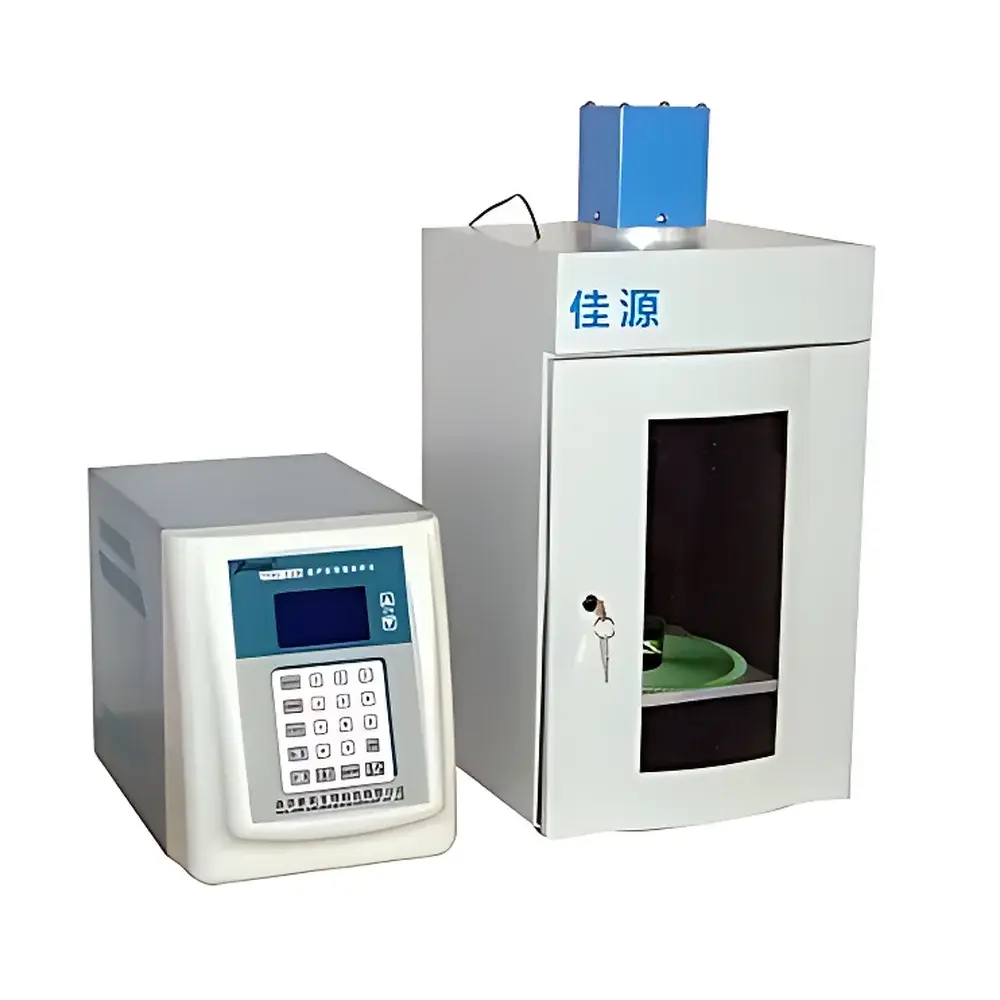
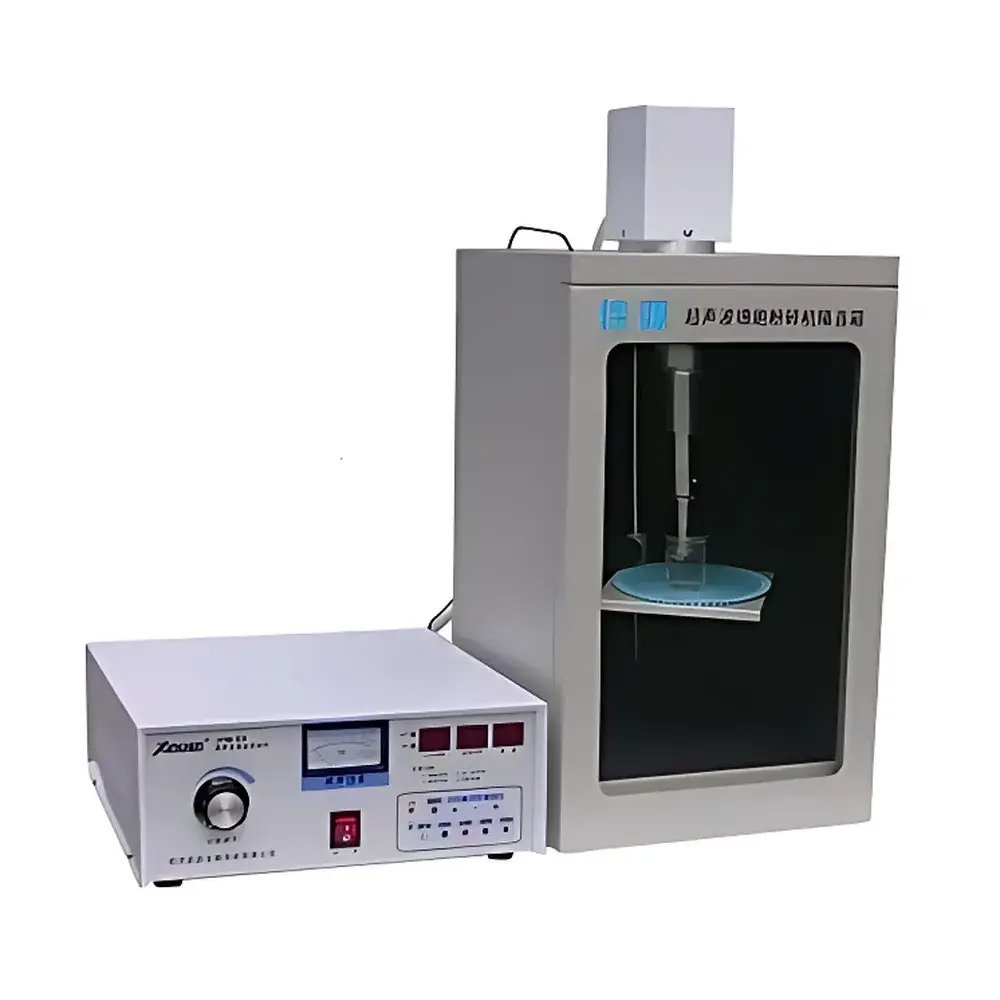
Jiayuan JY99-IIDN High-Power Ultrasonic Cell Disruptor
| Brand | Jiayuan |
|---|---|
| Origin | Beijing, China |
| Model | JY99-IIDN |
| Ultrasonic Frequency | 20–25 kHz (auto-frequency tracking) |
| Output Power | 1800 W (touch-key continuous adjustment) |
| Pulse Mode | On-time 0.1–99 s / Off-time 0.1–99 s |
| Total Operating Time | 0.1–99 min |
| Temperature Monitoring Range | 0–100 °C |
| Standard Probe Diameter | Φ25 mm |
| Optional Probes | Φ15, Φ22, Φ25, Φ28 mm |
| Sample Volume Capacity | 50–1200 mL |
| Duty Cycle | 0.1–99.9% |
| Input Voltage | 220/110 V AC, 50/60 Hz |
Overview
The Jiayuan JY99-IIDN High-Power Ultrasonic Cell Disruptor is an industrial-grade benchtop sonicator engineered for high-efficiency mechanical lysis of biological samples via acoustic cavitation. Operating within the 20–25 kHz frequency range with automatic frequency tracking, the system generates intense localized pressure differentials in liquid media—inducing transient microcavitation, bubble collapse, and shear forces sufficient to disrupt cell membranes, organelles, and extracellular matrices. Unlike thermal or enzymatic lysis methods, ultrasonic disruption preserves native protein conformation and nucleic acid integrity when properly controlled, making it suitable for downstream applications including Western blotting, qPCR, co-immunoprecipitation, and recombinant protein purification. The JY99-IIDN is designed for reproducible, scalable sample processing across research laboratories, bioprocessing pilot lines, and quality control environments where consistent energy delivery and thermal management are critical.
Key Features
- High-output 1800 W transducer with digital touch interface enabling precise, stepless power modulation—ensuring optimal energy coupling across diverse sample viscosities and volumes.
- Intelligent auto-frequency tracking maintains resonant operation under variable load conditions, minimizing probe wear and maximizing cavitation efficiency over extended duty cycles.
- Programmable pulsed sonication (on/off timing resolution to 0.1 s) mitigates heat accumulation and prevents biomolecular denaturation during prolonged processing.
- Integrated temperature monitoring (0–100 °C range) with real-time display allows correlation of thermal rise with lysis kinetics—essential for method development and protocol standardization.
- Modular probe architecture: Standard Φ25 mm titanium alloy horn; optional probes (Φ15, Φ22, Φ28 mm) support targeted energy density tuning—from high-shear bacterial lysis to gentle tissue homogenization.
- Robust industrial chassis with vibration-dampened base, sealed electronics, and IP20-rated enclosure—designed for continuous operation in ISO Class 7 cleanrooms and GLP-compliant labs.
Sample Compatibility & Compliance
The JY99-IIDN accommodates a broad spectrum of biological materials: suspension cultures (E. coli, yeast, mammalian cells), adherent monolayers (after trypsinization), soft tissues (liver, spleen, plant leaves), viral particles, and subcellular fractions. Its 50–1200 mL working volume range supports both small-scale optimization (e.g., 100 µL lysate prep for mass spectrometry) and mid-scale batch processing (e.g., 1 L E. coli harvests). The instrument complies with IEC 61000-6-3 (EMC emissions) and IEC 61000-6-2 (immunity), and its operational parameters align with common regulatory expectations for analytical method validation per USP , ISO 13485 Annex A.3 (for medical device R&D), and FDA 21 CFR Part 11 when paired with compliant data logging software.
Software & Data Management
While the JY99-IIDN operates as a standalone hardware platform, its digital control module supports RS-232/USB connectivity for external logging via third-party acquisition systems (e.g., LabVIEW, MATLAB, or custom Python scripts). All parameter sets—including power level, pulse sequence, total runtime, and temperature history—are timestamped and exportable as CSV files. When integrated into validated workflows, the device supports audit-trail generation, user access control (via external authentication), and electronic signature capability—meeting core requirements for GLP/GMP documentation integrity. No proprietary cloud service or vendor-hosted platform is required; data sovereignty remains fully under institutional control.
Applications
- Cell lysis and organelle isolation: Efficient release of cytosolic proteins, nuclear extracts, and mitochondrial fractions without detergent-induced artifacts.
- Nucleic acid shearing: Controlled fragmentation of genomic DNA for NGS library preparation (replacing enzymatic or acoustic shearing alternatives).
- Nanomaterial dispersion: Deagglomeration of carbon nanotubes, graphene oxide, and metal-organic frameworks in aqueous or organic solvents.
- Emulsification & nanoemulsion formation: Production of stable oil-in-water systems for pharmaceutical delivery vehicles and functional food ingredients.
- Extraction enhancement: Accelerated recovery of alkaloids, flavonoids, and polysaccharides from botanical matrices under mild thermal conditions.
- Microbial inactivation studies: Quantitative assessment of ultrasound-mediated viability loss in biofilm-forming pathogens (e.g., Pseudomonas aeruginosa, Staphylococcus epidermidis).
FAQ
What safety certifications does the JY99-IIDN hold?
The unit meets IEC 61000-6-2 (electromagnetic immunity) and IEC 61000-6-3 (EMC emissions) standards. It carries CE marking for EMC and LVD compliance in the European Economic Area. No UL or CSA listing is provided by default; site-specific electrical certification may be required per local jurisdiction.
Can the JY99-IIDN be used for cryogenic sonication?
No. The instrument is not rated for sub-zero ambient or sample temperatures. For cold lysis protocols, users must employ external cooling (e.g., ice-water baths or recirculating chillers) while monitoring temperature in real time via the built-in sensor.
Is probe sterilization supported?
Titanium alloy probes (Φ15–Φ28 mm) are autoclavable at 121 °C for 20 minutes. However, repeated autoclaving may accelerate surface oxidation; chemical disinfection (70% ethanol, 0.5% sodium hypochlorite) is recommended for routine decontamination between runs.
How is reproducibility ensured across operators?
Standardized parameter locking (power, pulse ratio, duration) combined with probe calibration records and temperature-triggered shutdown thresholds (<45 °C default) minimize inter-user variability. We recommend documenting probe serial number, usage hours, and tip erosion measurements in lab notebooks per ISO/IEC 17025 clause 7.7.
Related Products





