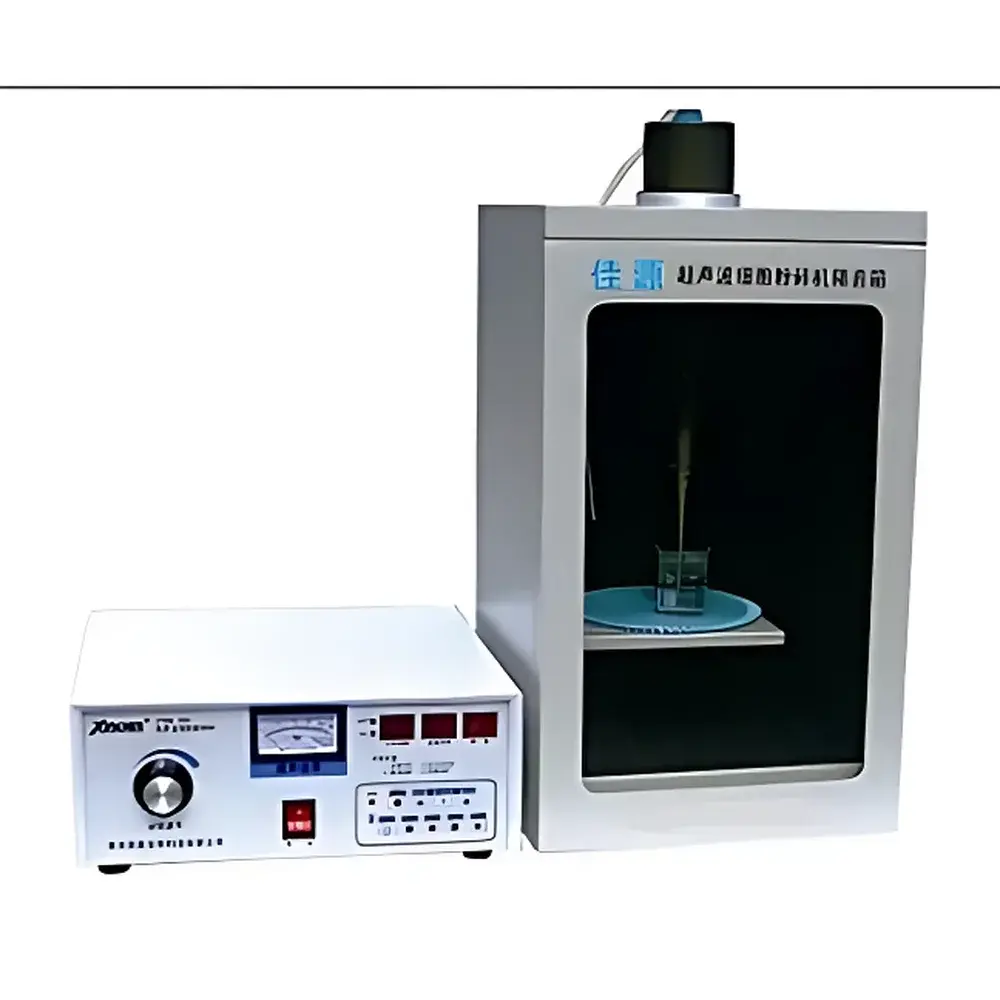
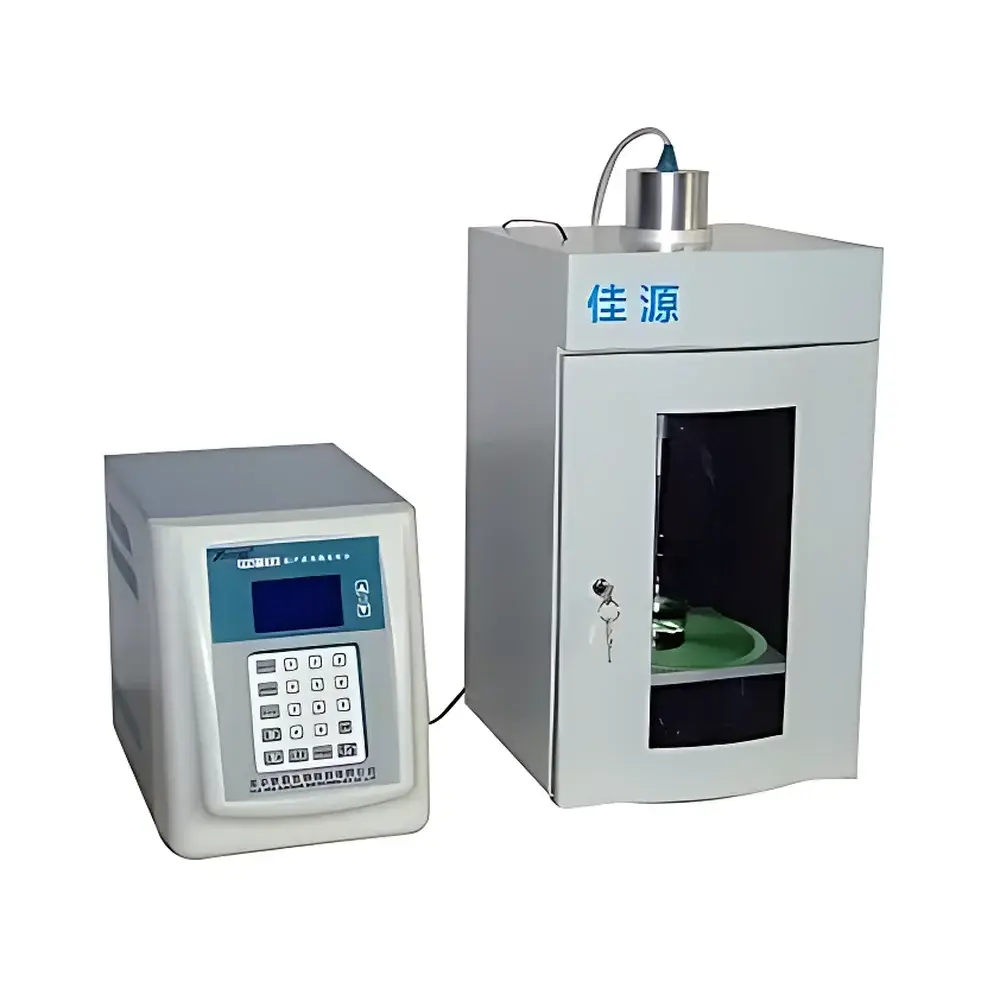
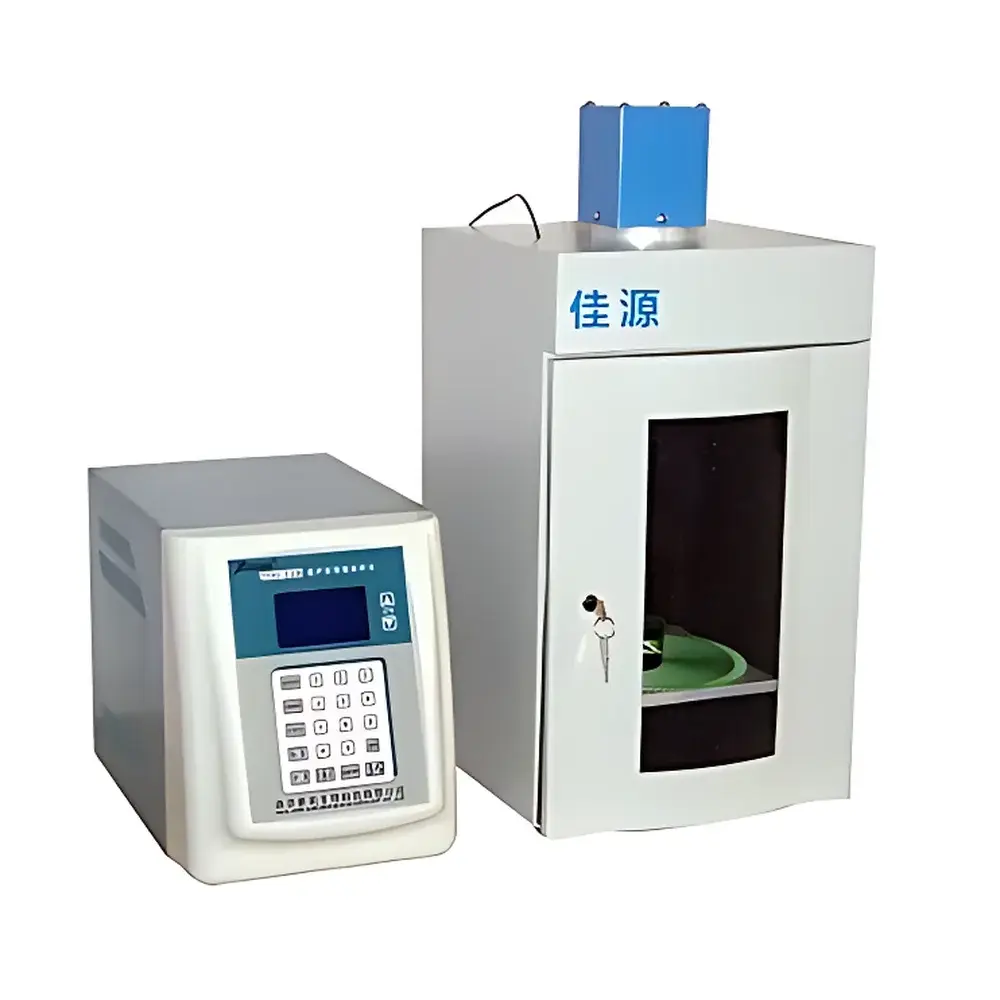
Jiayuan JY96-II Ultrasonic Cell Disruptor
| Brand | Jiayuan |
|---|---|
| Origin | Beijing, China |
| Model | JY96-II |
| Ultrasonic Frequency | 20–25 kHz (auto-frequency tracking) |
| Output Power | 150 W |
| Pulse Duty Cycle | 10–90% (adjustable) |
| Interval Duty Cycle | 10–90% (adjustable) |
| Total Operation Time | 1–99 min |
| Standard Probe Diameter | Φ6 mm |
| Optional Probe Diameters | Φ2, Φ3, Φ2–Φ15, Φ18–Φ25 mm |
| Sample Volume Range | 0.2–100 mL |
| Duty Ratio | 1–99% |
| Power Supply | 220/110 V, 50/60 Hz |
Overview
The Jiayuan JY96-II Ultrasonic Cell Disruptor is a benchtop sonication system engineered for precise, reproducible cell lysis, tissue homogenization, and nano-emulsion preparation in life science laboratories. It operates on the principle of high-intensity ultrasonic cavitation—where rapid pressure fluctuations in a liquid medium generate transient microbubbles that collapse violently, producing localized shear forces, shockwaves, and microstreaming. This physical mechanism enables efficient disruption of cellular membranes, organelles, and extracellular matrices without chemical or thermal denaturation, preserving biomolecular integrity for downstream applications including protein extraction, nucleic acid isolation, and subcellular fractionation.
Key Features
- Auto-frequency tracking circuitry: Maintains optimal resonance at 20–25 kHz across probe wear and sample viscosity changes, ensuring consistent energy delivery and minimizing probe overheating.
- Programmable pulse mode: Independent adjustment of sonication (10–90%) and rest (10–90%) intervals enables thermal management for heat-sensitive samples—critical for maintaining enzyme activity or preventing RNA degradation.
- Dual-time control architecture: Combines programmable total run time (1–99 minutes) with real-time duty ratio monitoring, supporting GLP-compliant protocol documentation and repeatability verification.
- Interchangeable titanium alloy probes: Standard Φ6 mm probe optimized for volumes 0.2–100 mL; optional probes (Φ2, Φ3, Φ2–Φ15, Φ18–Φ25 mm) extend operational flexibility across micro-volume lysates, viscous suspensions, and bulk emulsions.
- Robust industrial-grade transducer: Piezoelectric ceramic stack with aluminum horn assembly delivers stable 150 W nominal output power with low harmonic distortion and long-term amplitude stability.
- Universal power compatibility: Dual-voltage (220/110 V) and dual-frequency (50/60 Hz) input supports deployment in global laboratory environments without external transformers.
Sample Compatibility & Compliance
The JY96-II accommodates diverse biological matrices—including mammalian and insect cell cultures, bacterial pellets (E. coli, Bacillus spp.), yeast, plant leaf tissues, viral suspensions, and soft animal organs—without requiring pre-treatment or additives. Its non-contact, solvent-free operation aligns with green chemistry principles and avoids contamination from grinding media. The instrument meets general electrical safety requirements per IEC 61010-1 and is routinely validated in academic and industrial labs adhering to ISO/IEC 17025, USP , and ASTM E2872-13 (Standard Guide for Ultrasonic Processing Equipment Calibration). While not inherently 21 CFR Part 11 compliant, its time-stamped operation logs and manual parameter locking support audit-ready workflows when integrated into GMP/GLP documentation systems.
Software & Data Management
The JY96-II is a standalone hardware platform with front-panel digital interface—no proprietary software or driver installation required. All operational parameters (pulse width, interval, duration, duty ratio) are set via intuitive rotary encoder and LCD display, enabling rapid protocol recall and operator-independent setup. For traceability, users may manually record settings in lab notebooks or integrate the device into LIMS via external timers or PLC-triggered start/stop signals. Optional RS-232 or USB-to-serial adapters (sold separately) allow basic ASCII command control (e.g., “START”, “STOP”, “QUERY”) for semi-automated batch processing in regulated environments.
Applications
- Preparation of soluble protein extracts from recombinant E. coli and mammalian HEK293 cells
- Chromatin shearing for ChIP-seq protocols (with ice-jacketed microtubes)
- Nanoparticle dispersion in lipid-based drug delivery formulations
- Homogenization of plant root tissues for metabolite profiling
- Emulsification of oil-in-water systems for cosmetic and food-grade colloids
- Rapid lysis of Gram-positive bacteria for PCR template generation
- Cleaning and deagglomeration of microfluidic channel surfaces prior to functional assays
FAQ
What is the maximum recommended continuous operating time per cycle?
The JY96-II supports up to 99 minutes of total runtime per session; however, for thermal management of heat-labile samples, continuous sonication beyond 3–5 minutes is discouraged without active cooling. Pulse mode (e.g., 5 s ON / 5 s OFF) is strongly advised for extended protocols.
Can the JY96-II be used for nanoparticle size reduction?
Yes—when coupled with appropriate probe geometry (e.g., Φ2 or Φ3 mm tip) and controlled amplitude/duty cycle, it achieves effective deagglomeration and size narrowing in colloidal suspensions, typically reducing D50 values by 30–70% depending on initial dispersion state and surfactant presence.
Is temperature control integrated into the JY96-II unit?
No—this model does not include built-in temperature sensing or Peltier cooling. Users must employ external ice baths, chilled sample holders, or recirculating chillers to maintain samples below 4 °C during prolonged sonication.
How often should the titanium probe be inspected for erosion?
Visual inspection is recommended after every 20 hours of cumulative use. Tip pitting or diameter reduction >5% warrants replacement to preserve cavitation efficiency and avoid inconsistent lysis performance.
Does the JY96-II comply with FDA or EU regulatory standards for pharmaceutical manufacturing?
It is not certified as GMP-grade equipment; however, its mechanical design, parameter reproducibility, and operational transparency support qualification under user-defined validation protocols (IQ/OQ/PQ) in pharmaceutical R&D and early-stage process development.