
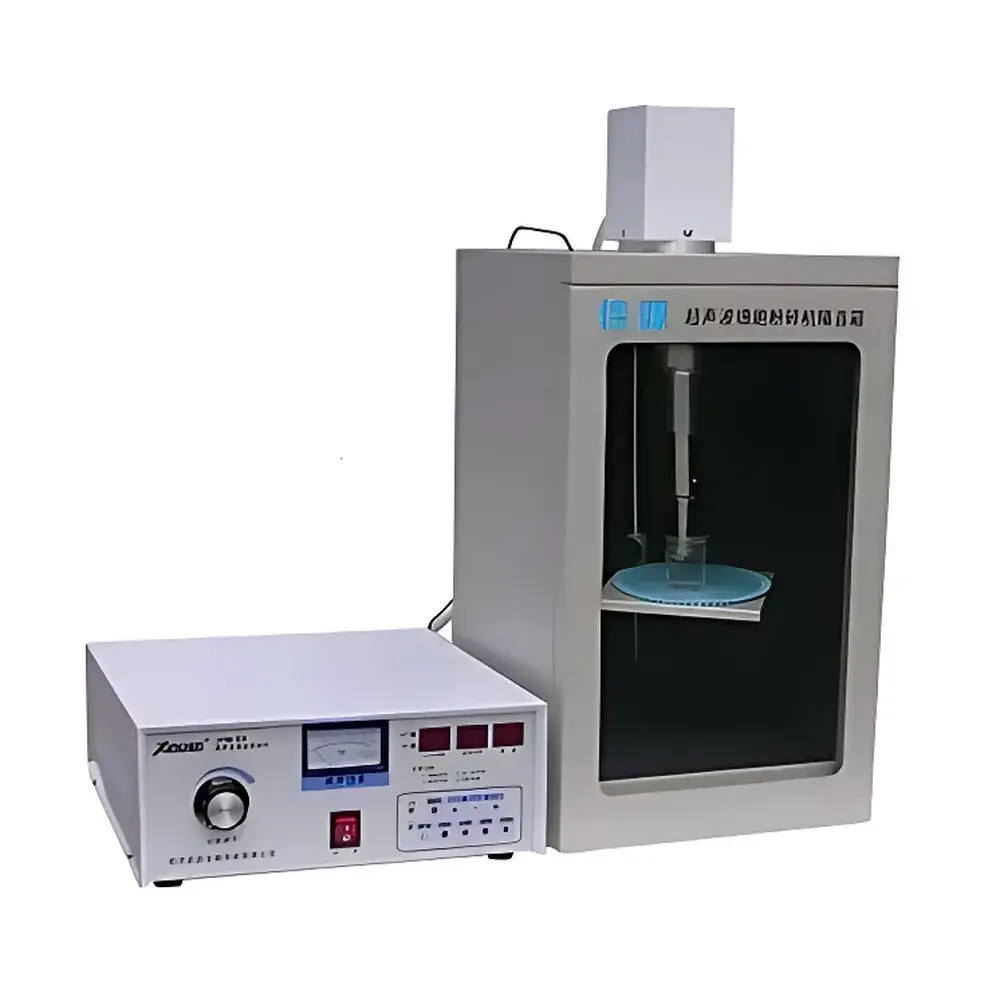
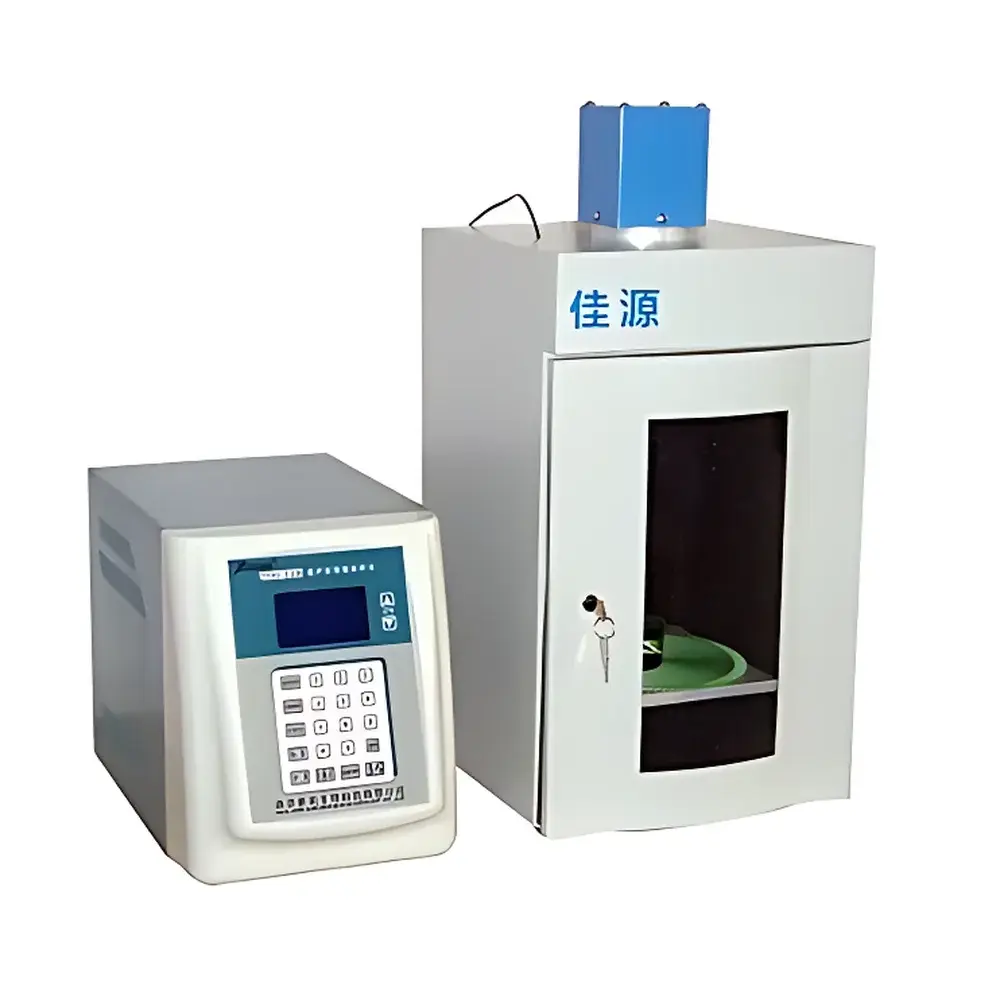
Jiayuan JY99-IID High-Power Ultrasonic Cell Disruptor
| Brand | Jiayuan |
|---|---|
| Origin | Beijing, China |
| Model | JY99-IID |
| Ultrasonic Frequency | 20–25 kHz with automatic frequency tracking |
| Output Power | 1800 W |
| Pulse Mode | On-time 0.1–99 s, Off-time 0.1–99 s |
| Total Operating Time | 0.1–99 min |
| Temperature Monitoring Range | 0–99 °C |
| Standard Probe Diameter | Φ25 mm |
| Optional Probe Diameters | Φ15, Φ22, Φ25, Φ28 mm |
| Sample Volume Capacity | 50–1200 mL |
| Duty Cycle | 0.1–99.9% |
| Power Supply | 220/110 V, 50/60 Hz |
Overview
The Jiayuan JY99-IID High-Power Ultrasonic Cell Disruptor is an engineered solution for controlled mechanical lysis of biological samples via high-intensity ultrasonic cavitation. Operating within the 20–25 kHz frequency range—with real-time automatic frequency tracking—the instrument maintains optimal acoustic coupling across varying sample viscosities and temperatures. Its 1800 W nominal output power enables efficient disruption of resilient cellular structures—including Gram-positive bacteria, yeast, plant tissues, and mammalian cells—while preserving labile biomolecules such as nucleic acids, proteins, and organelles when operated under appropriate duty-cycle and thermal management protocols. Unlike continuous-wave systems prone to localized overheating, the JY99-IID supports precise pulsed sonication (adjustable on/off intervals from 0.1 s), minimizing thermal denaturation and enabling reproducible, scalable lysis workflows in both benchtop research and pilot-scale preparation environments.
Key Features
- Real-time automatic frequency tracking ensures consistent cavitation intensity across changing load conditions and temperature gradients.
- Integrated digital temperature sensor (0–99 °C) with audible/visual over-temperature alert provides active thermal monitoring during operation.
- Programmable pulse mode: independent adjustment of sonication duration (0.1–99 s), rest interval (0.1–99 s), and total runtime (0.1–99 min) for method optimization.
- Duty cycle control from 0.1% to 99.9%, supporting fine-tuned energy delivery for heat-sensitive or shear-sensitive samples.
- Robust transducer architecture with industrial-grade piezoceramic stack and titanium alloy horn assembly for long-term stability and minimal harmonic distortion.
- Standard Φ25 mm solid titanium probe optimized for high-volume processing (50–1200 mL); optional probes (Φ15, Φ22, Φ28 mm) available for specialized applications including micro-volume lysis or high-shear emulsification.
- Built-in safety interlock system prevents operation without proper probe immersion or cooling jacket attachment (where applicable).
Sample Compatibility & Compliance
The JY99-IID accommodates a broad spectrum of biological and chemical matrices—including bacterial suspensions (e.g., E. coli, Bacillus subtilis), cultured mammalian cells, plant leaf homogenates, tissue lysates, viral particles, and nanoparticle dispersions. Its design conforms to general laboratory safety standards for Class II ultrasonic equipment (IEC 61000-4-3 EMC compliance; IP20 enclosure rating). While not certified for GMP manufacturing environments per se, the instrument supports GLP-aligned documentation practices through repeatable parameter logging (time, power, temperature, duty cycle) and is routinely employed in preclinical assay development compliant with ASTM E2711-20 (Standard Guide for Ultrasonic Processing of Biological Samples) and ISO 13320:2020 (Particle size analysis — Laser diffraction methods), particularly in nanoparticle dispersion validation.
Software & Data Management
The JY99-IID operates via an embedded microcontroller interface with LED-based parameter display and tactile keypad navigation. Though it does not feature onboard data export or PC connectivity, all operational parameters—including setpoints and real-time temperature—are retained in non-volatile memory across power cycles. For audit-trail requirements in regulated environments, users may integrate external digital loggers (e.g., USB-connected thermocouple recorders) or pair the device with third-party LabVIEW or Python-controlled relay interfaces for time-stamped parameter capture. The absence of proprietary software aligns with open-data workflows common in academic and contract research laboratories where instrument interoperability and raw data sovereignty are prioritized.
Applications
- Cell lysis for protein extraction, subcellular fractionation, and chromatin immunoprecipitation (ChIP) sample prep.
- Preparation of antigenic lysates for monoclonal antibody development and vaccine R&D.
- Nanomaterial dispersion and deagglomeration in drug delivery formulation (e.g., liposomes, polymeric nanoparticles).
- Homogenization of fibrous plant tissues prior to metabolite or RNA isolation.
- Emulsification of oil-in-water and water-in-oil systems for food science and cosmetic formulation studies.
- Accelerated solvent extraction (ASE) of natural products from botanical matrices.
- Mechanical activation of catalysts and surface functionalization of carbon nanotubes or metal oxides.
FAQ
Is the JY99-IID suitable for RNA extraction workflows?
Yes—when used with chilled buffers, low-duty-cycle pulsing (e.g., 2 s on / 8 s off), and ice-bath cooling, the JY99-IID achieves efficient lysis while maintaining RNA integrity, as verified by RIN > 8.5 in standard Agilent Bioanalyzer assays.
Can the instrument be operated continuously without interruption?
No. Continuous operation beyond 5 minutes at full power is discouraged due to thermal accumulation in the probe and sample; the built-in temperature sensor will trigger shutdown above 99 °C to protect transducer integrity.
What is the expected service life of the Φ25 mm titanium probe under routine use?
With proper cleaning (acetone rinse followed by ethanol sterilization), avoidance of abrasive particulates, and periodic visual inspection for pitting or tip erosion, the standard probe typically exceeds 2,000 operational hours before performance degradation warrants replacement.
Does the JY99-IID meet FDA 21 CFR Part 11 requirements?
The unit itself does not include electronic signature capability or audit-trail generation; however, its deterministic parameter settings and stable hardware response enable integration into Part 11-compliant workflows when paired with validated external data acquisition systems.
Are CE or UL certifications available for this model?
This configuration is supplied for research-use-only (RUO) applications and carries no CE marking or UL listing; end-users are responsible for local regulatory validation if deploying in clinical or diagnostic contexts.
Related Products




