
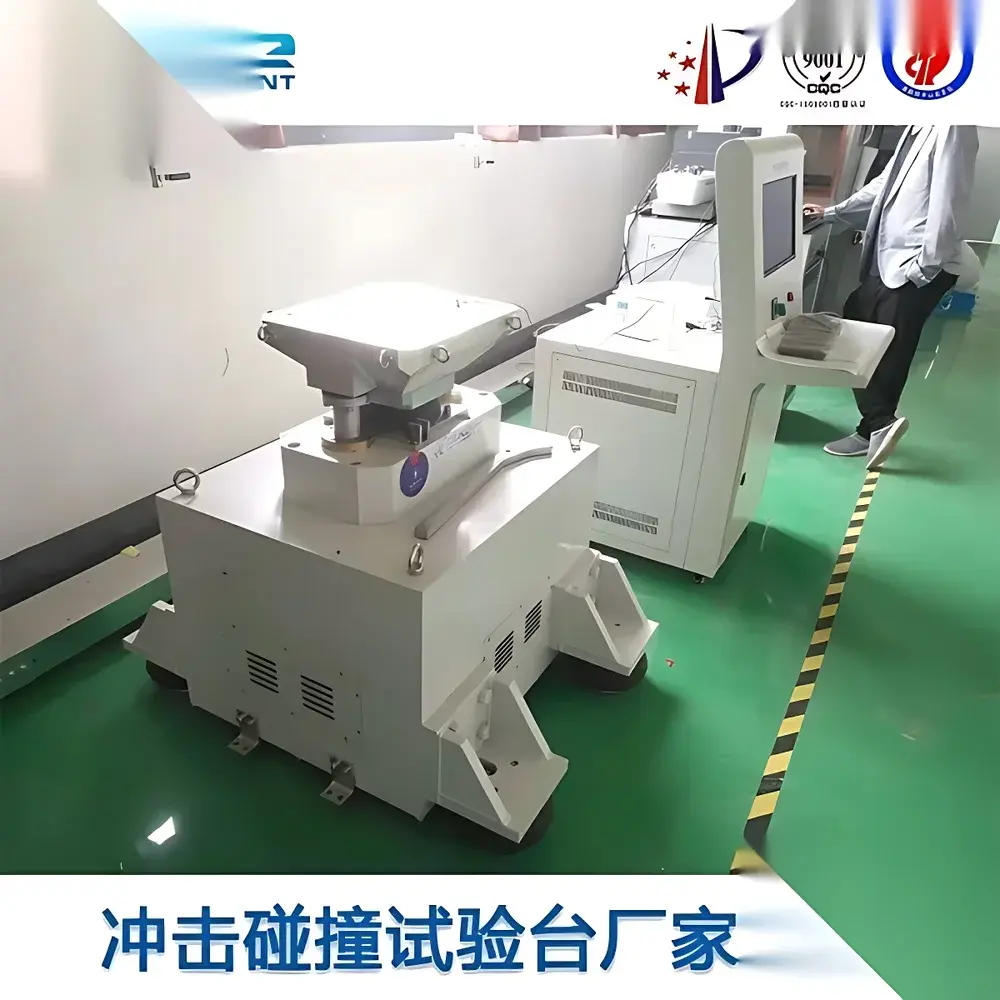
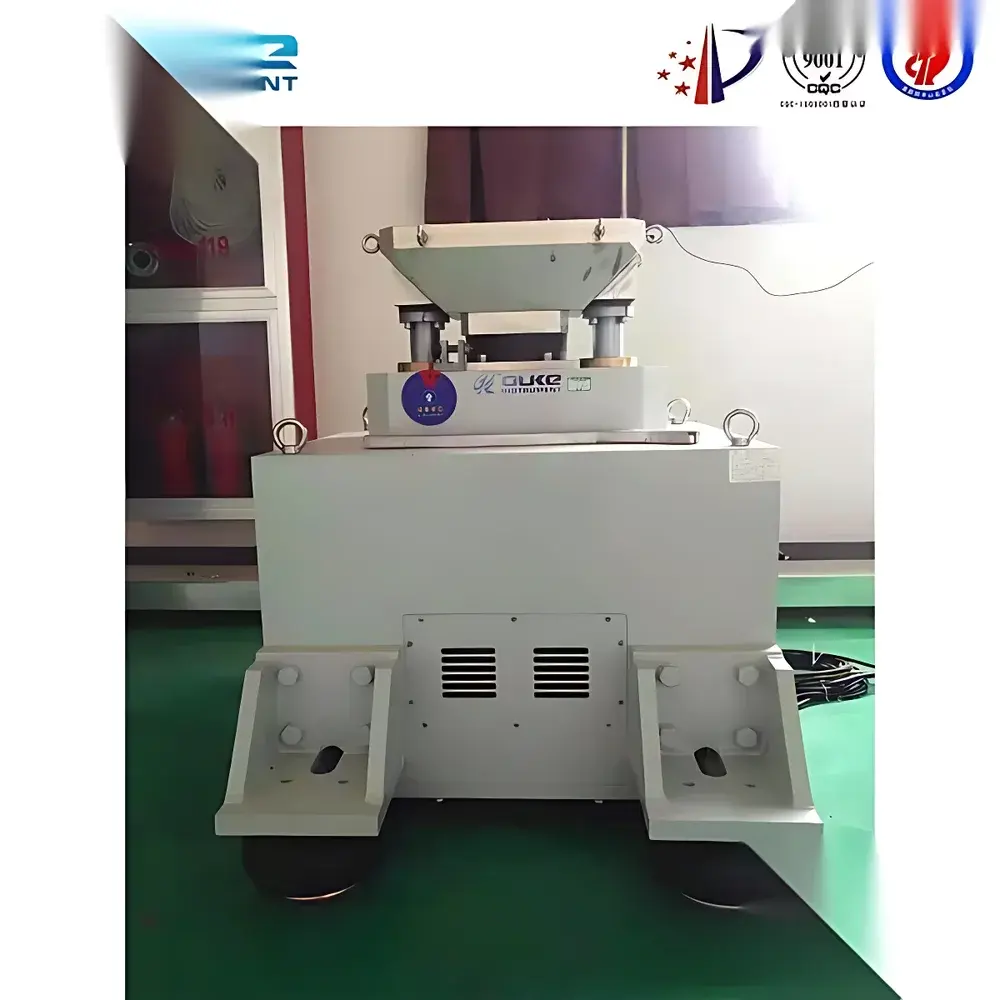
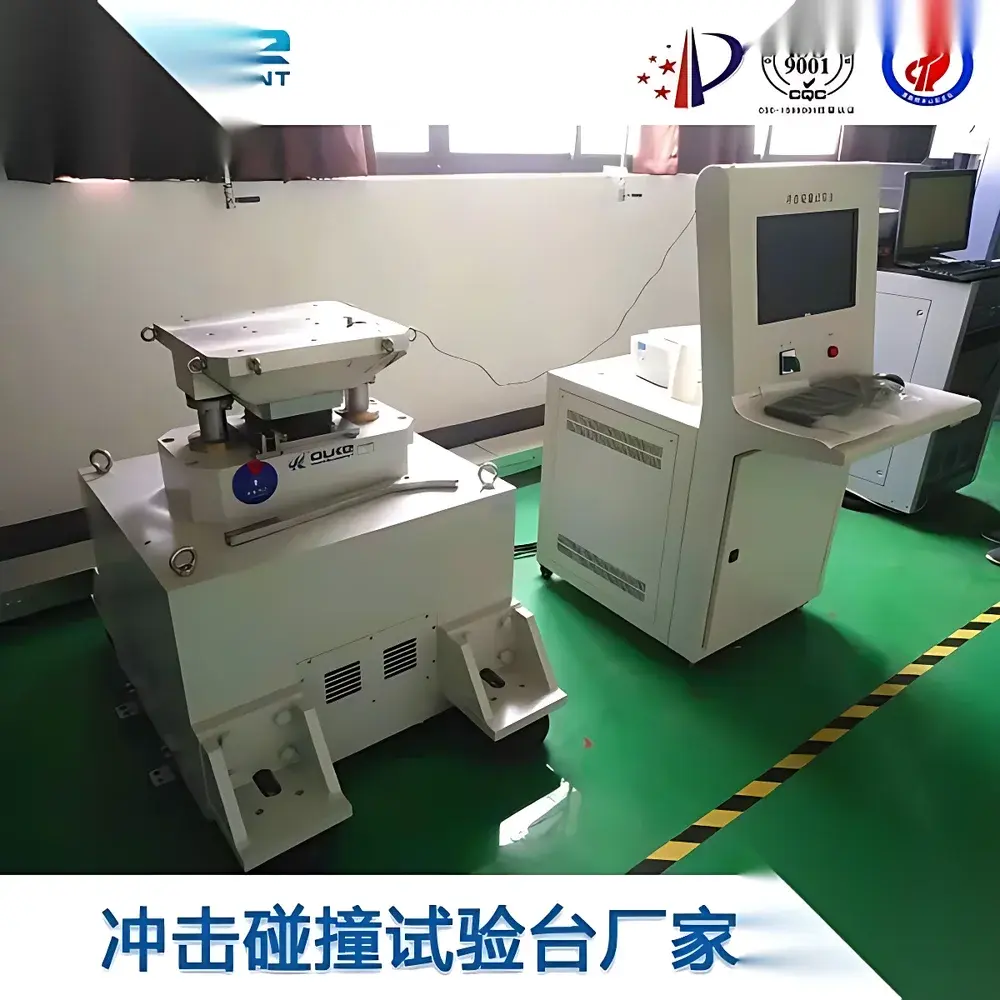
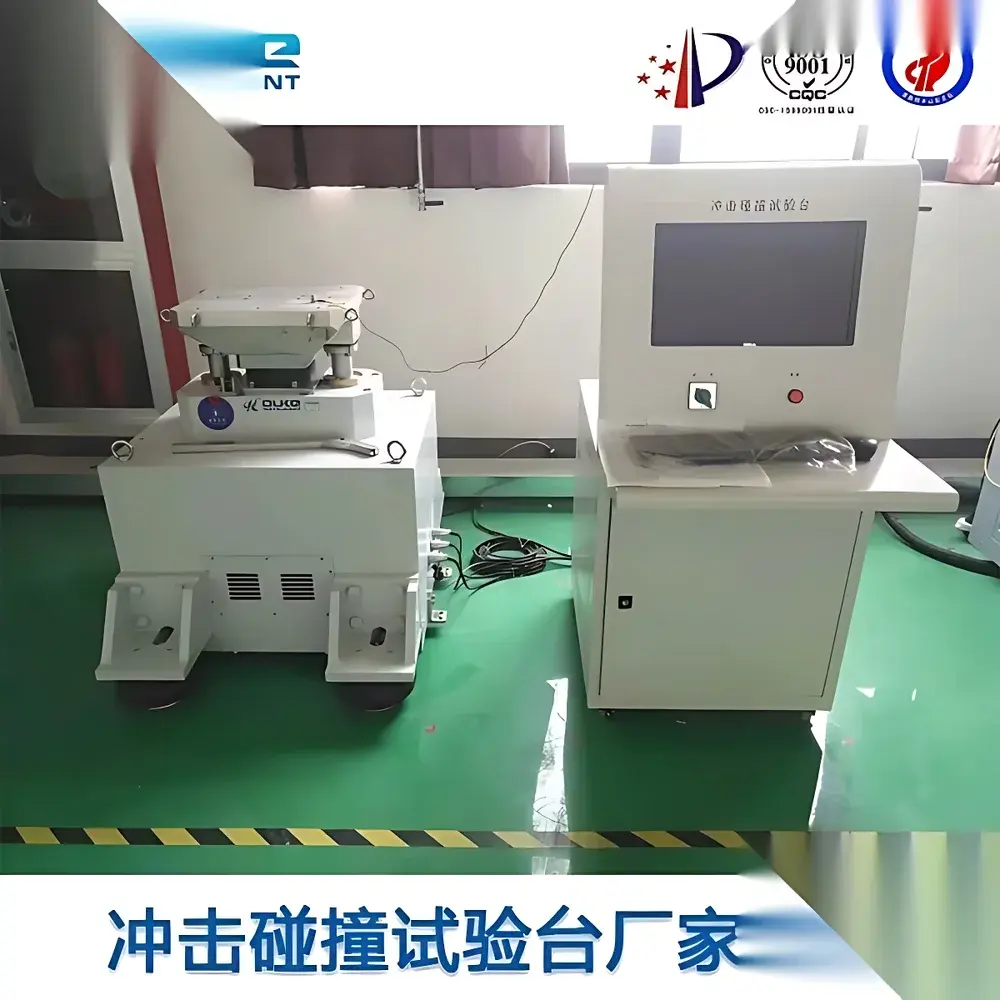
OKPZ Series Lithium-ion Battery Shock and Impact Test Table
| Brand | Other Brands |
|---|---|
| Origin | Imported |
| Manufacturer Type | General Distributor |
| Price | USD 16,500 (approx.) |
| Table Dimensions (mm) | 500×700 to 1000×1000 |
| Rated Load Capacity | 50–500 kg |
| Acceleration Range | 25–1200 m/s² |
| Pulse Duration | 1.5–25 ms |
| Drop Height Range | 0–200 mm |
| Impact Frequency | 1–120 impacts/min |
| Power Supply | AC 220 V ±5%, 50 Hz ±0.5 Hz, Single-phase Three-wire |
| Operating Air Pressure | 7–8 kg/cm² |
| Compliance Standards | MIL-STD-810, IEC 60068-2-29, GB/T 2423.5–2022, GB/T 2423.6–2022, GJB 150.18A–2012, GJB 360B–2009 |
Overview
The OKPZ Series Lithium-ion Battery Shock and Impact Test Table is a precision-engineered mechanical shock simulation system designed specifically for evaluating the structural integrity and safety performance of lithium-ion battery cells, modules, and packs under controlled transient mechanical loading. It operates on the principle of controlled free-fall impact combined with pneumatic-assisted acceleration modulation, generating repeatable, traceable half-sine, trapezoidal, or rear-peak sawtooth shock pulses per international test standards. Unlike electrodynamic shakers, this table employs a robust mechanical drive architecture—comprising a DC motor, gear-reduction lift mechanism, rolling support carriage, and calibrated drop-height adjustment—to deliver high-energy, low-frequency shock events with exceptional waveform fidelity and spatial acceleration uniformity across the test surface. Its design prioritizes operational safety, thermal stability during extended duty cycles, and compliance with stringent transport and abuse testing requirements mandated by global battery safety regulations.
Key Features
- Integrated dual-mode operation: supports both drop-type collision testing (height-controlled free fall) and spring-compression-driven impact testing (acceleration-modulated via pre-load adjustment)
- High-rigidity welded steel frame with reinforced aluminum alloy test platform ensures ≤±5% peak acceleration uniformity across full load area
- Closed-loop acceleration control system with real-time feedback from integrated piezoelectric accelerometers enables precise pulse amplitude regulation within ±2% deviation
- Modular waveform generation capability: standard half-sine output; optional firmware upgrade supports trapezoidal and rear-peak sawtooth pulse synthesis per IEC 60068-2-27 Annex A
- Comprehensive safety interlocks including emergency stop circuitry, over-pressure cutoff, mechanical limit switches, and redundant position sensing
- Adjustable buffer pad system using replaceable elastomeric materials (NBR, silicone, or polyurethane) to fine-tune pulse duration (1.5–25 ms) without hardware modification
Sample Compatibility & Compliance
The OKPZ series accommodates cylindrical, prismatic, and pouch-format Li-ion batteries up to 500 kg gross mass, with standardized mounting fixtures compatible with DIN 912 M6–M12 threaded inserts. All models are validated against the mechanical shock test protocols defined in UL 1642, UN Manual of Tests and Criteria Part III, Subsection 38.3.2, and ISO 12405-2 for electric vehicle traction batteries. The system meets electromagnetic compatibility (EMC) Class B requirements per EN 61326-1 and is engineered for GLP-compliant laboratory environments. Calibration certificates traceable to NIST or CNAS-accredited laboratories are provided with each unit, and documentation supports FDA 21 CFR Part 11 audit readiness for regulated R&D facilities.
Software & Data Management
Control and data acquisition are managed via the OKPZ-Soft v3.2 platform—a Windows-based application supporting local operation and remote monitoring via Ethernet. The software provides synchronized time-domain visualization of acceleration, velocity, and displacement waveforms at 1 MHz sampling rate, with automatic pass/fail evaluation against user-defined tolerance bands. Raw binary data (IEEE 754 float32) is exportable in CSV, MATLAB .mat, and universal UFF58 formats. Audit trails record all parameter changes, operator logins, calibration events, and test execution metadata with timestamped digital signatures. Optional integration with LIMS systems is supported through OPC UA and RESTful API interfaces.
Applications
- Abuse tolerance validation for EV battery modules subjected to road-induced shock during crash or pothole impact scenarios
- Qualification testing of battery management system (BMS) housing mounts and thermal interface material (TIM) adhesion under repeated shock exposure
- Development-stage screening of cell-to-pack mechanical coupling designs under MIL-STD-810H Method 516.7 Shock
- Quality assurance for battery shipment packaging per ISTA 3A and ASTM D4169 protocols
- Failure mode analysis of electrode delamination, current collector fracture, or electrolyte leakage induced by transient inertial loading
FAQ
What shock waveforms can the OKPZ table generate?
Standard configuration delivers half-sine pulses per IEC 60068-2-27. Optional waveform modules enable trapezoidal and rear-peak sawtooth outputs compliant with MIL-STD-810H Figure 516.7-1.
Is the system suitable for testing fully charged battery packs?
Yes—when operated inside certified explosion-proof test chambers with integrated gas monitoring and forced ventilation, per NFPA 855 and IEC 62619 requirements.
How is calibration maintained over time?
Annual recalibration is recommended using certified reference accelerometers and laser vibrometers. Built-in self-diagnostic routines verify sensor linearity, timing jitter, and actuator response prior to each test sequence.
Can the table be integrated into an automated test cell?
Yes—the system supports Modbus TCP and EtherCAT communication protocols for synchronization with robotic handlers, environmental chambers, and data logging networks.
Does the OKPZ series meet UN 38.3 transportation testing requirements?
It satisfies Section 38.3.2 (Shock Test) when configured with appropriate fixture rigidity and pulse parameters; full UN 38.3 certification requires additional thermal, vibration, and altitude testing in combination.



