
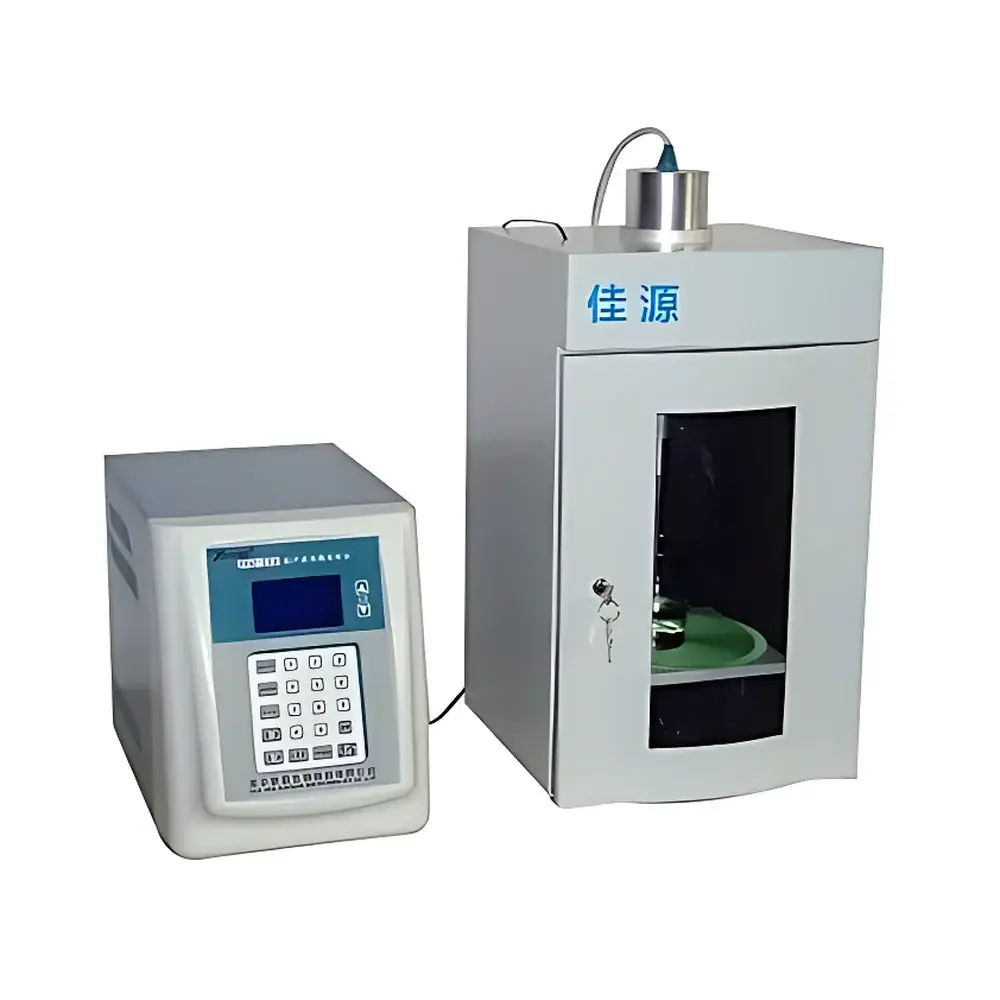
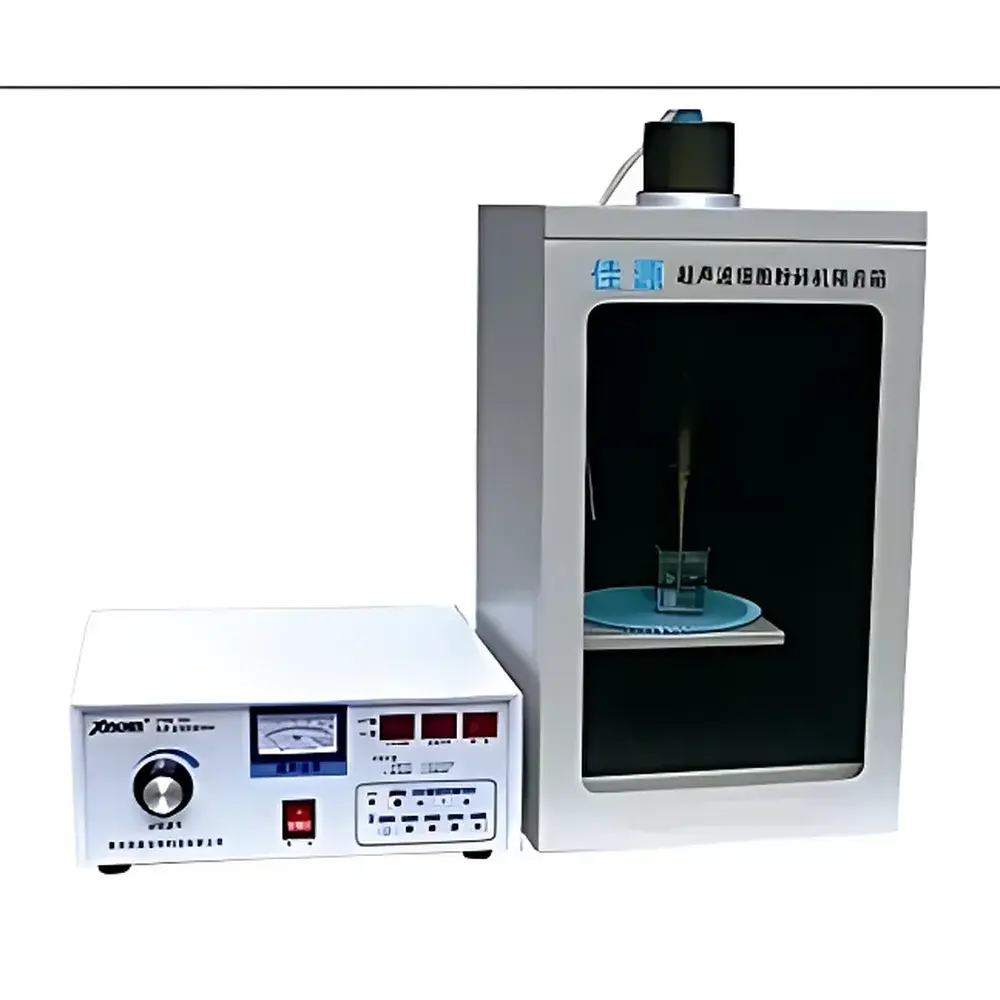
Jiayuan JY88-IIN Ultrasonic Cell Disruptor
| Brand | Jiayuan |
|---|---|
| Origin | Beijing, China |
| Model | JY88-IIN |
| Ultrasonic Frequency | 20–25 kHz (auto-frequency tracking) |
| Output Power | 250 W (touch-key continuous adjustment) |
| Pulse Mode | Adjustable on-time (0.1–99.9 s) and off-time (0.1–99.9 s) |
| Total Operating Time | 1–99 min |
| Duty Cycle | 1–99% |
| Standard Probe | Φ6 mm titanium alloy horn |
| Optional Probes | Φ2, Φ3, Φ2–Φ15, Φ18–Φ25 mm |
| Sample Volume Range | 0.2–200 mL |
| Power Supply | 220/110 V AC, 50/60 Hz |
Overview
The Jiayuan JY88-IIN Ultrasonic Cell Disruptor is an engineered benchtop sonicator designed for controlled, reproducible cell lysis, tissue homogenization, and nano-scale dispersion in life science laboratories. It operates on the principle of high-intensity ultrasonic cavitation—where rapid pressure oscillations generate transient microbubbles in liquid media that collapse violently, producing localized shear forces, microstreaming, and thermal transients sufficient to disrupt cellular membranes, disintegrate subcellular structures, and facilitate molecular extraction. Unlike rotor-stator or bead-beating methods, ultrasonic disruption delivers non-thermal, scalable mechanical energy with minimal sample heating when operated in pulsed mode—making it particularly suitable for heat-sensitive biomolecules including proteins, nucleic acids, and membrane receptors. The JY88-IIN integrates real-time frequency auto-tracking to maintain resonance stability across varying load conditions and viscosity changes, ensuring consistent energy delivery regardless of sample volume or composition.
Key Features
- 250 W nominal output power with touch-key digital control for continuous, stepless adjustment of amplitude (0–100%)
- Intelligent frequency auto-tracking circuitry (20–25 kHz range) to sustain optimal transduction efficiency during extended operation
- Pulse-mode programming with independently adjustable on-time (0.1–99.9 s) and off-time (0.1–99.9 s), enabling precise thermal management for thermolabile samples
- Duty cycle modulation from 1% to 99%, supporting both aggressive lysis and gentle emulsification protocols
- Robust titanium alloy probe (standard Φ6 mm) with optional probe diameters (Φ2–Φ25 mm) for scalability—from microliter microbial suspensions to 200 mL tissue homogenates
- Microprocessor-controlled timer with total run duration up to 99 minutes and automatic shutdown for unattended operation
- Universal dual-voltage input (110/220 V AC, 50/60 Hz) with overcurrent and overtemperature protection circuits
Sample Compatibility & Compliance
The JY88-IIN accommodates a broad spectrum of biological matrices: bacterial and yeast cultures (E. coli, S. cerevisiae), mammalian cell lines (HEK293, CHO), plant tissues (leaf, root, seed), viral particles, subcellular organelles, and synthetic nanomaterial dispersions. Its performance aligns with standard operating procedures referenced in ISO 11348 (toxicity testing), ASTM D7263 (nanoparticle dispersion analysis), and USP (characterization of therapeutic proteins). While not certified under FDA 21 CFR Part 11, the instrument supports GLP-compliant workflows when paired with external electronic lab notebooks (ELNs) and audit-trail-enabled data loggers. All probes comply with ISO 8502-3 for metallic biocompatibility and are autoclavable (up to 121°C, 20 min) for sterile processing in QC/QA environments.
Software & Data Management
The JY88-IIN operates via an embedded microcontroller interface with no proprietary software dependency. All operational parameters—including power level, pulse timing, total duration, and duty cycle—are stored in non-volatile memory and recalled at startup. For traceability, users may manually record settings alongside batch identifiers in laboratory notebooks or LIMS systems. When integrated into automated platforms, analog voltage outputs (0–5 V) can be configured to trigger external devices (e.g., cooling circulators, fraction collectors) based on real-time amplitude feedback. Though lacking native USB or Ethernet connectivity, its deterministic control logic ensures repeatable execution across operators and shifts—critical for method transfer between R&D and GMP pilot-scale operations.
Applications
- Cell lysis for protein extraction and immunoprecipitation (IP) sample prep
- Nucleic acid isolation (genomic DNA, plasmid, RNA) with minimized shearing
- Preparation of subcellular fractions (mitochondria, nuclei, lysosomes)
- Emulsification of lipid nanoparticles (LNPs) and nanoemulsions for drug delivery
- Dispersion of carbon nanotubes, graphene oxide, and metal-organic frameworks (MOFs)
- Accelerated solvent extraction (ASE) of phytochemicals from botanical matrices
- Deagglomeration of ceramic and polymer nanoparticles in suspension-based coatings
FAQ
What is the maximum recommended sample volume for the standard Φ6 mm probe?
The Φ6 mm probe is optimized for volumes between 0.2 mL and 50 mL. For volumes up to 200 mL, extended sonication time and lower amplitude settings are required to ensure uniform energy distribution.
Can the JY88-IIN be used for temperature-sensitive samples?
Yes—when operated in pulsed mode with ≥50% off-time and combined with external ice-water baths or recirculating chillers, sample temperature rise can be limited to <5°C over 5-minute cycles.
Is probe sterilization supported?
All titanium alloy probes are autoclavable (121°C, 20 min, gravity cycle) and compatible with ethanol immersion and UV-C irradiation protocols.
How does frequency auto-tracking improve reproducibility?
It compensates for impedance shifts caused by probe erosion, sample viscosity changes, or air entrainment—maintaining resonant coupling and stable acoustic output without manual recalibration.
What safety certifications does the instrument meet?
The unit conforms to IEC 61010-1 (Safety Requirements for Electrical Equipment for Measurement, Control, and Laboratory Use) and EMC Directive 2014/30/EU for electromagnetic compatibility.
Related Products




