
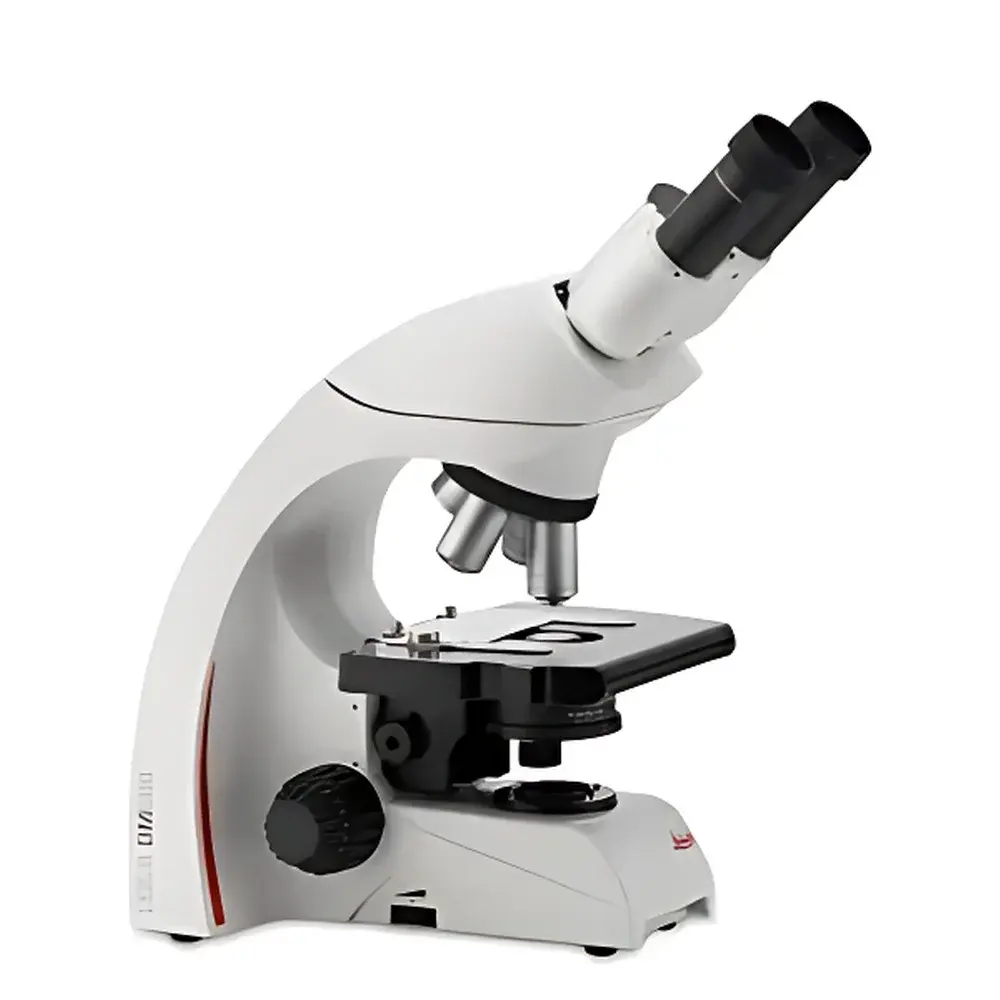
Leica DM500 Biological Microscope
| Brand | Leica |
|---|---|
| Origin | Germany |
| Model | DM500 |
| Type | Upright Microscope |
| Illumination | Integrated White LED (≥15,000 h lifetime) |
| Objective Compatibility | Full Leica DM Series Accessories |
| Special Optics | 100× Dry Objective (NA 0.8) |
| Ergonomic Features | EZStore™, EZGuide™, EZLite™, SafeTStage™, AgTreat™, EZTube™ |
| Compliance | CE, ISO 9001, IEC 61010-1 |
Overview
The Leica DM500 is a high-performance upright biological microscope engineered for routine teaching, clinical diagnostics, and entry-level research applications in life science laboratories. Built on the same optical platform as Leica’s advanced research-grade microscopes, it delivers exceptional image fidelity, contrast, and color fidelity across magnifications from 40× to 1000×. Its optical design follows Köhler illumination principles and incorporates achromatic–achromat objectives with anti-reflective broadband coatings to minimize chromatic aberration and maximize light transmission. The instrument operates on a robust mechanical architecture optimized for stability and long-term repeatability—critical for consistent morphology assessment in histology, microbiology, hematology, and cytology workflows. Unlike conventional student microscopes, the DM500 integrates industrial-grade engineering—including precision-machined aluminum alloy components, dust-resistant optical pathways, and sealed LED illumination—ensuring compliance with ISO 9001 manufacturing standards and suitability for regulated environments under GLP-aligned laboratory practices.
Key Features
- EZStore™ Transport System: Integrated vertical handle and front-mounted grip groove enable two-handed, ergonomic handling; prevents accidental impact during shelf storage or lab relocation.
- EZLite™ LED Illumination: Cold-white LED light source (5700 K CCT) provides uniform, flicker-free illumination across the full field of view without manual intensity calibration; rated for ≥15,000 hours (≈15 years at 3 h/day), eliminating bulb replacement costs and downtime.
- SafeTStage™ Self-Supporting Stage: Reinforced stage structure eliminates protruding support arms, reducing risk of finger entrapment; fully rounded edges meet EN 61000-6-3 safety requirements for laboratory equipment.
- AgTreat™ Antimicrobial Surface Treatment: Silver-ion additive integrated into all high-contact surfaces (focus knobs, stage controls, eyepiece housing) inhibits >99.9% of common Gram-positive and Gram-negative bacteria (tested per ISO 22196), supporting biosafety protocols in shared educational and clinical labs.
- EZTube™ Integrated Eyepiece Assembly: Pre-set diopter adjustment (±5 dpt) prevents misalignment-induced observer fatigue; modular tube design secures oculars against accidental dislodgement during transport or daily use.
- 100× Dry Objective (NA 0.8): Proprietary high-NA dry lens eliminates immersion oil handling while maintaining resolution comparable to standard 100× oil objectives—reducing contamination risk and simplifying cleaning protocols in high-throughput settings.
Sample Compatibility & Compliance
The Leica DM500 supports standard 1 mm–1.2 mm thick glass slides and 22 × 22 mm coverslips. Its pre-aligned Abbe condenser (NA 1.25) features a four-position slider accommodating brightfield, phase contrast (Ph1–Ph3), and darkfield observation without accessory swapping. The system complies with IEC 61010-1 (Safety Requirements for Electrical Equipment for Measurement, Control, and Laboratory Use) and carries CE marking for conformity with EU Medical Device Regulation (MDR 2017/745) Annex II Class I. While not FDA-cleared as a diagnostic device, its optical performance meets ASTM E2877-21 criteria for routine biological microscopy validation and supports documentation required for ISO/IEC 17025-accredited testing laboratories.
Software & Data Management
The DM500 is hardware-ready for integration with Leica Application Suite (LAS) X Core software via optional USB-C digital camera modules (e.g., Leica DMC2900). LAS X enables image capture, annotation, measurement (length, area, particle count), and export in TIFF, JPEG, and PNG formats with embedded EXIF metadata (magnification, objective ID, illumination mode). Audit trails, user access logs, and timestamped acquisition records comply with ALCOA+ data integrity principles—facilitating alignment with 21 CFR Part 11 when paired with validated IT infrastructure and electronic signature workflows.
Applications
- Routine histopathology screening (H&E, PAS, Giemsa-stained sections)
- Bacterial morphology analysis and Gram staining evaluation
- Peripheral blood smear examination (RBC/WBC differential, platelet estimation)
- Algal and protozoan motility studies in freshwater ecology labs
- Plant tissue sectioning and stomatal density quantification
- Quality control of cell culture monolayers prior to passaging
FAQ
Is the DM500 compatible with fluorescence imaging?
No—the DM500 is configured exclusively for transmitted-light techniques (brightfield, phase contrast, darkfield); fluorescence capability requires upgrade to the DM500 F or DM6 B platform.
Can third-party objectives be mounted on the DM500 nosepiece?
Only Leica RMS-thread (20.32 mm) objectives are mechanically and optically guaranteed; non-Leica lenses may compromise parfocality, working distance, and Köhler alignment.
Does the LED illumination support intensity dimming?
Yes—continuous analog dimming is controlled via the front-panel rotary knob (0–100%), with stable output maintained across the full range without color shift.
What maintenance is required beyond routine cleaning?
No scheduled calibration or lamp replacement is needed; annual inspection of mechanical play in coarse/fine focus mechanisms and condenser centering is recommended per Leica Service Bulletin SB-DM500-2023.
Is the DM500 suitable for GMP-regulated environments?
It satisfies foundational equipment qualification requirements (DQ/IQ) when deployed with documented installation procedures and environmental monitoring; PQ must be performed using traceable reference standards per internal SOPs.
Related Products



