
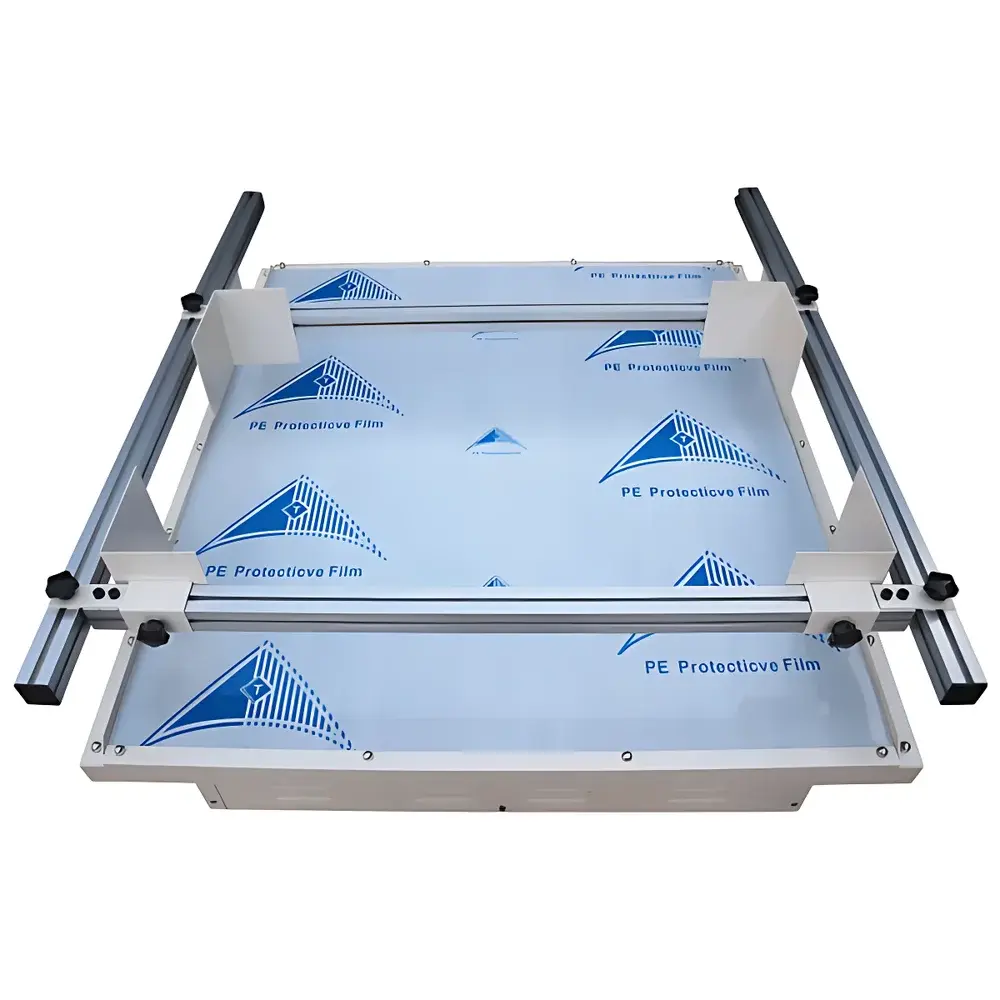
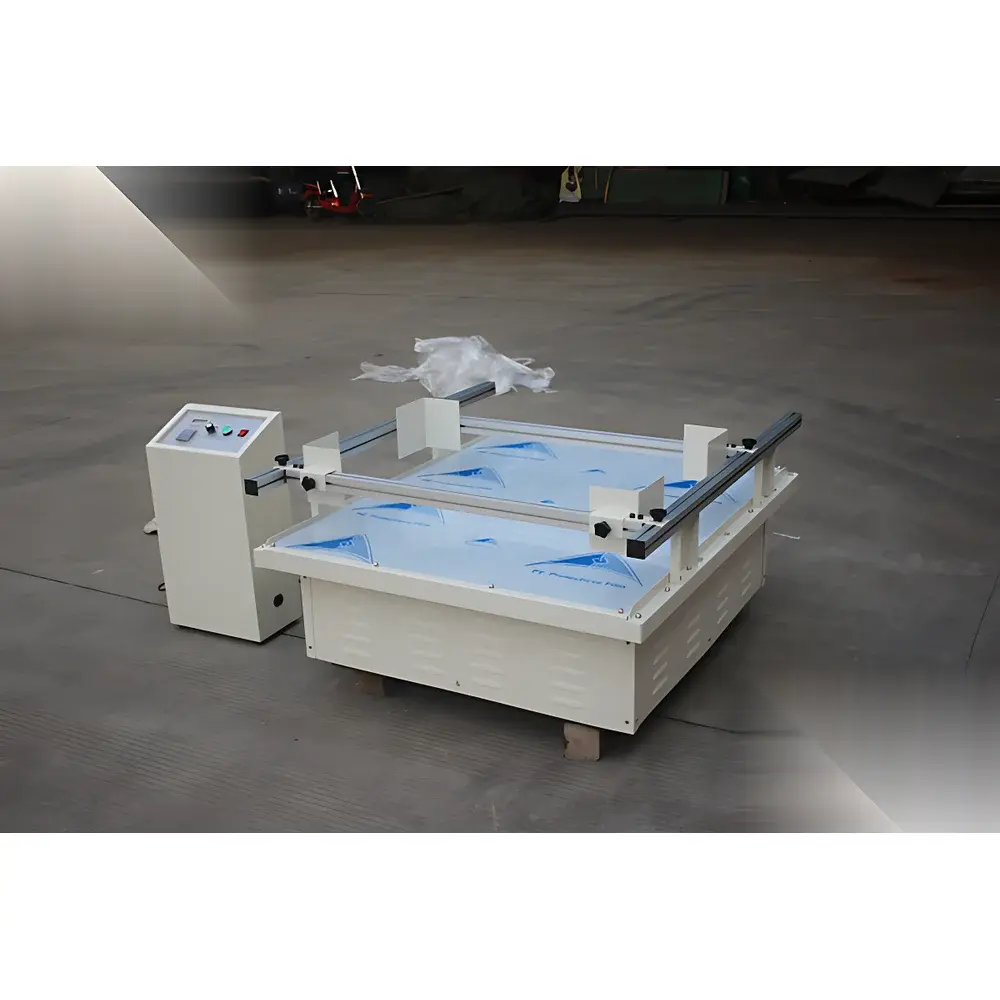
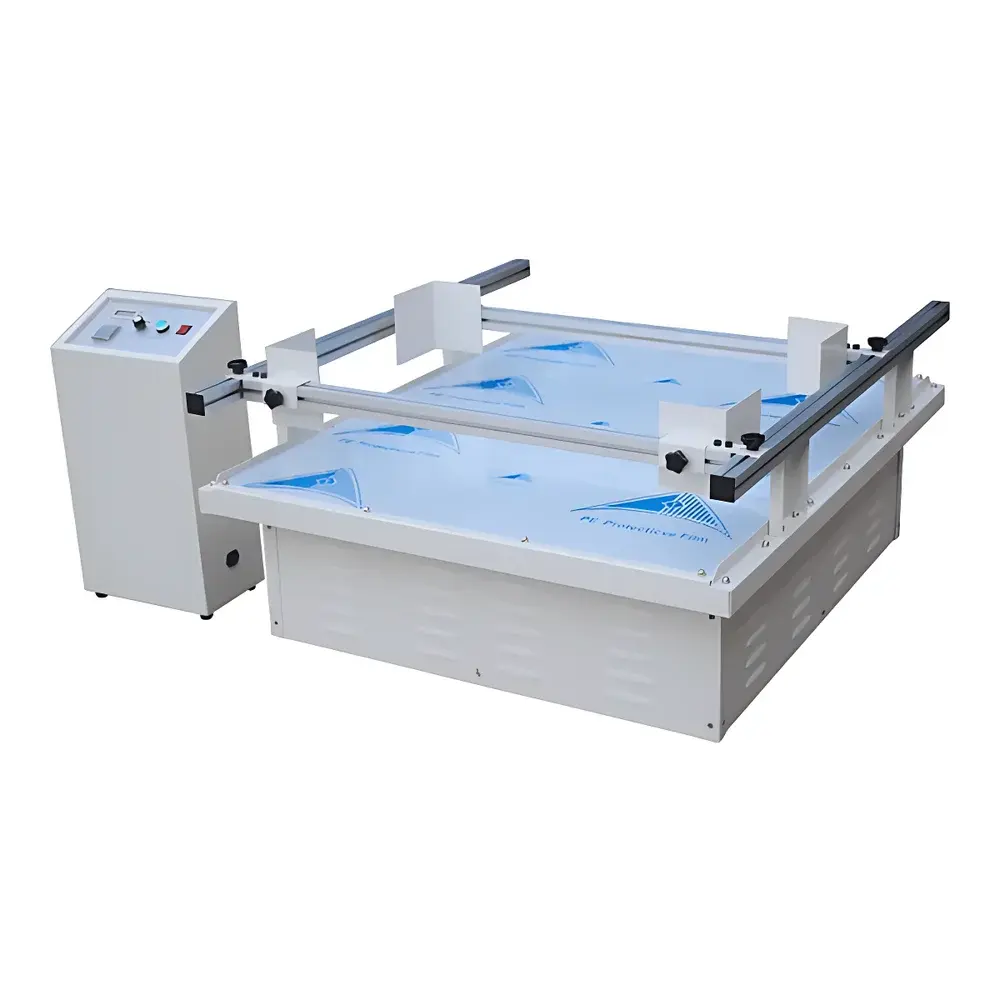
OK-100 Automotive Transport Vibration Tester
| Brand | OEM |
|---|---|
| Origin | Imported |
| Manufacturer Type | Authorized Distributor |
| Model | OK-100 |
| Load Capacity | 100 kg |
| Test Table Dimensions (L×W) | 120 × 100 cm |
| Vibration Mode | Reciprocating (Linear Sine) |
| Speed Range | 60–300 rpm |
| Peak-to-Peak Amplitude | 25.4 mm |
| Frequency Range | 1.0–5.0 Hz (equivalent to 60–300 CPM) |
| Timer Range | 0.1 s – 999.99 h |
| Drive System | AC Variable-Frequency or DC Speed Control |
| Power Supply | 220 V, 50/60 Hz (single-phase) |
| Compliance | ISTA 3A, ISTA 3E, EN 71-1, ASTM D999, ASTM D3580, ISO 13355, ISO 2247 |
Overview
The OK-100 Automotive Transport Vibration Tester is a precision-engineered linear reciprocating shaker system designed to replicate the dynamic mechanical stresses experienced by packaged goods during road, rail, and intermodal freight transport. Based on established empirical models derived from field-measured vehicle vibration spectra—particularly those documented in U.S. Department of Transportation reports and European Union logistics studies—the OK-100 generates controlled sinusoidal motion at fixed amplitude (25.4 mm p-p) and adjustable frequency (1.0–5.0 Hz), enabling standardized simulation of real-world shipping environments. Unlike random or broadband exciters, this unit employs deterministic sine sweep and fixed-frequency operation, aligning with the foundational assumptions of ISTA 3-series protocols and ASTM D999 for package integrity validation. Its robust steel-frame construction, low-inertia drive train, and precision-machined linear guide rails ensure high repeatability (< ±0.5% amplitude deviation over 8-hour continuous operation) and minimal harmonic distortion—critical for GLP-compliant packaging qualification workflows.
Key Features
- Reciprocating linear motion architecture with hardened linear guide rails and dual-side support bearings—ensuring stable load distribution and minimizing lateral drift under eccentric loading up to 100 kg.
- Digitally calibrated speed control interface with real-time RPM readout (0.1 rpm resolution) and integrated timer (0.1 s to 999.99 h), supporting both single-cycle and multi-stage test sequences.
- Low-noise operation (< 62 dB(A) at 1 m distance), achieved through brushless AC variable-frequency motor drive and elastomeric base isolation—enabling deployment in shared laboratory spaces without acoustic shielding.
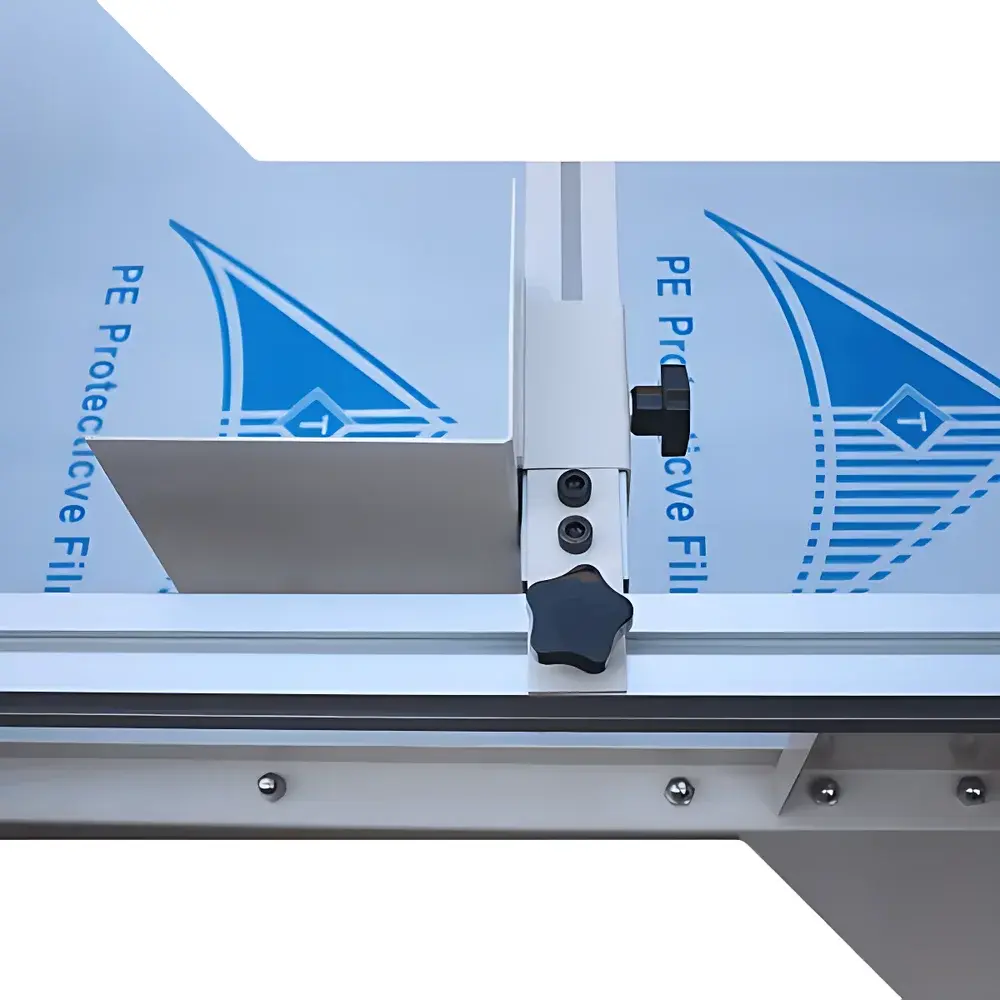
- Modular mounting platform with M6 threaded holes spaced at 50 mm intervals across the full 120 × 100 cm surface, accommodating custom fixture plates, retention straps, and instrumented load cells.
- Compliance-ready firmware architecture: All test parameters (start time, duration, speed setpoint, elapsed cycles) are timestamped and stored internally with non-volatile memory retention—supporting audit trails required under ISO/IEC 17025 and FDA 21 CFR Part 11 (when paired with validated PC-based logging software).
Sample Compatibility & Compliance
The OK-100 accommodates unit loads ranging from small electronics enclosures (minimum footprint: 10 × 10 cm) to assembled automotive interior modules (e.g., center consoles, door panels). Its flat, corrosion-resistant steel table supports direct placement or integration with standardized ISTA-compliant slip sheets and pallet adapters. The system meets mechanical and procedural requirements of multiple international transport simulation standards, including ISTA 3A (individual shipments), ISTA 3E (multi-package palletized loads), EN 71-1 (toy safety mechanical stress), ASTM D999 (vibration testing of packaged products), ASTM D3580 (sinusoidal vibration of packaged instruments), and ISO 13355 (road transport simulation using sine vibration). It does not perform random vibration per ISO 10326 or MIL-STD-810H; users requiring broadband spectral replication must select complementary equipment.
Software & Data Management
While the OK-100 operates as a stand-alone benchtop instrument with front-panel controls, optional USB- or RS-232–enabled data acquisition modules enable real-time parameter streaming to Windows-based host systems. Compatible software packages (sold separately) provide automated test sequencing, pass/fail logic based on cycle count or duration thresholds, CSV export for LIMS integration, and PDF report generation compliant with ISO/IEC 17025 documentation requirements. Audit trail functionality—including user login, parameter changes, and test initiation—can be configured to satisfy GxP-regulated environments when deployed with validated electronic signatures and role-based access control.
Applications
- Pre-shipment validation of primary and tertiary packaging for automotive components (e.g., ECUs, sensors, lighting assemblies) prior to Tier-1 supplier delivery.
- Comparative assessment of corrugated box compression strength loss after simulated transit exposure, per TAPPI T 813.
- Verification of internal product immobilization efficacy—especially for fragile optics, MEMS devices, or lithium battery modules—under sustained low-frequency excitation.
- Root-cause analysis of field failures linked to resonant amplification within specific CPM bands (e.g., 120–180 CPM corresponding to truck cab bounce frequencies).
- Educational use in packaging engineering curricula for hands-on demonstration of vibration fatigue mechanisms and damping material evaluation.
FAQ
Does the OK-100 meet ISTA certification requirements for third-party lab validation?
Yes—when operated within its specified amplitude (25.4 mm p-p) and frequency (60–300 CPM) envelope and paired with documented calibration records traceable to NIST standards, the OK-100 satisfies the equipment eligibility criteria defined in ISTA Procedure Validation Guidelines v3.0.
Can the unit be integrated into an automated test cell with PLC control?
Yes—digital I/O ports (24 VDC, opto-isolated) are available as a factory option for start/stop signaling, fault status feedback, and cycle completion pulse output.
Is amplitude adjustable beyond the fixed 25.4 mm setting?
No—amplitude is mechanically fixed to ensure compliance with ISTA/ASTM-defined boundary conditions; variable-amplitude operation would invalidate conformance to these standards.
What maintenance is required for long-term reliability?
Biannual inspection of guide rail lubrication, belt tension (if equipped with belt-driven variants), and motor cooling fan clearance; no scheduled recalibration is required unless subjected to impact overload or environmental contamination.
Does the system include vibration calibration certification?
A factory-issued calibration certificate (traceable to national metrology institutes) is provided with each unit; on-site verification services are available upon request.



