
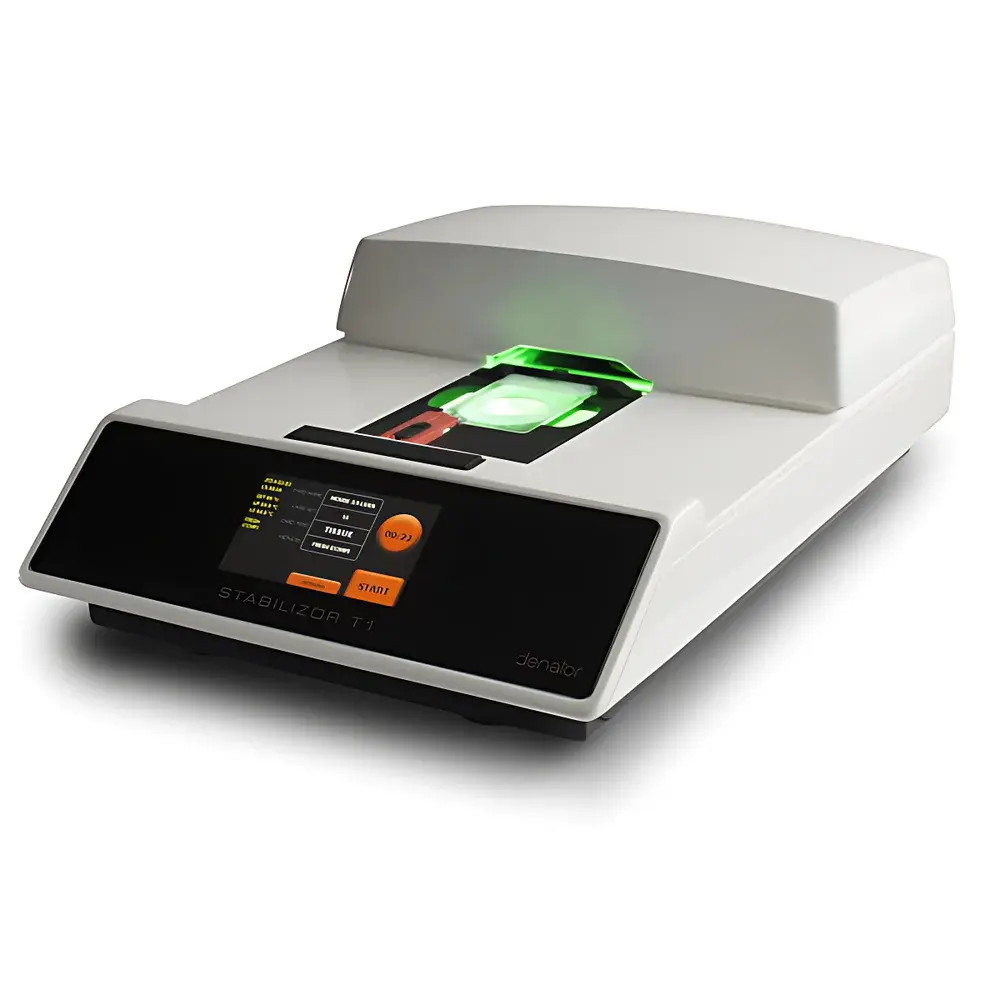
Denator Stabilizor T1 Thermal Sample Stabilizer
| [Brand | Denator AB |
|---|---|
| Origin | Sweden |
| Model | Stabilizor T1 |
| Type | Import |
| Distribution Status | Authorized Distributor] |
Overview
The Denator Stabilizor T1 Thermal Sample Stabilizer is a CE-marked, ISO 13485-aligned instrument engineered for rapid, irreversible thermal inactivation of endogenous proteases, phosphatases, and other labile enzymes in biological specimens. Unlike chemical inhibition or cryogenic quenching, the Stabilizor T1 applies precisely controlled conductive heating—via patented aluminum-based thermal plates—to induce instantaneous, uniform denaturation of enzyme tertiary and quaternary structures while preserving covalent peptide bonds and primary amino acid sequences. This physical stabilization mechanism halts post-excision proteolytic degradation, phosphorylation/dephosphorylation dynamics, and oxidative modifications within ≤30 seconds, thereby capturing the *in vivo* molecular state of proteins, peptides, phosphopeptides, and small-molecule metabolites at the moment of tissue excision or cell lysis. The system is validated for use with fresh, snap-frozen (LN₂), or cultured cell samples—including brain, liver, pancreas, heart, thymus, and biopsy-derived tissues—and serves as a foundational pre-analytical step for quantitative proteomics, phosphoproteomics, neuropeptide mapping, MALDI imaging, and clinical biomarker discovery.
Key Features
- Patented conductive thermal stabilization: Achieves complete enzymatic inactivation without chemical additives or solvents
- Sub-60-second stabilization cycle: Uniform heat penetration across heterogeneous tissue sections (up to 5 mm thickness) verified by real-time thermocouple calibration
- Laser-assisted sample dimension measurement: Automatically calculates optimal thermal dose based on cross-sectional area and thickness
- Vacuum-assisted sample compression: Eliminates air gaps between tissue and heating surface to ensure reproducible thermal transfer
- Programmable pressure control: Adjustable clamping force (0.5–3.0 bar) accommodates fragile or fibrous tissues without deformation
- Digital audit trail: All run parameters—including time, temperature profile, pressure, vacuum status, and sample ID—are timestamped and exportable via USB to comply with GLP/GMP documentation requirements
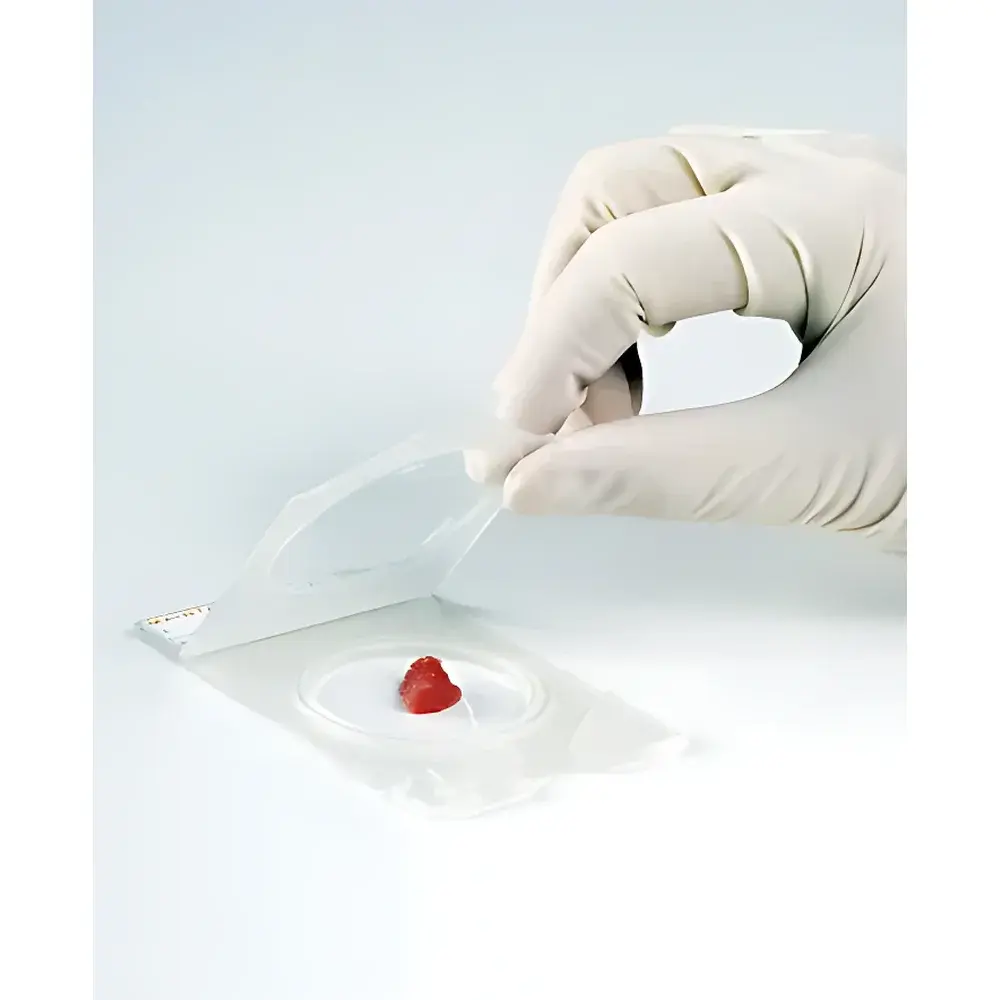
- Modular consumables: Single-use Stabilizor Cards (sterile, low-binding polymer) prevent cross-contamination and support traceability
Sample Compatibility & Compliance
The Stabilizor T1 is compatible with mammalian tissues (fresh or LN₂-stored), cell pellets, lysates, plasma, serum, CSF, and dried blood spots. It meets critical pre-analytical standards required for translational research: validation data confirm retention of labile PTMs—including Ser/Thr/Tyr phosphorylation, ubiquitination, and N-terminal acetylation—for ≥72 hours at room temperature post-stabilization. The system supports compliance with FDA 21 CFR Part 11 (electronic records/signatures), ISO/IEC 17025 (testing laboratory competence), and EU IVDR Annex I general safety and performance requirements. Instrument firmware and card lot traceability enable full method transfer across multi-site studies, including those conducted under CLIA or CAP-accredited environments.
Software & Data Management
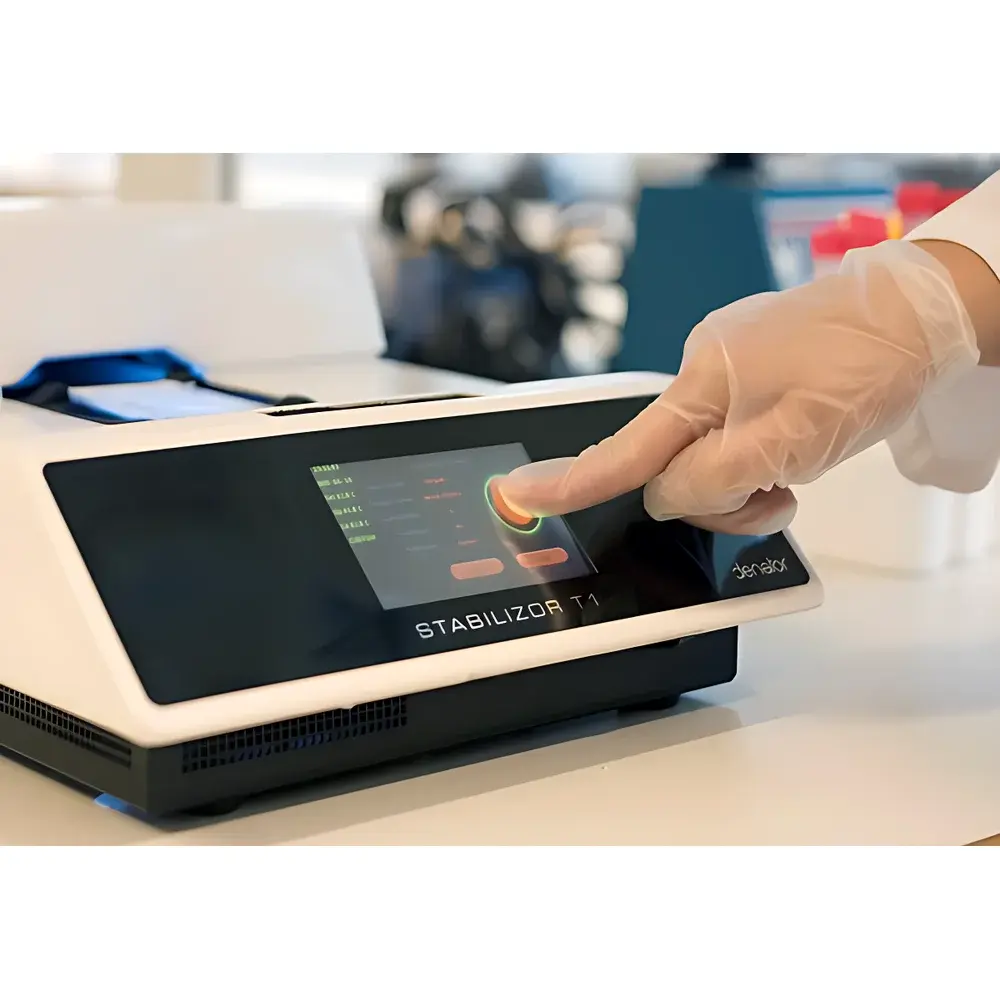
The Stabilizor Control Software (v4.2+) provides intuitive touchscreen operation with preloaded protocols for common tissue types (e.g., “Murine Brain”, “Human Liver Biopsy”, “Cell Pellet”) and customizable user-defined methods. Each stabilization event generates an encrypted .stb file containing raw thermal profiles, pressure/vacuum logs, and operator metadata. Export formats include CSV (for LIMS integration), PDF (for audit-ready reports), and XML (for automated workflow orchestration with LC-MS or MALDI-TOF platforms). Software updates are delivered via secure HTTPS; version history and change logs are maintained per ICH GCP Annex 11 guidelines.
Applications
- Phosphoproteomics: Arrests dynamic kinase/phosphatase activity to preserve site-specific phosphorylation stoichiometry prior to TiO₂ or IMAC enrichment
- Neuropeptide discovery: Enables robust detection of endogenous opioid peptides, RFamides, and tachykinins in CNS tissues by preventing rapid extracellular peptidase cleavage
- MALDI Imaging Mass Spectrometry (MALDI-IMS): Maintains spatial integrity of lipid, drug, and metabolite distributions in frozen sections without matrix-induced delocalization artifacts
- Clinical cohort studies: Supports standardized stabilization across decentralized biobanks (e.g., UK Biobank, US NCI cohorts) where sample collection intervals vary
- 2D-DIGE and Western blotting: Reduces smear formation and improves band resolution by eliminating proteolytic fragmentation of target antigens
- Targeted proteomics (SRM/MRM): Enhances assay precision by minimizing analyte loss from degradation during extraction and digestion
FAQ
Does the Stabilizor T1 alter protein primary structure or covalent modifications?
No. Independent mass spectrometry validation confirms retention of intact amino acid sequences, disulfide bonds, and stable PTMs (e.g., methylation, acetylation) post-stabilization.
Can stabilized samples be stored long-term?
Yes. Stabilized tissues remain stable for ≥6 months at –80°C; phosphopeptide integrity is retained for ≥72 hours at ambient temperature, enabling flexible downstream processing schedules.
Is the system compatible with downstream LC-MS workflows?
Yes. Published protocols demonstrate seamless integration with trypsin/Lys-C digestion, TMT/iTRAQ labeling, and DIA/SWATH acquisition—without ion suppression or adduct formation.
How does Stabilizor compare to microwave-assisted stabilization?
Microwave methods suffer from non-uniform energy distribution and thermal gradients; Stabilizor’s conductive heating delivers ±0.5°C uniformity across sample surfaces, validated by IR thermography.
What regulatory documentation is available for method validation?
Denator provides IQ/OQ/PQ protocols, traceable calibration certificates, and a Technical File compliant with MDR 2017/745 Annex II, supporting submission to EMA, FDA, and PMDA.




