
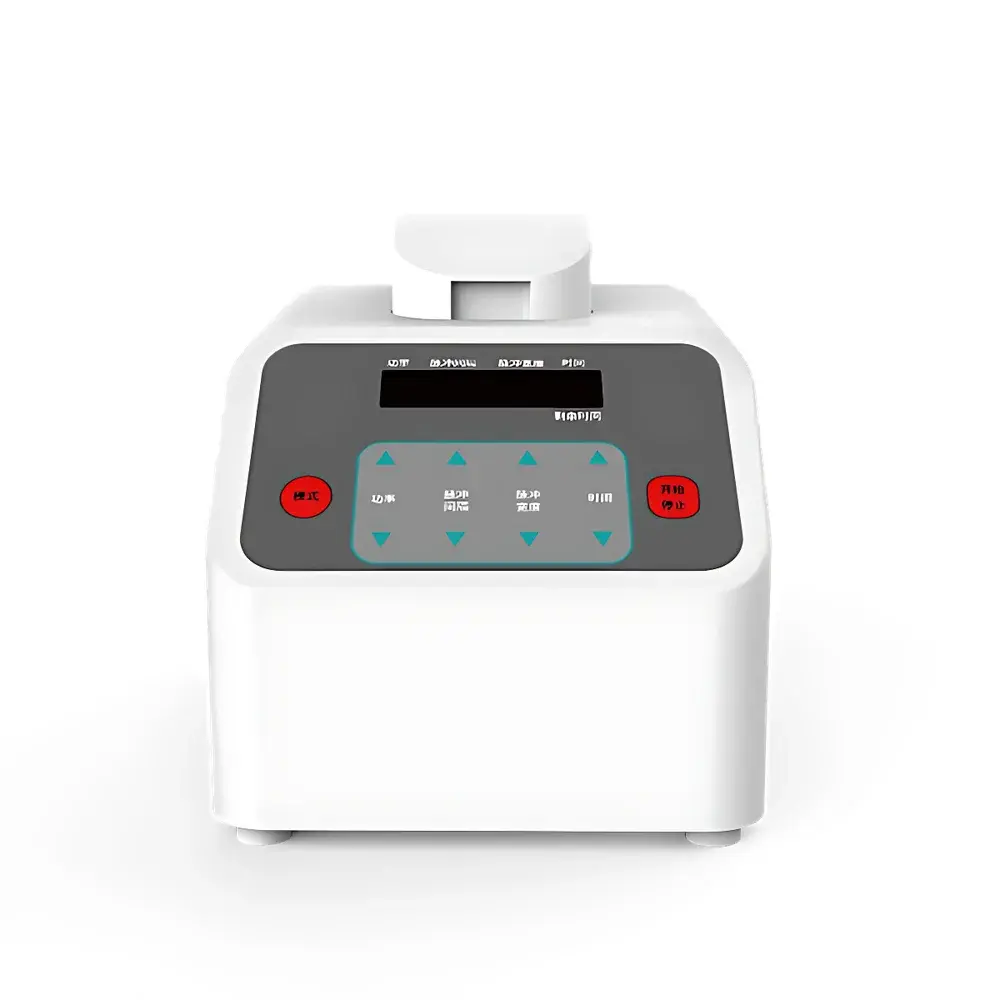
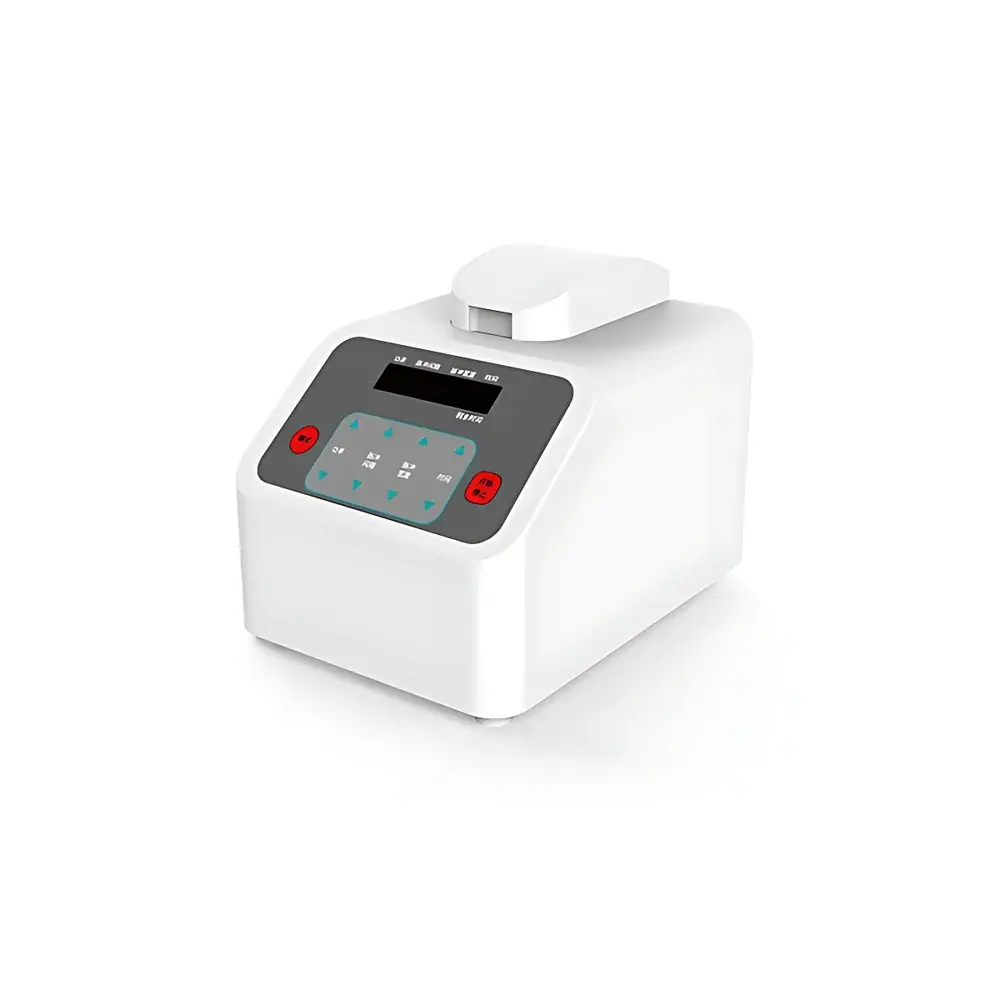
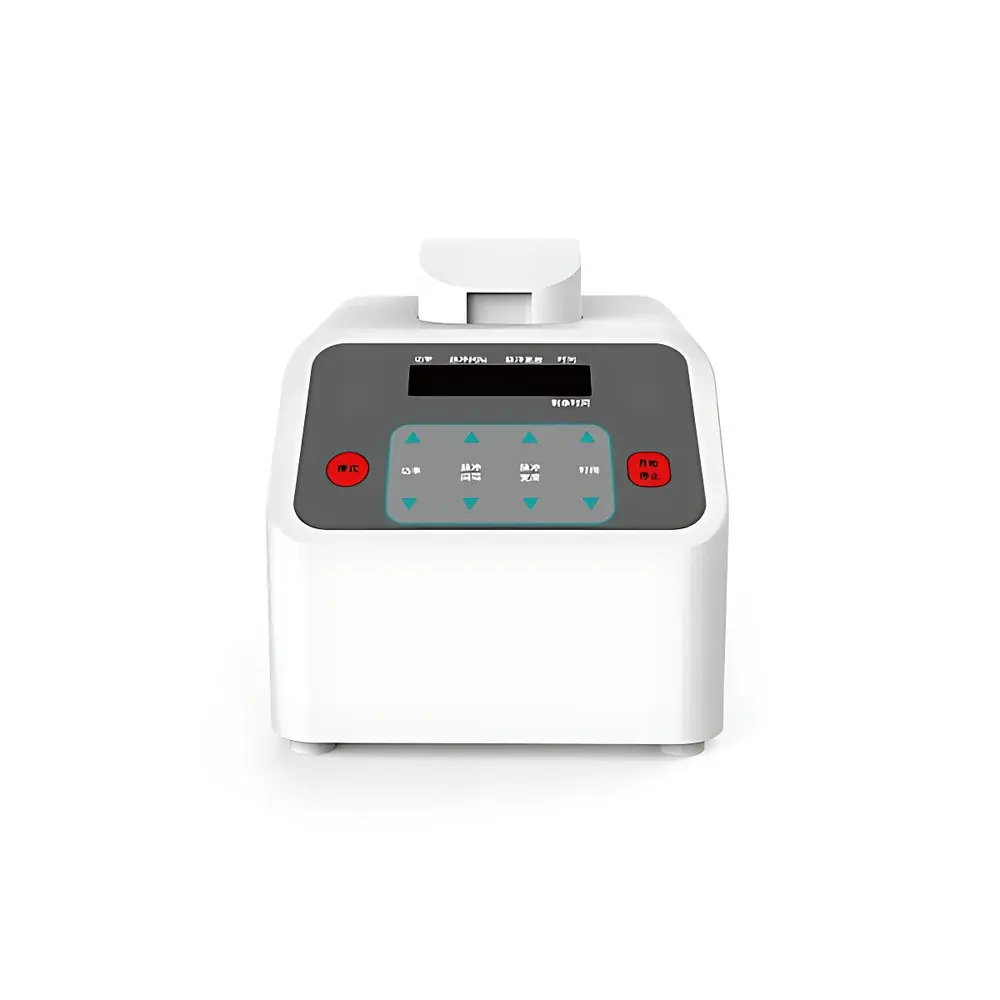
Scientz DNU-1020 Dry Non-Contact Ultrasonic Cell Disruptor
| Brand | Scientz |
|---|---|
| Origin | Zhejiang, China |
| Manufacturer Type | Direct Manufacturer |
| Product Category | Domestic (China-Made) |
| Model | DNU-1020 |
| Instrument Type | Ultrasonic Cell Disruptor |
| Temperature Range | 8–12 °C |
| Operating Frequency | 20 kHz |
| Ultrasonic Power Output | 30 W |
| Sample Volume Capacity | 500 µL – 1000 µL |
| Sample Throughput | Single-tube processing per cycle |
Overview
The Scientz DNU-1020 is a dry, non-contact ultrasonic cell disruptor engineered for high-fidelity, low-volume sample lysis in molecular biology and microbiology workflows. Unlike conventional probe-based sonicators that introduce contamination risk, thermal instability, and mechanical shear variability, the DNU-1020 employs bottom-coupled 20 kHz ultrasonic energy transmission through the base of sealed microcentrifuge tubes—eliminating direct transducer contact with biological material. This design enforces physical isolation between the acoustic source and sample, ensuring sterility integrity and reproducible cavitation dynamics within the confined liquid column. Integrated solid-state thermoelectric cooling maintains a stable 8–12 °C thermal environment throughout sonication, mitigating enzymatic degradation, nucleic acid shearing, and protein denaturation—critical for preserving labile analytes such as membrane-associated proteins, extracellular vesicles, and intact RNA isoforms. The system is purpose-built for applications demanding minimal handling, rapid turnaround, and strict compliance with pre-analytical standardization protocols in clinical diagnostics, field-deployable pathogen detection, and GLP-aligned biomarker discovery.
Key Features
- Dry non-contact operation: No probe immersion, no cross-contamination, no aerosol generation—fully compliant with biosafety Level 2 (BSL-2) containment requirements.
- Precision thermoelectric cooling: Maintains consistent 8–12 °C sample temperature without external chillers or ice baths, enabling unattended operation over multiple cycles.
- Optimized energy coupling: Proprietary transducer geometry and resonant chamber tuning deliver uniform cavitation intensity across 500–1000 µL volumes in standard 1.5 mL microtubes.
- Compact benchtop architecture: Footprint under 200 cm²; operates on standard 100–240 V AC input; no water circulation or exhaust ventilation required.
- Reproducible lysis kinetics: Fixed-frequency (20 kHz), fixed-power (30 W) operation eliminates operator-dependent variables—ideal for SOP-driven QC/QA environments.
Sample Compatibility & Compliance
The DNU-1020 supports lysis of Gram-negative and Gram-positive bacteria (e.g., E. coli, Bacillus subtilis), yeast (Saccharomyces cerevisiae), viral particles, bacterial spores, and synthetic lipid vesicles—all within sealed, PCR-grade tubes. It meets ISO 13485 design control principles for in vitro diagnostic (IVD) sample preparation equipment and aligns with CLSI EP17-A2 guidelines for evaluation of lysis efficiency in nucleic acid extraction workflows. While not FDA-cleared as a medical device, its operational parameters are validated for use in laboratories adhering to ISO/IEC 17025, CAP, and CLIA regulatory frameworks. All materials in contact with the instrument chassis conform to RoHS 2011/65/EU and REACH SVHC criteria.
Software & Data Management
The DNU-1020 operates via a dedicated front-panel interface with tactile push-button controls and LED status indicators—no embedded software, drivers, or network connectivity. This architecture ensures deterministic timing, eliminates cybersecurity vulnerabilities, and simplifies audit readiness in regulated environments. Cycle logs (start time, duration, temperature setpoint) are retained in volatile memory for up to 500 sessions and may be manually recorded for 21 CFR Part 11-compliant documentation when integrated into laboratory information management systems (LIMS). No proprietary file formats or cloud dependencies are introduced—data output remains fully human-readable and exportable via external logging tools.
Applications
- Rapid nucleic acid release for point-of-care RT-qPCR and isothermal amplification (e.g., LAMP, RPA) without phenol-chloroform or bead-beating steps.
- Preparation of native membrane protein extracts for downstream SEC-MALS or cryo-EM screening.
- Lysis of biofilm-embedded pathogens for antimicrobial resistance (AMR) gene profiling.
- Small-volume liposome disruption and content release kinetics studies.
- Standardized lysis of reference strains in proficiency testing programs accredited by UK NEQAS and CAP.
FAQ
Is the DNU-1020 compatible with 0.2 mL PCR tubes?
No—the system is mechanically calibrated for 1.5 mL microcentrifuge tubes only. Smaller tubes exhibit insufficient acoustic coupling and inconsistent thermal mass.
Can I run multiple samples simultaneously?
The DNU-1020 processes one tube per cycle. Parallel throughput requires sequential runs; no multi-well or rack-based configuration is supported.
Does the unit require calibration or periodic verification?
Yes—annual verification of temperature stability (±0.5 °C at 10 °C setpoint) and acoustic power output (via calorimetric measurement per ASTM E2921-13) is recommended for ISO/IEC 17025 compliance.
What maintenance is required?
None beyond routine surface disinfection with 70% ethanol; the solid-state transducer and Peltier module have no consumables or service intervals.
Is third-party validation data available?
Yes—application notes detailing lysis efficiency (measured by qPCR Cq shift), protein yield (BCA assay), and microbial viability loss (live/dead staining) are accessible via Scientz’s technical library under NDA.
Related Products





