
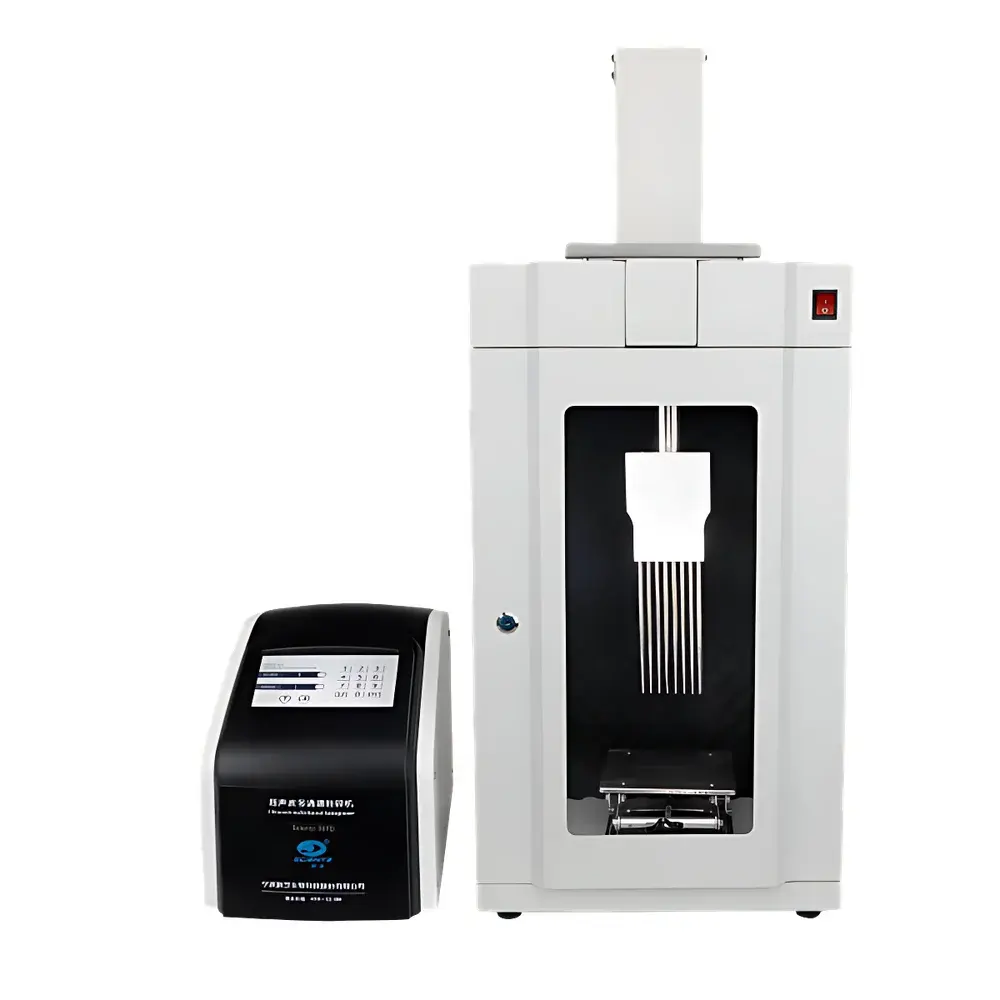
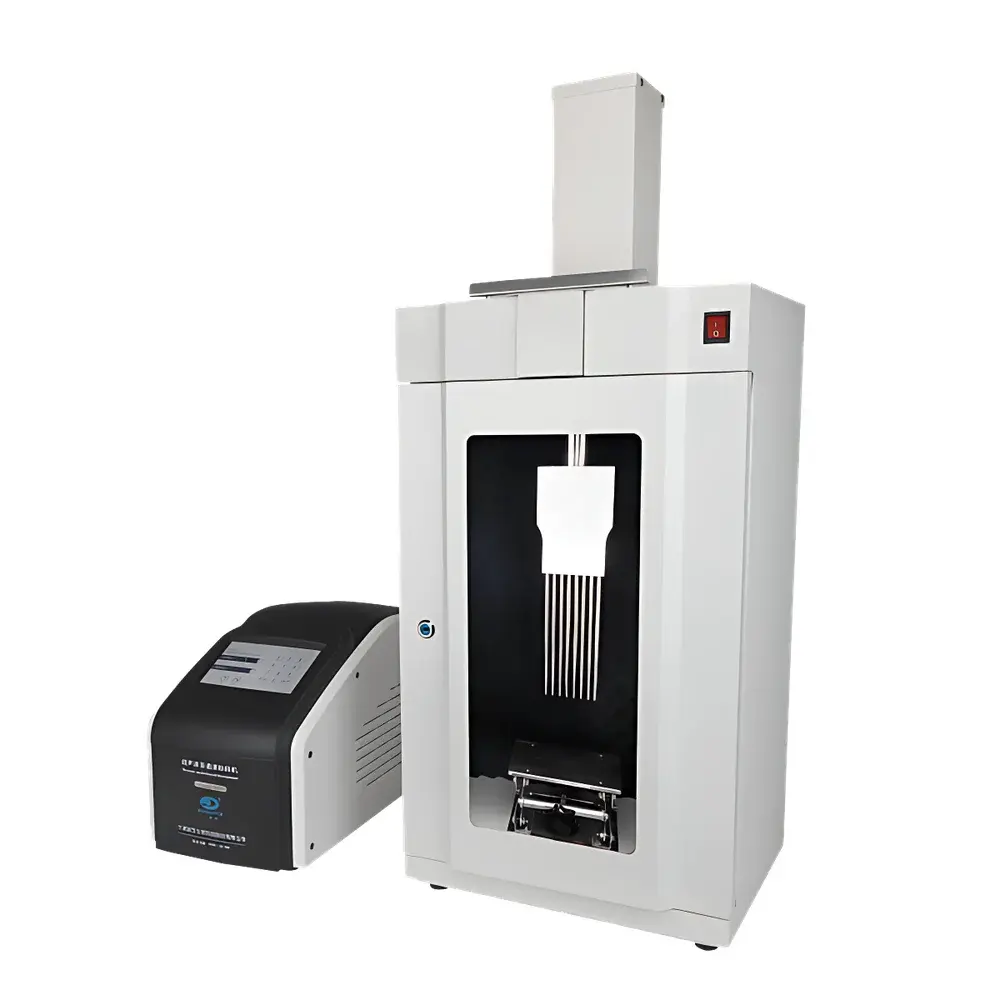
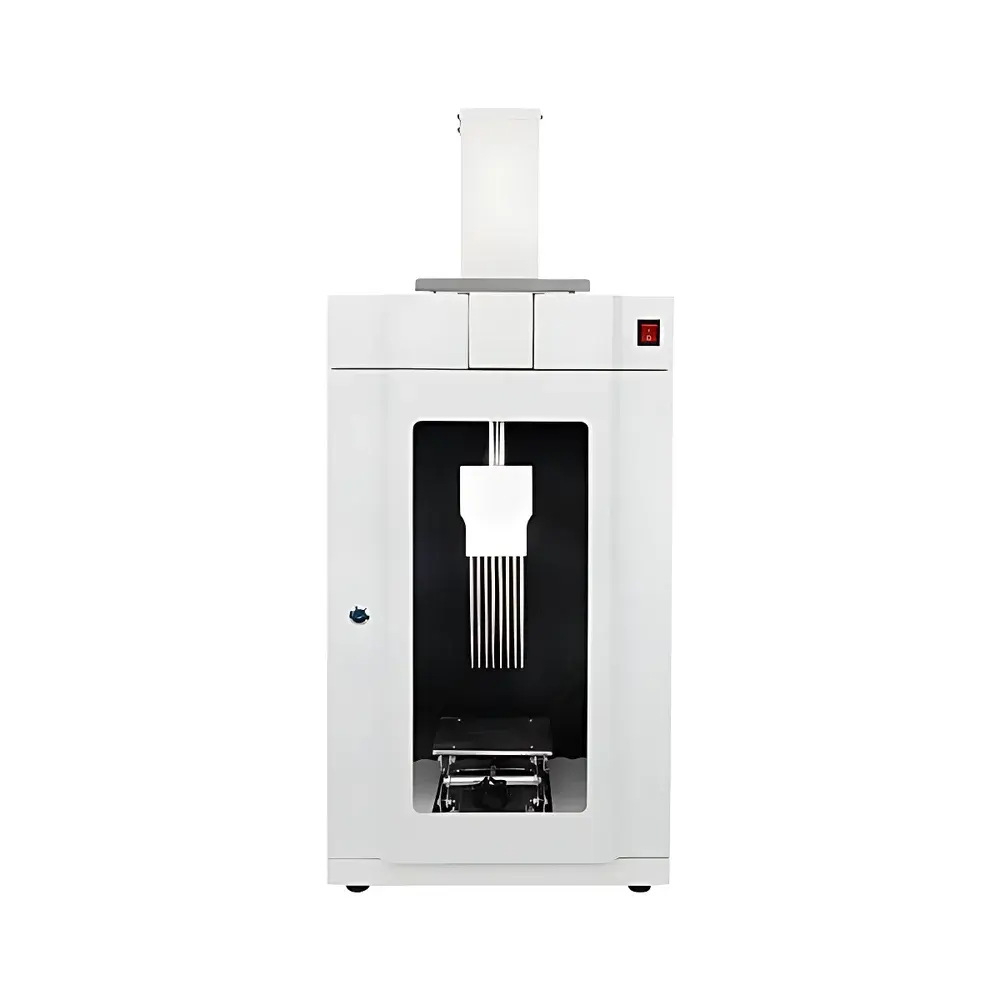
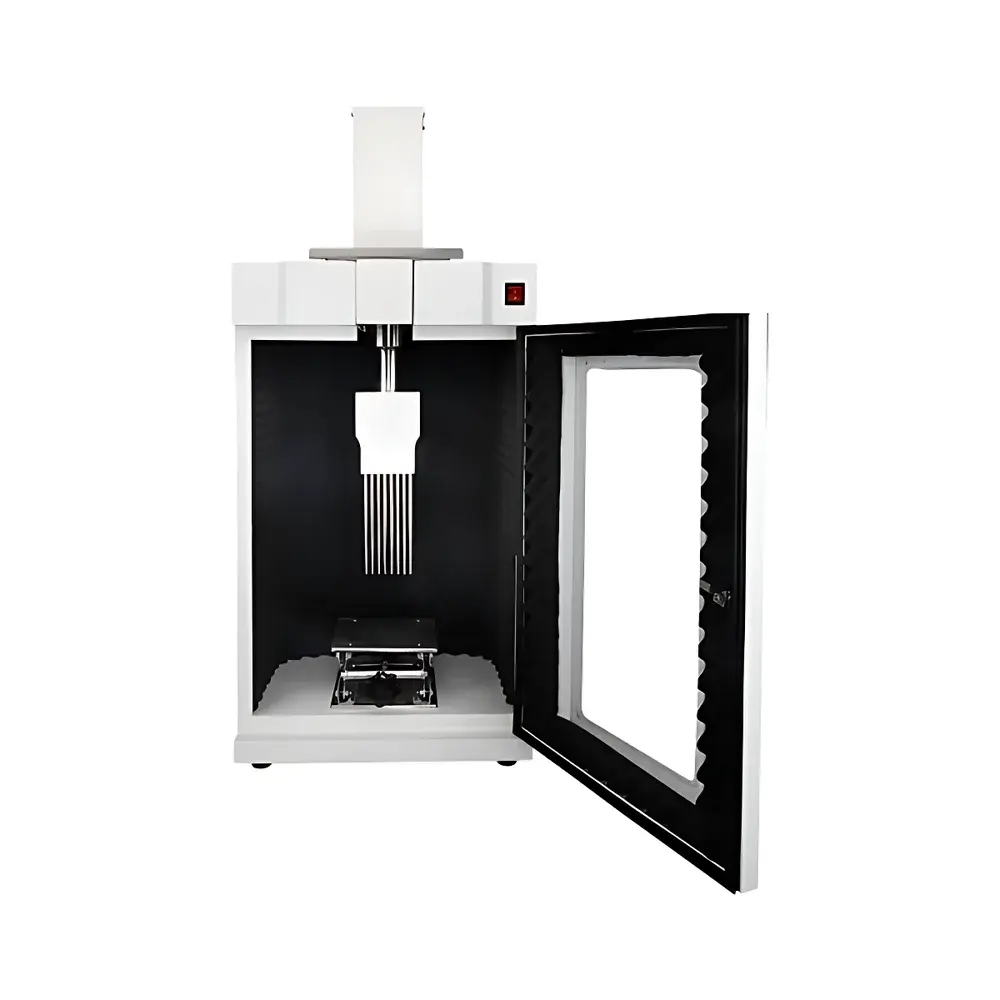
Ningbo Scientz SCIENTZ-96TD High-Throughput Ultrasonic Cell Disruptor
| Brand | Ningbo Scientz |
|---|---|
| Origin | Zhejiang, China |
| Manufacturer Type | Direct Manufacturer |
| Instrument Type | Ultrasonic Cell Disruptor |
| Model | SCIENTZ-96TD |
| Operating Frequency | 20 kHz ± 0.5 kHz |
| Total Ultrasonic Output Power | 2400 W |
| Sample Volume per Well | 100 µL – 0.5 mL |
| Parallel Processing Capacity | 96 samples |
| Cooling Method | Integrated Peltier-based temperature control (operating range: 0–40 °C, programmable) |
| Pulse Mode | Adjustable on/off duty cycle (continuous or pulsed) |
| Power Regulation | 1–100% stepless digital control |
| Data Logging | Timestamped operation records with parameter traceability |
| Compliance | Designed to support GLP/GMP workflows |
Overview
The Ningbo Scientz SCIENTZ-96TD High-Throughput Ultrasonic Cell Disruptor is an engineered solution for parallel lysis of biological samples under precisely controlled acoustic conditions. It operates on the principle of high-intensity ultrasonic cavitation—where piezoelectric transducers convert electrical energy into mechanical vibrations at a nominal frequency of 20 kHz ± 0.5 kHz. These vibrations are transmitted via titanium alloy horn assemblies to microtiter-format sample holders, generating transient localized pressures exceeding 1000 atm upon bubble collapse in the liquid medium. This hydrodynamic shear force disrupts cellular membranes, nuclear envelopes, and subcellular organelles while preserving macromolecular integrity—including native protein conformation and nucleic acid fragment size distribution—when operated within validated pulse parameters. Unlike single-probe sonicators, the SCIENTZ-96TD delivers uniform energy distribution across all 96 positions through synchronized multi-horn actuation, eliminating positional bias and enabling statistically robust comparative studies in genomics, proteomics, and synthetic biology workflows.
Key Features
- True 96-well parallel processing architecture with individually calibrated ultrasonic horns—ensuring <±3% inter-well power deviation across full load.
- Digital power regulation (1–100%) with real-time feedback control to maintain consistent acoustic intensity regardless of sample viscosity or volume variation.
- Integrated Peltier cooling system with programmable setpoint (0–40 °C), enabling temperature-sensitive applications such as chromatin shearing for ChIP-seq without ice-bath dependency.
- Configurable pulse modes: continuous, burst, or duty-cycle modulated (e.g., 5 s on / 2 s off), minimizing thermal accumulation while maximizing lysis efficiency.
- Onboard memory for up to 20 user-defined protocols—including amplitude, duration, cycle count, and cooling profile—with timestamped execution logging.
- Self-diagnostic firmware with automatic fault detection for transducer impedance mismatch, thermal overload, or horn resonance drift—triggering immediate shutdown and error code display.
Sample Compatibility & Compliance
The SCIENTZ-96TD accommodates standard 96-well PCR plates, deep-well blocks, and custom microcentrifuge tube arrays (0.2–0.5 mL). It has been validated for lysis of Gram-positive and Gram-negative bacteria (e.g., E. coli, B. subtilis), yeast (S. cerevisiae), mammalian cell lines (HEK293, CHO), plant protoplasts, and viral capsids. All wetted components comply with USP Class VI biocompatibility standards. The instrument’s operational log structure supports ALCOA+ data integrity principles and is compatible with 21 CFR Part 11-compliant LIMS integration when paired with Scientz’s optional SecureLink software module. It meets ISO/IEC 17025 requirements for method validation in accredited testing laboratories performing nucleic acid extraction or protein solubilization.
Software & Data Management
The embedded controller features a 5-inch capacitive touchscreen interface with multilingual OS (English, German, Japanese, Chinese). All parameter changes are recorded with operator ID, timestamp, and checksum-verified metadata. Export formats include CSV (for Excel/Prism analysis) and XML (for LIMS ingestion). Optional Scientz DataVault software provides role-based access control, electronic signature capture, and automated report generation compliant with GLP Annex 11 and GMP Annex 11 guidelines. Audit trails retain ≥18 months of raw operation logs with immutable hashing—fully recoverable after system reboot or firmware update.
Applications
- Chromatin fragmentation for ChIP-seq and CUT&RUN assays—achieving narrow fragment size distributions (150–500 bp) with inter-replicate CV < 5%.
- High-yield plasmid DNA isolation from E. coli cultures in 96-well format for combinatorial library construction.
- Preparation of subcellular fractions (mitochondria, nuclei) from tissue homogenates with minimal cross-contamination.
- Dispersion of carbon nanotubes and graphene oxide in aqueous surfactant systems for nanomaterial characterization.
- Rapid extraction of secondary metabolites from dried botanical matrices (e.g., ginseng root, turmeric rhizomes) under non-thermal conditions.
- Accelerated enzymatic digestion kinetics studies where mass transfer limitation is rate-determining.
FAQ
What is the maximum recommended total volume per 96-well plate?
The optimal working volume per well is 100–500 µL. Exceeding 500 µL increases cavitation damping and reduces lysis efficiency; volumes below 100 µL risk probe overheating and inconsistent energy coupling.
Can the SCIENTZ-96TD be used for RNA isolation without RNase contamination?
Yes—provided RNase-free consumables and pre-chilled reagents are used. The instrument itself introduces no enzymatic activity; its stainless-steel and titanium surfaces are autoclavable and compatible with RNase decontamination protocols.
Is remote monitoring or network connectivity supported?
Standard configuration includes USB host port for protocol transfer and data export. Ethernet and Wi-Fi modules are available as factory-installed options for integration into centralized lab automation networks.
How often does the ultrasonic horn array require recalibration?
No routine recalibration is required. Each horn undergoes factory resonance tuning and impedance matching verification. Annual performance verification using NIST-traceable reference standards is recommended for regulated environments.
Does the system meet IEC 61000-4 electromagnetic compatibility requirements?
Yes—the SCIENTZ-96TD complies with IEC 61000-4-2 (ESD), -4-3 (radiated RF), and -4-4 (electrical fast transients) standards, certified per EN 61326-1:2013 for laboratory use.





