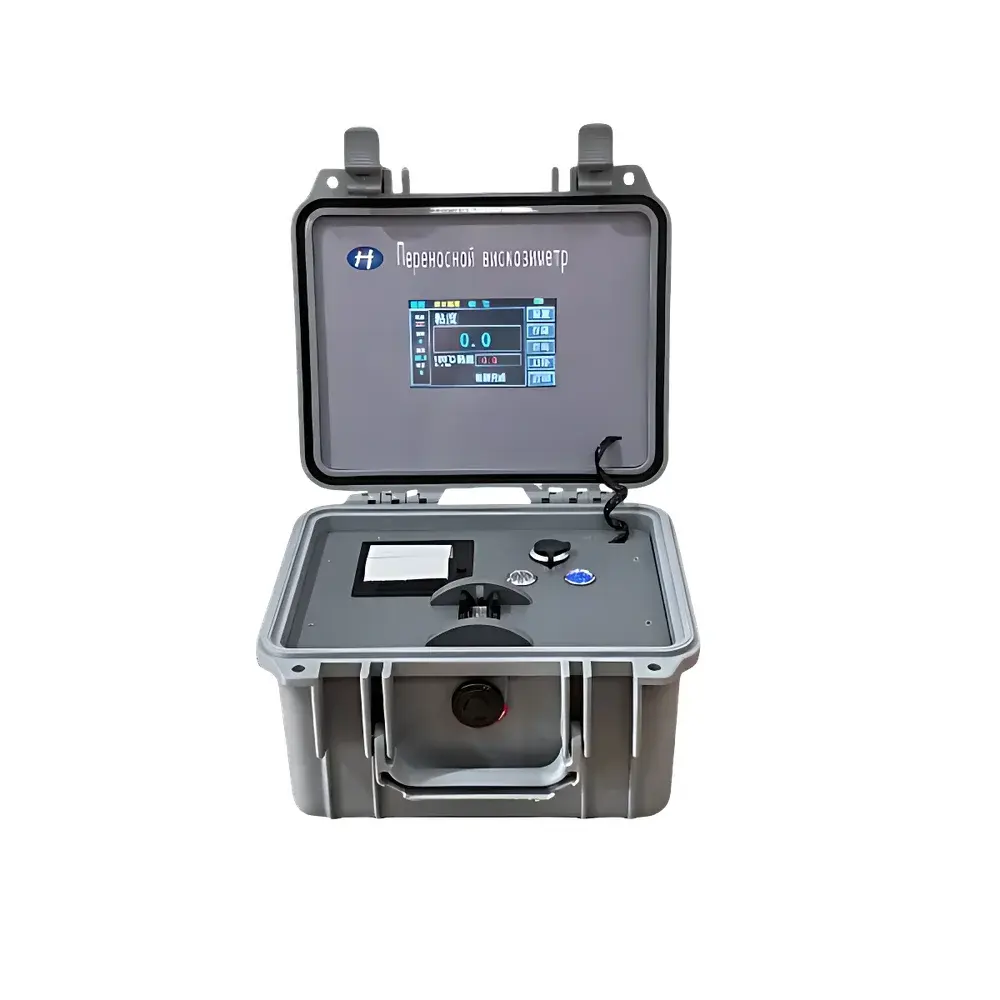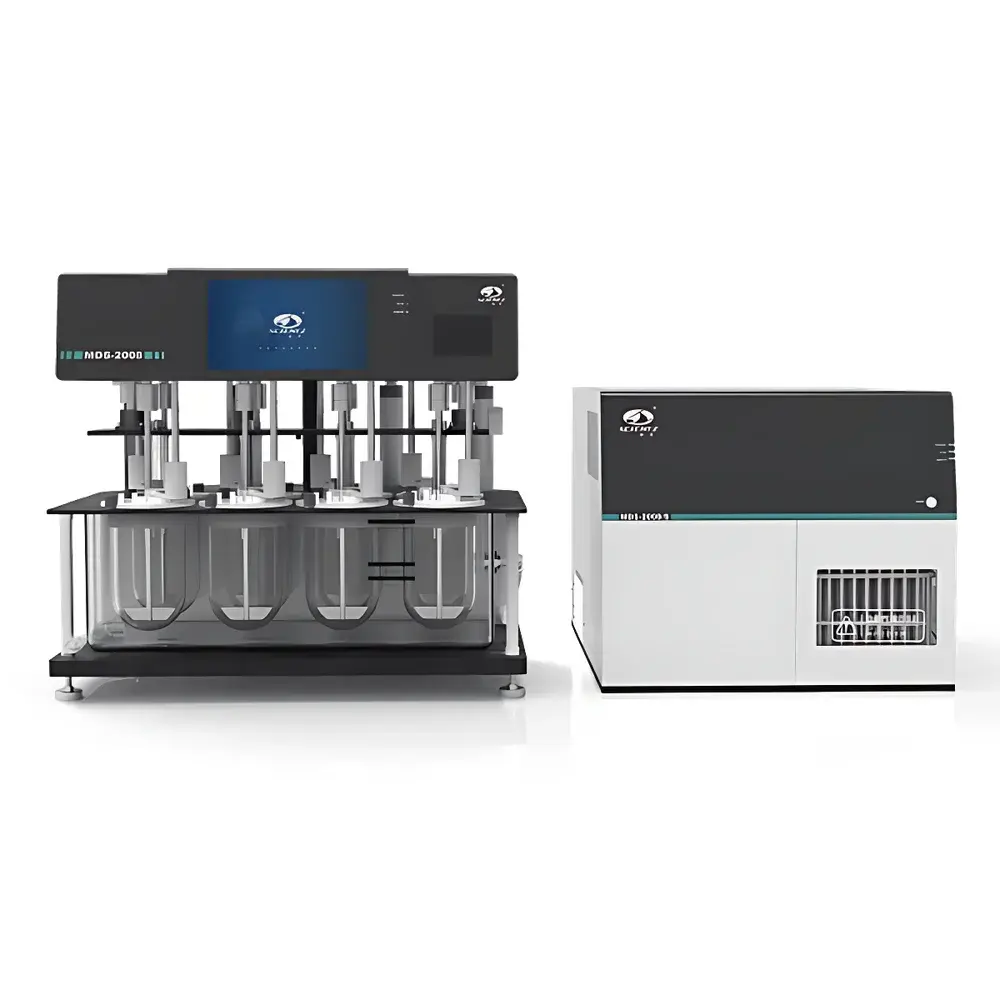
Ningbo Scientz MDS-2008 Automated On-line Dissolution Sampling System
| Brand | Scientz |
|---|---|
| Origin | Zhejiang, China |
| Manufacturer Type | Direct Manufacturer |
| Model | MDS-2008 |
| Instrument Type | On-line Dissolution Tester |
| Dissolution Vessels | 6 or 8 |
| Temperature Range | Ambient to 45.0 °C |
| Temperature Accuracy | ≤ ±0.2 °C |
| Rotation Speed Range | 25.0–250.0 rpm |
| Paddle Wobble Amplitude | ≤ 0.5 mm |
| Basket Wobble Amplitude | ≤ 1.0 mm |
| Water Bath Temperature Control Range | Ambient to 45.0 °C |
| Water Bath Temperature Resolution | 0.1 °C |
| Water Bath Volume | 28 L |
Overview
The Ningbo Scientz MDS-2008 Automated On-line Dissolution Sampling System is a fully integrated, GMP-compliant dissolution testing platform engineered for precision, reproducibility, and regulatory readiness in pharmaceutical development and quality control laboratories. Designed in strict alignment with USP <711>, Ph. Eur. 2.9.3, and JP 17 dissolution methodology requirements, the system implements the paddle and basket apparatus (Apparatus 2 and 1) under controlled hydrodynamic conditions. Its core architecture supports real-time, on-line sampling—eliminating manual intervention and minimizing operator-induced variability. The system operates on the principle of standardized fluid dynamics within calibrated dissolution vessels, where drug release kinetics are quantified via UV/Vis spectrophotometry or HPLC analysis of serially collected samples. Critical mechanical parameters—including vessel centering, shaft verticality, temperature uniformity, and rotational stability—are maintained within pharmacopoeial tolerances to ensure data integrity across method transfer, validation, and routine QC use.
Key Features
- GMP-ready hardware architecture with three-tier user access control (Administrator, Supervisor, Operator), supporting audit trail compliance per FDA 21 CFR Part 11 and EU Annex 11 requirements.
- 10-inch color touchscreen interface with bilingual (English/Chinese) support, enabling storage and execution of up to 100 pre-programmed dissolution methods.
- Independent temperature monitoring via eight embedded Pt100 sensors—one per vessel—with automatic probe retraction during sampling to prevent mechanical interference.
- V-shaped anti-evaporation lid design ensuring tight seal against solvent loss; optional amber 1000 mL dissolution vessels for light-sensitive formulations.
- Modular, segmented 316L stainless steel shaft assembly compatible with paddles, baskets, and small-volume adapters—no recalibration required when switching configurations.
- Integrated auto-dosing module supporting simultaneous or sequential tablet/capsule introduction across all 6 or 8 vessels, minimizing handling artifacts and improving dosing repeatability.
- One-piece molded water bath with radius-corner geometry and quick-connect fittings, enabling complete drainage and residue-free cleaning—critical for cross-product changeover and microbial control.
- PID + fuzzy logic temperature control delivering ±0.2 °C accuracy and 0.1 °C resolution across the full 20–45 °C operating range.
Sample Compatibility & Compliance
The MDS-2008 accommodates diverse dosage forms including immediate- and extended-release tablets, hard/soft gelatin capsules, transdermal patches, semisolid preparations (e.g., ointments, gels), microspheres, and implantable depot systems. Vessel options include standard 250 mL and 1000 mL configurations, with the latter available in UV-blocking amber glass to maintain photochemical stability during testing. All mechanical components—including cup retention rings, guide rods, and shaft assemblies—meet ISO 9001 manufacturing standards and are validated per ASTM E2503 and USP <1092> mechanical calibration guidelines. The system supports installation qualification (IQ), operational qualification (OQ), and performance qualification (PQ) documentation packages, including mechanical verification reports and PQ protocol templates aligned with ICH Q5C and Q7 principles.
Software & Data Management
Embedded firmware records time-stamped event logs—including temperature setpoints, rotation speed, sampling timestamps, and door status—with real-time printing capability via integrated thermal printer. Log files are exportable via USB in encrypted binary format, readable only through Scientz’s proprietary data management software (v3.2+), which enforces digital signature authentication and version-controlled method archiving. The software supports electronic signatures, user activity tracking, and configurable alert thresholds for out-of-specification events. All data structures comply with ALCOA+ principles (Attributable, Legible, Contemporaneous, Original, Accurate, Complete, Consistent, Enduring, Available), facilitating GLP/GMP audits and regulatory submissions.
Applications
- Comparative dissolution profiling for generic product development and bioequivalence studies.
- Stability-indicating release testing under accelerated and long-term storage conditions.
- Excipient interaction screening during formulation optimization.
- Quality-by-Design (QbD) parameter mapping for critical process attributes (CPAs) such as agitation rate, medium pH, and surfactant concentration.
- Batch release testing per pharmacopoeial monographs and internal SOPs.
- Automated multi-point sampling for kinetic modeling (e.g., Weibull, Korsmeyer-Peppas).
FAQ
Does the MDS-2008 support both Apparatus 1 (basket) and Apparatus 2 (paddle)?
Yes—the system is mechanically certified for both USP Apparatus 1 and 2 configurations using interchangeable 316L stainless steel shafts and vessels.
Can the system perform automated sample dilution?
Yes—integrated dual-syringe pump architecture enables on-line sample dilution with programmable dilution factors, reducing manual post-sampling handling errors.
Is the water bath temperature uniformity verified across all vessels?
Yes—temperature mapping is performed per USP <724> guidance; validation reports confirm ≤ ±0.2 °C deviation between vessels at steady state.
What filtration options are available for sampled media?
The system includes dual-stage filtration: a 10 µm pre-filter followed by a 0.45 µm membrane filter housed in a disposable cartridge, minimizing adsorption and clogging.
How is carryover minimized between dissolution runs?
Post-run, the system executes a full-fluid-path wash cycle using deionized water and ethanol, followed by nitrogen purge—validated to achieve ≤ 0.1% residual carryover (measured via spiked recovery test).