
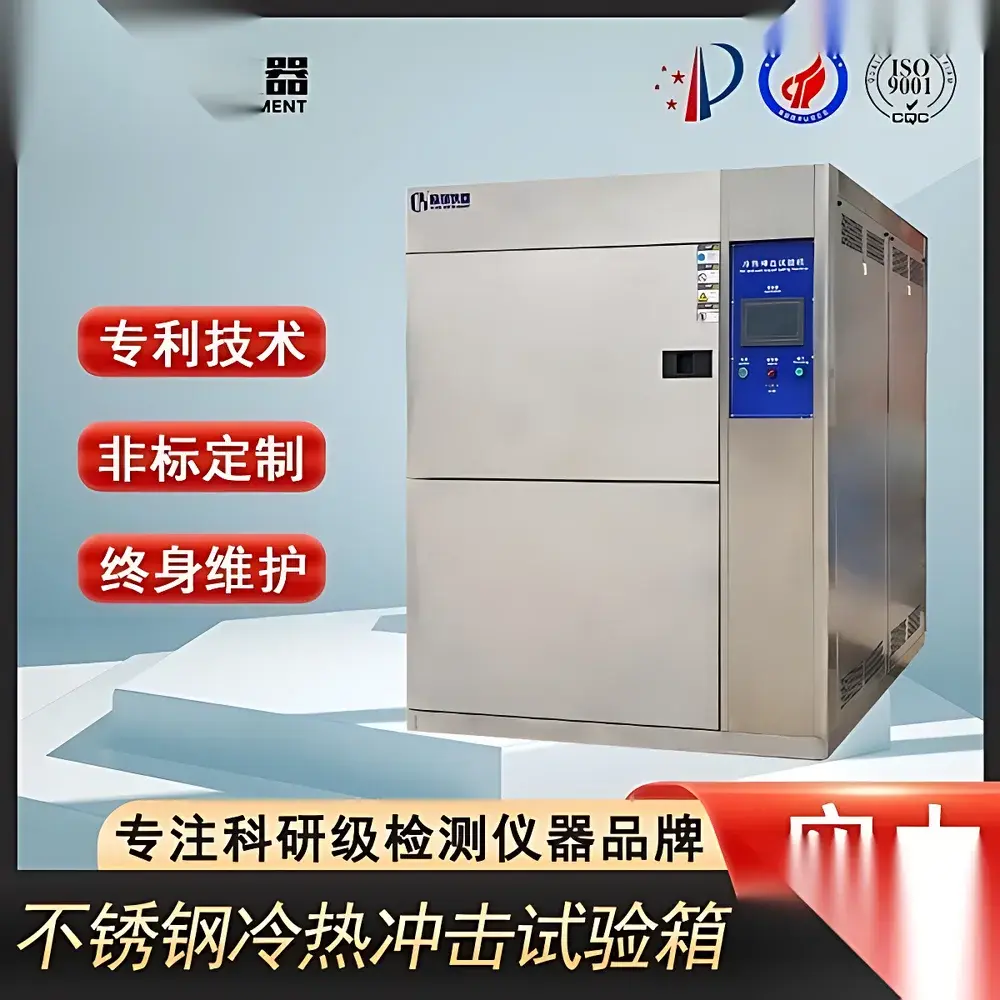
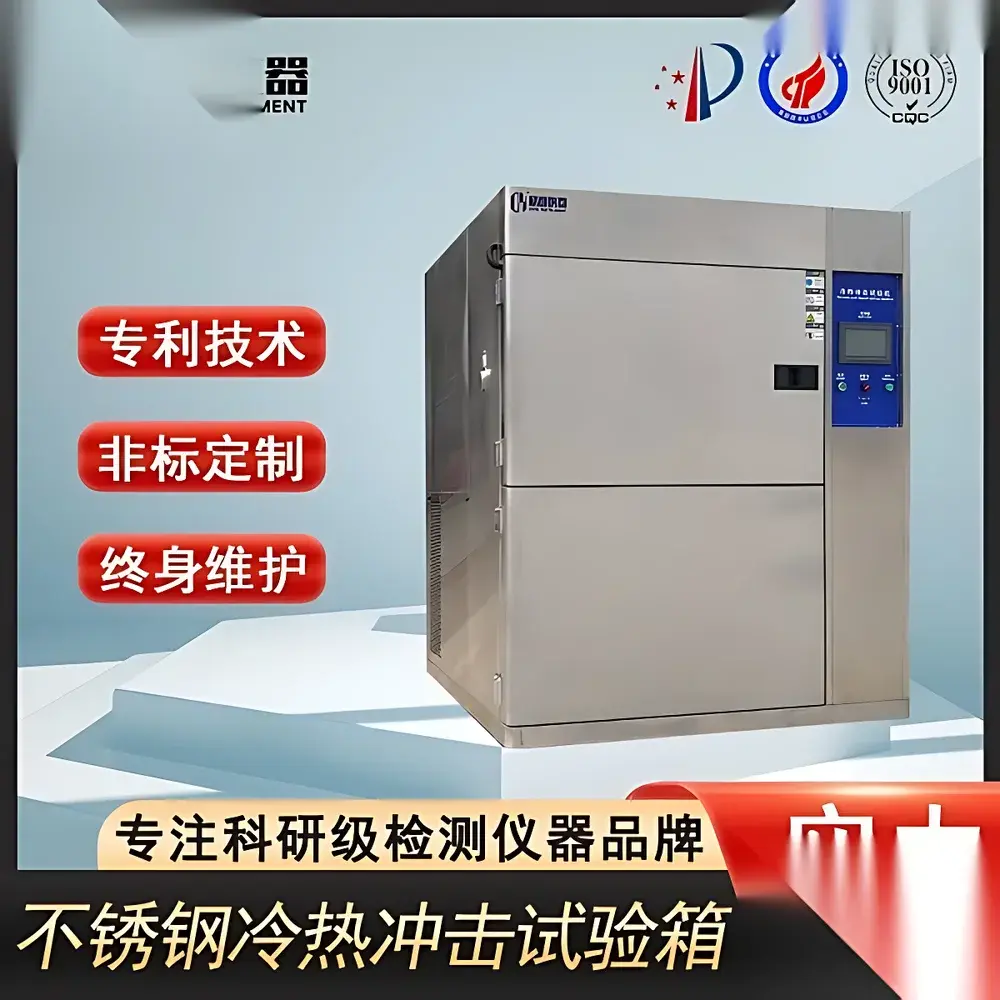
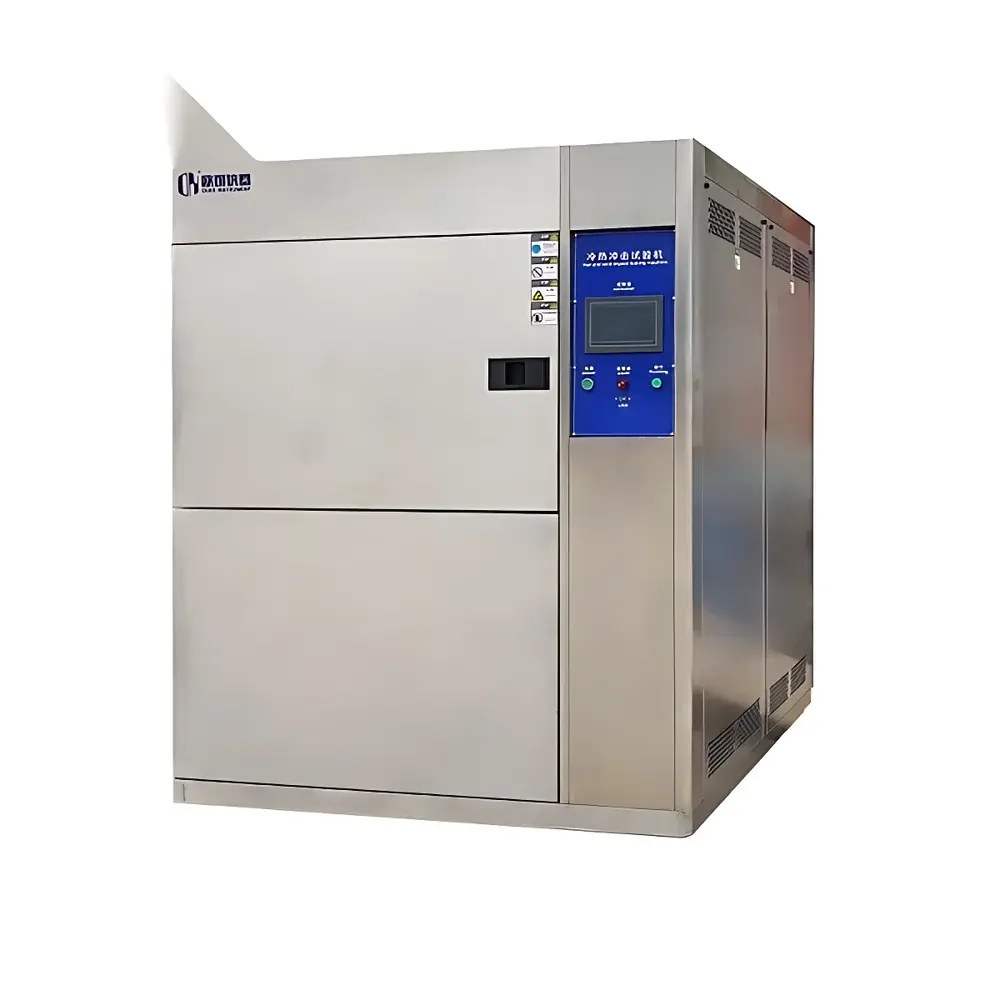
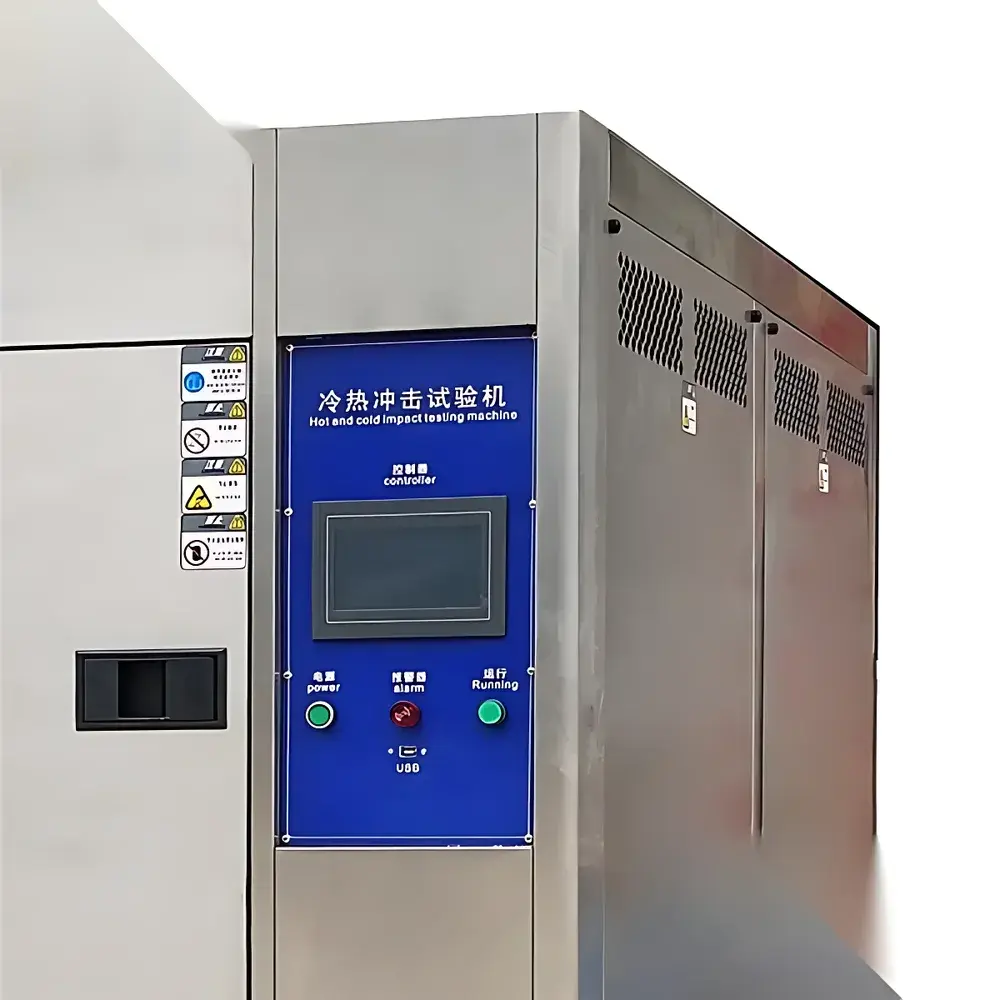
Thermal Shock Test Chamber – Industrial-Grade Low-Temperature Impact Environmental Chamber
| Brand | OEM / Private Label |
|---|---|
| Origin | Imported |
| Supplier Type | Authorized Distributor |
| Price | USD 11,200 (FOB) |
| Controller Options | TEMI880 Color Touchscreen Programmable Climate Controller (English/Chinese Switchable) or TEMI300 Membrane Keypad Controller (English Only) |
| Temperature Range | −70 °C to +180 °C |
| Humidity Range | 20–98% RH |
| Cooling System | Dual-Stage Cascade Refrigeration with Original Tecumseh (France) Hermetic Compressor |
| Insulation | Rigid Polyurethane Foam (100 mm thick) + Ultra-Fine Glass Fiber |
| Interior Material | SUS304 Stainless Steel |
| Exterior Material | Powder-Coated Cold-Rolled Steel or Optional Brushed SUS304 |
| Airflow | Wide-Band Forced Convection via Multi-Wing Centrifugal Blower |
| Compliance | ASTM D5276, IEC 60068-2-14, MIL-STD-810H Method 503.7 |
Overview
The Thermal Shock Test Chamber is an industrial-grade environmental test system engineered for rapid, repeatable thermal cycling between extreme low-temperature and high-temperature zones. It operates on the principle of forced-air convection combined with a dual-stage cascade refrigeration architecture, enabling precise, independent control of temperature and humidity across wide operational ranges (−70 °C to +180 °C; 20–98% RH). Designed for reliability in continuous operation, the chamber supports qualification testing per internationally recognized standards including IEC 60068-2-14 (thermal shock), ASTM D5276 (impact resistance under thermal stress), and MIL-STD-810H Method 503.7 (temperature shock). Its BTSC (Balanced Temperature & Humidity Control) system ensures dynamic equilibrium without overshoot or prolonged stabilization delays—critical for validating material integrity, solder joint reliability, and packaging performance under accelerated aging conditions.
Key Features
- Two programmable controller options: TEMI880 color touchscreen interface with bilingual (English/Chinese) firmware and real-time trend graphing, or the TEMI300 membrane keypad controller optimized for ISO/IEC 17025-compliant lab environments where language consistency is required.
- Dual-stage cascade refrigeration using original Tecumseh (France) hermetic compressors—engineered for extended service life, reduced maintenance intervals, and stable sub-zero performance down to −70 °C.
- Forced-air circulation via multi-wing centrifugal blower ensures uniform temperature distribution (±0.5 °C at setpoint, per IEC 60068-3-5) with no dead zones; airflow path designed as top-out/bottom-in wide-band pattern to minimize thermal stratification.
- Robust thermal insulation: 100 mm rigid polyurethane foam core plus ultra-fine glass fiber layer; door seal employs dual-layer high-temperature silicone rubber rated for −80 °C to +200 °C operation.
- Standardized test interfaces: 50 mm diameter cable port (left-side mounted), double-glazed observation window (tempered safety glass), adjustable stainless steel sample racks (two sets), interior fluorescent lighting, and four heavy-duty casters with locking brakes.
Sample Compatibility & Compliance
The chamber accommodates diverse sample geometries—including PCB assemblies, automotive sensors, medical device housings, and polymer-based packaging—without requiring custom fixtures. Internal dimensions support standard test specimens up to 600 × 500 × 500 mm (W×D×H). All materials contacting the test environment conform to RoHS Directive 2011/65/EU and REACH Annex XVII restrictions. The system meets mechanical safety requirements per EN 61000-6-2 (immunity) and EN 61000-6-4 (emission), and supports GLP/GMP traceability when integrated with validated software (see Software & Data Management section). Calibration documentation follows ISO/IEC 17025 guidelines, with optional NIST-traceable certificate available upon request.
Software & Data Management
A Windows-compatible PC software suite is included for remote monitoring, profile programming, real-time data logging, and automated report generation (PDF/CSV). The software supports audit trail functionality compliant with FDA 21 CFR Part 11 requirements—including electronic signatures, user access levels (admin/operator), and immutable event logs for temperature/humidity excursions, alarm triggers, and system status changes. Data export formats are compatible with LIMS platforms and statistical process control (SPC) tools such as Minitab and JMP. Optional Ethernet or RS-485 communication modules enable integration into centralized facility monitoring systems.
Applications
This thermal shock chamber serves critical roles in quality assurance and R&D workflows across electronics manufacturing (e.g., evaluating solder joint fatigue in automotive ECUs), aerospace component validation (e.g., thermal cycling of composite structural panels), pharmaceutical packaging stability studies (e.g., blister pack integrity under cold-chain interruption scenarios), and advanced materials development (e.g., cryogenic toughness assessment of thermoplastic elastomers). It is routinely deployed in third-party test labs accredited to ISO/IEC 17025 and certified for A2LA scope expansion in environmental simulation.
FAQ
What is the typical temperature transition time between −40 °C and +125 °C?
Typical two-zone transition time is ≤15 seconds for air-to-air transfer configurations; single-chamber ramp rates average 10 °C/min (heating) and 8 °C/min (cooling), verified per IEC 60068-3-10.
Does the system support humidity control during thermal shock cycles?
Yes—the BTSC system enables concurrent temperature and humidity profiling, including dew point tracking and condensation-controlled ramping for hygrothermal shock protocols.
Is factory calibration included with shipment?
Yes—a full-point calibration report covering temperature uniformity, stability, and humidity accuracy is provided prior to dispatch, aligned with ISO/IEC 17025 Clause 6.5.
Can the chamber be integrated into an existing MES or QMS platform?
Yes—via Modbus TCP or OPC UA protocol support (optional module); all digital I/O signals are mapped to standard industrial automation addressing schemes.
What maintenance schedule is recommended for optimal long-term performance?
Compressor oil analysis every 2,000 operating hours; refrigerant leak check annually; blower motor bearing inspection biannually; filter replacement quarterly.



