
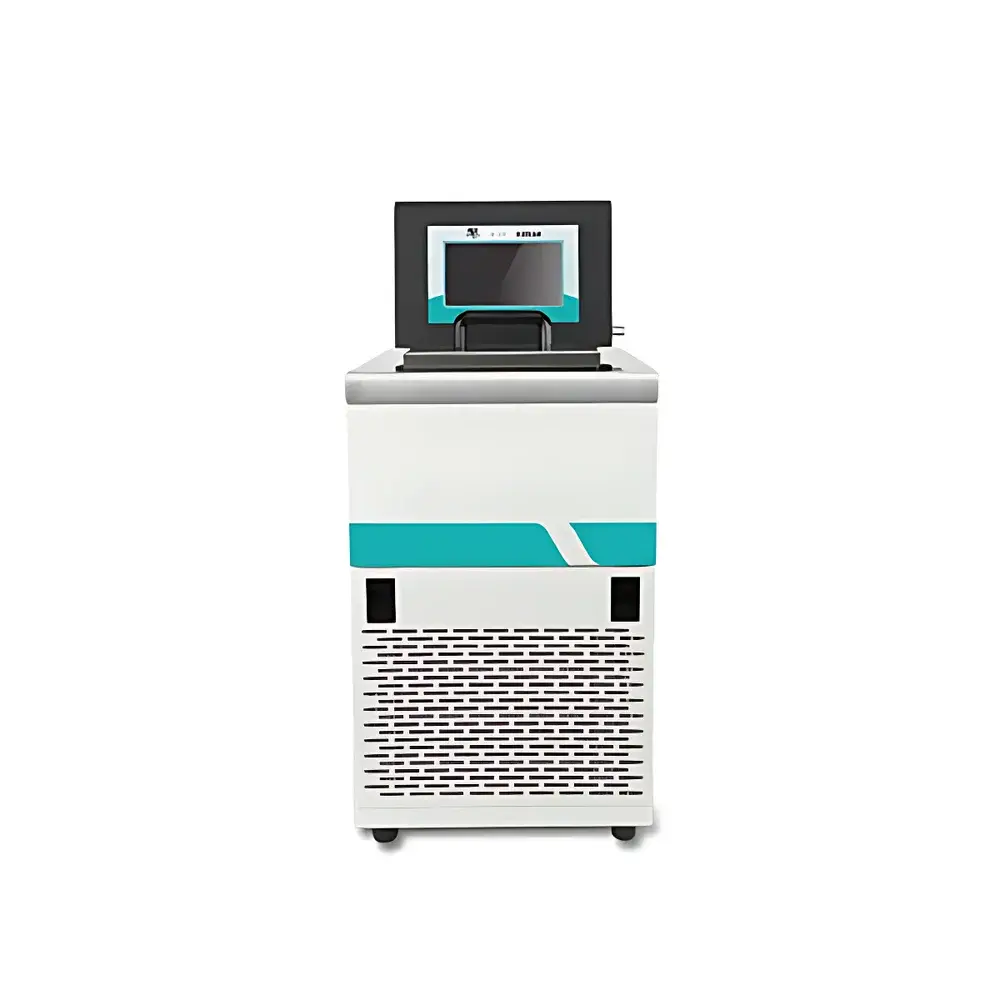
Scientz DC-3010 Low-Temperature Circulating Bath (Heating & Cooling)
| Brand | Scientz |
|---|---|
| Origin | Zhejiang, China |
| Manufacturer Type | Direct Manufacturer |
| Product Category | Domestic |
| Model | DC-3010 |
| Instrument Type | Constant-Temperature Bath |
| Circulation Mode | Internal & External Circulation |
| Temperature Control | Dual-mode (Heating & Refrigeration) |
| Bath Chamber Dimensions | 260 × 200 × 200 mm (L×W×H) |
| Temperature Range | −30 °C to +100 °C |
| Temperature Stability | ±0.1 °C |
Overview
The Scientz DC-3010 Low-Temperature Circulating Bath is an engineered thermal management system designed for precise, stable, and bidirectional temperature control of external equipment or internal bath media. Utilizing a closed-loop refrigeration cycle with environmentally compliant R-404A or R-507 refrigerant (subject to regional regulatory alignment), the unit integrates a high-efficiency hermetic compressor (Secop, Germany), PID-based digital microprocessor control, and dual-mode thermoregulation—enabling seamless transition between active cooling and resistive heating. Its core function is to maintain a uniform, vibration-damped liquid thermal reservoir—whether water, ethanol, silicone oil, or other compatible heat-transfer fluids—within a tightly regulated range of −30 °C to +100 °C. This capability supports both direct sample immersion applications and indirect thermal coupling via external circulation loops, making it suitable for integration into analytical instrumentation requiring stable thermal boundary conditions.
Key Features
- High-stability temperature control with ±0.1 °C fluctuation at setpoint, verified under steady-state load conditions per ISO 17025-aligned calibration practices
- 7-inch angled capacitive touchscreen interface with real-time display of bath temperature, setpoint, elapsed time, pump status, and system alarms
- Configurable auto-stop timer: programmable duration up to 99 hours, 59 minutes; terminates operation upon completion without manual intervention
- Power-loss recovery mode: retains all user-defined parameters (setpoint, circulation mode, timer, pump speed) and allows configurable auto-restart or standby state upon power restoration
- Dual-circulation architecture: switchable internal recirculation (for bath homogeneity) and external circulation (for remote load conditioning); adjustable flow rate (0–20 L/min) with pressure-tolerant magnetic-drive pump
- Integrated safety protections: compressor overheat cutoff, motor overload detection, low-level fluid alarm, and dry-run prevention circuitry
- Low-noise operation (<58 dB(A) at 1 m), achieved via Secop variable-speed compressor mounting and acoustic insulation within the chassis
Sample Compatibility & Compliance
The DC-3010 accommodates a broad spectrum of heat-transfer media—including deionized water, 30% ethylene glycol/water mixtures, silicone oils (up to 100 cSt), and low-viscosity organic solvents—subject to chemical compatibility verification per manufacturer SDS. Bath chamber geometry (260 × 200 × 200 mm) permits immersion of standard laboratory vessels (e.g., 1-L jacketed reactors, rotary evaporator condensers, ultrasonic probe housings) and supports custom manifold integration. The system complies with IEC 61010-1:2010 for electrical safety in laboratory equipment and meets CE marking requirements for EMC (EN 61326-1) and low-voltage directives. While not certified for medical device use, its thermal performance aligns with ASTM E2251-22 (Standard Specification for Liquid-Bath Temperature Calibration Systems) and supports GLP-compliant workflows when paired with validated calibration protocols and audit-trail-capable software.
Software & Data Management
The DC-3010 operates autonomously via embedded firmware but supports optional RS485/Modbus RTU or USB-to-serial connectivity for integration into centralized lab automation platforms (e.g., LabVIEW, DeltaV, or custom SCADA systems). Logged operational data—including temperature history, pump runtime, compressor duty cycle, and alarm events—can be exported as CSV files via USB flash drive. For regulated environments, third-party software solutions compliant with FDA 21 CFR Part 11 may be deployed to enforce electronic signature, role-based access control, and immutable audit trails—provided the host system implements required cryptographic integrity checks and user authentication layers.
Applications
- Condenser cooling for rotary evaporation systems, ensuring consistent solvent recovery efficiency across boiling point gradients
- Thermal regulation of non-contact ultrasonic disruptors (e.g., Scientz-950E series), preventing nucleic acid denaturation during cell lysis
- Exothermic/endothermic reaction control in jacketed glass reactors, enabling kinetic studies under isothermal conditions
- Temperature stabilization of optical components, semiconductor test fixtures, and precision metrology stages
- Calibration of thermocouples, RTDs, and infrared thermometers against NIST-traceable reference standards
- Biological sample conditioning for enzyme kinetics, protein crystallization trials, and cryopreservation protocol development
FAQ
What is the maximum external loop pressure this unit can sustain?
The integrated magnetic-drive circulation pump delivers up to 0.3 MPa (3 bar) static pressure at zero flow; continuous operation at >0.2 MPa requires confirmation of tubing and fitting pressure ratings.
Can the bath operate continuously at −30 °C ambient temperature?
Yes—the unit is rated for uninterrupted operation at ambient temperatures from +10 °C to +35 °C; sustained sub-zero bath setpoints require adequate ventilation and avoidance of high-humidity environments to prevent condensation-induced corrosion.
Is the temperature sensor calibrated to NIST-traceable standards?
The factory-installed PT100 sensor is calibrated against a NIST-traceable reference thermometer; users may perform field verification using a secondary standard probe and initiate offset correction via the service menu.
Does the system support external temperature feedback control?
No—the DC-3010 uses only internal bath-sensor feedback; external PID control requires integration with a standalone controller or PLC via analog voltage/current output signals (optional module).
What maintenance intervals are recommended for long-term reliability?
Compressor oil inspection every 24 months; refrigerant charge verification every 36 months; annual cleaning of condenser coils and pump strainer; biannual validation of temperature stability per ISO/IEC 17025 Section 6.4.10.



