
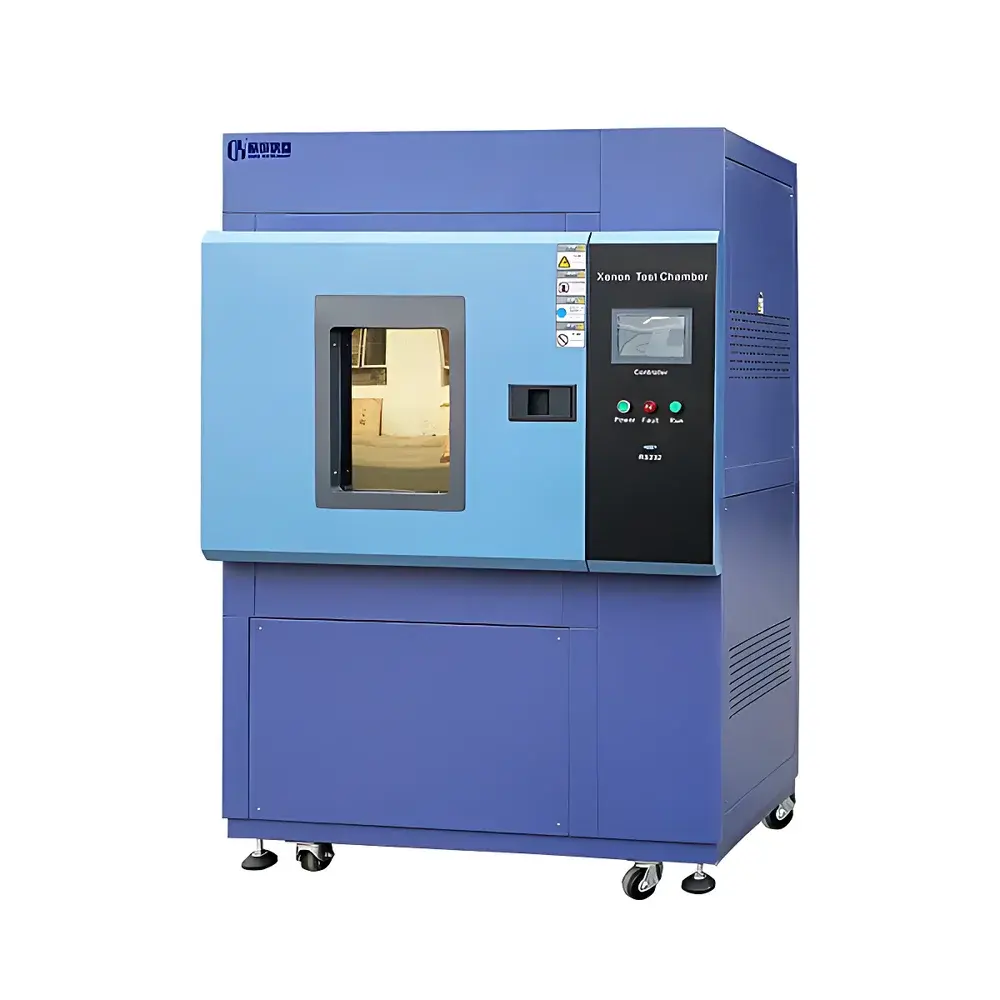
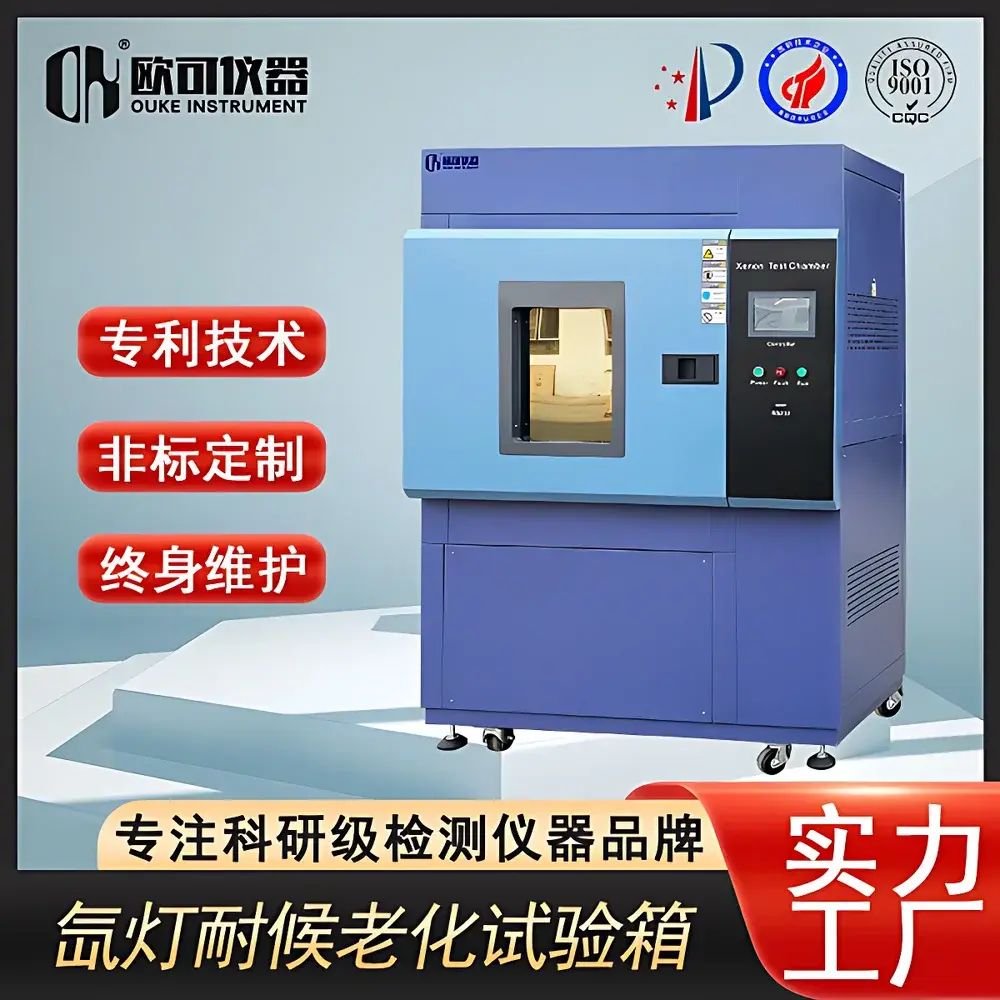
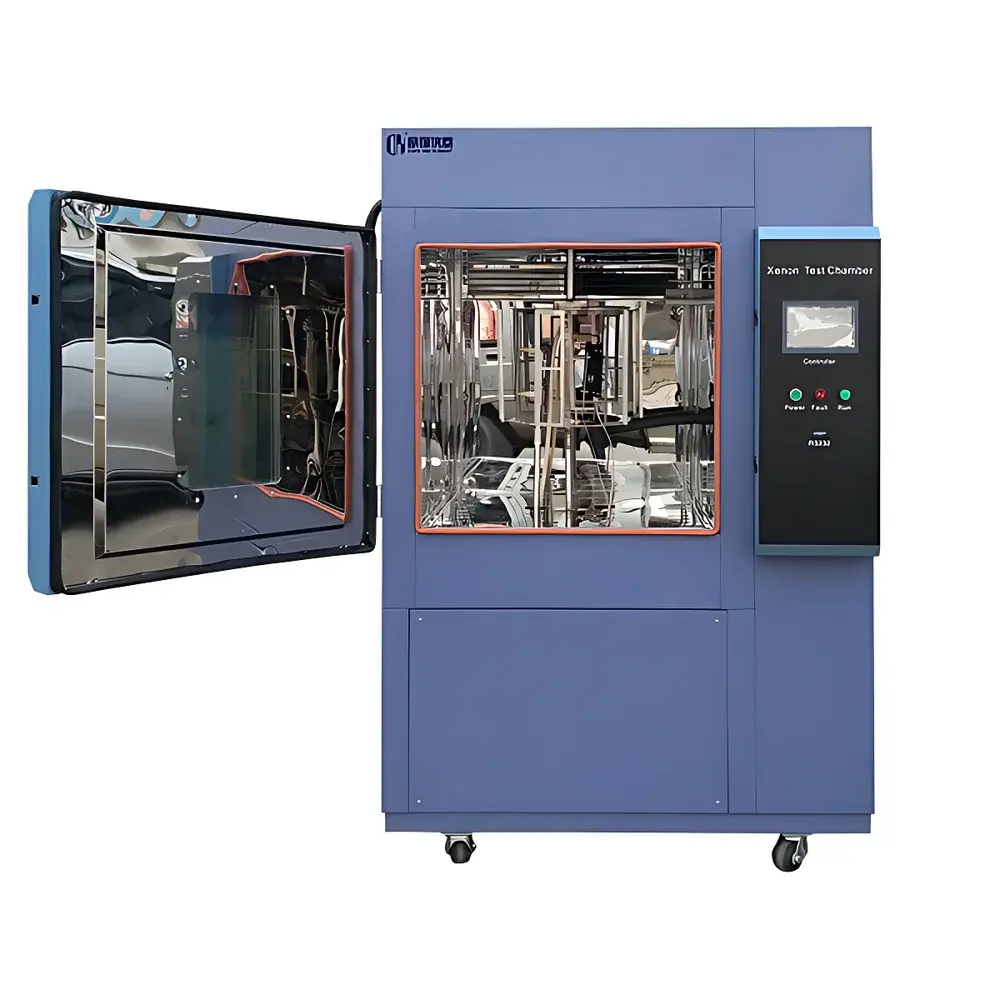
OK-XD-225.01 Water-Cooled Xenon Arc Weathering Test Chamber
| Brand | OK Instruments |
|---|---|
| Origin | Guangdong, China |
| Manufacturer Type | Direct Manufacturer |
| Model | OK-XD-225.01 |
| Xenon Lamp Power | 4 kW |
| Irradiance Range | ≤1200 W/m² |
| Light Cycle Timing | 1–999 hours/minutes/seconds (programmable) |
| Humidity Range (Light Cycle) | 20–75% RH |
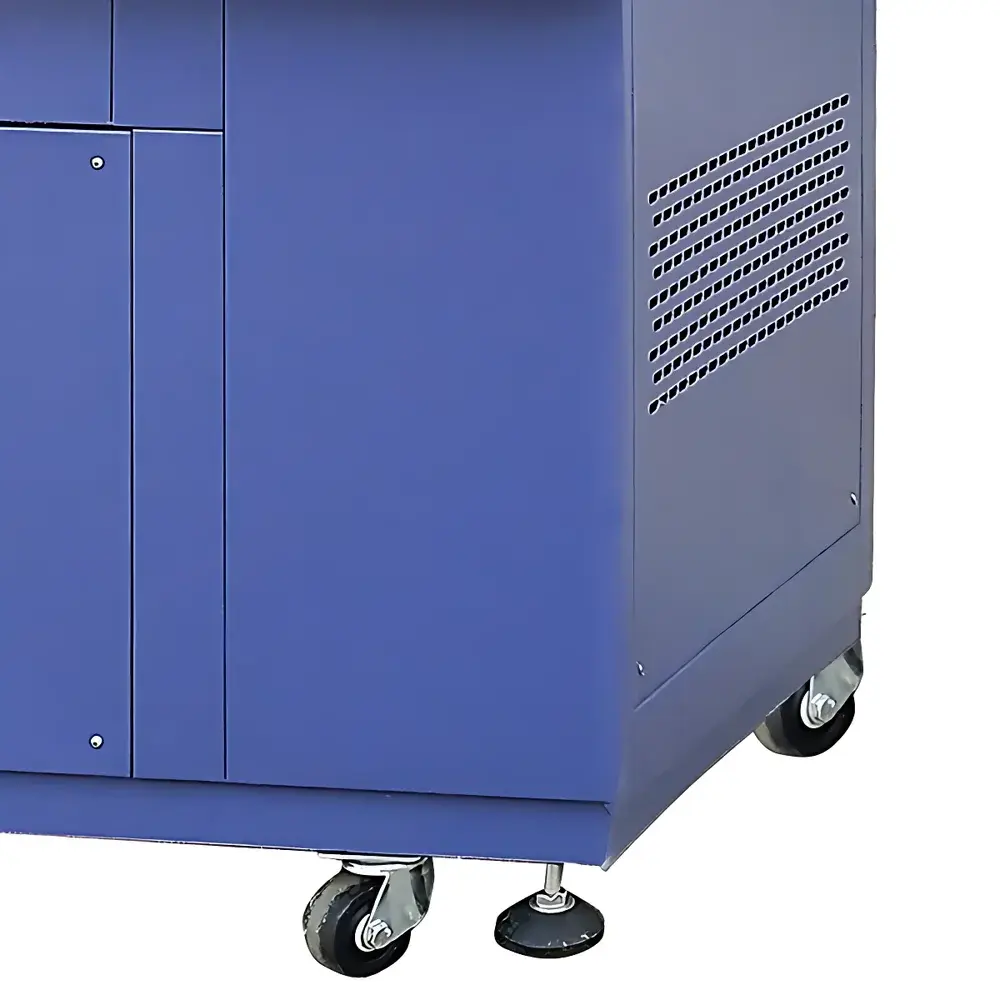
| Cooling Method | Closed-Loop Deionized Water Circulation |
| Compliance | ASTM G155, ISO 4892-2, SAE J2527, GB/T 16422.2 |
Overview
The OK-XD-225.01 Water-Cooled Xenon Arc Weathering Test Chamber is an engineered environmental simulation system designed to accelerate the degradation of polymeric, coated, and composite materials under controlled exposure to solar-spectrum radiation, temperature, humidity, and moisture cycling. It operates on the principle of xenon arc irradiation—where a high-intensity, continuous-spectrum xenon lamp, spectrally filtered to replicate terrestrial sunlight (290–800 nm), serves as the primary radiant energy source. Unlike UV fluorescent or metal halide sources, xenon arc lamps deliver a photometrically accurate match to natural daylight, enabling quantitative correlation between accelerated test results and real-world outdoor service life. The water-cooled architecture ensures thermal stability of both the lamp envelope and chamber interior, minimizing spectral drift and enabling precise irradiance control across extended test durations—critical for reproducible weathering data in R&D and quality assurance laboratories.
Key Features
- 4 kW water-cooled xenon lamp with integrated quartz envelope and forced deionized water circulation—ensuring consistent lamp surface temperature below 750°C and eliminating thermal quenching effects.
- Dual-circuit cooling system: independent lamp jacket cooling loop and chamber air conditioning loop, each equipped with PID-controlled chiller units, stainless-steel heat exchangers, and flow monitoring sensors.
- Programmable multi-segment test cycles supporting simultaneous control of irradiance (W/m²), black panel temperature (BPT), chamber air temperature, relative humidity, and spray duration—with resolution of ±0.1°C and ±1% RH.
- Standard optical configuration includes Daylight-Q filter (matching CIE Standard Illuminant D65) and optional Window Glass-Q filter for indoor or automotive glazing-filtered spectra.
- Rotating drum sample holder (Φ600 mm × 300 mm L) with 360° continuous rotation and adjustable sample tilt angle (0°–25°), ensuring uniform irradiance distribution per IEC 60068-2-5.
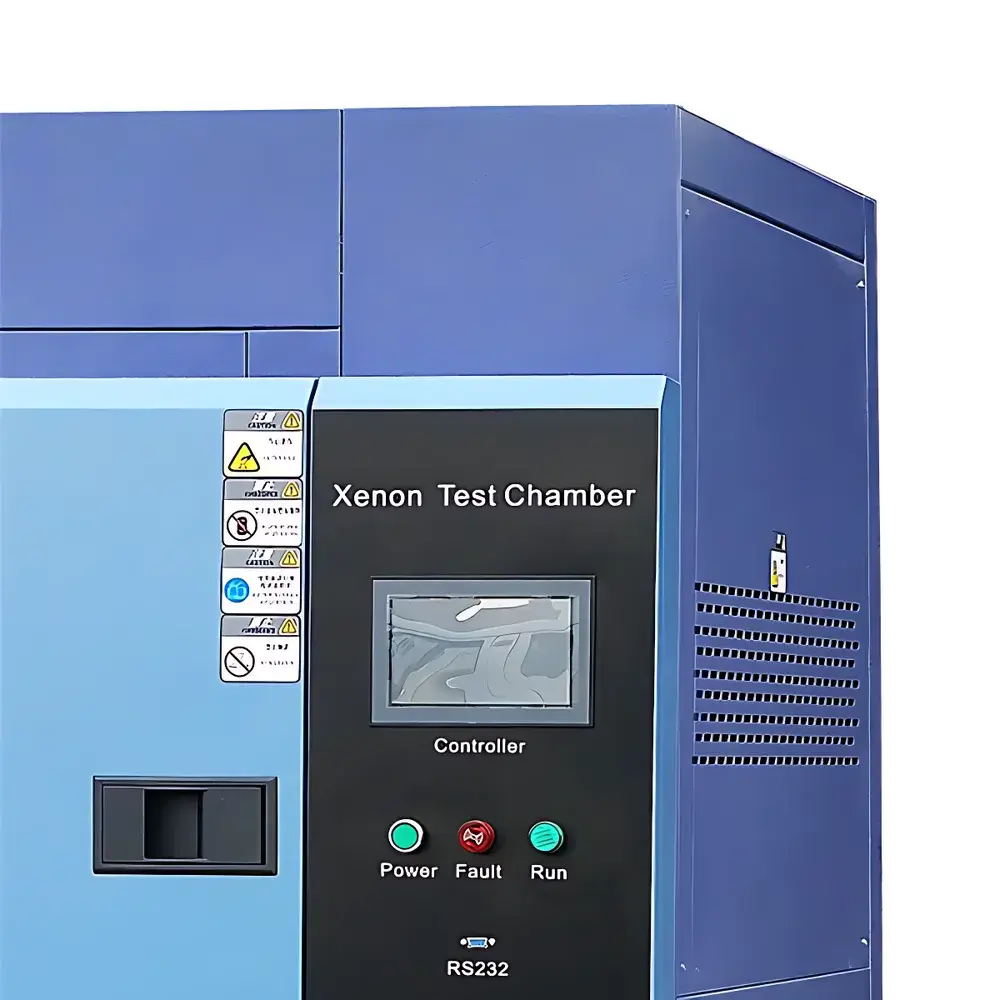
- PLC-based control system with 10.1-inch capacitive touchscreen HMI, password-protected user levels, audit trail logging, and USB export of real-time parameter history.
Sample Compatibility & Compliance
The OK-XD-225.01 accommodates flat-panel specimens up to 150 mm × 300 mm (standard drum loading) or cylindrical samples mounted on custom fixtures. Its chamber volume (225 L net) supports standardized specimen arrays per ASTM G155 Cycle 1–4, ISO 4892-2 Method A/B, and SAE J2527 Class A protocols. All operational parameters—including irradiance setpoints, spectral irradiance distribution (measured via calibrated spectroradiometer), BPT calibration traceability, and humidity sensor linearity—are validated against NIST-traceable reference standards. The system meets functional requirements for GLP-compliant testing environments, including electronic signature support, alarm event logging, and 21 CFR Part 11–ready data integrity features when paired with OK’s optional LabManager Pro software suite.
Software & Data Management
The embedded control firmware supports full-cycle programming with up to 99 steps per test sequence, including light-only, light+spray, dark+condensation, and temperature ramp phases. Raw sensor data (irradiance, BPT, chamber RH, coolant flow rate, lamp voltage/current) are sampled at 1 Hz and stored locally with timestamped metadata. Optional Ethernet connectivity enables remote monitoring via Modbus TCP or OPC UA interfaces. LabManager Pro (v3.2+) provides post-test analysis tools: spectral mismatch calculation per ISO 16474-2 Annex B, cumulative radiant exposure reporting (MJ/m² @ 340 nm), and comparative degradation trend overlays across multiple test runs. All calibration certificates, maintenance logs, and test reports comply with ISO/IEC 17025 documentation requirements.
Applications
This chamber is routinely deployed in tier-1 automotive supplier labs for validating exterior trim colorfastness per SAE J2527, in PV module qualification labs assessing backsheet delamination under IEC 61215 damp heat + xenon sequencing, and in architectural coating development for ASTM D4459 gloss retention tracking. It supports failure mode analysis of elastomeric seals (compression set vs. UV dose), textile UV resistance screening per AATCC TM16-2021, and polymer matrix composites used in aerospace ground support equipment. Its ability to synchronize UV dose, thermal cycling, and cyclic wetting makes it indispensable for correlating material property decay (e.g., tensile strength loss, yellowness index ΔYI, FTIR carbonyl peak growth) with field exposure histories.
FAQ
What is the typical service life of the 4 kW xenon lamp under continuous operation?
Lamp lifetime averages 1,500–2,000 hours at rated power; output degradation is monitored via built-in irradiance feedback and triggers automatic recalibration alerts at 10% spectral deviation.
Does the system include radiometric calibration capability?
Yes—the chamber ships with a NIST-traceable 340 nm broadband irradiance sensor and annual recalibration service package (OK-CAL-XENON-340).
Can the spray system use tap water?
No—only deionized water (resistivity ≥1 MΩ·cm) is permitted to prevent nozzle clogging and mineral deposition on filters and specimens.
Is compliance with ISO 4892-2 Annex D (spectral irradiance verification) supported?
Yes—integrated mounting points accommodate handheld spectroradiometers; OK provides pre-validated measurement procedures and uncertainty budgets per ISO/IEC 17025.
What maintenance intervals are recommended for long-term reliability?
Filter replacement every 1,000 hours, coolant fluid exchange every 6 months, and quarterly verification of humidity sensor hysteresis and BPT thermocouple drift.



