
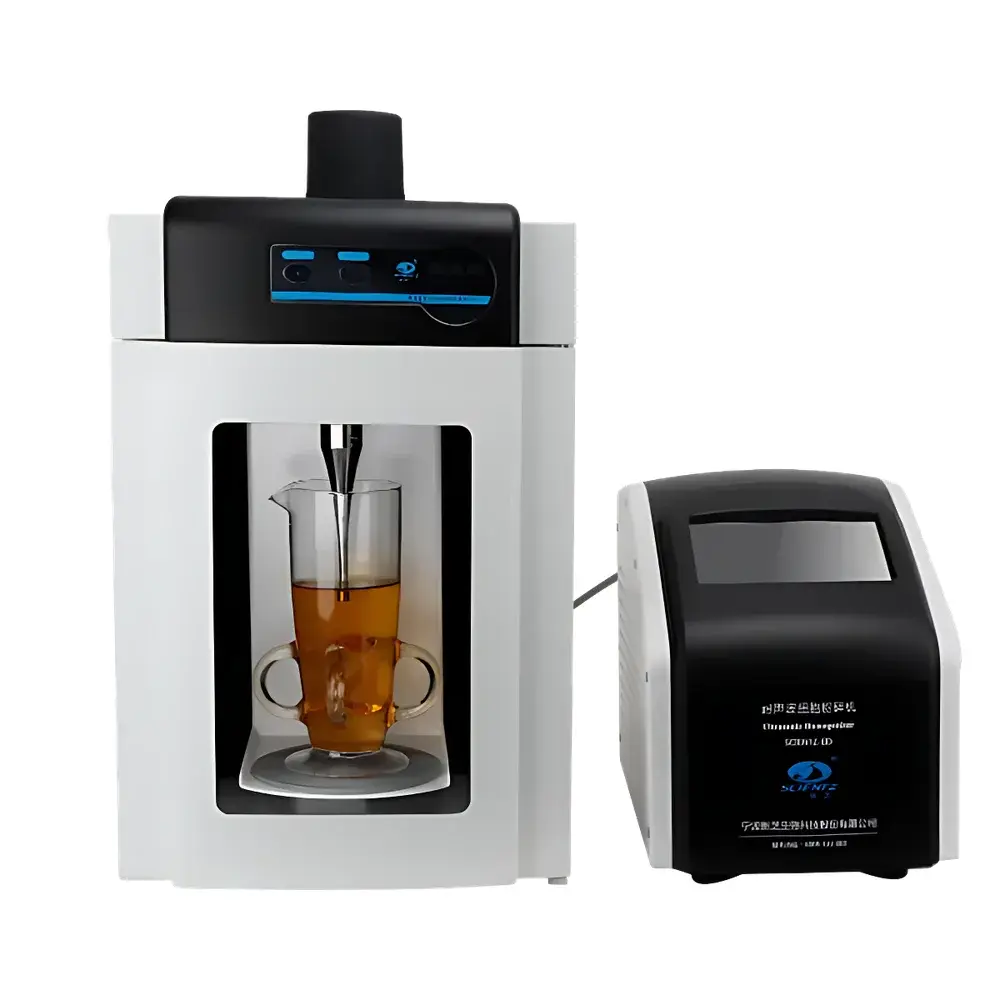
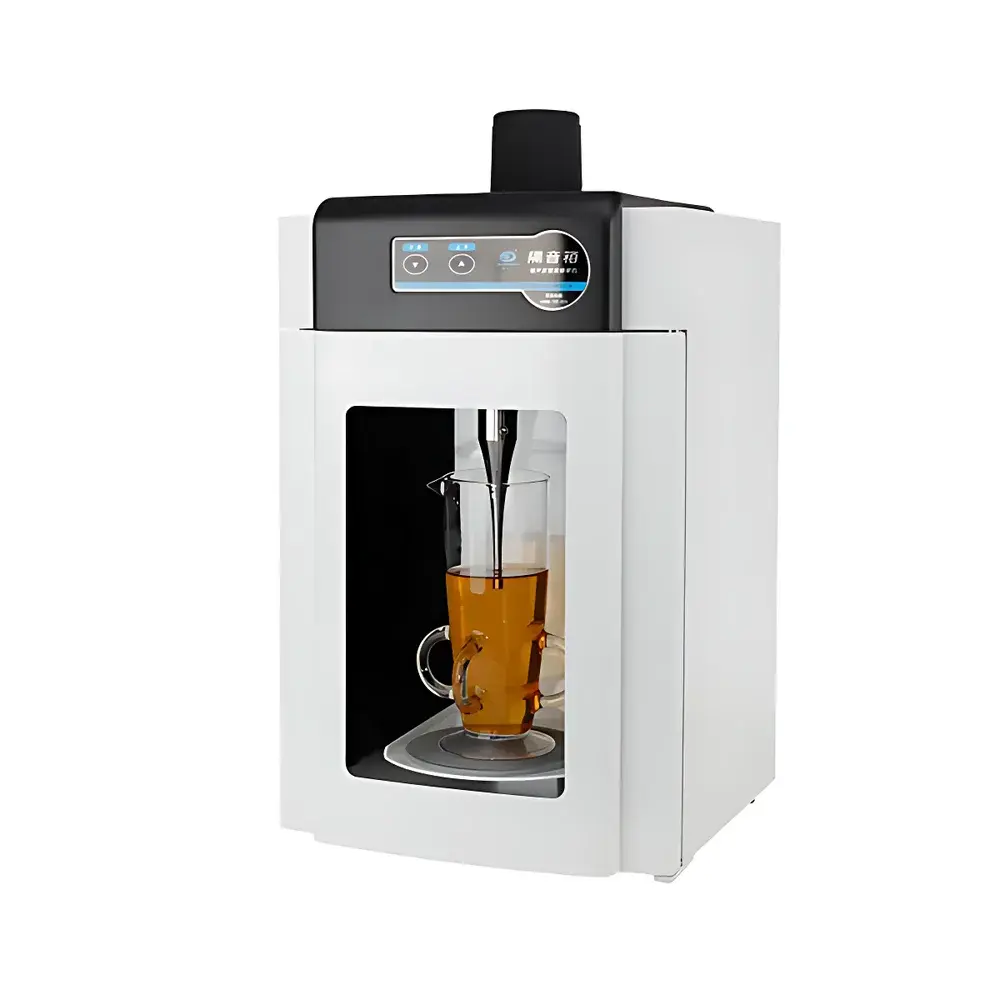
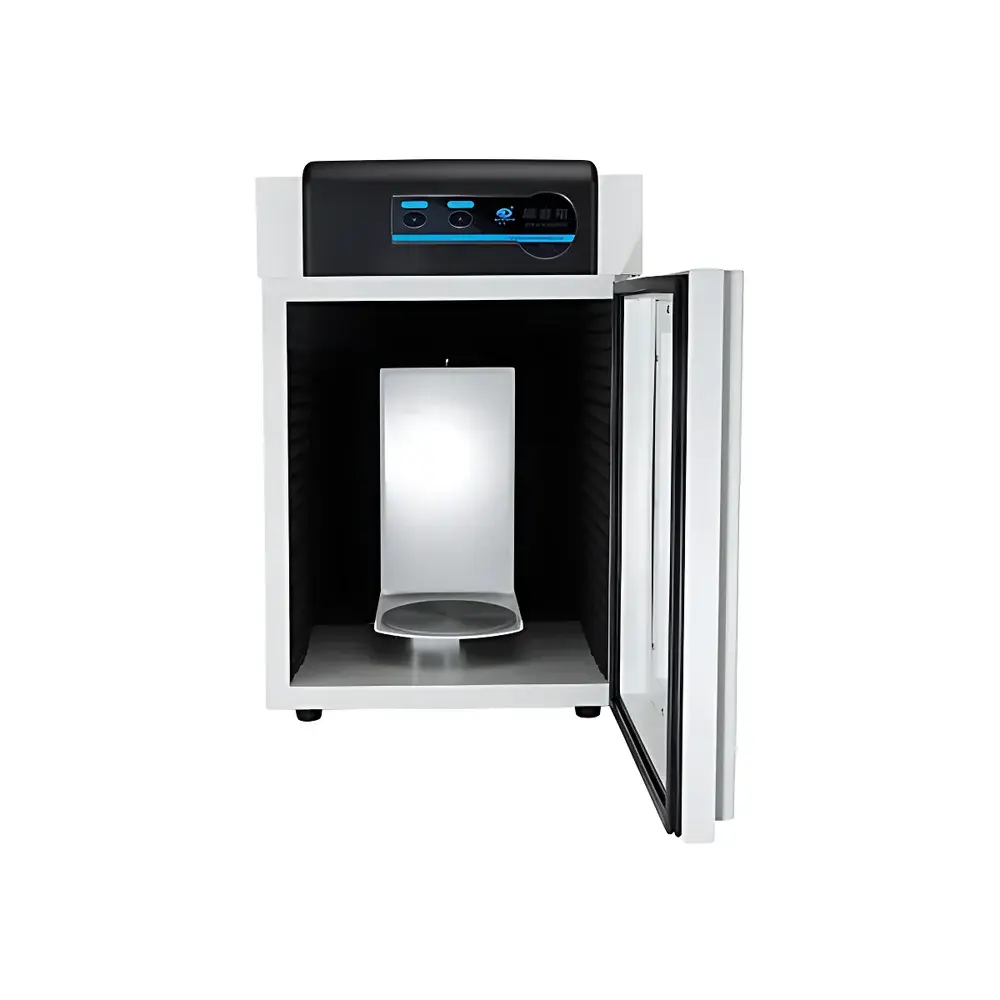
Scientz JY92-IIN High-Performance Ultrasonic Cell Disruptor
| Brand | Scientz |
|---|---|
| Origin | Zhejiang, China |
| Manufacturer Type | Direct Manufacturer |
| Instrument Type | Ultrasonic Cell Disruptor |
| Model | JY92-IIN |
| Ultrasonic Power Output | 650 W (adjustable from 1% to 99%) |
| Operating Frequency | 20–25 kHz |
| Temperature Control Range | 0–99 °C |
| Sample Volume Capacity | 100 μL–500 mL |
| Sample Throughput | Single-sample processing per cycle |
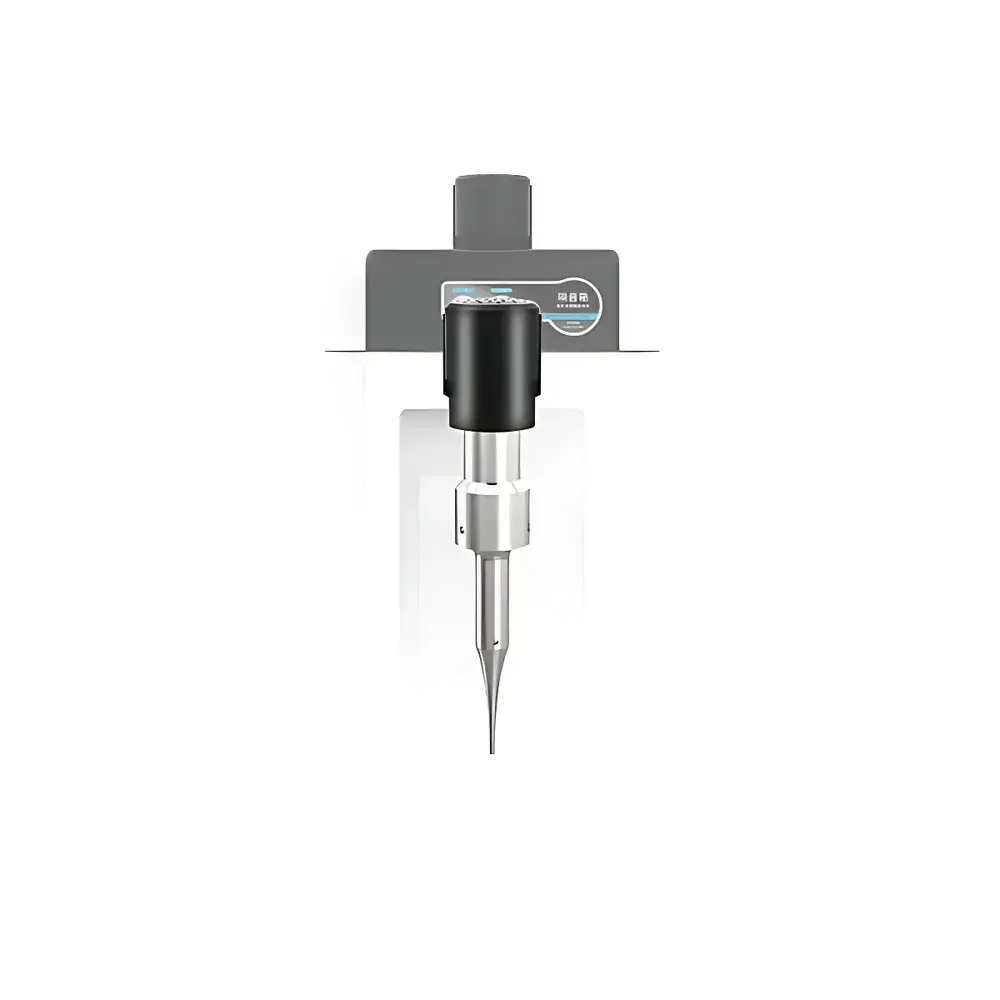
| Transducer Material | Titanium Alloy Horn Assembly |
Overview
The Scientz JY92-IIN is a benchtop ultrasonic cell disruptor engineered for precise, reproducible lysis of biological and material samples through controlled acoustic cavitation. It operates on the physical principle of high-intensity ultrasound propagation in liquid media—where rapid pressure oscillations generate transient microbubbles that collapse violently (inertial cavitation), producing localized shockwaves, microstreaming, and shear forces exceeding 106 Pa. This mechanism enables efficient disruption of cellular membranes, organelles, and extracellular matrices without significant thermal denaturation when operated under temperature-regulated conditions. Designed for laboratory-scale R&D and QC workflows, the JY92-IIN supports both contact-mode sonication (via titanium alloy probe) and indirect bath-style applications (with optional cup-horn or microtip accessories), making it suitable for sensitive biomolecules including nucleic acids, proteins, and exosomes.
Key Features
- Titanium alloy ultrasonic horn assembly: Delivers superior energy transfer efficiency (>85% electromechanical conversion), extended operational lifespan, and resistance to corrosion during prolonged exposure to aqueous and mildly acidic/alkaline buffers.
- Precise digital control interface: Enables independent adjustment of ultrasonic amplitude (1–99% of 650 W nominal output), pulse duration (on/off intervals from 0.1–99.9 s), and total treatment time (1 s–99 min 59 s), ensuring protocol reproducibility across users and experiments.
- Integrated temperature monitoring and regulation: Real-time PT100 sensor feedback coupled with programmable cooling setpoints (0–99 °C) minimizes sample heating during extended sonication—critical for preserving epitope integrity in ChIP-seq or maintaining RNA secondary structure.
- Programmable memory storage: Supports creation, naming, and recall of up to 20 user-defined protocols—including amplitude, pulse mode, duration, and temperature limits—facilitating compliance with SOP-driven environments.
- Safety interlock system: Automatic shutdown triggered by overtemperature (≥100 °C), power overload (>110% rated load), or elapsed timer expiration; visual and audible alerts ensure operator awareness and regulatory adherence.
Sample Compatibility & Compliance
The JY92-IIN accommodates diverse sample formats—from microliter-scale lysates (e.g., single-cell suspensions, bacterial pellets) to 500 mL reaction volumes (e.g., large-volume protein purification or nanoparticle dispersion). Compatible with standard glass, polypropylene, and stainless-steel vessels (diameter ≤50 mm for direct probe insertion). Meets essential safety standards including IEC 61010-1 (Electrical Safety for Laboratory Equipment) and conforms to electromagnetic compatibility requirements per EN 61326-1. While not certified for GMP manufacturing environments, its programmable audit trail functionality (via optional RS232/USB data logging) supports GLP-compliant documentation for academic, pharmaceutical preclinical, and contract research organization (CRO) use cases.
Software & Data Management
The instrument features an embedded firmware architecture supporting timestamped parameter logging (amplitude, duty cycle, temperature, runtime) via USB or serial interface. Optional PC-based software (Scientz-Ultrasonics Suite v3.x) provides real-time graphing, export to CSV/Excel, and batch protocol deployment. All logged data includes operator ID fields and checksum validation—enabling alignment with FDA 21 CFR Part 11 requirements when paired with institutional electronic signature policies. No cloud connectivity or remote access capabilities are included, preserving data sovereignty in regulated laboratories.
Applications
- Cellular lysis: Mammalian cells, yeast, Gram-positive/negative bacteria, spores, and viral capsids—optimized for downstream applications such as Western blotting, ELISA, and mass spectrometry.
- Nucleic acid shearing: Fragmentation of genomic DNA for next-generation sequencing library preparation (e.g., ATAC-seq, ChIP-seq), avoiding enzymatic bias.
- Nanomaterial processing: Deagglomeration and surface functionalization of carbon nanotubes, graphene oxide, metal-organic frameworks (MOFs), and rare-earth nanoparticles.
- Extraction & formulation: Accelerated solvent extraction of phytochemicals from botanical matrices; homogenization of lipid-based drug delivery systems (e.g., liposomes, nanoemulsions).
- Geological & environmental analysis: Disaggregation of soil aggregates, sediment cores, and mineral composites for elemental profiling (ICP-MS) or metagenomic sequencing.
FAQ
What is the maximum recommended continuous operating time per cycle?
The JY92-IIN supports uninterrupted operation up to 99 minutes and 59 seconds per program; however, for heat-sensitive samples, pulsed mode (e.g., 5 s on / 5 s off) is strongly advised to maintain temperature stability.
Can the instrument be used with corrosive solvents like chloroform or strong acids?
Titanium alloy horns resist mild corrosion, but direct exposure to halogenated organics or concentrated mineral acids requires custom PTFE-coated probes—standard configuration is validated only for aqueous buffers, ethanol, and isopropanol.
Is validation support available for IQ/OQ protocols?
Scientz provides basic calibration certificates (power output verification at 50% and 90% amplitude) and mechanical performance test procedures; full qualification documentation must be developed in-house per ISO/IEC 17025 guidelines.
Does the JY92-IIN comply with ISO 13485 or FDA 21 CFR Part 11 out-of-the-box?
No—compliance requires integration with validated third-party LIMS or ELN systems, implementation of role-based access controls, and periodic re-verification of firmware integrity; the device itself meets foundational electrical and EMC safety standards.
What maintenance is required for long-term reliability?
Monthly inspection of horn tip erosion (using calibrated micrometer), quarterly torque verification of transducer mounting bolts, and annual recalibration of temperature sensor accuracy against NIST-traceable reference standards.
Related Products




