
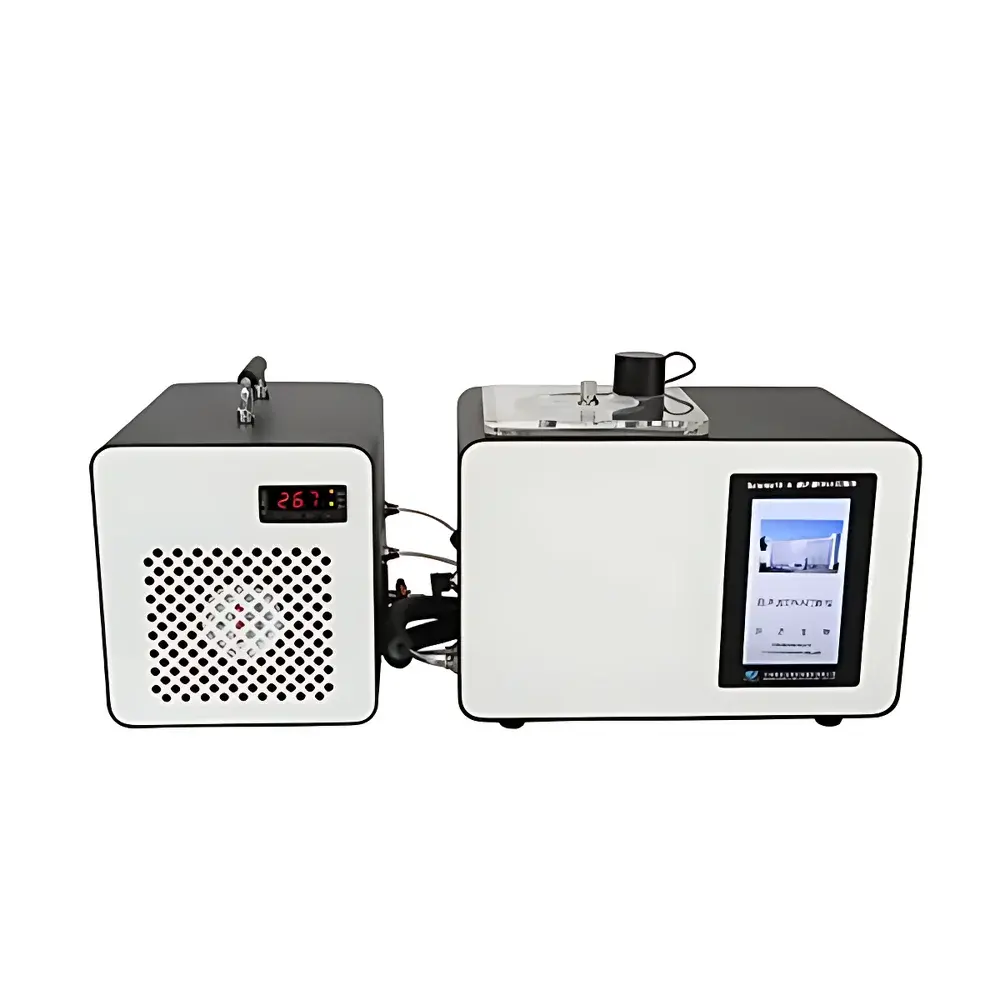
Scientz SCIENTZ18-A Ultrasonic DNA Shearer
| Brand | Scientz |
|---|---|
| Origin | Zhejiang, China |
| Manufacturer Type | Original Equipment Manufacturer (OEM) |
| Country of Origin | China |
| Model | SCIENTZ18-A |
| Pricing | Upon Request |
Overview
The Scientz SCIENTZ18-A Ultrasonic DNA Shearer is a benchtop, non-contact, isothermal sonication system engineered for precise and reproducible fragmentation of genomic DNA, chromatin, and other biomolecular samples. It operates on the principle of focused high-frequency ultrasonic energy (typically 20–400 kHz), converted via piezoelectric transducers into acoustic cavitation in the water bath medium. This process generates transient microbubbles (“cavities”) that rapidly expand and collapse—producing localized shear forces exceeding 10⁶ Pa within microseconds. These hydrodynamic stresses mechanically shear nucleic acid strands without introducing thermal denaturation or enzymatic bias. Designed for integration into standardized NGS library preparation and ChIP-seq workflows, the SCIENTZ18-A delivers consistent fragment size distributions across multiple parallel samples—enabling robust, scalable, and GLP-compliant sample processing in molecular biology, epigenetics, and functional genomics laboratories.
Key Features
- Parallel Processing Capacity: Simultaneous treatment of up to 18 samples in standard 1.5 mL or 2.0 mL microcentrifuge tubes, with minimal manual intervention.
- Low-Volume Compatibility: Supports sample volumes as small as 5 µL—critical for precious clinical isolates, single-cell lysates, or limited-input ChIP eluates.
- Non-Contact & Closed-Tube Operation: Eliminates probe contamination, aerosol generation, and cross-sample carryover; fully compatible with RNase/DNase-free workflows.
- Isothermal Control: Integrated temperature monitoring and optional external recirculating chiller (e.g., 10–25 °C setpoint) maintain sample integrity during extended sonication cycles.
- Precise Parameter Tuning: Adjustable amplitude (0–100%), pulse duration (1–99 s ON/OFF), total sonication time (1–999 s), and cycle count—enabling optimization for diverse sample matrices (e.g., crosslinked chromatin vs. purified gDNA).
- Fragment Size Range: Achieves controllable DNA fragment distributions between 100 bp and 1,000 bp—validated by Bioanalyzer or Fragment Analyzer electropherograms under standardized protocols.
Sample Compatibility & Compliance
The SCIENTZ18-A accommodates a broad range of biological inputs—including formaldehyde-crosslinked chromatin, native nucleosomes, purified genomic DNA, bacterial lysates, and viscous protein-DNA complexes. Its closed-tube architecture meets ISO 15189 and CLIA requirements for pre-analytical sample handling integrity. When operated with validated SOPs, the instrument supports compliance with FDA 21 CFR Part 11 (when paired with compliant LIMS or ELN systems), USP <1058> Analytical Instrument Qualification (AIQ), and GLP/GMP documentation standards. All wetted components are chemically inert (stainless steel bath, PTFE-coated transducer housing) and autoclavable where applicable.
Software & Data Management
The SCIENTZ18-A features an embedded microprocessor-based controller with LCD interface for real-time parameter display and execution logging. Each run records timestamp, amplitude, pulse profile, total duration, and bath temperature—exportable via USB to CSV for audit trail reconstruction. While the base unit does not include PC software, it is compatible with third-party laboratory informatics platforms (e.g., LabVantage, Benchling) through standardized data export formats. For regulated environments, users may implement electronic signatures and change control via external validation packages aligned with Annex 11 and ALCOA+ principles.
Applications
- Next-Generation Sequencing (NGS): Fragmentation of gDNA prior to adapter ligation in Illumina, Ion Torrent, and Oxford Nanopore library prep pipelines.
- Chromatin Immunoprecipitation (ChIP-seq & CUT&Tag): Controlled shearing of crosslinked chromatin to ~200–500 bp fragments while preserving epitope integrity.
- Nucleosome Positioning Studies: Generation of mononucleosomal DNA (~147 bp) from MNase-digested or sonicated chromatin.
- Ultra-Low-Input Epigenomics: Processing of sub-nanogram DNA from microdissected tissues or sorted cell populations.
- Homogenization & Emulsification: Preparation of uniform microsuspensions for drug delivery research or nanoparticle formulation studies.
FAQ
What is the recommended maintenance schedule for the SCIENTZ18-A?
Perform weekly visual inspection of the water bath for debris; replace deionized water every 3–5 days. Calibrate amplitude output annually using a calibrated hydrophone or reference standard per ISO 17025-accredited procedures.
Can the SCIENTZ18-A be validated for GMP use?
Yes—its deterministic, parameter-driven operation supports IQ/OQ/PQ protocol development. Full qualification documentation templates are available upon request from Scientz Technical Support.
Is the instrument compatible with 0.2 mL PCR tube adapters?
No—the standard configuration supports only 1.5 mL and 2.0 mL microcentrifuge tubes. Custom adapters require mechanical validation to ensure acoustic coupling fidelity.
How does cavitation efficiency vary with sample volume or tube material?
Efficiency decreases significantly below 10 µL or with non-polypropylene tubes (e.g., glass, polycarbonate). Always use thin-walled, acoustically transparent polypropylene tubes certified for sonication.
Does the SCIENTZ18-A meet CE or UL safety standards?
The device complies with IEC 61010-1:2010 for laboratory equipment safety and carries CE marking for the European Economic Area. UL certification is available upon special order with factory-installed modifications.



