
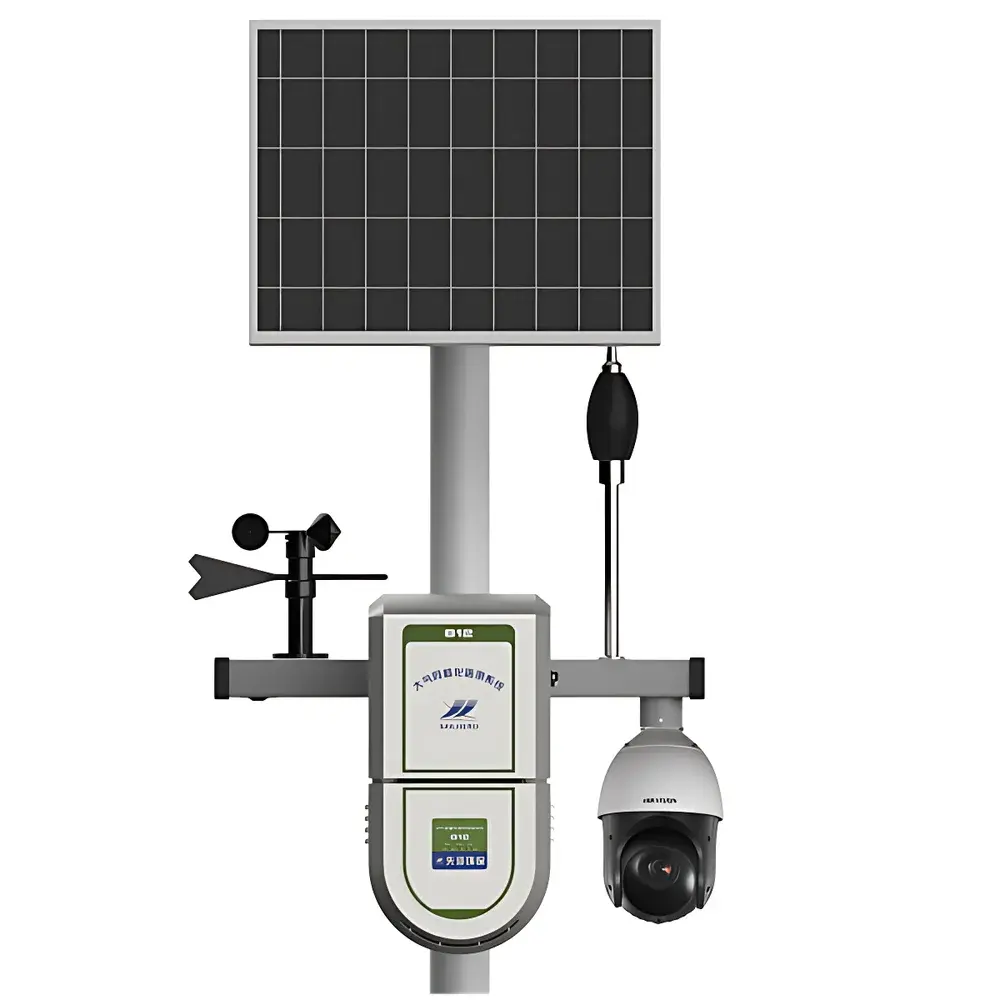
SAIL HERO XHAQSN-812 Air Quality Sensing Network Monitor
| Brand | SAIL HERO |
|---|---|
| Origin | Hebei, China |
| Manufacturer Type | Original Equipment Manufacturer (OEM) |
| Country of Origin | China |
| Model | XHAQSN-812 |
| Pricing | Available upon Request |
| Measured Pollutants | PM₂.₅, PM₁₀, SO₂, NO₂, NO, CO, O₃ |
| Optional Parameters | TSP, TVOC, Noise, Meteorological Five Parameters (Wind Speed, Wind Direction, Temperature, Relative Humidity, Atmospheric Pressure), Onboard Imaging |
Overview
The SAIL HERO XHAQSN-812 Air Quality Sensing Network Monitor is a compact, multi-parameter environmental monitoring platform engineered for high-density spatial deployment in ambient air quality surveillance networks. It integrates three core sensing modalities: electrochemical detection for reactive gases (CO, NO, NO₂, SO₂, O₃), optical light-scattering (nephelometric) measurement for particulate matter (PM₂.₅, PM₁₀, and optionally TSP), and photoionization detection (PID) for volatile organic compounds (TVOC). Complementing pollutant quantification, the unit concurrently acquires meteorological data—including wind speed and direction, ambient temperature, relative humidity, and barometric pressure—via calibrated onboard sensors. An integrated digital camera enables time-stamped visual documentation of site conditions, supporting contextual interpretation of sensor readings and verification of operational integrity. Designed for continuous unattended operation, the XHAQSN-812 serves as a foundational node in regulatory-grade and research-oriented air quality monitoring infrastructures, particularly where fine-grained spatial resolution is required—such as urban micro-zoning, industrial fence-line monitoring, traffic corridor assessment, and rapid-response emergency scenarios.
Key Features
- Multi-technology sensor fusion: Electrochemical cells for trace gas detection with sub-ppb detection limits; laser-based nephelometry for real-time PM mass concentration estimation; PID sensor with broad-spectrum VOC response and fast response time (<30 s).
- Flexible power architecture: Dual-input design supports AC mains connection and/or photovoltaic (solar) panel integration with intelligent charge management and deep-cycle battery backup for >72 h autonomy during grid outage.
- Compact form factor (≤450 × 350 × 220 mm) and low unit cost enable scalable, high-resolution sensor network deployment—ideal for urban air quality grids, industrial perimeter monitoring, and mobile or temporary monitoring campaigns.
- Secure wireless telemetry: Embedded LTE-M/NB-IoT module with TLS 1.2 encryption and configurable APN authentication ensures authenticated, tamper-resistant data transmission to centralized cloud or on-premise servers.
- Certified compliance: Validated and certified by the China Environmental Protection Industry Association (CEPIA) under the Environmental Protection Product Certification Program, confirming conformance with national technical requirements for ambient air monitoring equipment (HJ 653–2013, HJ 93–2013).
Sample Compatibility & Compliance
The XHAQSN-812 is designed for continuous, in-situ sampling of ambient outdoor air without sample conditioning or pre-concentration. Its sensor suite meets performance criteria outlined in Chinese national standards for automatic ambient air monitoring systems, including HJ 653–2013 (specifications for PM monitoring instruments) and HJ 93–2013 (requirements for gaseous pollutant analyzers). While not intended for reference-grade certification per ISO 20983 or EN 14625, the system is suitable for indicative monitoring, trend analysis, source attribution modeling, and compliance screening applications where regulatory frameworks accept equivalency-based instrumentation. Data outputs are structured to support interoperability with national air quality data platforms and third-party GIS-integrated visualization tools.
Software & Data Management
Data acquisition, preprocessing, and transmission are managed by an embedded Linux-based firmware stack with local edge processing capabilities—including outlier filtering, zero/span drift correction (for electrochemical sensors), and humidity-compensated PM calibration. Raw and processed time-series data (1-minute or 5-minute intervals, user-configurable) are transmitted via MQTT or HTTP(S) protocols to secure endpoints. The system supports audit-trail logging of configuration changes, sensor diagnostics, and communication events—facilitating GLP-aligned operational documentation. Optional cloud-hosted dashboard provides real-time map overlays, historical trend charts, alerting rules (e.g., threshold exceedance, sensor fault), and exportable CSV/NetCDF datasets compliant with FAIR data principles.
Applications
- Urban air quality mapping at neighborhood scale using dense sensor grids (≥1 node/km²)
- Fence-line and community-level monitoring around industrial facilities for early detection of fugitive emissions
- Roadside and tunnel air quality assessment targeting traffic-related pollutants (NOx, PM, CO)
- Short-term deployment for environmental impact assessments (EIA), construction site monitoring, and post-incident air quality evaluation
- Educational and citizen science initiatives requiring robust, low-maintenance instrumentation with accessible data interfaces
FAQ
What is the typical calibration interval for the XHAQSN-812?
Electrochemical sensors require quarterly field calibration using certified span gases; optical PM sensors are validated semi-annually against reference beta-attenuation or gravimetric methods per local QA/QC protocols.
Can the device operate reliably in extreme temperatures or high-humidity environments?
The unit is rated for operation between −20 °C and +50 °C and up to 95% RH (non-condensing); optional heated enclosure and desiccant modules are available for extended cold/humid deployment.
Is the onboard camera capable of motion-triggered imaging?
Yes—configurable motion detection logic allows image capture upon infrared or video analytics triggers, reducing storage overhead while preserving event-relevant visual records.
Does the system support remote firmware updates and configuration changes?
Yes—secure OTA (over-the-air) updates are supported via signed firmware packages and role-based access control (RBAC) for configuration management.
How is data traceability ensured for regulatory reporting purposes?
All sensor readings include embedded timestamps (NTP-synchronized), sensor serial IDs, and checksummed metadata; audit logs record operator actions and system events, aligning with basic requirements for data integrity in non-reference monitoring contexts.
Related Products







