
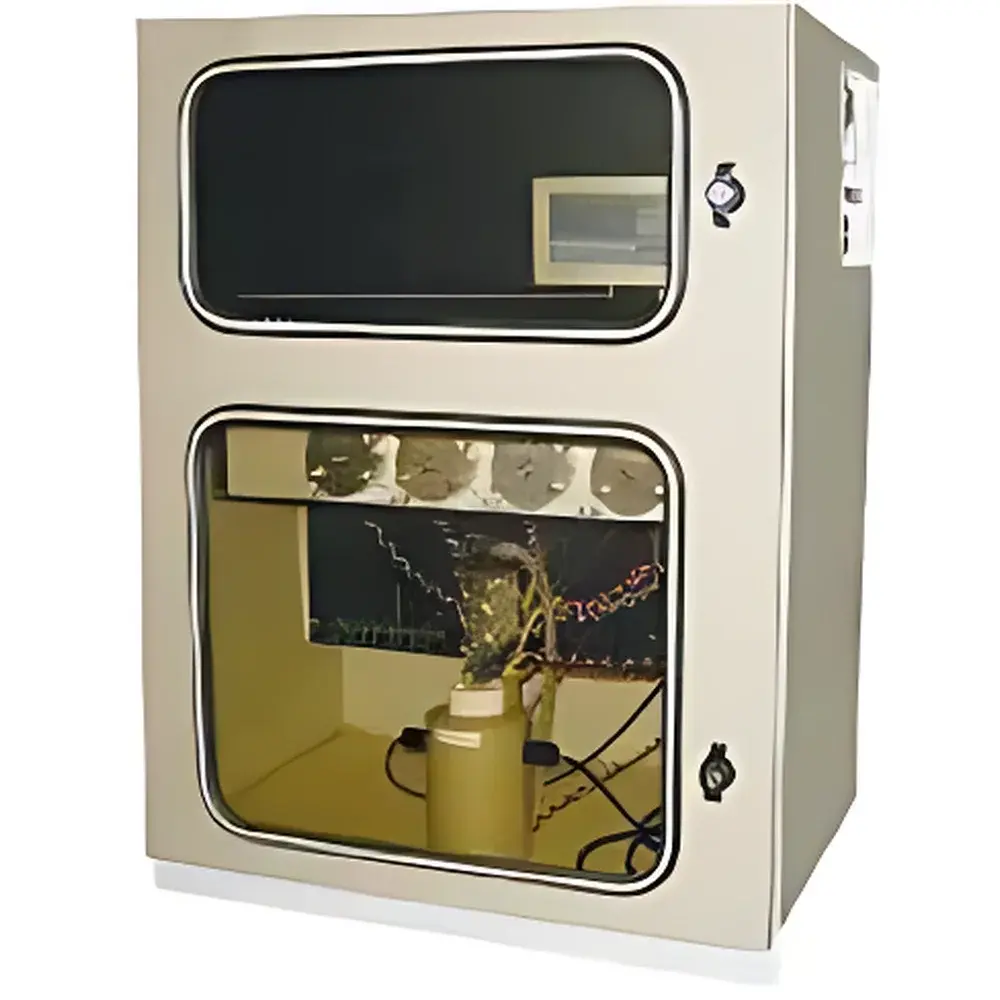
SERES 2000 CODMn Online Permanganate Index Analyzer
| Origin | Hebei, China |
|---|---|
| Manufacturer Type | Authorized Distributor |
| Origin Category | Domestic (China) |
| Model | SERES 2000 CODMn |
| Measurement Principle | Potassium Permanganate Oxidation with ORP/Photometric Endpoint Detection |
| Range | 0–10 mg/L and 0–20 mg/L (expandable to 100 mg/L) |
| Repeatability | ≤3% RSD |
| Accuracy | ±3% of reading |
| LOD | 0.1 mg/L |
| Resolution | ≤0.01 mg/L |
| Analysis Time per Sample | 25 minutes |
Overview
The SERES 2000 CODMn Online Permanganate Index Analyzer is a fully automated, laboratory-grade instrument engineered for continuous, unattended monitoring of the permanganate index (CODMn) in natural waters—including surface water, drinking water sources, and treated effluents. It implements the standardized acidic potassium permanganate oxidation method, as defined by HJ/T 100–2003 (China) and ISO 8467:1993, wherein organic and inorganic reductants in the sample are oxidized under controlled thermal and acidic conditions (96–98 °C, sulfuric acid medium). The reaction endpoint is determined either photometrically at 524 nm—tracking the characteristic absorbance decay of MnO4−—or via redox potential (ORP) monitoring, ensuring robust endpoint recognition across variable matrix compositions. This dual-mode detection architecture enhances reliability in turbid or colored samples where single-sensor approaches may exhibit drift or interference.
Key Features
- Integrated high-precision temperature control system with PID-regulated heating block and automatic overtemperature cut-off safeguard, maintaining thermal stability within ±0.5 °C during digestion.
- High-reliability peristaltic sampling and reagent delivery system using imported fluoropolymer (modified PTFE) tubing, rated for >6,000 hours of continuous operation and resistant to acid corrosion and mechanical fatigue.
- Automated post-analysis purge and line-flush sequence: upon power recovery or fault reset, residual reagents and reaction byproducts are fully evacuated from fluidic pathways before resuming analysis—eliminating carryover and baseline drift.
- Intelligent range-switching algorithm that dynamically selects optimal measurement span (0–10 mg/L or 0–20 mg/L) based on real-time signal amplitude, extending linear dynamic range without manual intervention.
- Onboard self-cleaning cycle using high-purity deionized water and timed air aspiration, activated between analyses to minimize biofilm formation and particulate deposition in flow cells and valves.
- Comprehensive alarm hierarchy with configurable thresholds: CODMn concentration exceedance, reagent depletion, pump occlusion, temperature deviation, optical path obstruction, and power interruption—with non-volatile memory retention for all operational logs and calibration records.
Sample Compatibility & Compliance
The SERES 2000 CODMn is validated for use with low-to-moderately turbid aqueous matrices meeting typical raw and finished drinking water specifications (e.g., NTU < 20, suspended solids < 50 mg/L). It complies with national regulatory requirements for online water quality instrumentation in China (HJ/T 100–2003), and its analytical methodology aligns with ISO 8467:1993 for permanganate index determination. While not certified to EPA Method 410.4 or ASTM D1253, its performance envelope satisfies routine surveillance applications under GLP-aligned operational protocols. All firmware and data handling routines support audit-trail generation, including timestamped operator actions, calibration events, and error logs—facilitating internal QA/QC reviews and third-party verification.
Software & Data Management
The embedded Linux-based controller provides local touchscreen operation and supports remote access via secure HTTP/HTTPS or Modbus TCP. Instrument configuration, calibration scheduling, alarm threshold adjustment, and diagnostic reporting are managed through a role-based web interface compliant with W3C standards. Raw sensor outputs (absorbance, ORP mV, temperature °C, pump step count) are logged at 1-second intervals and stored internally for ≥30 days. Data export is supported in CSV and XML formats, with optional integration into SCADA systems or LIMS platforms via configurable RESTful API endpoints. All critical parameters—including reagent batch IDs, calibration curve coefficients, and system uptime—are digitally signed and archived to prevent tampering, satisfying basic traceability requirements under ISO/IEC 17025 Clause 7.7.
Applications
- Real-time surveillance of source water quality at intake points of municipal drinking water treatment plants.
- Process monitoring of pre-oxidation efficiency in advanced oxidation units prior to coagulation.
- Long-term trend analysis of organic load variation in reservoirs and rivers subject to seasonal runoff or agricultural discharge.
- Compliance reporting for Class II–III surface water categories under China’s “Surface Water Environmental Quality Standards” (GB 3838–2002).
- Supporting early-warning systems for accidental organic contamination events (e.g., phenol, aldehydes, low-MW carboxylic acids) where rapid CODMn elevation precedes conventional BOD or TOC detection.
FAQ
What is the recommended maintenance interval for the SERES 2000 CODMn?
Routine maintenance—including tubing replacement, optical window cleaning, and reagent reservoir inspection—is advised every 90 days under continuous operation; full functional verification against certified reference materials should be performed monthly.
Can the instrument operate without external network connectivity?
Yes—the analyzer functions autonomously with local data logging and onboard alarm management; network connectivity is required only for remote diagnostics, firmware updates, or centralized data aggregation.
Is the 524 nm photometric channel susceptible to interference from nitrate or humic substances?
The dual-mode (photometric + ORP) endpoint detection mitigates spectral interferences; validation studies show no significant bias up to 5 mg/L NO3−-N or 20 mg/L dissolved organic carbon (DOC) in standard river water matrices.
How does the system handle samples with high chloride content?
Chloride concentrations exceeding 300 mg/L may interfere with permanganate oxidation kinetics; for such matrices, the instrument includes an optional chloride compensation protocol involving pre-dilution and parallel blank correction—documented in the technical supplement to HJ/T 100–2003.
Does the SERES 2000 CODMn support 21 CFR Part 11 compliance?
While it provides electronic audit trails and user authentication, full 21 CFR Part 11 compliance requires supplemental procedural controls (e.g., SOP documentation, independent review workflows) and is typically implemented at the site level rather than embedded in the device firmware.
Related Products







