
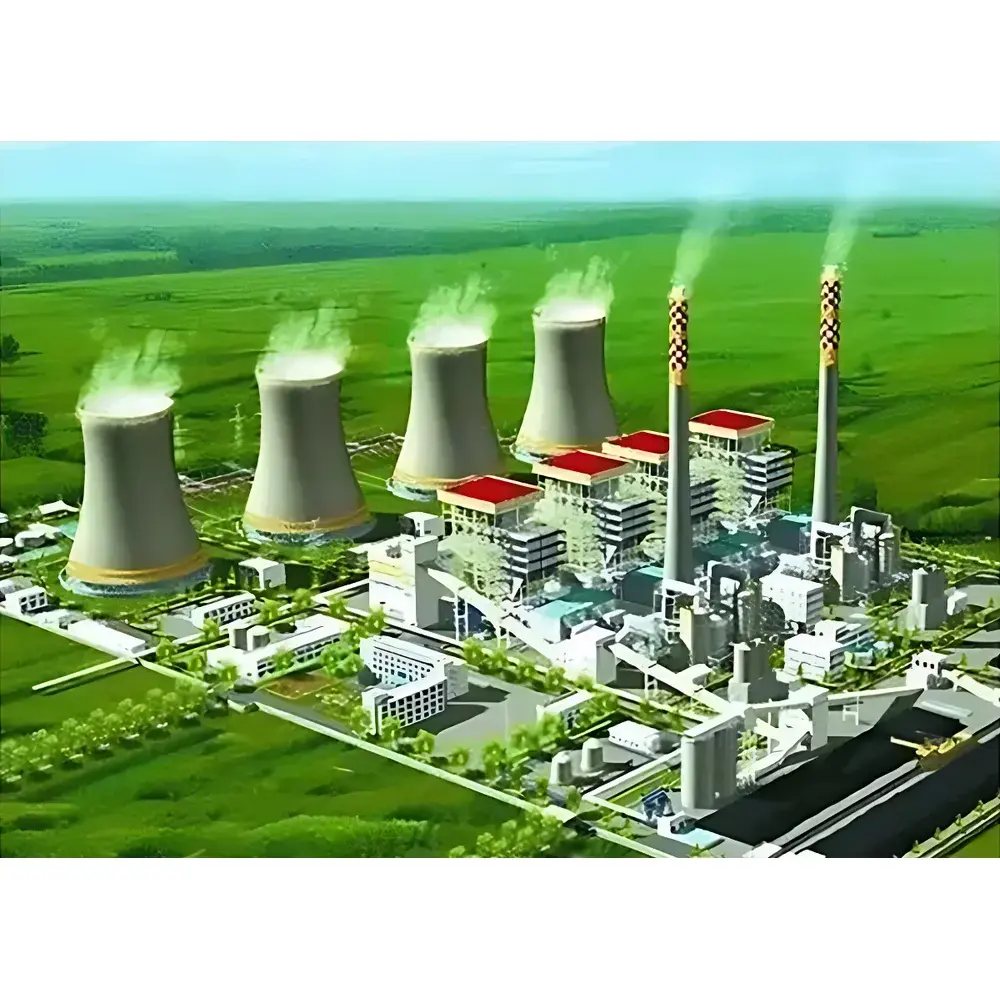
SAI HERO Chemical Industrial Park Environmental Monitoring & Early-Warning Platform
| Brand | SAI HERO |
|---|---|
| Origin | Hebei, China |
| Manufacturer Type | Direct Manufacturer |
| Country of Origin | China |
| Model | Chemical Industrial Park Environmental Monitoring & Early-Warning Platform |
| Pricing | Available Upon Request |
Overview
The SAI HERO Chemical Industrial Park Environmental Monitoring & Early-Warning Platform is an integrated, GIS-based environmental intelligence system engineered for continuous, multi-layered surveillance and risk-informed decision-making in high-hazard industrial zones. Built upon a modular service-oriented architecture, the platform unifies real-time sensor telemetry (ambient air quality, stack emissions, meteorological parameters), static regulatory databases (permits, compliance records, chemical inventories), and dynamic modeling engines to support the full emergency lifecycle—from pre-incident risk profiling and early anomaly detection to post-event impact assessment and recovery validation. Its operational foundation aligns with internationally recognized environmental management frameworks, including ISO 14001:2015 (Environmental Management Systems) and the OECD Guidance on Environmental Risk Assessment of Chemicals, while supporting audit-ready data traceability per GLP/GMP-aligned recordkeeping principles.
Key Features
- Multi-Tiered Monitoring Integration: Seamless ingestion of time-synchronized data from fixed-site CEMS/CEMS-like systems, low-cost sensor grids (PM2.5, VOCs, SO2, NOx, H2S), and mobile monitoring units—enabling spatially resolved baseline establishment and deviation detection.
- Automated Anomaly Detection & Tiered Alerting: Rule-based and statistical process control (SPC) algorithms trigger configurable alerts (email/SMS/API webhook) at three severity levels: threshold exceedance, trend acceleration, and cross-parameter correlation anomalies—supporting ISO 14001 Clause 8.2 (Emergency Preparedness and Response).
- GIS-Centric “One Map” Visualization: Unified geospatial dashboard overlaying real-time emission fluxes, wind-driven dispersion plumes, facility boundaries, sensitive receptors (schools, hospitals), and historical incident hotspots—rendered via Web GIS standards (OGC WMS/WFS).
- Mobile-First Enforcement Workflow: Android/iOS native application enabling field officers to receive automated inspection assignments, capture geo-tagged evidence (photos, GPS logs, instrument readings), and submit digital reports—fully synchronized with central case management and audit trails.
- Risk Source Registry & Lifecycle Management: Structured database for hazardous substances (CAS-regulated), process units, storage tanks, and containment systems—including hazard classification (GHS), quantity tracking, and linkage to Safety Data Sheets (SDS) and spill response protocols.
- Model-Driven Emergency Decision Support: Integrated coupling with validated atmospheric dispersion models (e.g., AERMOD, CALPUFF) and hydrological fate models—calibrated using local terrain, land-use, and real-time meteorological feeds—to generate predictive contamination footprints and mitigation scenario comparisons.
Sample Compatibility & Compliance
The platform accepts structured telemetry from third-party analyzers compliant with MODBUS RTU/TCP, OPC UA, or HTTP RESTful APIs (e.g., Thermo Fisher, Horiba, Siemens gas analyzers). All data ingestion pipelines enforce IEC 62443-3-3 cybersecurity controls for industrial automation systems. Metadata schema adheres to ISO 19115:2014 (Geographic Information – Metadata) and supports export in EPA-compatible formats (e.g., CSV, NetCDF, XML-EPA). System design facilitates alignment with China’s “Technical Specifications for Environmental Monitoring of Chemical Parks” (HJ 1217–2021) and supports documentation for international EHS audits under ANSI/ASSP Z10 or OHSAS 18001.
Software & Data Management
Deployed as a containerized microservices application (Docker/Kubernetes), the platform provides role-based access control (RBAC) with LDAP/Active Directory integration and optional 2FA. All raw sensor data is stored in time-series databases (InfluxDB) with immutable write-once retention policies; analytical outputs are archived in object storage (S3-compatible) with SHA-256 checksum validation. Audit logs capture user actions, configuration changes, and model execution parameters—retained for ≥18 months to meet GLP Annex 11 and FDA 21 CFR Part 11 electronic record requirements. Data exports comply with GDPR Article 20 (data portability) and include machine-readable metadata tags for FAIR (Findable, Accessible, Interoperable, Reusable) principles.
Applications
- Continuous compliance verification for Tier-1 chemical manufacturers operating under EU REACH or US TSCA reporting obligations.
- Dynamic risk prioritization for environmental inspectors conducting scheduled or complaint-driven inspections across multi-facility industrial clusters.
- Real-time plume trajectory forecasting during accidental releases (e.g., chlorine leak, VOC tank overfill) to guide shelter-in-place advisories and evacuation zone delineation.
- Long-term trend analysis of fugitive emissions to identify chronic sources requiring engineering controls (e.g., LDAR program optimization).
- Integration with corporate ESG reporting systems to quantify avoided environmental incidents and track KPIs such as “hours of unplanned downtime due to environmental nonconformance.”
FAQ
Does the platform support integration with existing SCADA or DCS systems?
Yes—via standard industrial protocols (MODBUS TCP, OPC UA, MQTT) or custom API adapters developed under IEC 61131-3 guidelines. Pre-certified drivers are available for major vendors including Honeywell Experion, Emerson DeltaV, and Yokogawa CENTUM VP.
How is model accuracy validated for emergency simulations?
Dispersion models are calibrated annually against tracer studies (e.g., SF6 releases) conducted under representative atmospheric stability classes (Pasquill-Gifford categories A–F), with performance metrics (NMSE, FAC2) documented per EPA Guideline on Air Quality Models (Appendix W).
Can historical data be used for root cause analysis of recurring exceedances?
Yes—the platform includes statistical process control (SPC) dashboards with control charts, Pareto analysis of violation drivers, and cross-correlation heatmaps linking meteorological variables (wind speed/direction, boundary layer height) to observed concentration spikes.
Is the system validated for use in regulated environments such as pharmaceutical manufacturing parks?
While not inherently “validated” as a GxP system, the platform’s architecture supports IQ/OQ/PQ documentation packages per ASTM E2500-13 and can be configured with 21 CFR Part 11-compliant electronic signatures and audit trail review workflows.
What level of cybersecurity certification does the platform hold?
The underlying infrastructure complies with NIST SP 800-53 Rev. 5 (Moderate Impact Baseline) and implements encryption-at-rest (AES-256) and in-transit (TLS 1.3); penetration testing reports are available under NDA for qualified clients.







