
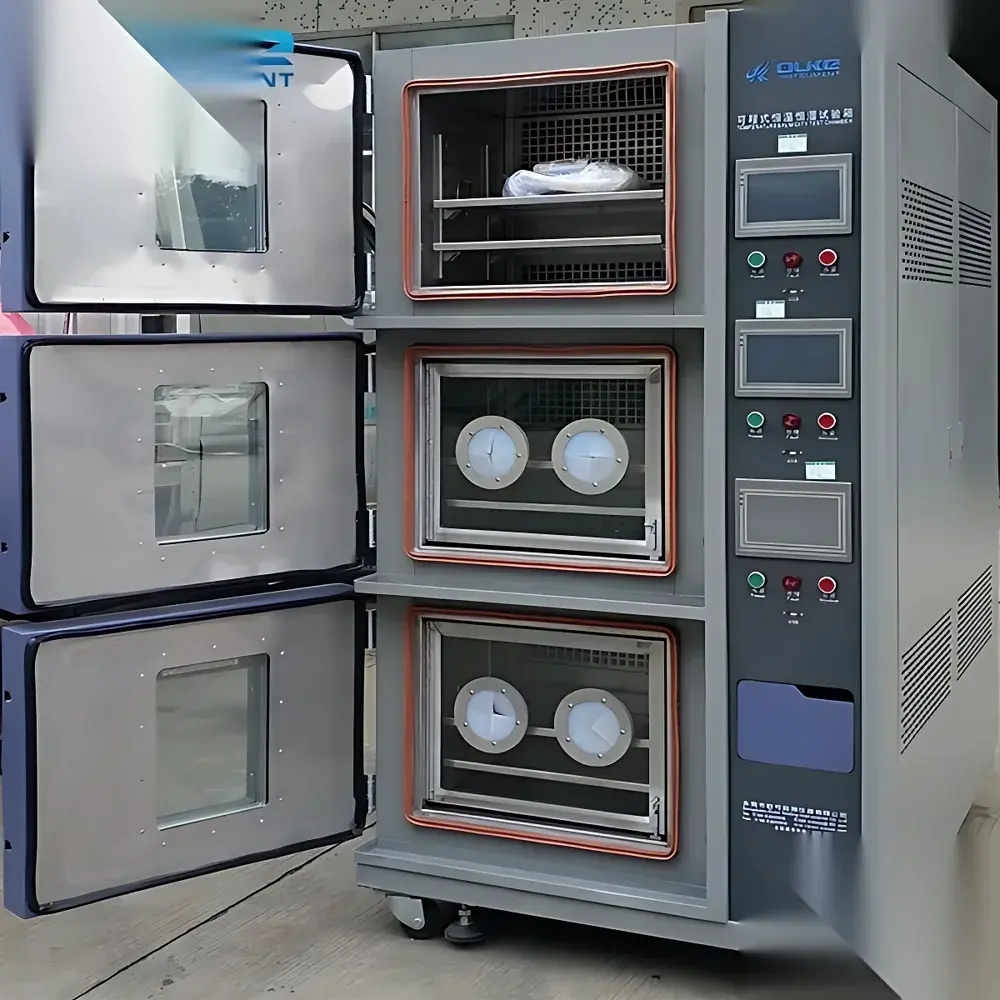
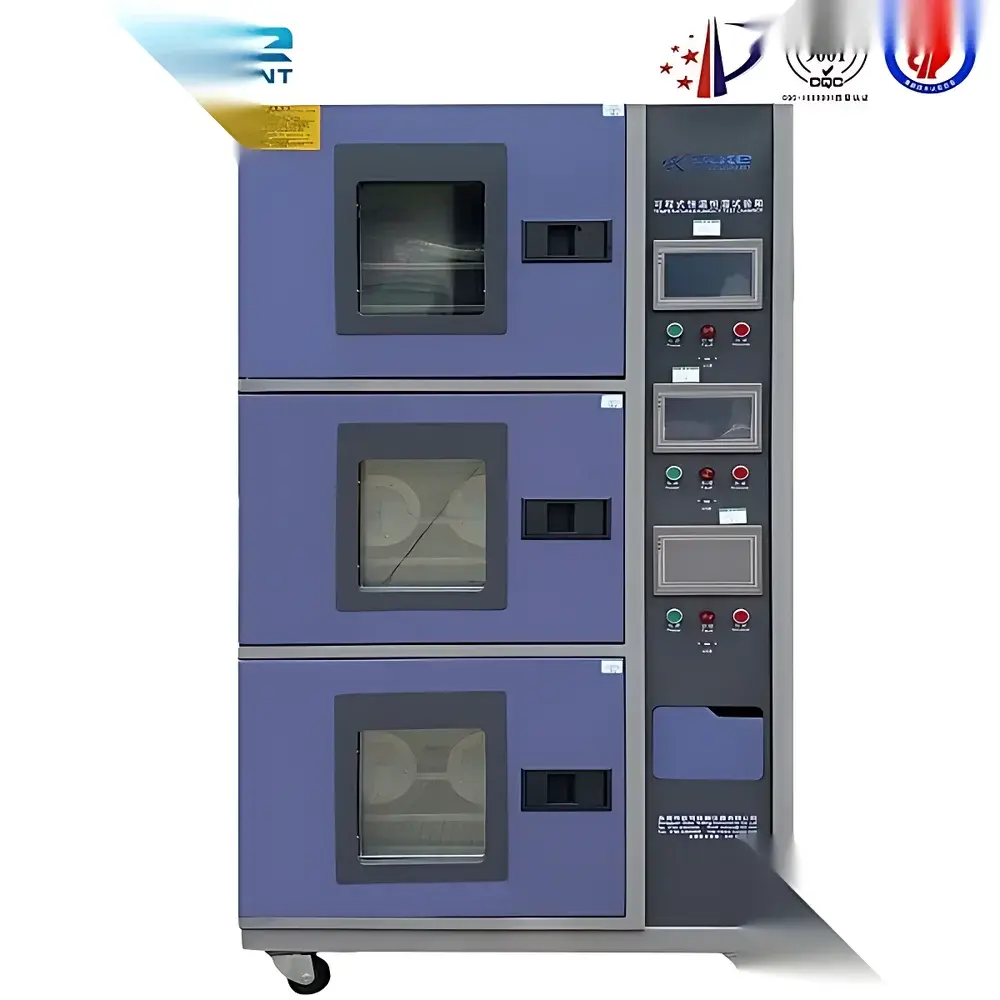
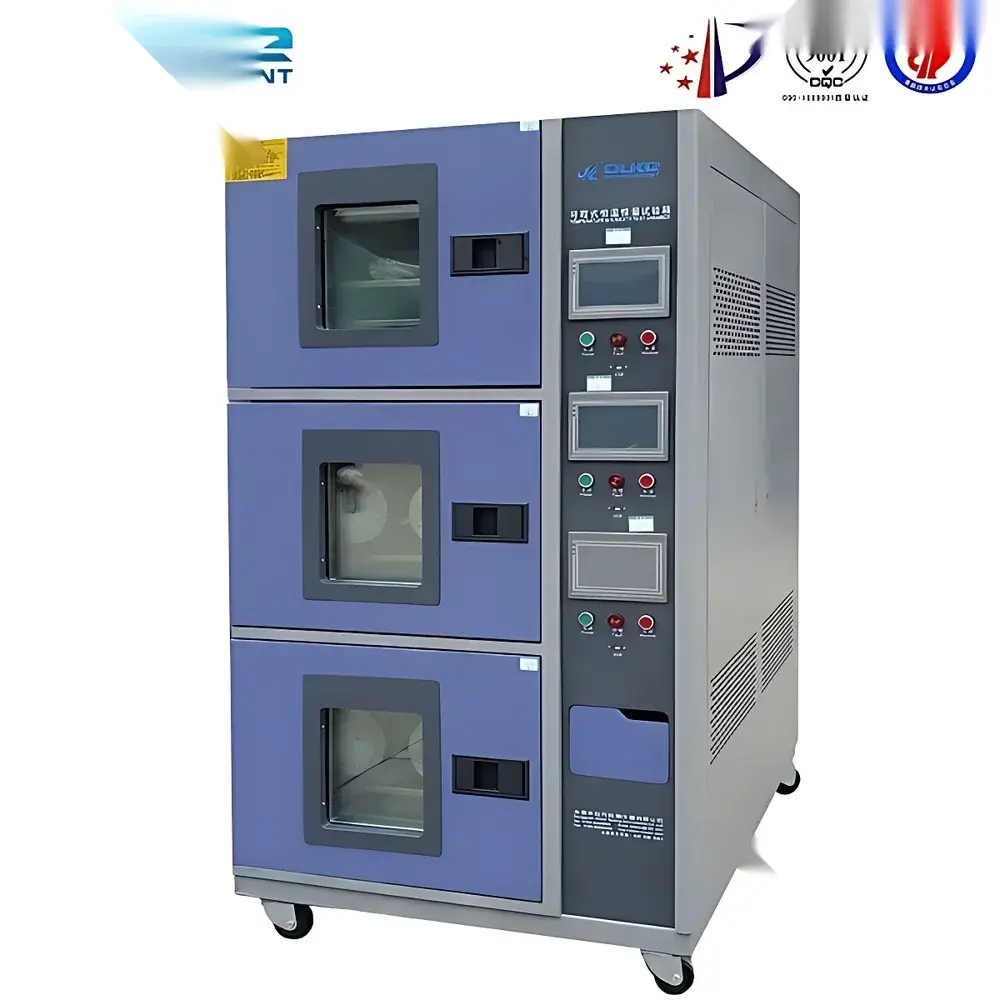
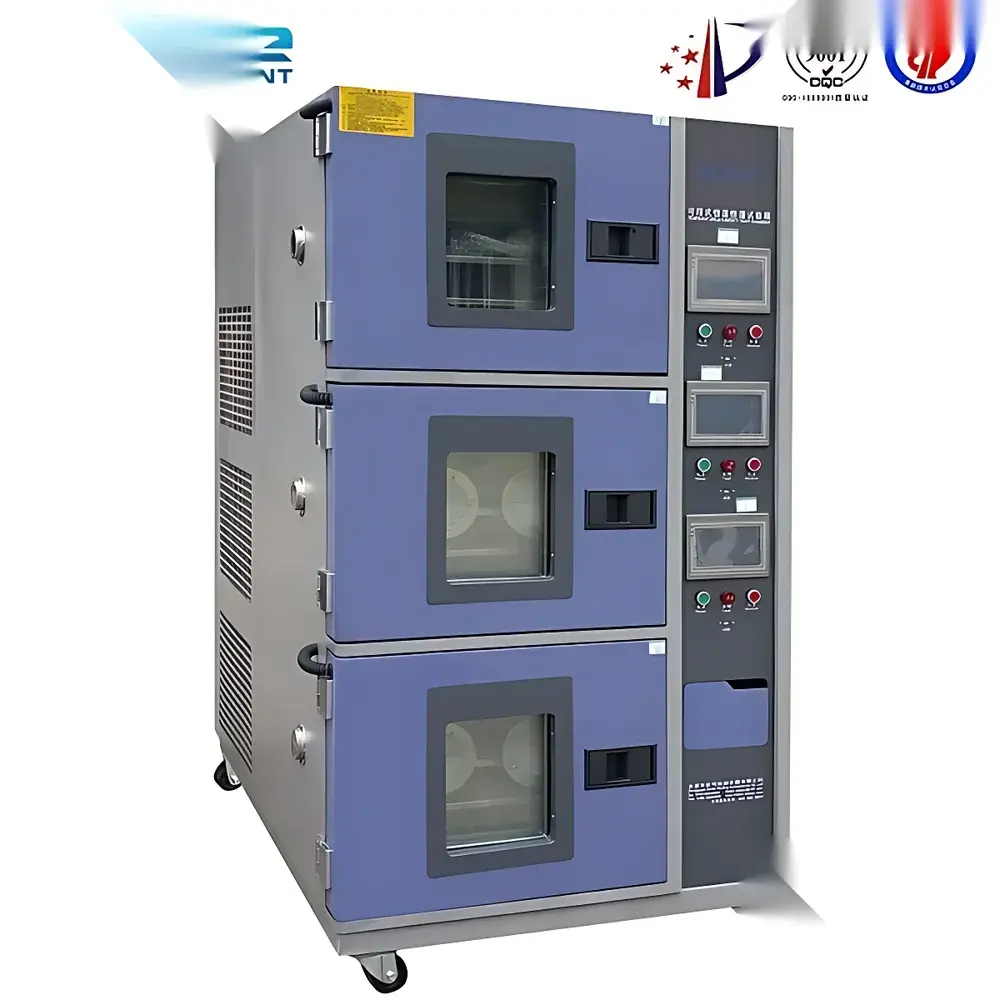
OK-TH-225 Low-Temperature Temperature and Humidity Controlled Chamber
| Brand | OEM |
|---|---|
| Origin | Imported |
| Manufacturer Type | Authorized Distributor |
| Model | OK-TH-225 |
| Temperature Range | −30 °C to +150 °C |
| Humidity Range | 20–98% RH |
| Compliance | GB/T 5170.2, GB/T 5170.5, GB 2423.1, GB 2423.2, GB 2423.22, GB 10589, GB 10592, GB 11158 |
| Cooling Water Requirement | 10–28 °C, 0.1–0.3 MPa |
| Control Method | PID-based Balanced Temperature & Humidity Control (BTHC) |
| Construction | Full-capillary auto-load-adjustment refrigeration system |
| Interior Volume | 225 L |
Overview
The OK-TH-225 Low-Temperature Temperature and Humidity Controlled Chamber is an engineered environmental test system designed for precise, long-term simulation of controlled thermal and hygrometric conditions. It operates on the principle of balanced heating, cooling, and humidification/dehumidification—achieved via a PID-regulated Balanced Temperature and Humidity Control (BTHC) architecture. This ensures dynamic equilibrium between energy input and thermal/hygrometric loss, enabling stable setpoint maintenance across its full operational range: −30 °C to +150 °C and 20–98% relative humidity (RH). The chamber is purpose-built for compliance-driven validation workflows in electronics, automotive components, aerospace materials, and pharmaceutical packaging—where reproducible exposure to extreme low-temperature and high-humidity stressors is essential for reliability assessment.
Key Features
- Full-capillary refrigeration circuit with auto-load-adjustment capability—eliminates reliance on mechanical expansion valves and delivers superior thermodynamic stability during rapid temperature transitions.
- Industrial-grade touch-screen controller with intuitive interface, multi-segment programmability, real-time trend logging, and password-protected parameter access—designed for operator efficiency and audit-ready operation.
- Double-wall insulated construction with high-density polyurethane foam (≥100 mm thickness) and seamless inner chamber welding—minimizes thermal bridging and ensures uniform internal temperature distribution (±0.5 °C at 1/3 volume load, per GB/T 5170.2).
- Stainless steel (SUS304) interior chamber and corrosion-resistant exterior housing—optimized for sustained operation under aggressive humidity cycling and condensation-prone conditions.
- Integrated water-cooled condenser system requiring inlet coolant at 10–28 °C and 0.1–0.3 MPa pressure—ensures consistent refrigeration performance even under ambient temperatures up to 31 °C (per GB 10589-89 qualification criteria).
- Flat-panel door with non-spring, ergonomic handle and double-layer tempered glass window—enables unobstructed visual monitoring without compromising thermal integrity or operator safety.
Sample Compatibility & Compliance
The OK-TH-225 accommodates diverse sample geometries—including PCB assemblies, polymer films, lithium-ion battery modules, medical device packaging, and active pharmaceutical ingredients (APIs)—within its 225 L working volume. Its performance validation adheres strictly to Chinese national standards aligned with international metrological practice: GB/T 5170.2 (temperature uniformity and stability verification), GB/T 5170.5 (humidity accuracy and recovery testing), and GB 2423 series (environmental stress screening protocols for electronic products). While not certified to IEC 60068 or ISO 16750 by default, the unit’s design basis—including PID-controlled BTHC logic, traceable sensor calibration paths, and documented thermal mapping methodology—supports third-party certification to ASTM D4332, ISO 4892-2, or MIL-STD-810H when integrated into a validated laboratory quality system (GLP/GMP-compliant environments require additional documentation controls and periodic requalification).
Software & Data Management
The embedded controller supports USB data export of time-stamped temperature/humidity logs (CSV format), with optional RS-485/Modbus RTU or Ethernet (TCP/IP) interfaces for integration into centralized SCADA or LIMS platforms. Audit trail functionality includes user login records, parameter change timestamps, and alarm event history—all retained onboard for ≥30 days. For regulated industries, optional software packages provide 21 CFR Part 11-compliant electronic signatures, role-based access control, and automated report generation (e.g., deviation summaries, chamber qualification certificates). All firmware updates are delivered via signed binary packages with version rollback capability.
Applications
- Accelerated aging studies of elastomers and adhesives under combined cold/humidity stress (e.g., sealant cracking evaluation per ISO 11346).
- Pre-conditioning of lithium-ion cells prior to cycle life testing at sub-zero temperatures (−20 °C to −30 °C).
- Validation of moisture barrier performance in sterile medical packaging (ASTM F1249 water vapor transmission rate correlation).
- Environmental stress screening (ESS) of avionics modules per DO-160 Section 4 (low-temperature operational limits).
- Stability testing of hygroscopic APIs per ICH Q1A(R2) guidance, using controlled humidity ramps at fixed low-temperature setpoints.
- Material compatibility testing of automotive interior trim under cyclic freeze-thaw/humidity exposure (SAE J2412).
FAQ
What is the typical temperature stabilization time from −30 °C to +85 °C?
Stabilization time depends on load mass and thermal inertia; under no-load conditions per GB/T 5170.2, average ramp rate is 3 °C/min (air temperature), with full stabilization achieved within ±0.3 °C tolerance in ≤35 minutes.
Can the chamber operate continuously at −30 °C and 95% RH?
Yes—its full-capillary refrigeration system and BTHC logic enable continuous operation at the lowest temperature/highest humidity intersection, though condensation management requires proper drainage and periodic defrost cycle scheduling.
Is external dehumidification or dry air purge required for low-RH operation below 20%?
No—the standard configuration achieves 20% RH minimum via refrigerative dehumidification; for sub-20% RH, optional desiccant-based dry air injection module is available as a factory-installed accessory.
How is calibration traceability maintained?
The unit ships with NIST-traceable certificate for PT100 sensors (temperature) and capacitive RH probes; annual recalibration is recommended per ISO/IEC 17025 guidelines, using accredited service providers.
Does the chamber support custom test profiles with conditional branching (e.g., “hold until dew point drops below −40 °C”)?
Basic controller supports linear and step profiles; advanced conditional logic requires optional PC-based software suite with scriptable event triggers and real-time sensor feedback loops.



