
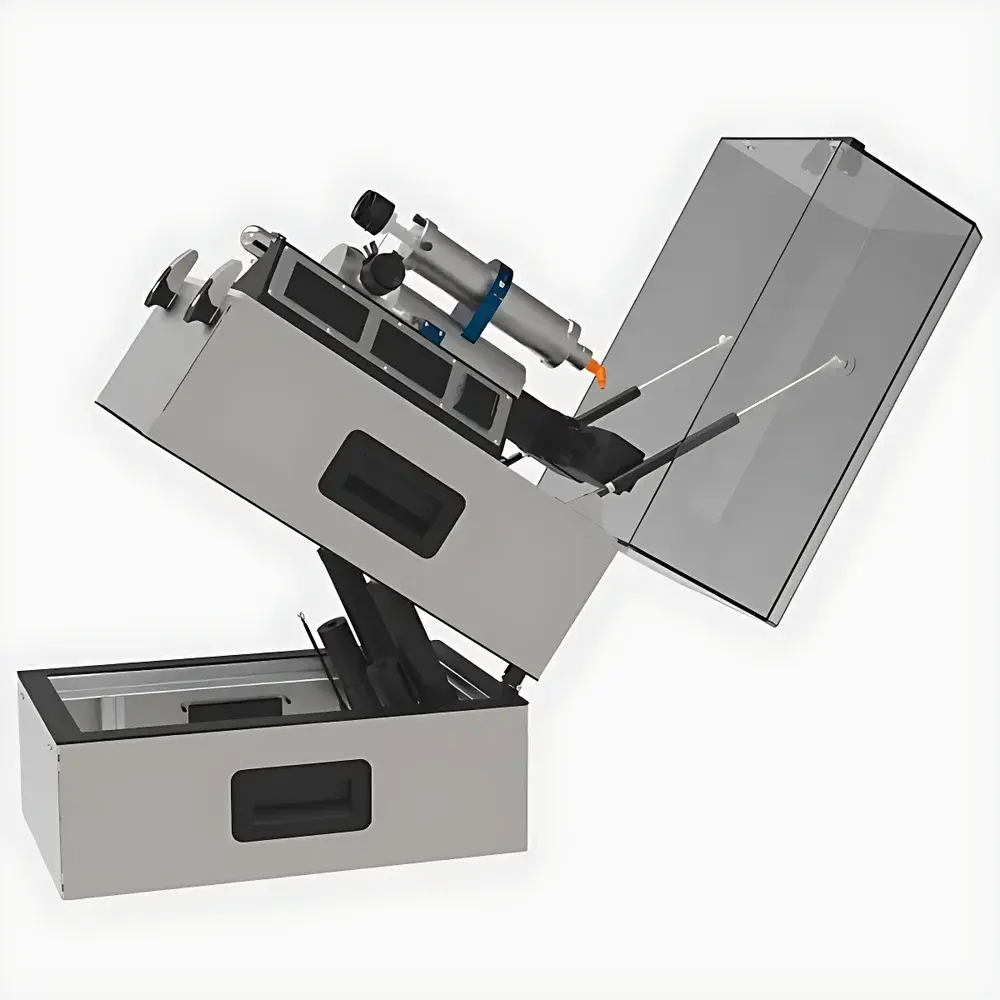
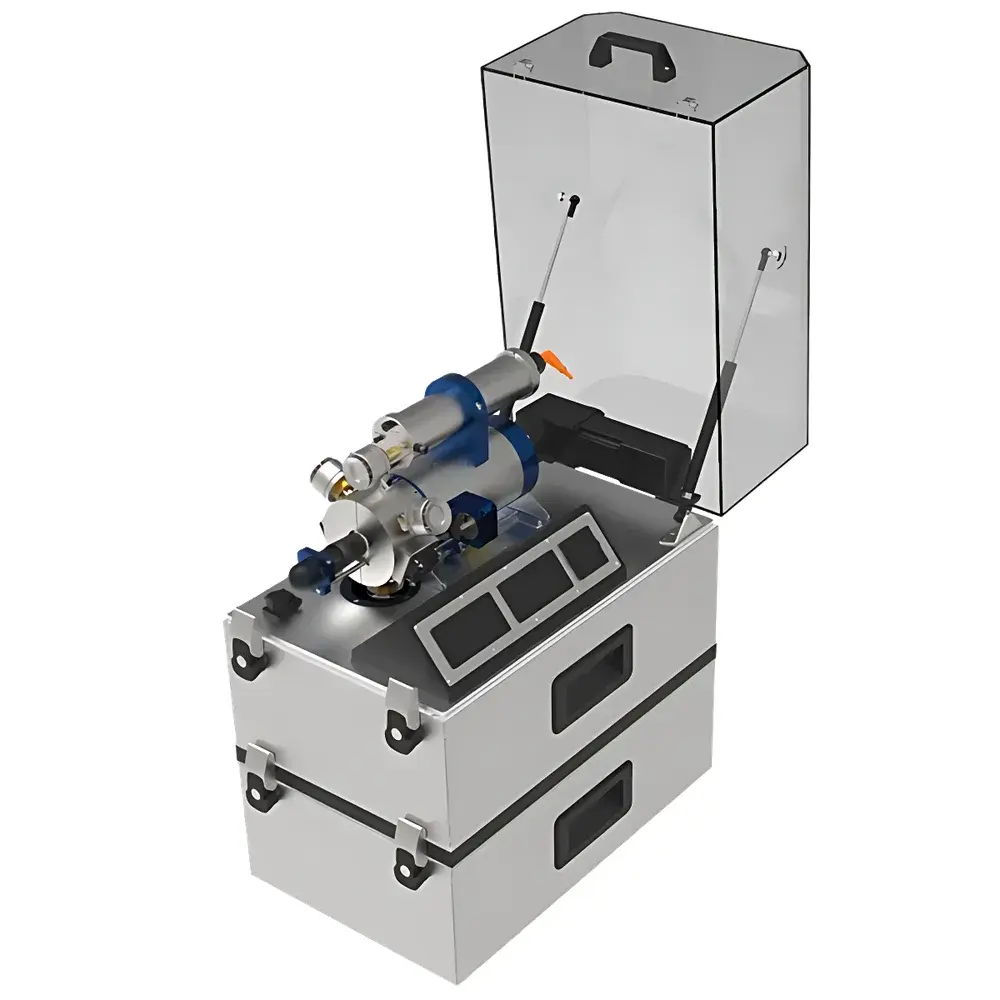
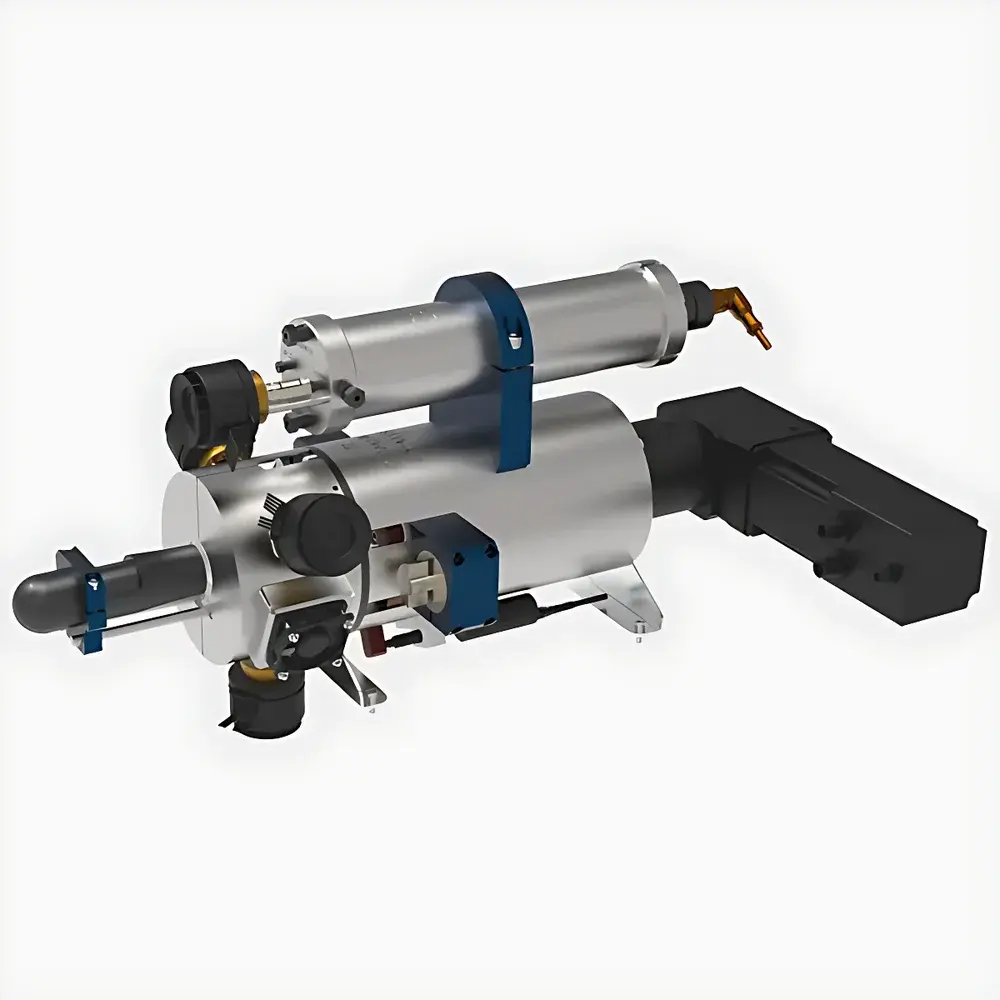
Irian J2 Compact PVT Behavior Analyzer
| Brand | Irian |
|---|---|
| Origin | France |
| Model | J2 |
| Pressure Range | 0–14,500 psi |
| Temperature Range | Ambient to 200 °C |
| Temperature Accuracy | ±0.3 °C |
| Pressure Uncertainty | ±1.5 psi |
| Cell Volume | 1.24 mL |
| Optical Imaging | Integrated HD Digital Camera |
| Actuation | Embedded Electromechanical Piston Pump with Automatic Valving |
| Gas Flow Control | Micro-Flow Regulating Valve |
| Cell Tilt | 0–45° |
| Dimensions | 610 mm × 559 mm × 203 mm (L×W×H) |
| Cooling | High-Capacity Forced-Air System |
| Agitation | Electromagnetic Vibration Module |
Overview
The Irian J2 Compact PVT Behavior Analyzer is a benchtop, high-precision instrument engineered for quantitative phase behavior characterization of hydrocarbon and reservoir fluids under controlled pressure and temperature conditions. It operates on the principle of constant-composition expansion (CCE), differential liberation (DL), and constant-volume depletion (CVD), enabling thermodynamically rigorous determination of bubble point pressure, dew point pressure, saturation pressure, and fluid shrinkage behavior. Designed for laboratories with space constraints yet demanding analytical fidelity, the J2 integrates a miniature sapphire-view cell (1.24 mL internal volume), high-stability thermal enclosure, and ultra-low-drift pressure transduction—meeting the metrological requirements for E&P core analysis, enhanced oil recovery (EOR) screening, and compositional simulation input generation.
Key Features
- Miniaturized sapphire optical cell (1.24 mL) with ±0.3 °C temperature stability and ±1.5 psi absolute pressure uncertainty—optimized for low-sample-consumption experiments without compromising measurement repeatability.
- Integrated HD digital imaging system with real-time visualization of vapor nucleation, bubble growth dynamics, and dew formation—enabling direct observation of phase transitions during isothermal compression or heating cycles.
- Electromechanically driven piston pump with closed-loop position feedback ensures precise volumetric displacement control; combined with automatic high-integrity valving for seamless switching between CCE, DL, and CVD protocols.
- Programmable cell tilt mechanism (0–45°) facilitates gravitational phase separation verification and improves detection sensitivity for near-critical mixtures exhibiting weak density gradients.
- Forced-air cooling subsystem maintains thermal equilibrium during rapid depressurization or extended high-temperature holds, minimizing thermal lag and ensuring ISO 5725-compliant reproducibility across repeated runs.
- Electromagnetic vibration module provides controlled agitation to accelerate equilibration in viscous or asphaltene-rich samples—critical for accurate saturation pressure determination in heavy oils and bitumen-diluent systems.
Sample Compatibility & Compliance
The J2 accommodates crude oils, condensates, synthetic blends, CO₂–hydrocarbon mixtures, and polymer solutions—provided they remain chemically compatible with 316 stainless steel, sapphire, and fluoropolymer wetted components. All pressure containment meets ASME B31.4 and PED 2014/68/EU design standards. Temperature and pressure calibration traceability is maintained per ISO/IEC 17025 requirements. The system supports audit-ready data capture compliant with FDA 21 CFR Part 11 when configured with optional electronic signature modules and time-stamped metadata logging.
Software & Data Management
Bundled Irian PVT-Suite software provides full experimental workflow automation—from method definition and hardware synchronization to real-time curve fitting and thermodynamic property derivation (e.g., Z-factor, formation volume factor, solution gas-oil ratio). Raw sensor data (pressure, temperature, piston position, image timestamps) are stored in HDF5 format with embedded metadata tags for long-term archival and cross-platform interoperability. Export options include ASTM D323/D1250-compliant reports, CSV for reservoir simulators (ECLIPSE, CMG, tNavigator), and XML-based PVTi import templates. Software validation documentation (IQ/OQ/PQ protocols) is available upon request for GLP/GMP-regulated environments.
Applications
- Determination of bubble point and dew point pressures for reservoir fluid sampling validation and PVT report generation per API RP 44 and ISO 20765-2.
- Differential vaporization experiments to quantify liquid shrinkage and evolved gas composition—essential for material balance calculations and tank-gauge reconciliation.
- High-pressure insulation testing of downhole elastomers and seal materials under simulated wellbore thermal gradients.
- Phase envelope mapping of CO₂–crude systems for miscible flood design and minimum miscibility pressure (MMP) estimation.
- Asphaltene onset pressure (AOP) detection via optical turbidity tracking during controlled depressurization sequences.
- Calibration support for equation-of-state (EOS) parameter tuning using experimental saturation data points.
FAQ
What sample volume is required for a complete CCE experiment?
Typically 1.5–2.0 mL of degassed fluid is recommended to ensure sufficient headspace for bubble detection while maintaining cell fill ratio within optimal range (70–85%).
Can the J2 perform live oil analysis directly from a separator?
Yes—when coupled with an integrated gas chromatograph (optional) and back-pressure regulator, the J2 supports continuous live fluid introduction with real-time compositional monitoring.
Is remote operation supported?
The system includes Ethernet-enabled hardware controllers and RESTful API endpoints for integration into automated lab infrastructure (LIMS/ELN) and unattended overnight runs.
How is pressure calibration verified?
A dual-stage verification protocol is employed: primary calibration against NIST-traceable deadweight tester at three points (10%, 50%, 90% FS), followed by in-situ drift monitoring using reference pressure sensors during thermal soak periods.
Does the software support EOS modeling export?
Yes—PVT-Suite generates tabular output compatible with commercial EOS packages including Peng–Robinson, Soave–Redlich–Kwong, and CPA, with column headers mapped to standard PVTi nomenclature.
Related Products



