
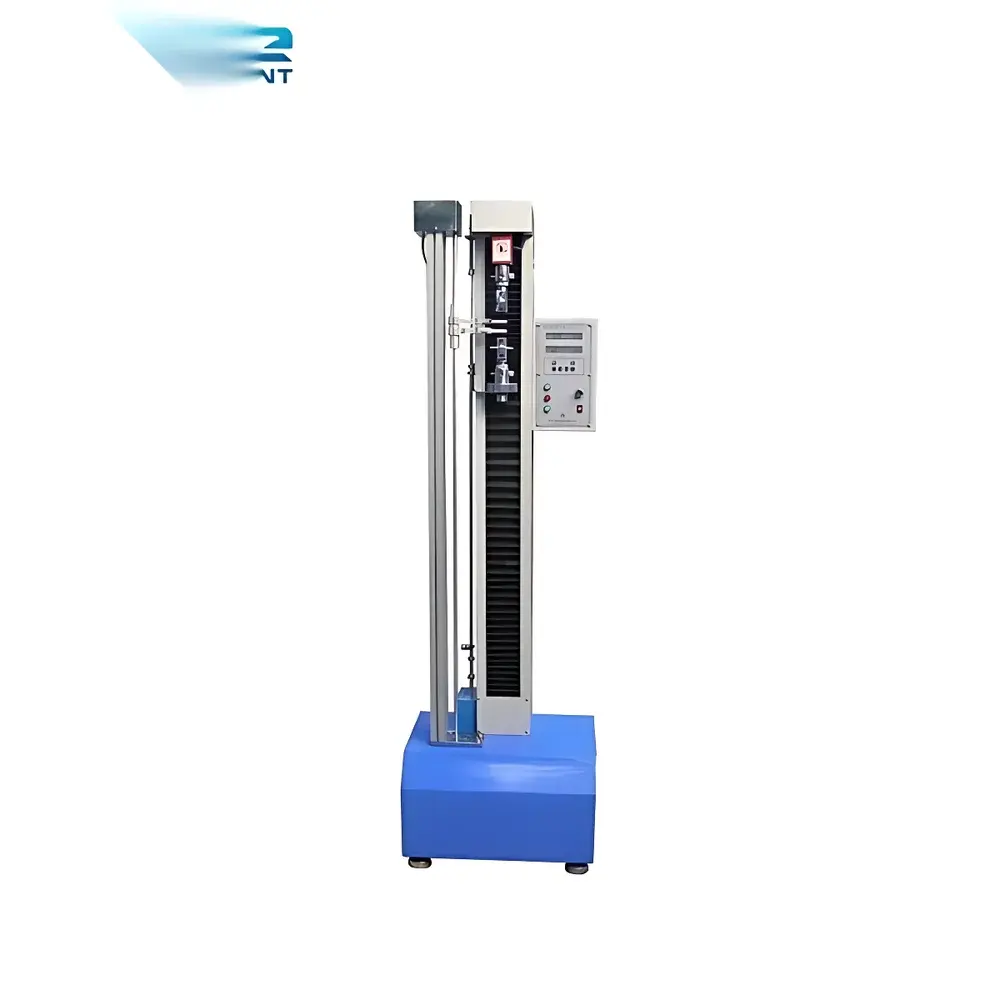
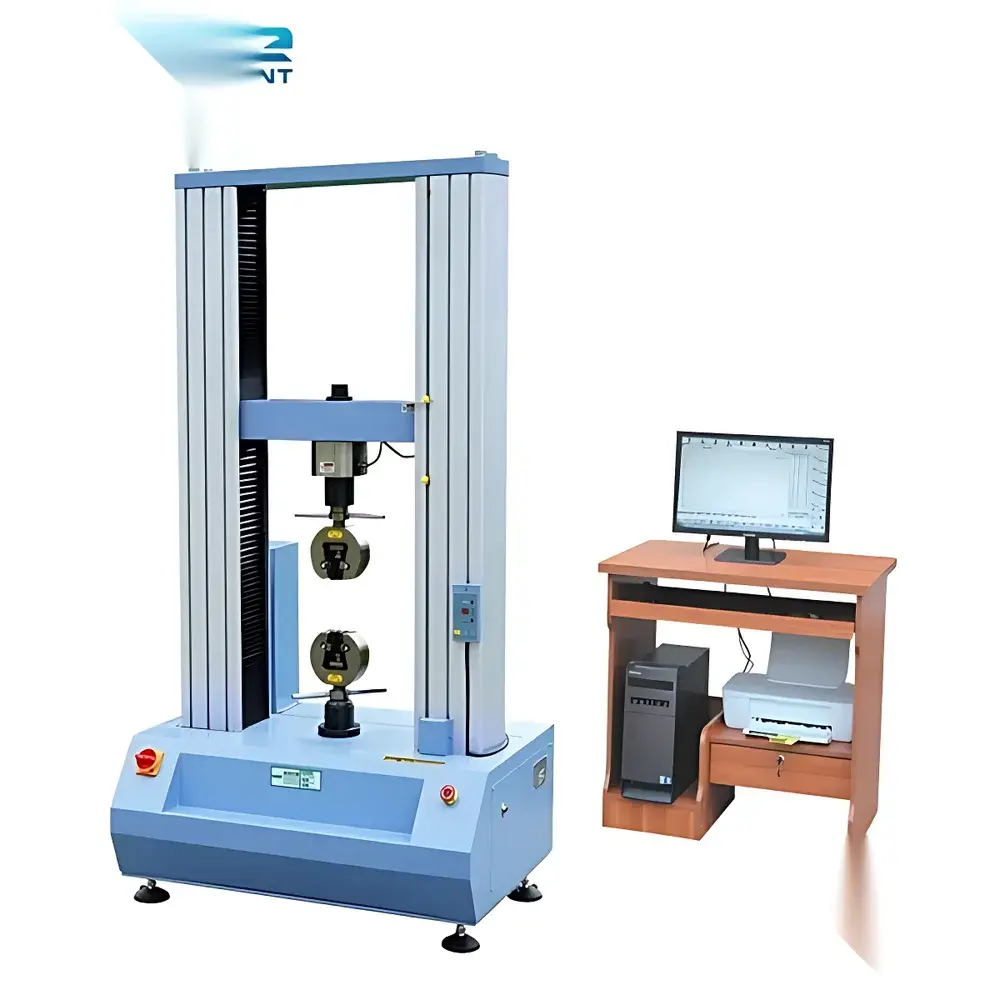
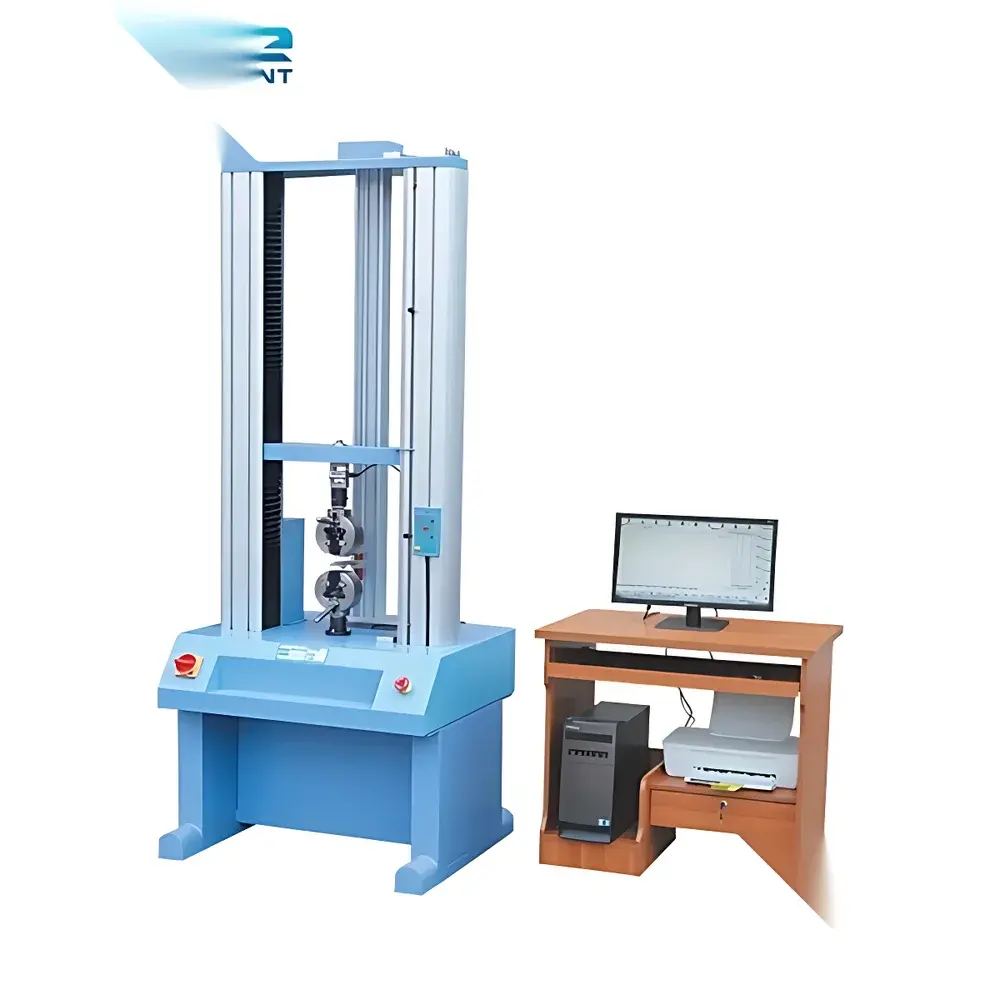
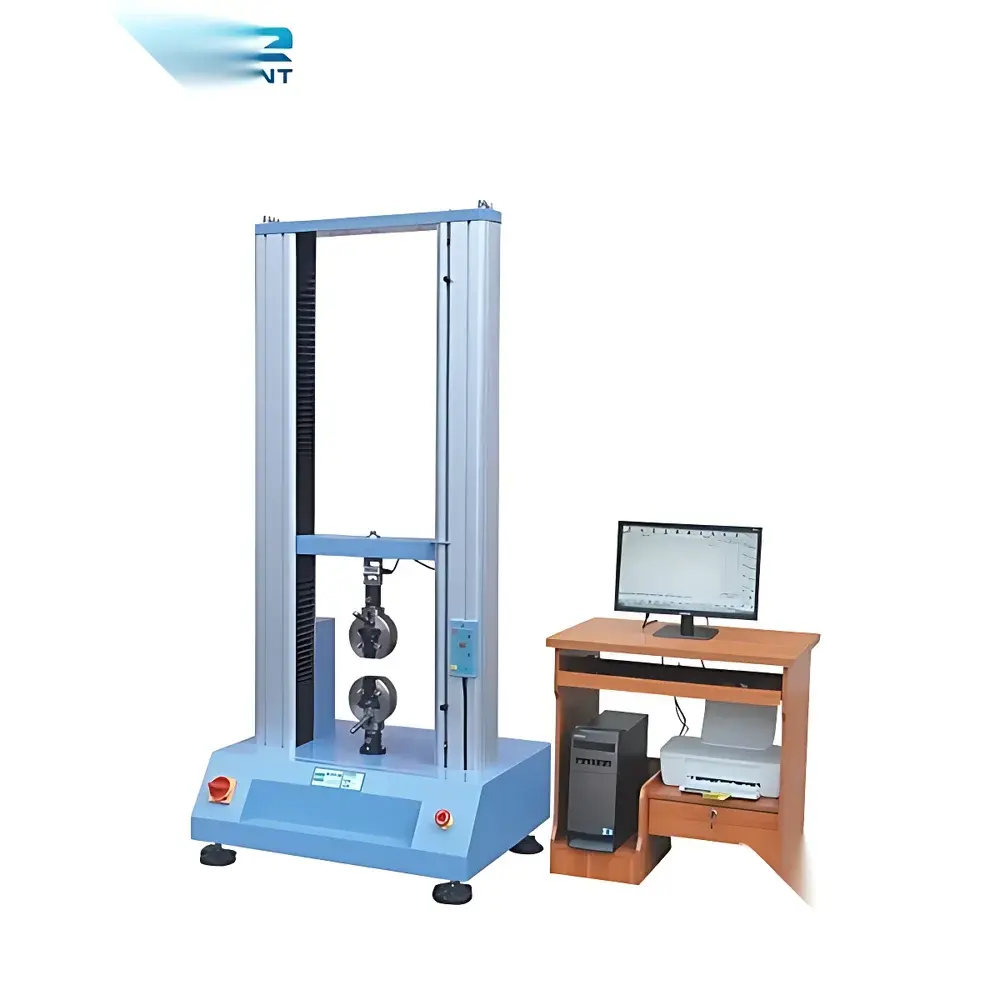
Digital Display Tensile Testing Machine
| Brand | Other Brands |
|---|---|
| Origin | Imported |
| Manufacturer Type | Authorized Distributor |
| Price | USD 3,200 (FOB) |
| Load Cell Accuracy | ±0.03% F.S. |
| Force Resolution | 1/100,000 full scale |
| Encoder Resolution | 2500 pulses/rev |
| Drive System | Panasonic AC Servo Motor |
| Transmission | Precision Ball Screw & Linear Guide Rails |
| Overload Capacity | 150% of rated load |
| Compliance | GB/T 16491, GB/T 1040, GB/T 8808, GB/T 13022, GB/T 2790–2792, GB/T 16825, GB/T 17200, GB/T 3923.1, GB/T 528, GB/T 2611, GB/T 6344, GB/T 20310, GB/T 3690, GB/T 4944, GB/T 3686, GB/T 529 |
Overview
The Digital Display Tensile Testing Machine is a precision electromechanical system engineered for uniaxial tensile, peel, shear, and elongation testing of solid and semi-rigid materials. It operates on the fundamental principle of controlled force application via servo-driven displacement, with real-time measurement of applied load and specimen deformation using high-fidelity strain-gauge-based load cells and optical encoder feedback. Designed for routine quality control and R&D validation in ISO/IEC 17025-accredited laboratories, this machine delivers traceable mechanical property data—including ultimate tensile strength, yield point, modulus of elasticity, elongation at break, and peel adhesion—across diverse material classes under standardized test conditions.
Key Features
- Panasonic AC servo motor drive ensures precise speed control (0.001–500 mm/min), minimal torque ripple, and long-term operational stability.
- High-resolution 2500-pulse-per-revolution optical encoder enables accurate position and displacement tracking with sub-micron repeatability.
- Precision-ground ball screw coupled with preloaded linear guide rails guarantees smooth, backlash-free motion and acoustic noise below 55 dB(A) during operation.
- Explosion-proof precision load cell with automatic thermal drift compensation and zero-point stabilization; certified linearity error ≤ ±0.03% full scale (F.S.) and repeatability better than 0.02% F.S.
- Real-time data acquisition at up to 1 kHz sampling rate, supporting dynamic event capture such as fracture initiation and post-yield behavior.
- Integrated software interface provides automatic peak hold, break detection with immediate stop command, overload protection (150% F.S. transient capacity), and multi-unit conversion (N, kN, lbf, kgf, MPa, psi).
Sample Compatibility & Compliance
This tensile tester accommodates specimens ranging from thin films (≥10 µm thickness) to metallic rods (up to Ø12 mm), including elastomers, thermoplastics, composites, nonwovens, coated substrates, adhesives, biomedical polymers, and fiber-reinforced laminates. Gripping configurations support pneumatic, wedge, roller, and custom fixtures for flat, cylindrical, or irregular geometries. All test routines conform to internationally recognized standards, including but not limited to ASTM D638, ASTM D882, ISO 527-1/-2, ISO 1798, ISO 8510-2, and the full suite of Chinese national standards cited (GB/T series). The system architecture supports audit-ready documentation for GLP and GMP environments, with optional 21 CFR Part 11-compliant electronic signatures and data integrity features.
Software & Data Management
The embedded Windows-based control software provides synchronized force-displacement curve plotting, real-time statistical summary (mean, SD, CV%), and customizable report templates compliant with internal QA protocols and external regulatory submissions. Raw test data are saved in ASCII CSV and binary formats for third-party analysis (e.g., MATLAB, Python pandas, Minitab). Built-in calibration verification tools allow periodic validation against NIST-traceable reference loads. Audit trail functionality logs all user actions—including method edits, calibration events, and result exports—with timestamped, immutable records. Export options include PDF, Excel, and image (PNG/SVG) outputs suitable for inclusion in technical dossiers or regulatory filings.
Applications
- Quality assurance of polymer films and packaging materials (e.g., seal strength per ASTM F88, puncture resistance per ASTM F1306).
- Mechanical characterization of medical device components (catheter shafts, suture threads, wound dressings) per ISO 10993-12 and USP <1031>.
- Adhesion performance evaluation of pressure-sensitive tapes, labels, and laminates using 90° and 180° peel methods (ASTM D3330, ISO 8510-2).
- Tensile property mapping of composite prepregs and cured laminates per ASTM D3039 and ISO 527-4.
- Validation of textile and geotextile tensile integrity per ISO 9073-3 and ASTM D5035.
- Routine testing of wire-and-cable insulation tensile strength and elongation per UL 1581 and IEC 60811-501.
FAQ
What standards does this machine support out-of-the-box?
It is preconfigured for all referenced GB/T standards and includes default test methods aligned with ASTM D638, ISO 527, and ISO 8510. Custom method creation is supported via editable parameter sets.
Is the load cell calibrated and certified?
Yes—each unit ships with a factory calibration certificate traceable to national metrology institutes. Optional UKAS/NIST-accredited recalibration services are available.
Can the system integrate with LIMS or ERP platforms?
Via TCP/IP and OPC UA protocols, raw data streams and metadata can be exported to laboratory information management systems or enterprise resource planning databases.
What maintenance is required for long-term accuracy?
Annual verification of load cell linearity and encoder resolution is recommended. Mechanical components require only periodic lubrication of ball screws and inspection of grip jaw surfaces.
Does the software support multi-language UI and reporting?
English and Simplified Chinese interfaces are included; report templates can be localized using built-in text editors without code modification.



