
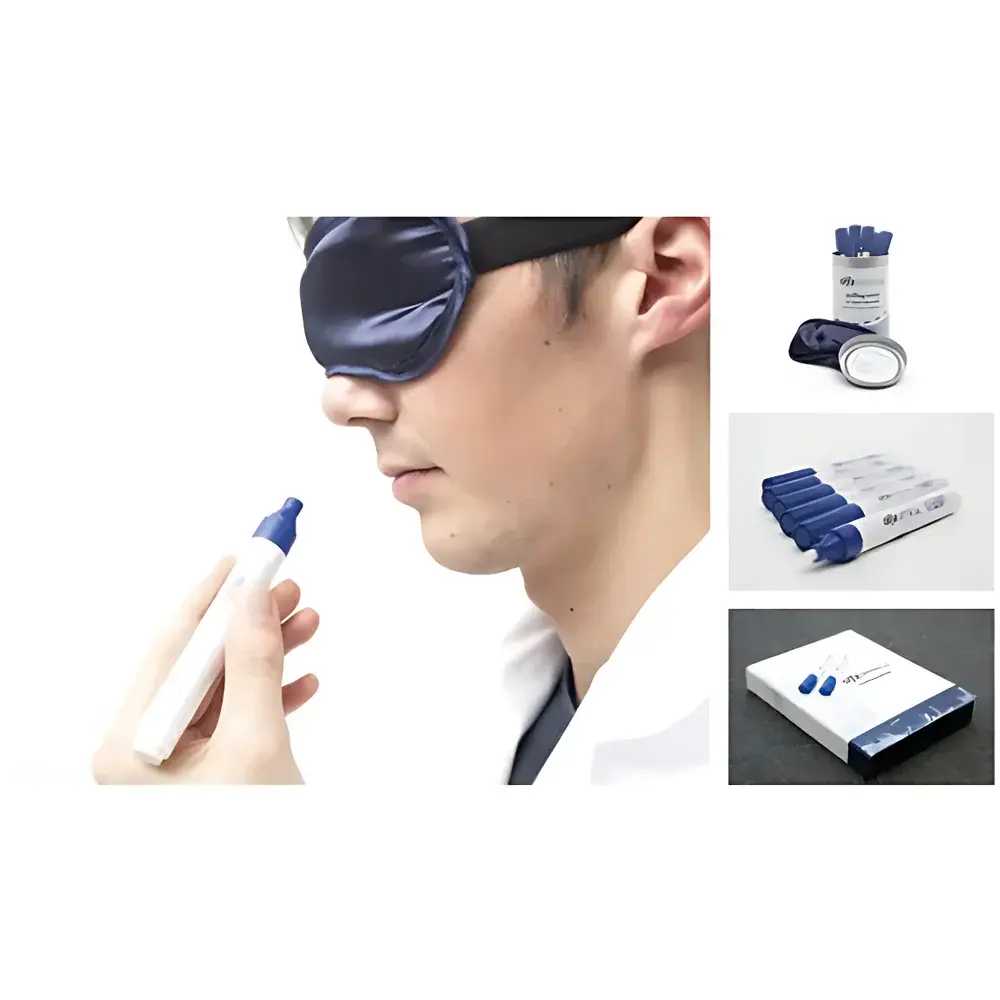
Olfasense SET1/SET2/SET3 Olfactometry Reference Odor Rod Set
| Brand | Olfasense |
|---|---|
| Origin | Germany |
| Model | SET1, SET2, SET3 |
| Application | Human Olfactory Screening, Training & Threshold Calibration |
Overview
The Olfasense SET1/SET2/SET3 Olfactometry Reference Odor Rod Set is a standardized, traceable tool system designed for the objective assessment and training of human olfactory panelists in accordance with EN 13725:2022 (Air Quality — Determination of Odour Concentration by Dynamic Olfactometry) and ISO 8586:2014 (Sensory Analysis — General Guidance for the Selection, Training and Monitoring of Assessors). Each set comprises chemically defined, stable odorant-impregnated rods manufactured under controlled environmental conditions in Germany. These rods deliver reproducible odor stimuli at calibrated dilution levels, enabling quantitative evaluation of odor detection thresholds, identification accuracy, and intensity discrimination—critical prerequisites for certified odor assessors in environmental monitoring, automotive interior air quality testing, and product development laboratories.
Key Features
- SET1: Contains 10 reference odorants selected for broad olfactory receptor coverage; used exclusively for initial assessor screening to identify individuals with normosmic sensitivity and absence of specific anosmias.
- SET2: Comprises 22 odor rods representing key odor qualities (e.g., floral, sweaty, rotten egg, caramel, green leafy, musty) aligned with the “Odor Profile Method” framework; validated for structured training curricula in automotive VOC emission testing labs per VDA 270 and ISO 12219-3.
- SET3: Delivers six concentration levels (from 0.1 to 100 OU/m³) of a single reference compound (n-butanol), enabling precise psychophysical calibration of odor intensity perception using Stevens’ power law methodology.
- All rods utilize inert polyester fiber substrates impregnated with high-purity, gas-chromatography-grade odorants; shelf life ≥24 months when stored at 4–25 °C in sealed aluminum pouches.
- Batch-specific certification includes GC-MS verification of odorant loading consistency and dynamic olfactometer validation data against certified reference gases (traceable to PTB, Germany).
Sample Compatibility & Compliance
The Olfasense odor rod sets are compatible with all EN 13725-compliant dynamic olfactometers (e.g., Olfactometer OM2, ODOmeter, Scentroid ODORweb) and manual sniffing protocols adhering to double-blind, forced-choice methodologies. Rods are validated for use in GLP-regulated environments and support audit-ready documentation required under ISO/IEC 17025:2017 accreditation. Their composition excludes allergens, regulated REACH SVHC substances, and volatile organic compounds prohibited under automotive OEM material specifications (e.g., Ford WSS-M99P1111-A, GMW14872). Full compliance documentation—including CoA, stability reports, and EN 13725 Annex C traceability statements—is provided with each shipment.
Software & Data Management
While the rods themselves are hardware-based reference standards, Olfasense provides optional integration with the Olfasense Panel Manager software (v5.2+), which supports digital recording of assessor performance metrics across all three sets. The software enforces randomized presentation sequences, automatic pass/fail logic per EN 13725 Section 7.3, and generates PDF reports compliant with FDA 21 CFR Part 11 requirements (electronic signatures, audit trails, data integrity controls). Raw response data exports to CSV or LIMS-compatible XML formats, facilitating longitudinal analysis of panel drift, inter-assessor variability, and training efficacy over time.
Applications
- Initial qualification and periodic re-certification of odor assessors for accredited odor laboratories (e.g., those issuing EN 13725-compliant odor concentration reports).
- Standardized training of sensory panelists in automotive Tier 1 suppliers and OEM R&D centers evaluating cabin air quality, trim materials, and HVAC system emissions.
- Method validation studies for new odor measurement protocols, including correlation analysis between instrumental analysis (GC-O, PTR-MS) and human perception.
- Academic research in olfactory neuroscience, psychophysics, and environmental exposure assessment where stimulus control and inter-laboratory comparability are essential.
- Internal QC for manufacturers of low-odor polymers, adhesives, and sealants requiring consistent sensory release profiling.
FAQ
Are the odor rods reusable?
Each rod is intended for single-use per test session to prevent cross-contamination and ensure stimulus fidelity. Reuse beyond the recommended 30-second exposure window compromises odorant volatility consistency and violates EN 13725 Section 6.2.2.
How often must assessors be re-tested using SET1?
EN 13725 mandates re-screening every 6 months; Olfasense recommends quarterly verification for laboratories operating under strict automotive OEM audit schedules (e.g., VW Group, BMW).
Can SET2 be used outside the automotive sector?
Yes—its odor quality spectrum aligns with the Dravnieks odor profile atlas and is widely adopted in food science, fragrance evaluation, and waste treatment odor management programs.
Is n-butanol in SET3 traceable to national metrology institutes?
Yes—each SET3 batch includes a certificate referencing NIST SRM 2231 (n-butanol in air) and PTB-certified gravimetric dilution standards, with uncertainty budgets ≤±3.2% (k=2).




